
Software engineer focused on distributed systems. Exploring LLM inference.
Remote
Joined May 2013
- Tweets331
- Following134
- Followers58
- Likes125






I built a GitHub Action that spent over 20 seconds building a binary on every run. Downloading a prebuilt one took about a second.
The tricky part was figuring out which version to download. I wrote up how I solved it.
rdiachenko.com/til/github/ac…

1
2
35
A shorter write-up of my vLLM experiment.
With 4 agents at once, the run took 15.4 s and the GPU generated about 2.5 times as many tokens per second as with 1 agent. With 8 agents, it took 57.2 s.

2
2
161
My first LLM inference experiment: a computer-use agent on my 16 GB GPU.
I made 4 predictions and got 1 right.
Prefix caching cut time to first token by up to 4.8×, but run time fell by only 30%. And 8 agents produced fewer tokens per second than 4.
rdiachenko.com/posts/inferen…

2
4
121
I wrote a Claude Code skill that turns a short spec into a hand-drawn README diagram, with light and dark versions.
It uses the Excalidraw CLI to render the images locally, without an account or API key.
rdiachenko.com/til/claude-co…

4
151
I haven't read many papers, mostly because I wasn't sure how to approach them.
Turns out there's a paper about that by Keshav: read it in three passes, and after each one decide whether to go deeper.
My notes with a decision tree:
rdiachenko.com/til/learning/…

3
161
Writing code used to teach us the system. Not the typing, but the time we spent inside it.
Agents compress that time. I wrote about what that costs us in understanding and judgement, and the cycle it can start.
rdiachenko.com/posts/essays/…

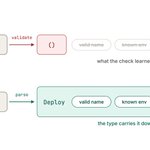
Validation checks a value and often throws away what it learned.
Parsing returns a type that keeps those guarantees.
I wrote about what "Parse, Don't Validate" looks like in Rust: newtypes, parsing at the boundary, the shotgun parsing antipattern, a serde constructor trap, and why it matters even more with coding agents.
rdiachenko.com/posts/rust/pa…

2
186
Docker's sbx allows to run AI coding agents inside a microVM with its own kernel, an outbound proxy, and credentials held on the host.
That makes --dangerously-skip-permissions safer to use.
1
164
Tried it with Claude Code and wrote a til rdiachenko.com/til/docker/sb…

151
Discovered VHS, which records terminal sessions from a script. Instead of screen recording and trimming, you write a .tape file that describes what to type, and VHS renders it into a GIF, MP4, or WebM with consistent timing and clean output.
rdiachenko.com/til/terminal/…
150
After upgrading from Postgres 16 to 18, every time I recreated my Docker container, the database started fresh. No errors, no warnings. Just `initdb` running on every startup, as if the named volume didn’t exist. The same setup worked fine with Postgres 16.
rdiachenko.com/posts/databas…

84
Claude Code supports a customizable status line at the bottom of the terminal. It's empty by default, but you can point it to a shell script.
rdiachenko.com/til/claude-co…

1
98
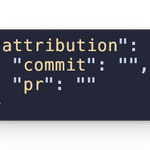
Claude Code adds a Co-Authored-By trailer to every commit and attribution text to PR descriptions by default. If you want clean commits without the co-author line, add this to your ~/.claude/settings.json:

84
If your Mac is randomly low on disk space and you use Claude Code, check /private/tmp/claude-*. Mine had a 324 GB surprise.
rdiachenko.com/posts/trouble…

76
24 books in 2025. 12 worth talking about. From logic and Rust to Dostoevsky and nutrition.
rdiachenko.com/posts/books/y…

96
50 days ago I tried to understand LLMs by reading papers and blog posts. I could follow the code, but the math made no sense. So I went back to the basics: logic and linear algebra. Now, 50 days later, I finally feel like I've started in the right place.
I wrote about the journey so far:
rdiachenko.com/posts/math/50…

2
127
Learning of the day: When you add data validation to code, run it against existing data and fix discovered data issues right away. Otherwise, you may end up with tons of issues during data migrations.
1
168
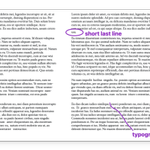
Nice read on web typography webkit.org/blog/16547/better…. Especially relevant if you have a blog or write online.
I had never really thought about these typography issues, but fixing them can noticeably improve readability:
1. Short last lines. Sometimes the last line of a paragraph ends up with just one word. This creates extra space between paragraphs, making it look inconsistent with the rest of the spacing.
2. Too many hyphens in a row. When several lines in a paragraph end with a hyphen, it adds some cognitive load. The paragraph becomes harder to read smoothly.
3. Bad rag. When the ends of lines vary too much in length, they create a zig-zag pattern or a ragged edge. It makes the text less visually balanced and harder to follow.
4. Typographic rivers. Uneven spacing between words can accidentally form vertical paths of whitespace across a paragraph. These “rivers” pull your eyes in the wrong direction and break reading flow.

193
A story of how I brought my Synology NAS back to life after a strange network issue.
rdiachenko.com/posts/trouble…

3
210