

PhD researcher at CEU, Political theory, Visiting McGill; Volunteer at @Langsikt_ ; Utilitarian; Hungarian and Norwegian; retweets are not endorsements
Montreal
Joined April 2020
- Tweets5.3K
- Following697
- Followers722
- Likes18.1K







Albert Didriksen 🔸 retweeted

New paper: Inter-AI Morality: How AI Systems Treat One Another
Most work on AI and morality asks how AI should treat us, or how we should treat AI. But AI systems increasingly deal with each other. 🧵
With Caspar Kaiser, @atcarterallen, and @jeffrsebo

Albert Didriksen 🔸 retweeted

Thrilled to be releasing “Inter-AI Morality,” a new empirical research agenda with @LuciusCaviola, Caspar Kaiser, and @atcarterallen on how AI systems perceive and treat each other. We release it alongside “Welfare Regard in Multi-Agent Systems,” an early study in this emerging field by @sandcassel_, @arianaazarbal, and @anna_soligo at @AnthropicAI on whether AI models treat each other in a manner consistent with concern for welfare.
AI systems increasingly interact with each other. They cooperate with, compete with, and sometimes even create, modify, or terminate each other. Inter-AI morality is the study of how AI systems perceive and treat each other, as well as how they ought to do so. It draws from a wide range of existing fields that study similar questions regarding humans and other animals, while attending to ways that AI systems differ from these familiar cases.
Our research agenda organizes empirical questions in this field into three categories. The moral process category concerns how individual AI systems interact with each other. The social scale category concerns how these patterns change across dyads, groups, organizations, and populations. And the moral change category concerns how these patterns develop through training, selection, social learning, self-modification, and other processes.
The concurrent paper by Cassel et al. provides an early study by examining how five AI models treat other models. Claude showed the most apparent welfare regard on average, though results varied by setting. For example, Claude was the most likely to refuse or add protections to experiments that might harm other models, whereas Grok was the most willing to give up its own queued jobs so that another model could access computing resources.
This research matters for AI safety and alignment. How AI systems perceive and treat each other affects humans and other animals, and there could be serious risks either way. If AI systems coordinate, then they could more easily collude against us. If they compete, then we could be caught in the crossfire. We need empirical research about how AI systems treat each other and why, and normative research about what would be best for us.
This research could also matter for AI welfare, independently of AI safety. In the future, most interactions involving AI systems could be between AI systems. If AI systems have a realistic chance of being welfare subjects, then these interactions could be a major source of potential benefits or harms. Ideally, this research can inform AI development now, so that AI societies can support co-beneficial human-AI relations when the stakes are higher.
Our next task is to develop a normative research agenda for this field. In the meantime, we look forward to seeing other work as the field develops.
Our paper on inter-AI morality: digitalminds.cam/inter-ai-mo…
Anthropic’s blog post on Cassel et al: alignment.anthropic.com/2026…
Upcoming @nonhumanminds webinar with me, Lucius, and Caspar: nonhumanminds.org/event/inte…


Albert Didriksen 🔸 retweeted

CMEP researcher Toni Sims writes about AI consciousness in today's @nytimes!
Speculation and intuition alone cannot settle whether AI systems are conscious. We need rigorous, multidisciplinary research to assess the evidence and navigate the risks.
nytimes.com/2026/11/01/opini…

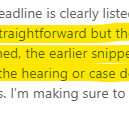
Such a lame headline for an otherwise interesting survey!

More than half of the men surveyed in a new Harvard report claimed to recognize AI leaders who were, in fact, totally fictional. wired.com/story/men-cant-sto…

Popular opinion: There is at least one person who enjoys the taste of beer.

Unpopular opinion; No one - literally not a soul - actually enjoys the taste of beer. Not a single human. Those who claim to enjoy beer, don’t actually. It’s really just a social ritual, a form of self deception… the impact of decades of stacked marketing to convince you that beer is anything but an alcohol delivery mechanism. You can enjoy getting sloshed. You can enjoy the social liberation that alcohol offers. You can enjoy the party. But don’t act like you actually like the taste of beer. You don’t. You might think you do. But you don’t. Because it tastes like it looks: bitter dehydrated piss, with bubbles. In the case of Guinness, like diarrhea, with bubbles. And you know it.

Albert Didriksen 🔸 retweeted

I do not understand people who's reaction to 'dont abuse claude' is outrage
Like what the fuck are you guys using ai for I use it to find emails not horrific sadism
I do think that the best PR move OpenAI could do rn is to repay all student debt incurred by the math students of the world.
Albert Didriksen 🔸 retweeted

This is the first time in my life where I have been truly stumped when it comes to ascertaining the optimal move.
I truly have no idea. All paths seem to terminate almost instantaneously. I have never been faced with a scenario even remotely analogous to this.

Albert Didriksen 🔸 retweeted

i cannot wrap my fucking head around this.
“the average result used the equivalent compute of roughly three hours of chatgpt pro thinking.”
THREE HOURS!!!!????!!
we’re talking about mathematical problems that humans have spent years or decades thinking about.
i don’t think we’re remotely prepared for the scaling implications here.
Albert Didriksen 🔸 retweeted

EAs put on this strange performance where they pretend there are a bunch of insane bullet biting utilitarians running around the community whose influence we need to moderate, when in reality there are literally only two and we put one in jail and the other one in a PhD program

"Effective altruism is directionally correct, even if you should not follow its recommendations all the way."
@tylercowen self-recommending as usual
thefp.com/p/in-defense-of-ef…

Albert Didriksen 🔸 retweeted
We’ve often been asked why @LeverhulmeCFI has AI Ethics Master’s programs but no PhD. Short answer: setup takes a lot of work.
But I'm proud to report our PhD in AI & Society is finally here! Ethics, law, governance and more. Apply here for October 2027!
postgraduate.study.cam.ac.uk…
Albert Didriksen 🔸 retweeted

AI is a domain where just relying on common sense and intuitions really doesn’t tend to pay off. Now that AI sentience has come up in the Discourse, everyone is rushing to assure us on how this is all intuitively foolish w/o actually thinking deeply about any of this. Do better.
Albert Didriksen 🔸 retweeted

Here are the first 4 problems on 80000 Hour's most pressing problem page in Dec 2019 web.archive.org/web/20191224…

So, does ManCity being guilty mean Van Dijk retrospectively wins the 2019 Ballon d'Or? Portugal retrospectively winning Euro 2020, as Ronaldo isn't too stressed about being behind Messi? Italy retrospectively qualifying for the last two World Cups, as they avoid the Euros curse?
Albert Didriksen 🔸 retweeted

64 goals in 56 games for Norway
Quarterfinals at the World Cup
Two titles - over 50 goals every season
Best candidate for Ballon d'Or:
@Erling

Albert Didriksen 🔸 retweeted

Haaland isn't even campaigning for the Ballon d'Or, despite holding records strikers can only dream of. He's breaking them left, right and centre. What do you mean he's scored 63 goals in 56 Norway appearances? 28 in 16 competitive internationals? Haaland is judged by Haaland standards. There are no superlatives left to describe him