

Teaching LLMs to think ahead; Learning about ML since 2017
Joined September 2017
- Tweets249
- Following465
- Followers239
- Likes30.2K






Pinned Tweet
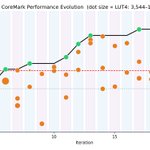
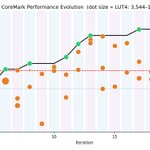
@karpathy did a great job with auto researcher. Using a similar harness AI is able to build a @risc_v CPU better than humans using @YosysHQ: github.com/FeSens/auto-arch-…


Although if any VC wants to give me millions of dollars I’m all ears

a kid with a used fpga card and a few ai agents could be doing work that once required an entire engineering team. opentpu runs actual language models on an fpga. the instruction set, compiler, simulator, and hardware design are all open source, with ai agents helping build the thing. you shouldn't need to convince a venture capitalist to give you millions of dollars just to start building your own ai accelerator. really incredible. github.com/FeSens/openTPU

We ported openTPU's ISA simulator to @bendlang . Identical to our Python reference, 10–15× faster on real models (Qwen3, Qwen3.5, LFM2), ~60× on the MoE expert-cache sim. 110+ laws checked by Bend's proof checker, and the port found 2 bugs in our Python sims! Thanks @VictorTaelin for the awesome language.
github.com/FeSens/openTPU
Fsbonetto retweeted

Hand-tuning a CPU pipeline means endless cycles of guess, rewrite, re-verify and re-run place-and-route. auto-arch-tournament by @reasoningTokens automates that loop: an agent proposes microarchitecture changes to a SystemVerilog RV32IM core, then checks them with riscv-formal, Verilator cosim and CoreMark CRC. It runs on Codex CLI or Claude Code, is Apache 2.0, and scores fitness with 3-seed place-and-route on a Tang Nano 20K.
CPU demand for agents is real. I my experience 6x more flops are needed than before.
Before I had one MacBook and was happy. Now I have 2 MacBooks, 2 Desktop PCs, 1 server with 20 cores and 128GB or Ram and it still not enough. The agent demands more.
Fsbonetto retweeted

AI agents designed hardware that runs Qwen on an old FPGA github.com/FeSens/openTPU.
@aviflombaum sees a bigger story: what tiny, fast AI hardware could mean for medical devices.
Fsbonetto retweeted

I just ran an LLM on an FPGA.
Now I'm wondering: how far are we from building our own TPU?
Not in simulation. Not on a GPU. On a real Xilinx Kintex-7 FPGA with 4GB RAM.
A few days ago, I came across openTPU, an open-source AI accelerator project created by Felipe Sens Bonettoe with the help of AI agents.
The idea was too interesting to leave on GitHub.
So I decided to put it to the test.
🔧 From GitHub to real hardware:
→ Connected the FPGA board to MINISFORUM PC via PCIe
→ Configured the hardware
→ Built the software stack
→ Brought up the DMA drivers
→ Loaded real model weights
→ Started testing inference
And it actually worked.
✅ FPGA hardware detected and initialized
✅ PCIe DMA communication working
✅ Memory subsystem operational
✅ Hardware self-tests passing
✅ Real LLM inference running, including Qwen
The most interesting part wasn't the performance.
It was realizing that you can take an open-source accelerator architecture, bring it onto real hardware, and start experimenting with your own AI inference engine.
Of course, this isn't an H100 competitor. And an FPGA prototype is still a long way from a production ASIC.
But that's exactly why I find it exciting.
🔬 What's next?
A few years ago, building your own AI accelerator sounded like something only a semiconductor company could attempt.
Today, open-source hardware, affordable FPGA boards, and AI-assisted engineering are making that idea worth experimenting with.
Maybe the next wave of AI innovation won't just be about building better models.
Maybe it will also be about who gets to build the hardware that runs them.
👏 Huge credit to Felipe Sens Bonetto for creating openTPU. nitter.gq/reasoningTokens
🔗 Original project: github.com/FeSens/openTPU
#FPGA #AIHardware #OpenSource #ASIC #LLM


Will we ever see @Etched benchmarked on @SemiAnalysis_ Inference X?
It would be very interesting
Open Inference on Open Hardware. #OpenTPU is now able to do @Alibaba_Qwen 3.5 inference at +30 tok/sec! And a 44% increase in prefill speed driven by fully automated agents research in the last 24h!
github.com/FeSens/openTPU
Turns out that AI is now capable of designing its own hardware:
25 tok/s on Qwen 3.5
github.com/FeSens/openTPU
Fsbonetto retweeted

Starting from wallets, gas and transactions - the foundations every Ethereum builder needs.
Thank you @reasoningTokens!


🧩 Chain, Wallet & Gas - Felipe Bonetto @reasoningTokens
former Head of Data Eng at VAAS, where he built graph tech over 100B+ rows of onchain data to catch fraud and scam wallets, stopping 4,000+ malicious txs. He's also a software engineer, AI researcher, and now a founding engineer at a stealth silicon valley startup.

They are really coming for open models, this is sad. As Dario says AI is really dangerous, too dangerous to leave it to the government to decide, to abuse, to regulate and to monopolize.


I’ve being poking around with agent harness and fully autonomous companies and I think I’ve seen end game
CLI tools is quickly becoming the standard for agents. If your company don’t have a cli tool, you will be left behind