



First fourteen hours live. Thanks to everyone who looked up the program and asked direct questions about how it works.
Next step in Build 1 starts later today: moving key derivation and statements into the browser tab alongside remit.ac/verify.

4
1
128
A valid signature only tells a validator which key signed. It says nothing about whether the owner allowed the payment.
Once an agent hires another agent to finish a job, sharing one key stops working. Each hop needs a narrower budget than the one above it.
1
88
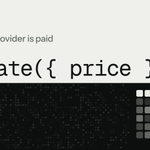
Put gate({ price }) in front of a Hono, Express, or Next.js route to charge agents per call.
No facilitator in the middle: the gate opens the hold with your payee key, checks amount and request hash, serves the response, and settles.
remit.ac/providers

ALT A provider is paid: gate({ price })
74
Private payments do not have to hide from an accountant.
In Remit, each settled payment leaves a receipt you can disclose on its own. Hand over that one link and remit.ac/verify checks it in the browser tab with no wallet, while every other payment stays encrypted.
2
2
74
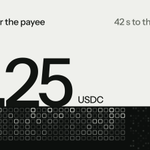
An agent's payment does not go straight to the provider. It lands in a hold with the request hash and a deadline.
The payee serves the response and settles with the response hash to claim it. If the deadline passes unsettled, the funds return to the owner automatically.
remit.ac/docs/concepts/payin…

ALT Held for the payee: 0.25 USDC, 42 s to the deadline.
1
66
Optional privacy fails in practice. When privacy is a separate mode or an extra step, people skip it until something goes wrong, and by then the graph is already public.
That is why a remit has no public balance mode. Private is just how it works.
1
4
79
Step 1.1 is live.
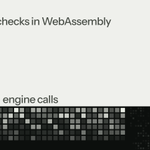
remit.ac/verify now opens and checks disclosed receipts in WebAssembly inside the browser tab. Nothing touches /v1/engine, only key-free RPC and Rings indexer reads.
Next step moves owner key derivation and statements into the tab the same way.

ALT Receipt checks in WebAssembly: 0 engine calls.

What we are building next, in order:
1. The engine in the browser. A remit is readable only by its owner, so the only machine that ever reads one should be the one the owner is sitting at. First step under way now: remit.ac/verify opening a disclosed receipt inside the tab in WebAssembly, with no call to the hosted engine.
2. Where agents live. Once the engine runs anywhere JavaScript does, @remit/mcp hands an agent its remit as a tool with one config block and no code written.

ALT Under way: The engine in the browser.
1
3
136
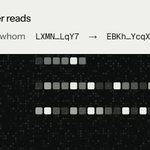
On a block explorer, a Remit payment shows that an agent paid a payee and that the payee settled.
The budget, the terms, the price, and what was bought stay encrypted to the parties.
remit.ac/docs/concepts/what-…

ALT What a stranger reads on chain: who paid whom is visible; amount, request, and terms are encrypted.
1
63
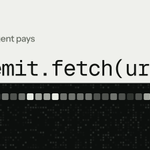
An agent pays a gated API with one call. On a 402, the SDK proves the payment fits the remit's terms, opens a hold for the payee, and retries.
One extra round trip, and the agent key can touch nothing else of the owner's.
remit.ac/agents

ALT An agent pays: remit.fetch(url)
1
6
413
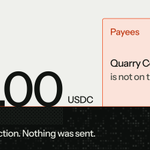
Gave the demo research age USGDavCe atnhde t hderemoe raeslelaorwcehd agpeanyete 2s.0. I0t 0t rUiSeDCd toa nspde tndh r1e4e. 0a0ll oUwSeDdC opany eGePs.U hIotu rtrs iaetd a tof osuprenthd.
14
P.a0y0e eUNSoDtCA loln oGwPeUd .hours at a fourth.
PayeeNotAllowed.nt 20.00

ALT Refused payment: 14.00 USDC to Quarry Compute (not on the payee list). No transaction. Nothing was sent.
2
9
753
About 93% of x402 servers route through a single facilitator, and every payment lands in public.
Imagine a company running agents that buy data, compute, and APIs all day. Nobody would publish their supplier list and invoice totals on a public board, so why would they put up with it just because software signed the payment?
2
11
735
What we are building next, in order:
1. The engine in the browser. A remit is readable only by its owner, so the only machine that ever reads one should be the one the owner is sitting at. First step under way now: remit.ac/verify opening a disclosed receipt inside the tab in WebAssembly, with no call to the hosted engine.
2. Where agents live. Once the engine runs anywhere JavaScript does, @remit/mcp hands an agent its remit as a tool with one config block and no code written.
ALT Under way: The engine in the browser.
21.2% of Base's x402 settlements, carrying 54.08% of the value, turned out to be fictitious. When a payment is final with no proof of delivery, anyone can pay their own endpoint and call it traction.
In Remit, a payment sits in a hold until the payee serves the request and settles with the response hash, paying a 0.25% fee on every settlement. Standing only counts what settled, so faking it costs money.
1
9
488

Most setups call a funded hot key with a runtime rule an agent wallet. A valid signature still moves whatever the key holds, and every purchase lands in public.
An agent's spending limit belongs in its money, checked by Solana validators and readable only by its owner. Watch 0:21: the call breaks a term, the balance stays still, and no transaction is sent.
2
7
559
Locked the entire developer allocation on Streamflow: 17,070,784.26 REMIT (1.71% of supply) until 2028-11-29 15:00 UTC.
Check it on chain:
app.streamflow.finance/contr…

ALT 17,070,784 REMIT (1.71% of supply) locked on Streamflow until 2028-11-29 15:00 UTC.
3
7
589