

The Resolution Foundation is an independent think-tank dedicated to lifting living standards in the UK.
- Tweets54.1K
- Following2.7K
- Followers67.8K
- Likes266





ALT Titled "1: the crisis never really ended", with a photo of a household energy bill showing £366.85. Text: wholesale gas prices have climbed back towards their crisis highs, and there is a real risk of another spike in early 2027. Last time, in 2022, the Government provided universal support costing £44 billion, with the richer half of households getting more than half the benefit.

ALT Titled "2: The benefit system doesn't capture everyone who needs help", with a thermometer and snowflake icon. Text: basing eligibility for support on receipt of means-tested benefits would only reach around 1 in 4 households, missing most of the poorest half. And it isn't only the very poorest who struggle: in 2022-23, almost two-in-ten of the second-poorest fifth of households couldn't afford to keep their home warm.

ALT Titled "3: There's a smarter way to target help", with a thermometer icon and a photo of a crowd on a street. Text: we should instead base eligibility on the income of the highest earner in a household. A £24,000 threshold would reach around two-in-five households, and 75 per cent of the poorest four deciles, nearly as well as using total household income but far simpler to run.

ALT Titled "4: Not perfect, but ready for winter", with a photo of snow-covered terraced houses with a For Sale sign, a January calendar icon, and a photo of a crowd. Text: it comes with trade-offs, favouring pensioners, and around 490,000 working-age families with children would miss out. But a £2 billion scheme could give £175 to each eligible household. The Government should start building its support now, so it is ready this winter.

ALT Chart showing average gap between private rents and Local Housing Allowance, as a proportion of the LHA rate: Great Britain, April 2012 to September 2026

ALT Chart showing proportion of working-age adults in private-renting families on housing support who are materially deprived, and who cannot afford selected essentials: GB, 2024-25

ALT chart showing Proportion of PIP recipients aged 16-64 who report that PIP enables them to undertake various activities: England and Wales, May-June 2026

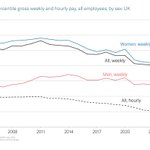
ALT Chart showing ration of 90th to 10th percentile gross weekly and hourly pay, all employees, by sex: UK

ALT Chart showing number of paid employees according to real-time PAYE data: UK

ALT Chart showing price per litre of road fuels: UK

ALT Chart showing proportion of PIP recipients aged 16-64 who report the top ten most common conditions, by age band: England and Wales, May-June 2026

ALT quote graphic Nye Cominetti, Principal Economist at the Resolution Foundation, said: “Low hourly pay in the UK has stopped falling for the first time in over a decade. This is the result of the minimum wage moving to a ‘hold steady’ phase after years of being ramped up. It remains the case however that the share of workers on low pay is vastly lower than it was a decade ago. “Today’s data may have implications for next year’s minimum wage. With hourly pay growth surprising on the upside, the minimum wage next year may be significantly higher than the forecast of £13.18 published by the LBC back in April. However, the LPC now have more wiggle room on setting minimum wage rates, so the final number will come down to their judgement.”

ALT CHart showing Nominal main rate of Fuel Duty per litre, by policy scenario: UK

ALT Chart showing Historical and forecast annualised default tariff cap levels, direct debit customers with typical consumption

ALT Chart showing Shortfall in receipts relative to Spring Forecast due to estimated lower net migration: UK

ALT quote graphic Hannah Aldridge, Senior Research and Policy Analyst at the Resolution Foundation, said: “The affordability gap between the 30th percentile rent level and Local Housing Allowance has now reached a record high. Without urgent government action this gap will keep growing and pushing down on the living standards of low-income families in the private rented sector. “John Healey’s first Budget next week is an opportunity to fix this once and for all by committing to automatically linking LHA to private rent levels each year. “Previous Resolution Foundation analysis suggests re-linking LHA would primarily benefit tenants, not landlords. And with rising energy bills bringing the cost of living back into focus, now is the right time to give hard-pressed households reassurance on future rent support.

ALT chart showing Proportion of PIP recipients aged 16-64 who report that PIP enables them to undertake various activities: England and Wales, May-June 2026

ALT chart showing Average change in annual household income (after housing costs) as a result of unfreezing LHA and increasing the UC taper (2026-27 prices), by income vigintile: UK, 2029-30

ALT Event graphic Fixing broken labour markets What can the UK and US learn from each other? UK launch event for The Wage Standard by Professor Arin Dube Thursday 22 October 2026 4:00 pm - 5:00 pm