

Finance | History | Trance patreon https://xitter.cf/t.co/xgWIKaKCFk?…
Joined February 2013
- Tweets103K
- Following401
- Followers18.7K
- Likes14.8K



Pinned Tweet
Wage Labour on the Pre-colonial Gold Coast (Ghana) in Global Perspective. c. 1600-1900.
patreon.com/isaacsamuel64/po…


Digital clues point to Meretneith as Egypt's female king, 5,000 years ago
phys.org/news/2026-09-year-r…

Study finds Levantine ivory, c. 1600 to 600 BCE, came from Africa through Nubian trade, not Egypt
archaeologymag.com/2025/10/l…


isaac Samuel retweeted

The way this is so true 😹😹 you can make up the craziest fanfic about Africa and everyone will believe it in a heart beat.

Technically, yes
But the more common claim is that Africa has "no" navigable rivers, or "lacks" navigable rivers, not that "some" sections of its rivers aren't navigable
There's usually a surprising lack of nuance in most discussions of Africa, eg in economic history papers


Even colonialists knew the Congo had navigable rivers; it's half the reason why they occupied it
The problem is that anyone can make up a nonsense claim about Africa, and people will believe it
A lie can travel halfway around the world while the truth is still putting on its shoes


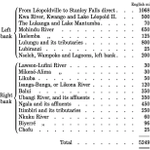
The Congo basin contains an estimated 8,400 kilometres (5,249 miles) of navigable rivers.

Navigating the Congo River: Ancient Towns, Societies and Trade in Central Africa.
africanhistoryextra.com/p/na…

The Congo Basin had some of the most unique forms of indigenous proto-urbanism
featuring near-grid-like settlement patterns; straight streets over 40ft wide, and square houses built in parallel lines


Ancient Towns, Societies and Trade in Central Africa
africanhistoryextra.com/p/na…
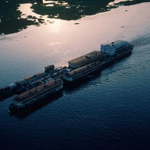
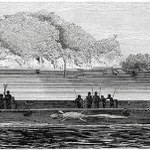
Barge on the Congo River.
africanhistoryextra.com/p/na…

Navigating the Congo River: Ancient Towns, Societies and Trade in Central Africa.
africanhistoryextra.com/p/na…
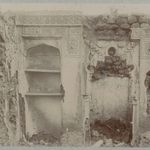
Ruins of a mosque in Isangi, eastern D.R.Congo, ca. 1894.

Navigating the Congo River: Ancient Towns, Societies and Trade in Central Africa.
africanhistoryextra.com/p/na…
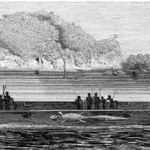
freight canoes and navies on the upper Congo River


Navigating the Congo River: Ancient Towns, Societies and Trade in Central Africa.
africanhistoryextra.com/p/na…
sail boats on the Congo River


Navigating the Congo River: Ancient Towns, Societies and Trade in Central Africa.
africanhistoryextra.com/p/na…
navigable routes in the Congo River basin

Navigating the Congo River: Ancient Towns, Societies and Trade in Central Africa.
africanhistoryextra.com/p/na…
Stanley encountered African boatmen navigating the Congo River and its tributaries, many of whom guided his expedition.
The explorer managed to purchase, and in other cases, outright steal, dozens of large canoes for his journey
africanhistoryextra.com/p/na…
The Congo River remains a vital waterway and tourist attraction.
The River network functions as the primary “highway system” for moving people and heavy goods from the interior forests and mines to global markets.
africanhistoryextra.com/p/na…
Wage labour existed in pre-colonial Africa, contrary to popular claims that work was performed almost exclusively within the household or through slave labour.
The History of Wage Labour on the Pre-colonial Gold Coast is the subject of my latest Patreon Article;
⤵️
patreon.com/isaacsamuel64/po…
