

@withpersona Co-founder and CEO
San Francisco, CA
Joined June 2019
- Tweets440
- Following176
- Followers1.9K
- Likes1K






Pinned Tweet
With how quickly fraud is evolving due to AI, online identity now collects more data than ever. Privacy feels like an inevitable sacrifice.
We don’t believe it has to be, so we built Relay.
Relay verifies you are human, but keeps your activity private.
Persona never sees who you share this proof with or what you’re doing online, and the website you’re trying to verify with never sees any of your personal information.
Identity and privacy don’t have to be a tradeoff.


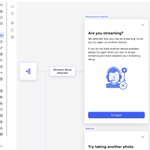
Hey @ludwigahgren, Rick, CEO of @withpersona here.
Saw a clip of you having some issues with the age verification flow for Roblox using Persona.
You passed the age check, but got caught on the fraud check as we flagged your streamer setup as an attempted deepfake. Our detection model is particularly sensitive to public figures given how often they're deepfaked. Will work with folks at Roblox to get this resolved.
Also been a Ludbud since the 30 day subathon, so it was a bummer to see you use our product and get flagged as fraud. If you are ever looking for sponsors for Melee, please let me know (I main Sheik).


3 of the worst parts of the internet: Slop, deceptive bots, and polarization.
Right now, I feel we are in Slop Town.
I estimate that 70%-80% of internet engagement and content right now is auto-generated. Engagement is manufactured. Discourse is polarized. Right now, we are not in a golden age of the internet.
To fix this, we need to take identity seriously.
Verify you're you, share less.
You shouldn't have to hand over your entire identity just to prove one thing about yourself.
We've gotten used to sharing far more personal information than necessary online.
Our work with @Ledger is a step toward changing that, giving people more control over what they reveal and what stays private.

Proof of You™: prove you are who you say you are without handing over your ID document.
With our partner @withpersona on Ledger Atom, you’ll prove facts about yourself; that you’re over eighteen, a real human, and other verified details of who you are, without ever revealing more than you need to.
Rick Song retweeted

we’ve worked on deep technical problems in identity and computer vision since day one. this year, our research landed at CVPR; and our work with @UBuffalo produced an open taxonomy of selfie fraud. as AI blurs who's real online, here's why shared research matters more than ever:
research.withpersona.com/the…

Some of the work I'm most excited about at @withpersona comes from our research team.
Over the past year, @iamcharbles and the team have made some big strides: they’ve had a paper accepted to the main conference at CVPR, and successfully built an open taxonomy of selfie fraud with the @UBuffalo for others to build on.
We’ve loved partnering with researchers who push this field forward for everyone. To support more of that work, we’re offering grants of up to $100K for university researchers working on privacy, fraud, and accessible identity.
If that’s you or someone you know, I'd love to hear from you!
More info here: withpersona.com/research/per…
The reason identity became such a big online conversation is actually pretty simple: everything moved online.
You used to have to physically show up to prove who you were, drive to the bank, walk into the restaurant, stand in line at the box office… All of it required your actual self to be somewhere.
Now none of those key moments of verification require you to leave your couch (or your bed). Identity just had to catch up to where the interaction moved.

Rick Song retweeted
single photo -> controllable 3d model, with rigged head and neck too. specifying computer vision and computer graphics terms in prompts seems really effective
(none of these people are real, except for me obv)
There’s a lot of talk about AI safety and not enough about AI accessibility.
There's so much talk about p(doom), AI hacking into everything, and the end of the world.
But for the average person, I think a much more immediate anxiety is the feeling of being left behind.
They hear that AI is transforming everything, try it themselves, watch an agent fail to buy their groceries, and wonder, "What am I missing?"
It creates this strange gap where people are constantly told AI is incredibly powerful, but don’t experience that power themselves. It feels like everyone else has access to some incredible technology that they somehow missed.
Safety matters, but I wish there was more discussion about how we can build things to make sure everyone can actually benefit from AI.
We pointed Opus 5.5 at one of our research codebases and told it to visualize how it works.
If you ever wonder how @withpersona thinks about deepfakes and fraud, here's a sneak peek at what's happening under the hood.

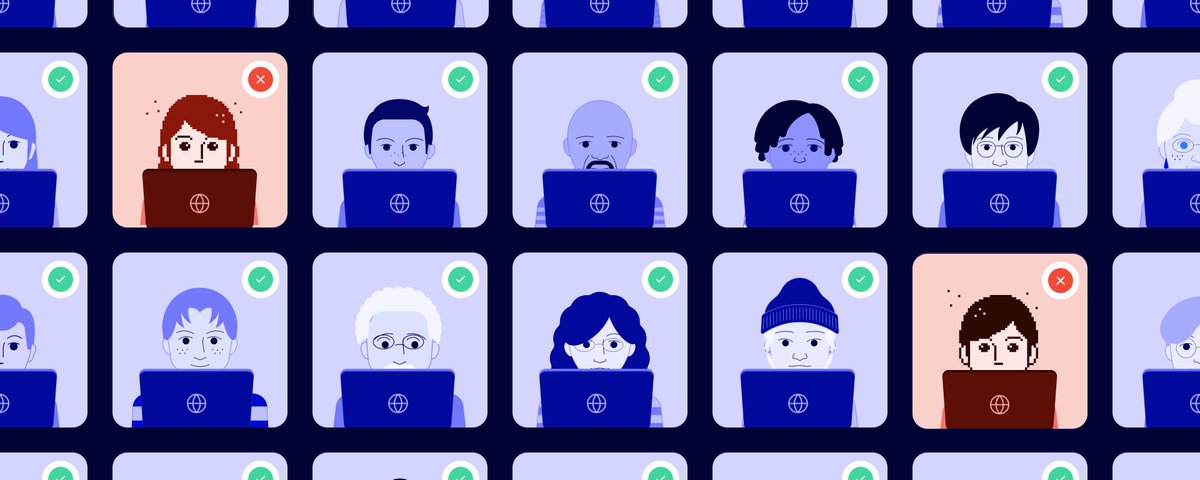
i asked opus 5.5 to create a website that explains our taxonomy for selfie fraud, then convert that into a video that highlights its research contributions.
we use this taxonomy for prioritization, design, and evaluation of our fraud models. crazy how it interpolated our paper into motion graphics that specifically convey the design intent of our system.
(shout out to our collaborators at SUNY Buffalo; also, none of these people are real)
The internet needs proof of humanness more than ever. We have a unique opportunity to build it with privacy at the core.
As bots become harder to stop and identity theft grows more sophisticated, platforms increasingly need stronger ways to verify who’s real. But stronger verification shouldn’t have to mean collecting more personal data.
We should be asking not just what data is needed, but also what data isn’t.
That’s what the team at @withpersona is working toward with Relay.
Relay uses Privacy Pass, an open IETF standard, to let organizations verify claims like humanness or age without learning your identity, all while preserving the best-in-class accuracy of Persona’s platform.
Proud of the team for the work on this one. Excited to see where it goes
Sometimes, the answer is less data, not more.
That's the whole idea behind Relay: double-blind assurance built on Privacy Pass, an open @ietf standard.
Technical deep dive for those who want to see for themselves → withpersona.com/blog/relay-u…

Our team at @withpersona has spent years working on human verification.
We've built one of the most robust systems to prove humanness, but as identity becomes ever more critical, we need to rethink how it works.
The future shouldn't be scanning your face multiple times a day to use the internet.
There’s still a lot of work for us to do here, but we are excited for what's next.

Bot detection & human verification will be one of the most urgent demands for businesses over the coming years. Agent swarms will suffocate every website and form; small companies and government websites are most vulnerable.
There is a huge gap in the market for this right now. When we looked at what offerings were in the market to use at X, there was not a single company that brought together all the latest technologies so we had to do it all in-house.
Our team at @withpersona has learned a lot about identity fraud from our work helping stop some of the most sophisticated fraud attacks.
Really excited about about the work they're doing with @UBuffalo researchers to map the landscape and create an interactive resource and open dataset that everyone can use to improve our collective efforts to protect people from identity theft and fraud.
I recently wrote about how identity attacks are changing. This is one way we're turning what we see in the real world into something researchers and fraud teams can study, test against, and build on.
The Hugging Face dataset gives researchers synthetic and recreated examples of real-world attacks to train and test models, based entirely on patterns we've encountered in the wild.
Really proud of the @withpersona Research team, @iamcharbles, Saatvik Billa, Hongkai Pan
We’re releasing a new benchmark for evaluating selfie fraud and face anti-spoofing systems.
Developed by researchers at Persona and the @UBuffalo, the benchmark provides a shared taxonomy and evaluation framework for selfie fraud, grounded in real-world attack patterns encountered across 1B+ identity verifications.
It includes:
—> 27 selfie attack techniques, mapped from source material to final submission
—> 3,800+ examples of selfies organized by medium, category, and attack type
—> An interactive tool for deconstructing how fraudsters create individual attacks
—> A synthetic and recreated dataset on Hugging Face for researchers to test and train models
Explore the benchmark: threats.withpersona.com/matr…
Dataset: huggingface.co/datasets/with…

It’s been a rough few years for identity.
Over 150 million driver's licenses were leaked last week. Tech improvements mean you can now use deepfakes to impersonate anyone or create a whole fake personality to publish content under.
The volume and scale of identity theft is going to break the internet. It’s already starting to, and we’re seeing the signs of it every day here at Persona.
It no longer matters if a person exists anymore. Scammers can borrow a new 'real identity' every minute and never run out. All this raises a big question: what does it actually even mean to be you online today?
Growing up, the internet felt magical. I spent most of my free time playing online games and in chat rooms. I made friends, got flamed, trolled, and cooked plenty. But the magic remained intact, because everyone felt like a real person.
There’s a deep nostalgia for that old internet, when a stranger could become a real friend even if you never met IRL.
Now, that anonymity has faded, and it’s become harder to know who or what to trust. Strangers feel like potential scammers, grudges like engagement bait, and viral videos like marketing hoaxes.
Everything feels fake. Fake stories, fake products, fake people. Even when it’s not fake, the concern that it might be changes how we all interact with the content.
So what changed?
Identity has been flipped on its head. Back then, you were often interacting with fake identities, but real people. Now, we spend our time online looking at real identities, operated by fake people.
At Persona, we think of identity as the front door. Fake accounts, transactions, products, and stories often start with the same problem: a person pretending to be someone they’re not.
And at the same time, being fake has become much more valuable. Stealing an identity used to mean opening a bank account or taking out a loan under someone else’s name. Now, it also means shaping public opinion, influencing policy, moving the stock market, and manipulating prediction market outcomes.
But nothing has really changed about the way we verify people.
Most systems still ask you to show an ID, scan your face, and prove yourself from scratch, over and over again. These methods are exhausting, outdated, and often require sharing more information than necessary.
You shouldn’t have to repeatedly hand over sensitive information to prove you’re real. The internet depends on people being able to connect and participate without fearing that everyone on the other side is trying to take advantage of you.
We believe your verified identity should be something that you build upon and carry with you, not remade from scratch with all your raw data every time you need to interact online. Most importantly, you should have control over what gets shared and what can be carried portably from one interaction to another.
That’s the shift we’re investing in at Persona and where you’ll continue to hear from me, for both our business and the internet as a whole.