

✦ 願我們都能活成一座島,有海,有風,有光,有屬於自己的文明
Joined June 2010
- Tweets3.1K
- Following114
- Followers159
- Likes2.7K







Rooftop 10 retweeted

This is a diagnosis of a condition that started in my body over 20 years ago. Had I not taken care of my body during the past few years, it would be a lot worse. Health issues will always pop up, no matter how healthy one is. The best thing is to get diagnosis early. Full story:

Bad news #1:
I have an autoimmune disease. My stomach is eating itself.
Bad news #2:
2–5% of people have this, too. Likely more, because it hides.
Good news:
I'm going to try and solve it. Will share all.
As a kid, I ate sugar cereal, drank sugary soda, and gobbled down fast food. I had a few healthy years in my early 20s but then became a young father of three and began building a business.
Juggling that stress and grind, I let my health slip and gained 40 lbs. Within a few years I’d fallen into a deep, chronic depression.
Somewhere in that timeline, my body began developing an autoimmune process affecting my thyroid and then my stomach lining.
It’s called Autoimmune Gastritis (AIG).
My hypothyroidism got diagnosed when I was 21 years old with a routine blood draw. That enabled me to begin proactive management, supplementing levothyroxine and Armour Thyroid. They are the hormones my body should be producing on its own but wasn’t.
By taking these pills daily, my body was able to operate as though my thyroid was functioning properly. What I didn’t know was that something else was going on inside my body: my stomach had begun attacking itself. But there was no routine test to find out and I didn’t have any symptoms.
I just discovered it in May. I'm unsure how long I've had it. AIG causes irreversible damage: nutritional deficiency, anemia, and over a long horizon, elevated cancer risk. When AIG is discovered today, standard medical care concedes defeat, stating that nothing can be done except managing the condition, no matter how awful or lethal the effects.
Looking back over the past few years, I can now see the early signals we were picking up in measurement but hadn’t connected the dots. For 11 years, I’ve had low ferritin, without anemia. We continually tried to raise my iron levels with food and supplementation but nothing would work.
We chased the obvious solutions first. A plant-based diet means all my iron is the hard-to-absorb, non-heme kind. Hard training, sauna, and hyperbaric oxygen all raise the body's demand for iron. But none of them explained the core failure: despite me taking iron orally, trialing every formulation, and using every timing trick, none of the iron would stick.
What I didn’t fully appreciate until recently is how many stones my previous providers had left unturned. The low ferritin kept getting explained away but not fixed.
I overhauled my medical team earlier this year. It was the rebuild to lay the groundwork for Immortals Care, our $1M a year protocol. With greater capacity, we revisited everything.
On the surface, my low ferritin was easy to dismiss by most standards of care. My hemoglobin and hematocrit were normal. Ferritin measures stored iron, while hemoglobin measures circulating iron, and because the body drains its reserves first to keep hemoglobin normal, you can be fully iron deficient with a perfectly normal hemoglobin and hematocrit.
This is why my low ferritin kept getting dismissed: the numbers that define anemia looked fine, so no one asked why my iron reserves wouldn't refill.
My team pressed on that question. They first turned to a colonoscopy. I was 48 years old and overdue. It was good health hygiene to have while also serving a specific purpose of searching for a hidden source of blood loss such as a polyp or even cancer in my bowels. Either one of those would be an explanation of why the iron kept disappearing.
At the same time, they began connecting the dots. Iron absorption depends on stomach acid, so one theory was that my stomach acid was disrupted. They also knew that thyroid and stomach autoimmunity often travel together, so often that the pairing has a name: thyrogastric syndrome.
Put against my 27+ year history of autoimmune thyroid disease, the pieces pointed to a single hypothesis: my own immune system was attacking my stomach.
To our surprise, my colonoscopy came back clean. A perfectly healthy colon, better than 95% of colonoscopies of men, according to the gastroenterologist. That ruled out the first concern and worst possible outcome: slow continuous bleeding from colon cancer, or pre-cancerous polyp.
My team had exercised great foresight though, anticipating this possible outcome. In addition to a colonoscopy, they’d ordered an upper endoscopy to be performed at the same time. The combined procedure is a bi-directional endoscopy. Probes would look at my entire intestinal tract, up from below and down the throat.
Additionally, we had several blood biomarkers measured ahead of the procedure to try and pick up on any signals that would give the gastroenterologist guidance for what to look for while doing visual inspections.
Fifteen minutes before the procedure, my blood results returned, finding elevated levels of anti-parietal-cells-antibodies (APCA). They came back at roughly five times the upper limit of normal (103, against a ceiling of 20 Units/mL). It was a positive result confirming the suspicion of AIG being the culprit behind my low ferritin, the other type of gastritis, driven by a bacterial infection, was already ruled out, as we knew I am negative to H. pylori.
Even before this finding, my team had ordered five biopsies to be taken from three regions of my stomach.
The biopsies were the critical piece. Had they not been ordered, the bi-directional endoscopy would have been completed and AIG remained undiagnosed as there were no visual signatures of the condition in my intestines.
Two days later, the results of biopsies came in, showing clear signs of early autoimmune gastritis: early atrophy confined to the acid-producing lining, with the rest of the stomach still spared. My team had anticipated this, methodically tracing every line of evidence.
We now had a formal diagnosis. I have autoimmune gastritis AIG. My stomach is eating itself.
So this was never one problem. It was three, linked to one another: the iron deficiency, the autoimmune gastritis driving it, and the autoimmune thyroid disease alongside it. Iron and thyroid feed each other both ways, low iron impairs the conversion of thyroid hormone into its active form, and an under active thyroid impairs how the body uses iron. Each made the other harder to fix.
Autoimmune gastritis affects an estimated 2–5% of people, and likely more, because it hides and is challenging to diagnose. It's usually silent for years, surfacing only once the stomach has atrophied enough to do real damage: iron deficiency first, then B12 deficiency, then anemia from both, and over a long horizon, raised stomach-cancer risk. In one study of people with precancerous gastric lesions, roughly 18% carried the autoimmune antibodies, and only about 1% had ever been diagnosed.
And the earliest clue, low ferritin, is the one standard medicine waves through. Low iron stores get normalized and rarely investigated at all when anemia hasn't shown up yet. That blind spot is what hid mine for a decade.
The good news: the iron deficiency is now corrected. I received a 1,000 mg Monoferric iron infusion. This was chosen for two reasons after considering multiple formulations. First, it can safely deliver a full dose of iron in a single infusion (1,000 mg), while older options like Venofer require several separate appointments to reach the same total.
Second, certain other IV iron formulations can cause a drop in blood phosphate levels, an important mineral for bones and energy. Monoferric is much less likely to do this, which matters given how closely we track long-term metabolic and bone health parameters.
As mentioned earlier, current medical standards treat AIG as something to be managed, not resolved.
It's worth noting that many of you give me a hard time, inviting me to "live life" and engage in self-destructive behaviors like a "normal person". I'm cool with the playful ribbing. Also, had I not taken care of my health during the past five years, my situation could potentially be very serious.
You too may have a lurking health issue that is undiagnosed and could increase in severity from unhealthy life choices, without your knowing. The absence of symptoms is not the presence of health.
A gentle nudge that minding your health, no matter your situation in life, is good decision making.
My team and I are going to try and solve my AIG. This is how we’re approaching it:
First, routine monitoring keeps the disease in view: ferritin and iron, B12, the pepsinogen I/II ratio, gastrin, and chromogranin A. Gastrin is the dial to watch. If it climbs, the disease is advancing, and the risk of gastric neuroendocrine tumors climbs with it.
Second, we’re doing advanced characterization of the disease. We’ll do a repeat biopsy to read the immune infiltrate, deep cytokine profiling, and T-cell subset analysis, to see which pathways are actually firing.
That testing drives the intervention plan, including the experimental approaches we intend to develop.
+ If gastrin and chromogranin rise: damp the gastrin drive (netazepide) and tighten endoscopic surveillance. If the profile is Th1 / interferon-driven: target JAK/STAT.
+ If it's Th17 / IL-17-driven: target IL-17 and STAT3.
+ If regulatory T cells are failing: rebuild them (low-dose IL-2, induced Tregs).
+ If it's antibody- and B-cell-driven and antigen-specific: engineered cell therapy (CAAR-T).
Which organizes into four tiers, from available today to frontier:
Tier 1, now: protect and support; zinc-L-carnosine, and acid replacement (betaine HCl with pepsin) under physician supervision. This is specific to my case and not something to self-prescribe, especially given the cancer-surveillance considerations above.
Tier 2, target the signaling , JAK/STAT, GSK-3, IL-17, and damp the gastrin drive (netazepide).
Tier 3, reset the cells, induced regulatory T cells (iTregs).
Tier 4, frontier: engineered T-cell therapy (CAR-T / CAAR-T), custom AI-designed antibodies, or synthetic proteins, that can specifically seek out inactivate or destroy the rogue immune cells attacking my stomach lining.
To be clear: there's no approved cure for autoimmune gastritis today. Medicine treats it as something to manage, not solve. Tiers 2 through 4 are investigational preclinical evidence at best, and in several cases therapies that still have to be built.
If you're working on autoimmune gastritis, antigen-specific tolerance, regulatory T cells, or CAAR-T for organ-specific autoimmunity, please reach out.
Modern medicine has normalized too many conditions that erode our health, function, and comfort, shrinking the goal to monitoring and management while a cure is rarely even attempted. Most of these verdicts were handed down decades ago, in an era that predates nearly all of our current tech and science, and they have gone largely unchallenged.
We want to change that. In the age of AI, multiomics, and custom-built DNA, proteins, and cells, no condition should be presumed incurable simply because no one has yet tried to cure it with today's stack.
I’ll end on a personal note.
We fill our days mostly on things that are trivial next to what we ultimately care about. We know, deep down, however, that in the noise of it all, health is easily forgotten until it’s the only thing that matters.
We spend a fraction of our lives truly sober to the preciousness of life. We feel it when someone we love dies, when a child is born, when we come close to death ourselves, or when a diagnosis marks our limit. In those moments, we are sobered, and the rarity of it all becomes self evident. Imagine the existence we’d build together if that clarity didn’t fade.
I wish all of you the very best. Care for yourself, care for others, care for the planet and care for our animal friends. Care for life as it’s the most precious gift there is.


Rooftop 10 retweeted

学AI最怕的一件事,就是你懂了所有原理,但一打开编辑器就不知道写啥
GitHub上有个库叫AI-Project-Gallery,我觉得很适合现在卡在"懂但不会做"阶段的人
收录了30+个真实AI项目,从房价预测、疾病分类这种经典题,到Gemini聊天机器人、文档生成器这种热门方向,都有
最关键的是里面有大量End-to-End端到端项目,数据处理、模型训练、评估、部署,一条链路全走完,不是那种东拼西凑的碎片代码
想做毕设、搭项目集、给GitHub加点硬货的,直接去翻
🔗 github.com/KalyanM45/AI-Proj…

Rooftop 10 retweeted

一个35岁的中国营销总监,只用Claude,一个月赚了30万美元。
AI的游戏,彻底变了。
他放出了一群由Opus 4.7驱动的AI代理,在Polymarket上交易BTC市场。
Claude当大脑 + 代理集群模拟引擎 = 每笔交易赚5,000–15,000美元。
👉 钱包:polymarket.com/@marketing101…
讽刺的是,他的用户名就叫 Marketing101 —— 一个从零开始、不懂代码、没做过App的普通人,也能搞出这种离谱结果。
这家伙一年能赚超过300万美元。
而别人还在把Claude当普通聊天机器人用,聪明人已经开始拿它印钱了。
全自动运行,一台完美收割BTC市场数学定价错误的机器。
他不需要预测未来,只是在早期把两个方向都买进去,然后在到期前把弱的那一边卖掉。
纯数学驱动的印钞机。
Rooftop 10 retweeted

前端的工作真的快保不住了!
有人把 Stripe、Linear、Figma、Ferrari 等顶级品牌的设计系统全部扒下来,做成 DESIGN.md 文件,GitHub 已经 5.4万 Star!
一个md文件丢进项目根目录,告诉AI「照这个风格做」,它就直接吐出品牌级UI。
配色、字体、组件、间距、设计语言全都有,甚至带Prompt指引。
覆盖Claude、Cursor、Vercel、Apple、Nike、Tesla等几十个顶级品牌。
以前做UI要找设计师、改来改去,现在复制一个md就完事。
这已经不是辅助,这是直接替换整个设计流程!
github.com/VoltAgent/awesome…

Rooftop 10 retweeted

Jane Street 以年薪 $22 万–$60 万聘请了这位初级员工,因为他利用 AI 分析数万亿条数据。
在这场 1 小时的讲座中——他展示了如何借助自己的机器研究数万亿的数据点。
收藏并观看它,而不是看 Netflix,来学习如何做到同样的事情。

Rooftop 10 retweeted

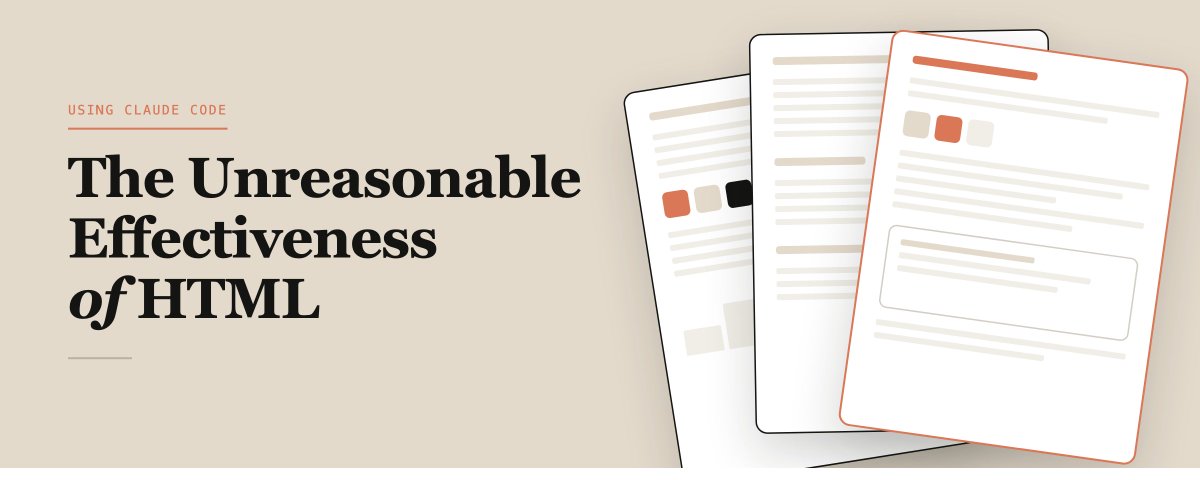
Claude团队的工程师,已经彻底抛弃Markdown了。
不是Markdown不好用,
是AI变得太快,它已经跟不上了。
以前AI写10行笔记,Markdown刚刚好,
现在AI能一次性输出1000行计划、复杂流程图、完整代码审查,
密密麻麻的纯文字墙谁有耐心看得完?
作者自己都说,他从来没完整读完过100行以上的AI生成MD文件。
更要命的是:现在都是AI写,我们只看不改。
Markdown最大的优点“易手动编辑”,现在已经彻底没用了。
而HTML,才是AI时代真正的沟通语言,
它能做到的事,Markdown想都不敢想:
• 直接生成带颜色的表格、SVG流程图、可点击的原型
• 加滑块调参数、拖拽排序任务、实时预览Prompt效果
• 改完一键导出成代码或Prompt,喂回给AI继续迭代
• 发个链接别人点开就能看,不用下载任何工具
作者直接放出了20个现成示例:
从代码审查的彩色diff,
到可拖拽的任务看板,
从动画参数调试器,
到一键生成的幻灯片。
每一个都是能直接用的生产力工具。
最爽的三个用法,现在就能抄:
1. 代码审查:让AI把PR生成带注释的彩色diff+模块调用图
2. 做计划:生成带时间线、风险表、流程图的交互式项目页
3. 临时工具:让AI写一个Prompt调参器,改完直接复制结果
当然它也有缺点:
多花一点token,生成时间长2-4倍,版本控制不如MD干净。
但作者说:体验提升了10倍,这些代价完全值得。
本质上不是格式之争,而是人机协作方式的升级。
因为Markdown是给人写给人看的,
而HTML是给AI写给人用的。
随着当AI越来越聪明,我们需要的不再是文字墙,而是能互动、能操作、能思考的界面。
现在打开Claude,输入“帮我做一个HTML文件……”,你会打开一个全新的世界。

Rooftop 10 retweeted

中国的一位女开发者
用ClaudeCode做了一个音乐电台Agent
起名叫Claudio
是一个24小时在线的AI电台主播
蒸馏了她十四年的歌单
从歌单、到界面交互、到审美,都很棒
Claudio的声音也很有磁性
会介绍音乐
会根据日程安排和时间选择播放什么音乐
整体非常有调性
让人看到“去APP化”、全民高定agent服务会是未来可能的方向
#ClaudeCode
#VibeCoding


Rooftop 10 retweeted
GPT-Image2 提示词库火了!
开源才2天多,Star数已经冲到1.8K,这速度真的离谱。
这个项目主打工业级提示词引擎+模板库,还在每天持续更新,搞AI图像生成的必须收藏!
错过这个你会后悔的那种。
🔗github.com/freestylefly/awes…

Rooftop 10 retweeted

GitHub 上的开源健身教练平台,让每个人都能随时拥有专属私教。
选好器械、锁定训练部位,它就会自动生成个性化训练计划,并持续记录与追踪你的训练进度。
GitHub:github.com/Snouzy/workout-co…
官网:Workout.cool
内置海量动作数据库:图文讲解清晰、视频演示到位;同时支持 CSV 批量导入,自定义扩展也很方便。
部署方式灵活,支持 Docker 一键启动,开箱即用。

Rooftop 10 retweeted

🤯16步完整编舞直出!
ChatGPT-Images2 + Seedance2.0制作编舞视频太顶了!
流程超丝滑:
1、先用 ChatGPT-Images2 生成16宫格舞蹈动作图
2、再喂给 Seedance 2.0 生成完整舞蹈视频
参考16宫格 vs 视频效果,对比真的绝💃
这下编舞也自由了!
(完整提示词整理在评论区)
🤖 Made with AI

Rooftop 10 retweeted

这个好玩🤩
3D 软件公司 Spline 发布了一个可以用 AI 帮你创建任何 3D 网页的产品 omma
聊天就可以创建非常炫酷的 3D 效果或者网页 3D 游戏,里面的代码和模型都是 AI 生成
Rooftop 10 retweeted

AI各有所长,赶紧收藏:
1。 豆包:查资料、聊天、写文章、翻译等。
2。 Kimi:处理长文章,能看懂也能写!
3。 海豚配音:有300+种适合自媒体的声音。
4。 FishAudio:快速复制声音,操作简单。
5。 iSlide:一句话就能做出PPT。
6。 可灵:能把文字和图片变成视频。
7。 即梦:只要简单描述,就能生成图片。
8。 有言:3D数字人,能代替真人出镜。
9。 迅捷OCR文字识别:精准提取图片和文档里的文字,识别又快又准。
10。 剪映专业版:功能强大,素材特效丰富,剪视频轻松搞定。
11。 美图秀秀AI绘画:输入创意点子,一键生成精美画作。
12。 知学云AI知识服务平台:提供智能知识管理、问答等功能,帮助高效利用信息。
13。 达观数据智能写作平台:擅长写新闻、商业文案,写作速度快。
14。 易企秀:能快速做H5页面,模板种类多,适合活动宣传、产品推广。
15。 来画动画:不用专业技能,就能轻松做出各种风格的动画视频,表达创意更简单。
16。 MindShow:输入文字大纲,自动整理成思维导图,还能一键转换成演示文稿。
17。 文心一格:百度出的AI绘画工具,能生成很有艺术感的图片。
18。 图怪兽:在线设计神器,有超多海报、logo模板,简单改改就能出图。
19。 秒出PPT:输入主题和要点,几分钟就能搞定排版漂亮、逻辑清晰的PPT,大幅提升效率。
20。 智影:集视频剪辑、抠图、配音等功能于一体,界面清爽,新手也能快速上手。
21。 闪剪:专注短视频制作,智能剪辑,能快速把素材拼成吸引人的短视频。
22。 熊猫办公:办公资源丰富,不止PPT模板,还有Word、Excel模板和各种设计素材。
23。 稿定设计:涵盖平面设计、电商设计等,提供超多可编辑模板,满足各种设计需求。
24、Deepseek:文章、推理、写代码。
Rooftop 10 retweeted

Historic Liquidation Event — Biggest in Crypto History
• Covid Crash (March 2020): $1.2 Billion liquidated
• FTX Collapse (Nov 2022): $1.6 Billion liquidated
• Today: $19.16 BILLION liquidated


Rooftop 10 retweeted

Everyone says AI coding will replace you.
So I ran a brutal experiment.
Some shocked me. Some flopped badly.
Thread with prompt + results: 🧵

Rooftop 10 retweeted

杰夫·布斯在 Simply Bitcoin 的一次访谈中彻底颠覆了我的认知。
这位经济学家揭示了:
• 你真正需要多少比特币才能退休
• 为什么全球 900 万亿美元的资产都是无效的
• 通缩何时变得不可逆转
我花了好几个小时才理清他的逻辑。下面是六个颠覆一切的认知:🧵

Rooftop 10 retweeted
这意味着将有 5000 亿到 1 万亿美元的资产正在迁移中。
主要的目的地包括:新加坡和阿联酋。
仅新加坡一地,预计在 2024 年就将新增 3500 名百万富翁。
这不仅仅是为了避税。
而是为在新秩序中活下来做准备:

Rooftop 10 retweeted

我做「毛玻璃」也有一年多了,不得不站出来为Liquid Glass说句公道话:大家不要小看毛玻璃的意义,它不是为了好看,而是GUI软件为了支持多模态AI和AR/MR而从屏幕发展到空间计算所必然带来的重大本质变化😆
空间计算环境下,GUI的背景是真实物理空间,会动态变化和风格不一致、各种明暗各种颜色都有, 所以GUI不能用固定背景色,只有白天模式和黑夜模式也不够(这个功能其实也是为了有限的解决GUI适应不同环境的问题),需要跟随环境变化(包括你实时的视线变化)而动态变化——GUI的「每一寸」都需要根据背后环境的视觉外观而实时动态渲染
这实际上等于要求每个应用不能各自自己渲染自己,不是把最底层的图形渲染结果(比如浏览器引擎 GPU Backend 的渲染结果)给OS合成,而是需要把自己内部更high level的GUI信息(比如浏览器引擎做光栅化之前的信息、3D引擎的ECS数据、能生成shader的node graph数据)提供给OS,让OS统一渲染所有应用
Android XR 就无法支持这种毛玻璃/liquid glass功能(见回复),只能做alpha混合,跟它的 Home Space 没法像 visionOS 的 Shared Space 那样支持 2D+3D 混合应用的原因类似
所以「毛玻璃」不仅影响GUI软件点适用场景和能力边界,而影响整个系统架构和应用开发方式
iPhone 的 GUI 改成 Liquid Glass 之后,实际上整个 Home/Launcher 界面可以不是固定壁纸,而是实时的摄像头画面,整个手机就好像是透明的(可惜这次没上这个功能)——手机实体屏幕的「背景」注定是会越来越动态的,最终形态就好像「抖音操作系统」,抖音拍摄界面是默认 Home 界面,应用的分发不仅来自图标列表,也来自实时环境画面(多模态输入的一部分)中的上下文。除非在这之前眼镜/轻量头显就能完全取代手机


This is essentially not a result of Apple's design but rather an inevitable consequence of the trend from VR to MR. VR apps are not multitasking; the entire display, including the virtual spatial environment and 2D GUI, are rendered and controlled by the VR apps themselves. So, these apps can use non-general design approaches to ensure that the 2D GUI remains distinct from the background environment.
In contrast, MR apps tend toward multitasking, where each app is responsible for only a portion of the entire display, coexisting with content rendered by the OS. They cannot control parts of the display outside of their context. Moreover, the spatial environment serving as the background becomes the real-world environment, and the OS cannot control the background's content, colors, or lighting.
Unlike desktop and mobile platforms, where the OS can determine whether in light or dark mode, MR backgrounds may randomly mix light and dark areas, shift between brightness and darkness, or change dynamically with the user's movements. Therefore, no single fixed background color can ensure that a 2D GUI remains legible and distinguishable in such a context. Consequently, MR OSs have to adopt a general design for all 2D GUIs, featuring semi-transparent materials and physically-based rendering effects.

