






与谁共鸣 retweeted

How I Trade $BTC



与谁共鸣 retweeted

Here's Elon Musk's full interview at DealBook Summit today:
0:00 Opening Remarks
0:31 Jensen Huang Situation
2:44 Jensen Like Jordan
3:41 Would Hire Jensen
5:43 Midterms Loss Reaction
6:25 Balance Of Power
8:45 No Pardon Needed
10:30 Politics Involvement
12:07 Not MAGA Views
14:58 Starlink Saved Ukraine
21:30 Zelensky Not Truthful
22:02 Starlink Vs Starshield
23:35 Power Of One Person
24:16 Rules Unchanged
26:17 Open Source Rockets
27:51 Starlink Funds Starship
29:59 Multiplanetary Future
32:22 Direct To Cell Plan
35:53 SpaceX Tesla Merger
39:31 No Merger Bonus
40:51 Model YL Demand
41:12 Cybercab And AVs
42:44 Anthropic Compute Deal
45:11 Feeling At Peace
与谁共鸣 retweeted

In a new episode of China Xplained, South visits an oven factory in Zhongshan, Guangdong, which produces appliances for American brands. The field visit explores how manufacturers, foreign brands, suppliers and retailers share the value generated by Chinese exports.
The field visit also goes beyond China's borders, drawing on reporting from Midea's factory in Egypt and BYD's operations in Thailand and Hungary to examine how Chinese investment is creating jobs, developing local supply chains and supporting industrial growth overseas.
As APEC economies seek deeper cooperation, the episode offers another perspective on the China Shock debate: Global manufacturing is not simply about who exports the most, but also about who shares the opportunities it creates.
与谁共鸣 retweeted

Have you ever wondered why catching Starship is so much harder than catching Super Heavy, even though they both return to the same launch tower? 🔥
💡 The answer comes down to four major engineering challenges that make Starship’s recovery fundamentally different 👇
⚡ The first problem is shedding an enormous amount of energy
At hot staging, Super Heavy was traveling at roughly 5,800 km/h (3,600 mph). Starship, meanwhile, had to return from orbital speeds of roughly 27,500 km/h (17,100 mph).
That’s nearly five times faster. Because kinetic energy increases with the square of velocity, each kilogram of Starship at orbital speed carries roughly 22 times the kinetic energy of a kilogram of Super Heavy at separation.
That works out to nearly 30 million joules per kilogram.
Almost all of that energy has to be dissipated before Starship can safely reach the tower.
One option would be to use rocket propulsion to cancel out its orbital velocity. However, scrubbing off roughly 7.7 km/s of speed using Raptor engines alone would require a massive amount of propellant.
The rocket equation makes this approach especially punishing. Every extra kilogram of landing propellant has to be hauled into orbit first, dramatically increasing the fuel needed at liftoff.
Instead, SpaceX uses Earth’s atmosphere to bleed off almost all of Starship’s orbital velocity.
That saves an extraordinary amount of propellant, though it introduces another major hurdle.
🔥 Surviving extreme atmospheric heating comes next
As Starship plunges into the atmosphere at hypersonic speeds, powerful shock waves compress and heat the surrounding air to blistering temperatures.
Thousands of ceramic heat-shield tiles protect its stainless-steel structure from the intense heat.
Simply keeping those tiles attached isn’t enough, though. Superheated gas can seep into the gaps between them, risking damage to the underlying structure.
For Flight 15, SpaceX carried forward upgrades from Flight 14, including extra tile-retention hardware in vulnerable areas and redesigned curved tiles that reduce heating between adjacent tiles.
Because Super Heavy never reaches orbital velocity, its return doesn’t expose it to anything close to the same thermal stress.
And there’s another complication.
A heat shield that survives one reentry isn’t necessarily ready to fly again. Starship’s thermal protection system must eventually withstand repeated missions without major repairs or refurbishment.
That’s critical, since rapid reusability is one of the core reasons SpaceX designed Starship to be caught rather than discarded.
Yet surviving reentry still isn’t enough. Starship also has to arrive at the exact right spot.
🎯 Hitting a precise target from orbit raises the stakes even further
About 56 minutes before the catch, a single Raptor engine fired for just 10 seconds to initiate Starship’s return.
That brief deorbit burn wasn’t meant to eliminate orbital velocity. Instead, it nudged the spacecraft’s trajectory so atmospheric drag could take over the much larger job of slowing it down.
Starship then entered the upper atmosphere thousands of kilometers away over the Pacific Ocean.
From there, its four aerodynamic flaps controlled its orientation and fine-tuned the forces acting on the vehicle.
Super Heavy uses grid fins to steer during its return, but Starship’s flaps have to handle a far wider range of flight conditions.
As Starship decelerates from hypersonic through supersonic and down to subsonic speeds, its guidance system continuously adjusts its attitude and flight path.
The challenge is maintaining the right balance of altitude, speed, and trajectory while aerodynamic forces shift dramatically throughout reentry.
For Flight 15, the return corridor crossed sparsely populated parts of northern Mexico and South Texas.
Starship maneuvered around major population centers in the Rio Grande Valley, passed north of South Padre Island, headed offshore over the Gulf of Mexico, and made its final turn toward Pad 2 at Starbase.
Think about the guidance precision required.
A spacecraft returning from orbit must dissipate nearly all of its immense kinetic energy while threading a carefully controlled trajectory straight back to a single launch tower.
It also has to arrive at a low enough speed, in the proper orientation, and with enough propellant remaining to pull off the final maneuver.
That brings us to the most visually spectacular part of the entire recovery.
🚀 Executing the landing flip with pinpoint precision is the final test
Super Heavy approaches the launch tower already vertical, using its grid fins and Raptor engines to guide its final descent.
Starship comes in belly-first.
It has to rapidly swing its massive frame upright, stabilize its attitude, and align itself precisely between the tower’s mechanical arms.
SpaceX’s official Flight 15 timeline allotted just 18 seconds between the start of Starship’s landing burn and the catch.
During those 18 seconds, three sea-level Raptor engines ignite to kick off the maneuver.
The spacecraft rotates upright while its flight computers constantly regulate engine thrust and vehicle attitude.
The engines then step down from three to two, giving the vehicle finer control as it nears the chopsticks.
Finally, it transitions to a single engine for the last moments of descent before shutting down as the tower takes its weight.
Consider the coordination involved.
The guidance system must balance translation, rotation, thrust, and descent rate while positioning a massive spacecraft within a narrow capture envelope.
Unlike a conventional vertical rocket landing, Starship must first transition from an aerodynamically controlled, belly-first glide to an engine-powered vertical approach.
All of this unfolds within seconds, right after the vehicle has completed one of the most punishing atmospheric reentries ever attempted by a reusable spacecraft.
🧠 What makes SpaceX’s approach so ingenious is how seamlessly the entire recovery system works together
Trying to solve every phase of the return with rocket propulsion would carry a crushing propellant penalty.
Instead, SpaceX delegates the toughest parts of the recovery to systems purpose-built to handle them.
The atmosphere dissipates most of the orbital kinetic energy without consuming onboard propellant.
The heat shield protects Starship from the intense thermal loads of that deceleration.
The four aerodynamic flaps provide the control authority needed to manage its attitude, energy, and trajectory throughout atmospheric flight.
And the Raptor engines take over once aerodynamic control alone can no longer deliver the precision needed for the final catch.
That division of labor allows SpaceX to recover an orbital spacecraft without carrying enough fuel for an all-propulsive return.
Yet the engineering trade-off goes deeper than saving propellant.
SpaceX is shifting much of the cost of returning from orbit away from expendable propellant and toward reusable hardware built to endure extreme thermal and mechanical stress.
The potential economic payoff is enormous.
Cutting back on the propellant reserved for recovery frees up more of Starship’s mass capacity for useful payload. However, that advantage only becomes truly meaningful if the heat shield, flaps, engines, and other systems can survive repeated flights without extensive refurbishment.
That’s why catching Ship 42 is such a landmark milestone.
SpaceX has proven that its thermal protection, aerodynamic controls, propulsion, and guidance systems can work in concert to recover an orbital upper stage right at the launch site.
The next engineering hurdle is proving that the same spacecraft can do it repeatedly.
If SpaceX can bring Starship home, inspect it, refuel it, and launch it again without rebuilding major systems, the economics of getting payload to orbit could change dramatically.
That first catch proves the recovery architecture works. Repeated reflights will determine just how much of its economic potential SpaceX can unlock.
与谁共鸣 retweeted

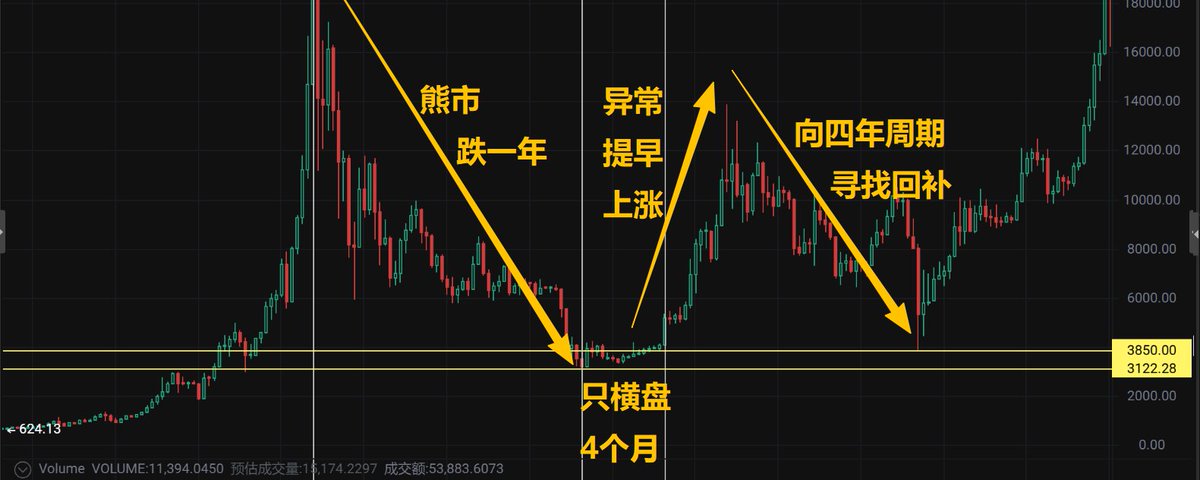
现在牛市还在吗?
如果还是牛市,
为什么会出现周线六连跌?并且越跌越多?
为什么会连续跌破短期持有者成本,200日线,50周线等众多重要牛熊支撑线?
还会跌破57800出现新低吗?
如果你关心这些问题,
请阅读本文 : )


与谁共鸣 retweeted

The Elysium ecosystem is filling up fast
The infrastructure is already taking shape. Now the app layer is starting to expand.
NFT / DEX
- @kalosfun
- @AtlasHL
- @HyperFlow_fun
DeFi
- @NestExchange - ve(3,3)
- @HybraFinance - Liquidity
- @Pindar_finance - Funding Rates
Prediction / Betting
- @hyperflip_xyz - Combo Bets
- @speculatexyz - Prediction Markets
And this is still just the beginning.
More builders. More apps. More liquidity coming to Elysium.
@Enter_Elysium

与谁共鸣 retweeted

I think people are still underestimating how early @Enter_Elysium is
Mainnet isn’t even fully live yet and there are already 7 launchpads positioning for the first wave:
- @AscendLaunch
- @oxleydotfun
- @SignalFam
- @CorePad_hl
- @perpmefun
- @Neuriio
- @MontraXYZ
This is usually how the casino starts
What catches my attention isn’t the number of launchpads itself
It’s the fact they’re showing up this early
When multiple teams start competing for the same early users and liquidity, usually something is about to get noisy
I don’t expect all 7 to survive
I’m just trying to figure out which one becomes the default place people go when the first real Elysium runner appears
That’s the bet


I can see $ECAT becoming the meme leader on @Enter_Elysium
Meanwhile, $E/acc feels more like the broader narrative of the whole ecosystem, something deeply tied to Elysium itself.
And lately, $ECAT even rolled out a zero-fee bridge :))
A meme that keeps shipping.
Love to see it, $ECAT
@Elysium_Cat

与谁共鸣 retweeted

Grok Bot + TradingView is one of the MOST powerful AI trading setups I’ve ever used
You can literally turn Grok Bot into your personal trading assistant in minutes
It'll run premium indicators on live charts, conduct deep technical analysis & more
feed this before it’s gone:


现在大家都在质疑 $kimchi 是否能得到 @kimchi1x 的认可,从时间线上来看,代币先于推文,只能是知道消息的人发的,代币是官方的可能性大大增加。
发送到10亿!!!
solana:CSocnzcRpgSCr1naKcNTieWZUxb6rABe45j844m7pump

$KIMCHI 时间线(utc):
23:00:15 · 钱包 EFSr…56oF 创建代币,并在同一笔交易中买入 79% 供应量,花费 86 SOL
23:00:21 · kimchi 发推文 “october 2026 vlog in bio”
23:01:12 · EFSr 把 750M(75%)转到 kimchi 的 pumpfun 钱包 Gs5FH…GYeX
代币上线 6 秒后他才发推
有人精确知道上线时机
钱包情况:
· 创建者 EFSr:已存在 2 年以上,solscan 显示它是 2,728 个钱包的首批资金来源
· kimchi 钱包 Gs5FH:首笔 SOL 来自 “losther” GgbCF…,它是 31,678 个钱包的首批资金来源
· 该钱包内 1.35B $PUMP(约 650 万美元)来自 binance + okx 提现
数据:
· kimchi 钱包:750M $KIMCHI 账面价值约 2200 万美元
· 所有池子总流动性:约 120 万美元
· 单一钱包持仓约为流动性的 20 倍
目前尚未卖出。但如果卖出,将没有接盘流动性
历史:
kimchi 2024 年公开分享过的一个钱包,在 $STAR 上线 12 秒后买入,当天卖出(h/t @SpecterAnalyst)
谁在控制 EFSr 是没人回答的问题
334
与谁共鸣 retweeted
I rarely share my thoughts on altcoins, but I think many are sitting in fairly decent positions.
A lot of coins flushed 20–30% during this $BTC drop, which is substantial considering BTC itself only fell around 8%.
In the early stages of a bull cycle, I’d rather be positioned in these coins before BTC makes new highs.
SOL, LTC, ASTER, BNB all look interesting to bid here.
SOL 97-103 / LTC 56-59 / ASTER 0.66-0.7 / BNB 722-680
There may still be some more temporary downside, but I think the RR is starting to look attractive. If BTC makes its move towards 126K, I believe many of these coins will rally 50-75% from current prices.
与谁共鸣 retweeted
Here’s the full Tesla Roadster unveiling event.
0:15 – Crazy Tesla + SpaceX collab preview
2:25 – Last manually driven Tesla car
2:53 – Taking it way past the limits
3:15 – Countdown & first flight works
5:38 – Flying cars are real
5:41 – Peter Thiel flying cars quote
6:02 – Fan suction system (up to 2G)
6:16 – Downforce & crushing track records
7:08 – Starman appearance
7:52 – Rocket thrusters & full gymnastics
8:52 – Kickflip demo (Tony Hawk approved)
9:32 – Real road car + rocket car future
9:56 – Air tanks, nozzles & specs
10:14 – Rechargeable ultra-high pressure air
10:36 – Car reveal & aerospace design
12:50 – Fan modes
13:37 – Variable pitch rear wing
13:50 – 0-60 goal under 1 second
14:21 – Acceleration demo
16:22 – 0.81s 0-60 achieved
16:26 – Production car will be even quicker
17:05 – World’s quickest production car
17:28 – Top speed & Snake River Canyon teaser
18:26 – Mach 0.5+ goal
18:52 – First best flying car + last best driver’s car
19:04 – Production starts 2028
与谁共鸣 retweeted

美股代币化全链熄火后,LONG 终于交出了它的破局答卷。
最近大家都在吐槽美股代币化是“伪需求”——Degen 嫌慢,正经股民嫌烦,单纯搞个 1:1 影子股票根本打不过传统免佣券商。
但今天 @longdotxyz 联创 @Natan_benish 发的长文,把 Stock-Fi 的维度拉高了一整层:他们正式推出了【社区主动管理型资产篮子(Thematic Baskets)】。
简单拆解这个机制为什么是美股代币化的真正破局点:
从“买单只股票”到“买垂直叙事”: 在传统股市,伟大的公司往往不仅代表自己,更代表一个未被定价的时代赛道。
Nate 举了个极佳的例子:如果 5 年前,社区为英伟达打包一个“数据中心算力链”篮子,而不是等到华尔街把它从“显卡公司”重估为“AI 基础设施”——社区就能在叙事爆发前,提前吃满整条产业链的超额溢价。
加密圈的“注意力经济”反哺传统资产: 加密圈最擅长做叙事定价(比如 Zcash 绑定隐私叙事,HYPE 绑定链上 Perps)。 现在 LONG 把这套逻辑搬到了美股:
• AI/算力社区 → 自动化打包数据中心+上游供应链资产
• 创新药社区 → 打包 GLP-1 减肥药/多肽概念生态
• 芯片社区 → 打包内存/封装瓶颈资产 散户去券商买的是单只静态股票,在链上买的则是由狂热社区自主发现、动态平衡的“先锋概念 ETF”。
流动性飞轮形成闭环:
过去散户在链上炒美股代币,赚了钱就提现砸盘跑路;
在 Baskets 机制下,社区自身成了资产的分发引擎(Distribution Engine),交易产生的 Flows 会被自动沉淀到配对流动性池、社区金库(Vault)和外部 LP 中,实现链上资产的自造血。
单只股票代币化是华尔街玩剩下的死胡同;
但“社区自治 + 垂直叙事 + 自动化资产篮子”,或许才是 Stock-Fi 颠覆传统金融的真正杀手锏。

With all the market noise, we haven’t said enough about the actively managed baskets we released on @longdotxyz (more is coming)
a lot of our releases so far doesn't require direct user engagement they run on auto pilot.
I think this is one of our biggest leaps in fulfilling a bigger vision of stock-fi
by enabling stock pairs to express VERY specific narratives and amplify them(remember these are stock based communities that generate flows by being dist engine for stocks and capture these flow into deep stock liq in the pair pool, community vault and external LP)
Stocks increasingly represent more than individual businesses. The strongest performers often become proxies for entire categories. But sometimes the category itself is not yet exciting or the stock didn't even recognized in it.
Crypto already works this way:
zcash → today privacy(in the past a more secure/efficient BTC)
HYPE + LIT → onchain perps(maybe 2y ago it was about onchain crypto perps eating CEX perps but now liq market infra/RWAs perps?)
Community-owned and managed baskets bring that same thinking to stock pairs, letting communities accrue value from net long bets while amplifying an underpriced narrative behind their stock before it gets massive.
AI/compute related pairs → datacenter + supply chain baskets
Pharma pairs → GLP / peptide baskets
Memory pairs → Leopold/bottleneck style baskets
Imagine the NVDA community building a datacenter basket five years ago, while everyone still called it a GPU gaming company. A way to gain exposure to the compute thesis while reinforcing the bigger bet: NVIDIA becoming the backbone of global AI infrastructure.
Stock communities can now own the future they see coming. Distribute it with via basket pairs. And even enable multiple diff thematic "bets" via baskets.
The design space is infinite. And we’re still completely underestimating how much “delusional,” conviction driven communities on LONG will impact the financial system.
LONG.

