

Reuters energy columnist. I also like guitar picking. Tweets are my views. email me [email protected]
London, England
Joined June 2013
- Tweets8.7K
- Following630
- Followers7.9K
- Likes14.7K




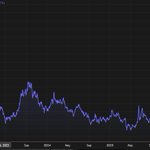
Saudi Aramco is evacuating staff from its headquarters in Daharan, probably as a precaution ahead of an escalation in the war against the Houthis in Yemen, but I wouldn't be surprised if this is also a dry run in the event of a new round of fighting between the US and Iran
Ron Bousso retweeted

Don't mistake Mideast oil rebound for normality - column by @ronbousso1 reuters.com/commentary/reute…

Ron Bousso retweeted

Don't mistake Mideast oil rebound for normality - column by @ronbousso1 reuters.com/commentary/reute…
COLUMN: Don't mistake Mideast oil rebound for normality
Crude oil prices remain near five-month highs despite a recent surge in Middle East crude exports above pre-war levels and intensifying Iranian attacks on tankers in the Strait of Hormuz. This suggests investors may already be bracing for another round of regional escalation.
The rebound in crude flows from the Gulf is striking. Middle East oil exports have averaged 17.3 million barrels per day (bpd) so far in October, up from 16.4 million bpd in September and above the 16.9 million bpd average in the two months before US-Israeli strikes on Iran began on February 28, according to Kpler data.
The sustained traffic is a clear sign that Gulf producers and tanker owners are willing to tolerate the risk of attack.
But higher flows should not be mistaken for a return to normality.
Read my full Reuters Open Interest column
reuters.com/commentary/reute…
Seriously? What a load of nonsense from a leader of a major global bank. This quote won't age well.
reuters.com/business/energy/…

Ron Bousso retweeted

🛢️🚢 Freight Costs Are Disrupting Global Oil Markets
Record-high shipping costs are squeezing refining margins and disrupting physical crude and refined-product flows.
This raises a critical question: Who should absorb the rising transportation costs? Producers, traders, refiners, or end buyers? Could these costs be shared across the supply chain, or will new pricing mechanisms and trade routes emerge?
The answer could reshape crude differentials, refining margins and global fuel prices.
The new battleground in oil markets may not be supply alone, but the cost of delivering it.
#OilMarkets #CrudeOil #Refining #Freight #EnergyMarkets #OOTT

COLUMN: Asian refiners' pain is Middle East oil producers' problem
Shipping costs near record highs are crushing Asian refining margins even as global fuel markets run short of supply. To keep Asian refiners buying, Middle Eastern exporters may have to absorb more of those costs themselves, squeezing the revenue they desperately need after months of war.
In yet another sign of the extraordinary distortions rippling through global energy markets as the US and Iran vie for control of the Strait of Hormuz, oil is increasingly flowing out of the Middle East, but actually getting it to customers has become so expensive that it threatens to undermine the recovery.
Read my @ReutersOI column: reuters.com/commentary/reute…

Ron Bousso retweeted

Record high targeting of shipping by Iran as volumes have recovered.
Something has to give.
(Source Eurasia Group)

The stark admission by the UKMTO, the British maritime security service, that it is struggling to correctly report the extent of attacks on vessels attacked in and around the Strait of Hormuz is entirely consistent with what I've been hearing from Gulf NOCs and traders about just how dangerous tanker transits out of the Gulf are - I was repeatedly told that practically every vessel that crosses Hormuz, whether through the southern corridor close to Oman that is protected by the US Navy, or even through the northern route allegedly controled by Iran, is harassed by IRGC over the radio and fired at, be it warning shots near the ship or directly at the ship.
Hormuz flows have recovered sharply, but the dangers of crossing the waterway is extremely elevated.

Brent just broke through $110 a barrel for the first time since May after Houthi claims they hit Saudi energy infrastructure.

Ron Bousso retweeted

With Asian refining margins crushed by near record-high shipping costs, Middle Eastern exporters may have to absorb more of those costs to keep Asian refiners buying, explains ROI's @ronbousso1 reut.rs/4skMZ64

Ron Bousso retweeted

Ron. We had first called out @UK_MTO several months back, when we asked them as to why USN attacks were not being reported. Then we found they unreported the number of attacks on vessels (likely under orders), the extent of the damage to vessel and environmental damage as well (SIDR was repeatedly reported as not leaking crude) and we also found they were fudging casualty numbers (by increasing them while reporting an Iranian strike). After chasing them several times, they reported they could not verify all attacks and hence had to drop several of them, however while they also cannot verify USN supported transits, they still publish the numbers as reported to them with a disclaimer.
You would do well to lookup the roles of spotters in the Hormuz, the recent uptick in speedboats and those that shine lights to identify, the claims of mines and UUVs recently cited. The hailings by both parties, we have uploaded a few - both by IRGC and USN in the last weeks.
You may want to check on the various scoops we've pushed along. USN directives to ships on Radar/GPS/GNSS and AIS and the ability that USN acknowledges that IRGC can still read radar emissions even when digitally transiting dark. (Something the IRGC hailing shows, as they identify vessels by coords/names) On written forms that are needed to be filled over associated dangers of crossing the Hormuz such as with mines and IRGC drone attacks.
Crazy time for sailors out there who're risking it all to keep things moving.
A quick take on the rise in Iranian attacks on tankers around the Strait of Hormuz @ReutersOI
The stark admission by the UKMTO, the British maritime security service, that it is struggling to correctly report the extent of attacks on vessels attacked in and around the Strait of Hormuz is entirely consistent with what I've been hearing from Gulf NOCs and traders about just how dangerous tanker transits out of the Gulf are - I was repeatedly told that practically every vessel that crosses Hormuz, whether through the southern corridor close to Oman that is protected by the US Navy, or even through the northern route allegedly controled by Iran, is harassed by IRGC over the radio and fired at, be it warning shots near the ship or directly at the ship.
Hormuz flows have recovered sharply, but the dangers of crossing the waterway is extremely elevated.
Ron Bousso retweeted
Asian refiners' pain is Middle East oil producers' problem - column by @ronbousso1 reuters.com/commentary/reute…

Ron Bousso retweeted
Asian refiners' pain is Middle East oil producers' problem - column by @ronbousso1 reuters.com/commentary/reute…
COLUMN: Asian refiners' pain is Middle East oil producers' problem
Shipping costs near record highs are crushing Asian refining margins even as global fuel markets run short of supply. To keep Asian refiners buying, Middle Eastern exporters may have to absorb more of those costs themselves, squeezing the revenue they desperately need after months of war.
In yet another sign of the extraordinary distortions rippling through global energy markets as the US and Iran vie for control of the Strait of Hormuz, oil is increasingly flowing out of the Middle East, but actually getting it to customers has become so expensive that it threatens to undermine the recovery.
Read my @ReutersOI column: reuters.com/commentary/reute…
Ron Bousso retweeted
ENERGY WATCH: Boom and doom - Newsletter by @ronbousso1 Sign up here: reuters.com/newsletters/reut… reuters.com/commentary/reute…

Ron Bousso retweeted
ENERGY WATCH: Boom and doom - Newsletter by @ronbousso1 Sign up here: reuters.com/newsletters/reut… reuters.com/commentary/reute…

The @IEA said the total amount of oil stocks to be released will exceed the original 400 million agreed in March. Its members agreed to release the remaining 100 million barrels, including 20 million barrels of diesel.
That's not a lot of diesel at all, and less than the 50 million anticipated initially. It will do little to cool global diesel prices.
Given that Europe does have large diesel emergency stocks (around 300 million barrels), I expect the US won't be happy with this.
iea.org/news/iea-governing-b…

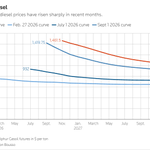
ICE diesel contracts for delivery in December 2027 climbed above $1,000 a ton for the first time this week, compared with a pre-war level of $644.
For much of this year, energy markets operated on the assumption that the Iran war would resemble past geopolitical crises: a sharp but temporary disruption followed by a quick return to normality.
Increasingly, investors are concluding otherwise. The issue is no longer simply how much oil can move through Hormuz. Markets need to know whether the global energy system can quickly rebuild the inventories, refinery capacity and supply chains damaged by months of conflict.
Read my @ReutersOI column reuters.com/commentary/reute…
