
Chennai, India
Joined October 2009
- Tweets887
- Following322
- Followers120
- Likes2.9K




Rajesh Panchanathan retweeted

The biggest AI cost hack, in my view, is writing deterministic code.
I keep seeing agents with longer and longer prompts doing checks that belong in ordinary code. The token bill is obvious. Finding mistakes and fixing what broke can cost more.
Three costs to look at:
#1 Inference.
Every time the agent runs, you're paying a model to interpret rules that code could just execute. Checking an approved supplier list or comparing an invoice amount with a PO doesn't need a model.
#2 Errors.
When the model misses a rule, somebody has to catch it, work out what happened and fix it. That work can cost more than the inference. And that's assuming somebody catches it before the payment goes out.
#3 Change.
Somebody adds another rule to the prompt. Now you rerun the eval set to check that the existing rules still work. One changed instruction can affect the rest.
Move those checks into functions. A coding agent drafts the code and tests. An engineer checks both against the business rules.
The checks use no model tokens. You still pay for engineering, hosting and maintenance. Code can still be wrong, but with the same inputs and rule data, you can reproduce the failure, fix the logic and add a regression test.
Keep the model for work that needs interpretation, like a line item description that doesn't clearly match the PO. Anything still unresolved goes to a person before payment.
Measure whether that reduces errors. Don't assume it.
This week, open your longest agent prompt and mark every line that's really an if statement.
That's the coding agent's task list.
Rajesh Panchanathan retweeted

In my ongoing quest to find the limits of Opus 5.5, I directed it to audit my old scientific field, theoretical astrophysics. We indexed about 150,000 papers, audited 50,000 for issues, and did progressively more thorough checks on thousands more. We found nearly 1000 major errors that got cited many times, most are still uncorrected. This survey enabled me to estimate the efficacy of peer review for correcting errors (not very good) and to identify dozens of open questions that anyone with spare Claude Max tokens could answer today (.md context files included).
Bottom line: AI can speed up quantitative science by >1000x with no further model improvement required. But I'm seeing no evidence of this being pushed within universities, only academics complaining about labs dropping math proofs.
Among my fellow reformed academic high agency founders, however, several are speed running entire disciplines.
This survey has implications for how science will be run in the very near future. Hint: Academic publishing is dead. It was already a very stupid way to record and promulgate knowledge, and had been so for decades, even before all that publicly funded knowledge was locked behind paywall cartels. Now AIs can generate thousands of novel, correct papers per day, it is no longer meaningful for humans to consider a research paper a "unit of science" or to even bother much with the 99.9% of science which, up to this point, was necessary drudgery. Time to discover something like General Relativity or Evolution every week. LFG!!
Enjoy: science.caseyhandmer.com/phy…

Rajesh Panchanathan retweeted

𝑨 𝒏𝒆𝒘 𝒑𝒍𝒂𝒄𝒆 𝒄𝒂𝒏 𝒐𝒑𝒆𝒏 𝒖𝒑 𝒂 𝒘𝒐𝒓𝒍𝒅 𝒐𝒇 𝒏𝒆𝒘 𝒑𝒆𝒓𝒔𝒑𝒆𝒄𝒕𝒊𝒗𝒆𝒔.
From the shores of Zanzibar to the learning environment at IIT Madras Zanzibar, discover a setting where education meets a wider world of experiences.
Discover Zanzibar. Discover IIT Madras Zanzibar.
#Zanzibar #IITMZanzibar #IITMadras #DiscoverZanzibar #StudyInZanzibar
Rajesh Panchanathan retweeted

Repeating my request -
Start long lease for individual doctors to have clinics in Pune Metro stations. Do NOT sell that space to corporate healthcare.
Start at-least one Jan-aushadhi shop in these medical hubs.
Metro stations are convenient and accessible to people on wheelchairs too.
Make them into diverse medical hubs. Bring community spirit back in our communities.
@PMOIndia
@CMOMaharashtra
@mohol_murlidhar
@Medha_kulkarni
@SidShirole


Rajesh Panchanathan retweeted

When I was 16, I told my mentor I was going to MIT. He told me it wasn’t possible. Two years later I was the first person from an Indian state of 240 million people to get in.
I grew up in Kanpur, where it was understood I would go to an IIT. I barely spoke English and didn’t know anyone who had gone to the US. I walked into Avanti Fellows, the nonprofit Akshay Saxena had just started to help kids lift their families out of poverty through STEM careers, and told him I wanted MIT instead. Mostly because Richard Feynman had gone there.
He wasn’t trying to discourage me. He was being honest about the odds, and the odds said it had never happened. But, despite the odds, I got in. He still gets calls every year from parents asking him to help a kid get into MIT or an Ivy, and he still thinks it’s mostly impossible.
Years later, I started the company that became @warpdotco. Akshay wasn’t sure about it at first either, but he invested anyway.
Akshay was honest about the odds both times. He showed up for me every time though.
Everyone needs an Akshay in their life.

Rajesh Panchanathan retweeted

Gaurav Munjal loses his faith. Unacademy's abysmal outcome has got Munjal to change his views on all things ed-tech. In this State of the Unicorn series interview, Munajl says ed-tech is either entertainment or test prep, everything else is useless. @MorningContext


Rajesh Panchanathan retweeted

Claude is live in India with in-country inference through Amazon Bedrock!
In August, we said this was coming. Our customers, especially in regulated sectors and government, want to use Claude on their most critical work, with requests processed in India. From today, they can.
More details at linkedin.com/pulse/claude-go…

Rajesh Panchanathan retweeted
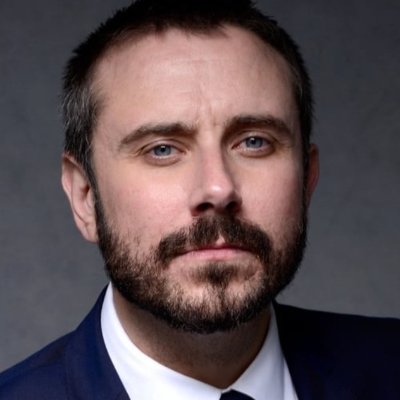
For more than two months, I have been working on a truly horrific story about one of the gravest war crimes committed by the United States since Vietnam: The bombing of the Shajareh Tayyebeh school in Minab, Iran. It was one of the first targets struck in the opening hours of the war on February 28, 2026.
At least 156 people were killed in the U.S. cruise missile strikes—120 of them were children and 26 were teachers. We spoke to survivors, first responders, parents, doctors, teachers, psychologists, and other witnesses. Some of them had never before shared their experiences of that day.
It would be impossible to do justice to what happened in Minab that day with words alone. In more than 25 years in journalism and reporting on war, I do not believe I have reported on a more heinous single crime.
Massacre at Minab: The School That Became a Grave
dropsitenews.com/p/minab-sch…
Please share this story with as many people as you can.


Rajesh Panchanathan retweeted

Intro to Jev, the new "System One model" from @typesafeai
What it is, why you should know about it, how is it different from regular Machine Learning, how is it different from LLMs, and why all the open source alternatives to Jev are not the same thing:
aiiq.substack.com/p/should-y…

Rajesh Panchanathan retweeted

₹2 buys a stranger's home address. We tested a Play Store app with 10M+ downloads selling VAHAN/eChallan data, one number plate gave us the owner's full name, father's name, permanent address, insurance policy, chassis and engine numbers, all of which Parivahan masks behind an OTP.
This isn't a hack. Researchers at Cyderes traced it to licensed API keys given to KYC companies, now resold on Telegram.
IFF has written to MoRTH, NIC & CERT-In demanding a forensic audit, and filed RTIs on 22 Sept. Found your own data on these apps or similar website? Write to [email protected]
Rajesh Panchanathan retweeted
AI helps those who're already good:
Research shows these skills/capabilities are most strongly correlated with vibe-coding abilities:
- Computer Science Conceptual Knowledge
- General Intelligence (IQ-ish test of cognitive ability)
- Written Communication Skills

China published the most uncomfortable paper on vibe coding.
ETH Zurich tested 100 developers in a controlled, commercial-grade vibe coding environment to see who actually succeeds.
The findings are brutal.
The researchers tracked computer science achievement, written communication skills, and general cognitive reasoning.
They wanted to see what actually predicts vibe coding proficiency when you never touch a line of source code yourself.
Two major predictors emerged.
Written communication proficiency mattered. The ability to structure thoughts and articulate intent unambiguously in text directly impacts what the AI builds.
But that wasn't even the main takeaway.
Computer science achievement was a massive, dominant predictor of success.
Even when researchers controlled for general intelligence and reasoning skills, CS background still heavily dictated who built working software and who completely crashed.
In fact, CS knowledge contributed roughly twice the unique predictive variance of writing skills alone.
Why? Because vibe coding isn't about writing code. It’s about debugging logic.
When an AI agent builds a complex application and quietly breaks an edge case under the hood, a non-technical user looks at the glowing UI and assumes it works.
They don't know what questions to ask. They don't know what logic to challenge. They lack the mental models to recognize architectural catastrophe.
You can prompt your way past syntax.
You cannot prompt your way past a fundamental lack of engineering intuition.
The hype told us that learning to code is dead because language is all you need.
The data just proved the opposite.
To truly master the vibe, you still need to understand how the machine thinks.

Rajesh Panchanathan retweeted

The UC system is being flooded with students with 4.0 GPAs. It is now over 100,000 a year (left).
Yet California 11th graders proficiency levels haven't budged (right).

Rajesh Panchanathan retweeted

Happy Birthday to Neil, who would have been 74 today. Taken too soon but always remembered. His musical legacy, his playing, and especially his lyrics resonate with us more and more as time goes on.
❤️ #neilpeart #theprofessor

Rajesh Panchanathan retweeted

MIT published a brutally honest report on what AI is doing to students.
A committee of professors and students spent five months studying how AI changed learning on campus, and the findings read like a warning to every university on the planet.
Study groups are disappearing. Office hours are emptying out. Problem sets and take-home exams no longer prove anything, because AI can produce credible solutions to almost any written assignment in the undergraduate curriculum. Students who lean on chatbots lose mastery and confidence, and some slip into what the report calls cognitive surrender, reaching for AI at the first hint of struggle.
The numbers are rough. 46 percent of surveyed MIT undergrads use LLMs daily. 90 percent worry about their own overreliance. Undergrads who feel AI makes them replaceable now outnumber those who feel it makes them capable.
The committee's answer surprised me. They refused to fight AI with surveillance. The report calls AI detectors unreliable, says lockdown browsers feel like spying, and warns that policing students builds a classroom atmosphere of mutual distrust.
Instead, MIT wants to rebuild education around the things AI can't replace. That means oral exams, semester portfolios, in-person project work, and a required social component in every subject. The report even floats the idea of rethinking grades entirely, since without a GPA to optimize, much of the incentive to cheat with AI evaporates.
The committee warns professors against replacing undergrad research assistants with AI agents just because they're cheaper, because a university exists to grow people, not output.
The most famous tech school on earth admitted the machines broke its way of teaching. Its answer is more humans, not more software.

Rajesh Panchanathan retweeted
😂 So Caltech undergrads wanted to, like barbarians at the gate, use their AI credits to destroy open math problems, but one thousand older, senior mathematicians, the established ones with Fields medals and honors under their belt were absolutely outraged that these tyros, these uneducated uncivilized barely self showering children would decimate their status symbols, raised a ruckus, and got those free credits rescinded.

We recognize that the rapid progress of AI in mathematics is disruptive. We're looking to engage with the math community more on the best way to integrate this technology and communicate its impacts. After considering concerns raised by members of the mathematics community, we’ve decided to withdraw OpenAI’s sponsorship of the Caltech Mathathon and have notified the organizers.
Rajesh Panchanathan retweeted

The biggest threat today is that schools still haven’t accepted that education system must change now. We’re educating children for a world that no longer exists. And are still obsessed with grades,memorisation, and linear career paths. Most schools still teach what to think and not how to think.
Why is it hard to accept that AI has already solved access to information and it’s cheap and accessible. This doesn't mean teachers will be displaced. But learning technology cannot be only limited to computer science as a subject. AI will intersect in every aspect of learning from math, chemistry, physics, language, art and everything.
The opportunity isn’t to sell AI to kids. It’s to re-wire how learning happens inside schools using AI to be more curious to ask better questions and and build things early. This concept of the nerdy kid in the computer lab will no longer exist. A child interested in art, science, or language can now create useful tools. We have to change the way kids are educated. Now!

Delighted to report fantastic outcomes running @AnthropicAI Claude Code via runner loops, with permissions dangerously skipped.
Here's what I pieced together (with Claude's help, of course):
SPEC → PLAN → RUNNER → TESTER → FIXER
Repo link at the end of this thread

1
69
Why separate TESTER and FIXER?
TESTER documents issues objectively (P0/P1/P2 priority)
FIXER resolves them without context of "I built this"
Fresh perspective catches what the builder missed. Same principle as code reviews.
1
15
All templates are open source:
github.com/rpanchanathan/cla…
One command setup:
~/claude-runner-templates/setup.sh spec-driven
Copies everything to your project. Customize claude md with your stack, and you're ready to run.

25