
Labor Economist @AucklandUni. Interested in skills, technology, and education.
Auckland, New Zealand
Joined July 2022
- Tweets33
- Following186
- Followers194
- Likes315


Sam Stemper retweeted

You know what other tools know better than most instructors? Coursera and YouTube courses from top faculty, *the internet*, books from the library. How many students used those tools instead of formal ed? Very very few. How many will use Claude independently to learn the material? Probably the same amount.
I know it doesn’t sound glamorous, but the primary role of faculty is to get students in the seats and create incentives to actually absorb the information. This is your job. AI can help as a tool, I’ve seen some great harnesses of AI for education, but it will not do this.


Sam Stemper retweeted
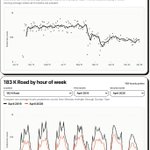
Lots going on in the intervening years, but it is true that (in many places) foot traffic in Auckland is still far from its pre-COVID levels. K Road, Upper Queen Street particularly sluggish. Stronger recovery in Britomart/Commercial Bay area.


Global measures of adolescent skills have been declining for years, but most of the data behind those claims are buried inside OECD PDFs.
I built a tool that lets you query and visualize the underlying PISA microdata in plain English. 1/3
You can ask things like:
“NZ reading scores by gender over time”
“US math scores by parental education”
“Scores by subject: English-speaking vs non-English-speaking countries”
The app turns those requests into SQL and handles the weighting + plausible values under the hood. 2/3
Try it here: pisadata.samstemper.com
(It’ll stay live until I burn through my OpenAI and BigQuery budgets...) 3/3
📢 Excited to announce the publication of my new paper, "College Access and Notability in the United States."
Now out in Regional Science & Urban Economics.
Paper👉 sciencedirect.com/science/ar…
Interactive Data👉 notability.samstemper.com/
Brief details👇
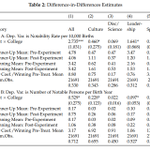
To probe mechanisms, I use the ChatGPT API on biographical text from Wikipedia to see who attended or worked at the new college. Only ~13% did; the main effect comes from broader shifts in local education as colleges attract and build human capital.
Sam Stemper retweeted

How has access to the internet affected adolescent development globally? Former #CIDPhDAffiliates @rjain_econ and @samstemper share insights from their recent paper on 3G internet and student achievement in #CIDVoices. @IQSS
bit.ly/4dcIZev

Sam Stemper retweeted

🚨Now out in the @J_HumanResource🚨
"Testing"
w/ A. Bergbauer & Rick Hanushek
👉In low-/medium-performing countries, more standardized testing is associated with higher student achievement
👉Different testing regimes have different effects
🔗jhr.uwpress.org/content/59/2…
A🧵1/10

Sam Stemper retweeted

New research shows the economic gains from ensuring all children acquire universal basic skills. In Australia, 1 in 5 children don't achieve basic skills. Closing this gap could be worth $2 trillion to our economy - and reduce inequality. hanushek.stanford.edu/sites/… @Woessmann

Sam Stemper retweeted

🚨🧵📜@davidfromterra, Julien Lafortune and I have a new wp!
Perhaps the longest-standing debate in education is on whether money matters. Esp. in the case of capital (building /renovating school facilities), conflicting results have led scholars to conclude that “it depends.”

Sam Stemper retweeted

New analysis of 72 countries in #PISA - @OECDEduSkills int'l test
COVID induced school closures led to educational loss of more than 7 months of schooling
Learning losses are larger for countries with longer school closures, and those from poor backgrounds
shorturl.at/mBJWX
#Covid #LearningLoss #SchoolClosures
@JakubowskiEvid Gajderowicz
@angrist_noam @leecrawfurd @susannahhares @JustinSandefur @pengzell @Woessmann @DeWitteK @EmiVegasV


With the release of PISA 2022, the long-standing global decline in PISA scores has many of you asking: is it the phones?
Ronak Jain and I have a new working paper that tries to shed some light on the question.
Details below… 🧵

Two caveats:
- 3G is a small part of the story of changes in technology use among children and adolescents over the past decades. @JonHaidt and @jean_twenge (among others) have done great work that helps paint a broader picture.
- This is a working paper. Comments very welcome!
See the paper for:
- Some more nice charts
- IV and bias-robust 2SDID results
- Lots of heterogeneity results
Full paper here: dropbox.com/sh/622b7ul6qi43m…