

Mostly about running. Not much ado about anything. Don't Panic.
Bangalore, India
Joined December 2008
- Tweets8.7K
- Following578
- Followers748
- Likes4.4K









Rahul Bhattacharya's Railsong has many delightful vignettes of the Bombay of the 80s. This passage about rules in a Working Women's hostel reminded me of the Irani cafe boards.
@kritipraaa
Hope you're out of the reading slump, @NirmalSBhansali . See you this time?


Always nice to see entrepreneurial energy & Karthik/Priya embody this. Former national-level TT players, they quit their corporate jobs, moved back to BLR to start Daily Nectar, with a focus on nutrition for active lifestyles.
I like their genuine approach and intent to do things the right way. Wish them the very best!
This was a fun chat about all things running. 🙂

Here it is.
Our chat ran over 20min and it was a challenge to keep it short. We tried our best.
And on that note happy Diwali/Deepavali everyone!
@satishs

Great nugget of a conversation. On what going all-in can be for 'generalist' occupations. The last bit about flow states is spot on.

You can read a million books and listen to a million podcasts, but are you actually learning anything?
Do you integrate the knowledge and turn it into something useful? Or does it just fade away?
@michael_nielsen


There is a legitimate conversation to be had about the risks of marathons and Hyrox. These are demanding sporting events, and preparation, appropriate training, medical awareness and race-day safety matter.
But the framing needs perspective. In one of the largest such studies, an analysis of 29 Mn marathon/HM finishers in the US (2010–23) found 59 cardiac deaths, i.e. roughly one fatality for every 500,000 participants (0.0002%). That's a risk, but an exceptionally low one.
Loose analogies: we don't judge the safety of air travel by isolated crashes. For context, India recorded 1.73 lakh road deaths in 2023 (474 every day). The same perspective is needed when discussing endurance sports. These aren't directly comparable risk measures, but the contrast is worth reflecting on.
The bigger public-health concern is physical inactivity. WHO estimates that insufficiently active people have a 20–30% higher risk of death than those who are sufficiently active. Its recommendations are hardly extreme: 150–300 mins of moderate physical activity a week (30 min on five days), or equivalent vigorous activity, along with strength training twice a week.
We should absolutely encourage people to train sensibly, build up gradually, understand their health and respect the demands of endurance events.
But presenting marathons/Hyrox "primarily" through the lens of rare tragedies risks getting the public-health message completely backwards. For the overwhelming majority who don't get even 30 minutes of regular physical activity, the priority should be to just get moving: walking, running, cycling, swimming or strength training.
We need more people embracing an active lifestyle, not more people being scared away from one.

Satish retweeted

the illusion of human exceptionalism crumbles fast when you see how much of our intelligence is just pattern recognition & predictive modeling. ai exposes how much of what we call “creativity” is remixing, how much “insight” is regurgitation, & how much “expertise” is just memorized heuristics.


Every time I watch Helen Obiri run, am reminded of this. #NYCMarathon

Exhibit 2: Helen Obiri - the final mile from yesterday's NYC marathon. Arms almost flailing side-to-side, body swaying a lot.. one would think at this point, she's breaking down. But watch till the end and see her surge. youtu.be/_2F62UtYR4Y?si=Utf2…
Satish retweeted

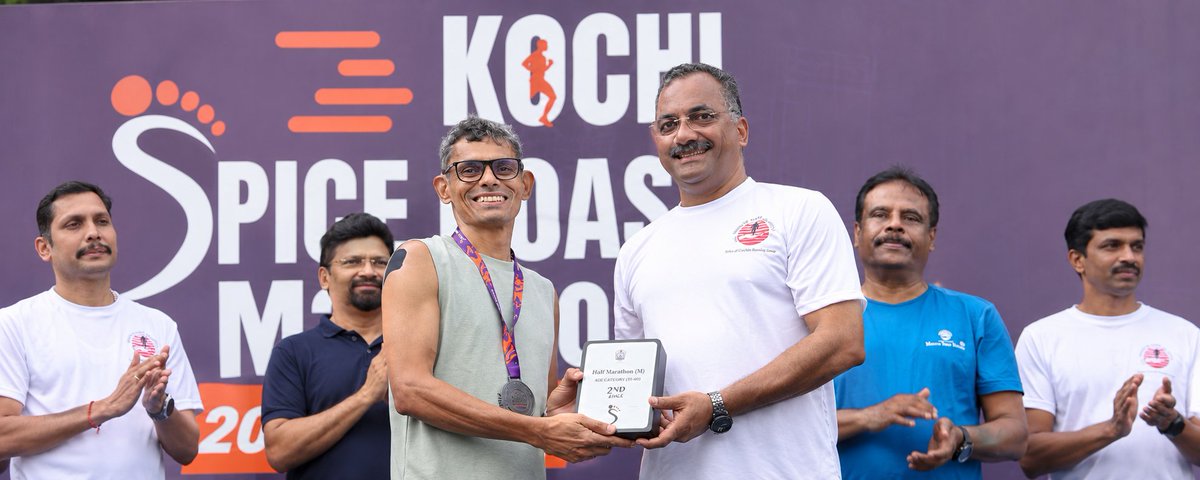
Sat down with @satishs recently to chat about his running journey and the running scene in general.
Video dropping soon!



Satish retweeted

The single fastest way to improve your entire life is to sign up for a physical side quest. Race. Competition. Adventure. Whatever. Your day becomes more structured with the training. You sleep deeper because you're tired. You eat cleaner. You look better. You feel better. Everything falls into alignment. It's a psychological process disguised as a physical one.
