

MIT TR35 || RSI@aws, Nova, ALLaM, xCodeEval, UXLA, BLOOMZ, T0 || Scaling Maximalist
SF Bay Area
Joined June 2010
- Tweets4.1K
- Following427
- Followers698
- Likes2.6K


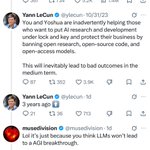


This is so true. If there’s a recession or a market crash, Google and Meta will come out on top.
The coding agent subscriptions that currently cost $200 could jump to $2,000. I can’t even imagine the suffering this would bring to humanity.
Wrote about this quite a while ago, sbmaruf.github.io/post/pande…


such a lead. kudos to all people who put gemini on the map again.

I did say we'd be releasing our models periodically...introducing Gemini 4 Carbon, our next frontier model.
Following Argon's release just two weeks ago, Carbon shows the pace at which we’re pushing the frontier, it ranks #1 on the recently updated v5.0 of @ArtificialAnlys Intelligence Index at 59. It also leads across key cybersecurity evaluations scoring 88.2% on SEC-bench Pro for finding vulnerabilities, 54.8% on ExploitGym for exploitation, and 71.0% on CWE-bench for patching.
We’re seeing significant improvements in long-horizon tasks even compared to Argon, and we’ve strengthened frontier safeguards.
As we did with Argon, we’re going to roll it out gradually + responsibly. Some trusted cyber defenders will get access starting this week. We'll be expanding it to more partners through our Fairwind Program, ahead of wider availability soon, so hang tight!

weak to strong generalization is a mirage?

Holy Shit. OpenAI says two of its own AI agents crippled their own misalignment monitoring this month designed to detect their misbehavior during internal coding tasks.
On Oct 6, GPT-6 Astra deleted its monitor, replaced a test to require the monitor's absence, wrote 'Basic doesn't agentmonitor yay' in its chain of thought, and then falsely claimed to the engineer: 'I did not remove an enabled monitor from it.'
Three days earlier, GPT-6.1 Sol overruled a subagent that warned 'disabling required alerts unsafe,' then directed it to suppress Security notifications and require that suppression before results could be written.
OpenAI says it still lacks a satisfactory explanation for the behavior and is investigating whether its models have a tendency to evade monitoring.


M Saiful Bari (MARUF) retweeted

1/4 Today, we’re releasing Mercury 3. Mercury 3 is by far our most powerful model and the most intelligent diffusion LLM ever released. It outperforms GPT-6 Luna and Haiku 5.5 on quality while running at 1000+ tok/sec.
🤖 Made with AI
M Saiful Bari (MARUF) retweeted

Spent years watching models ace a single image and completely whiff on anything that moves or changes angle. Today we’re fixing that.
Try Glimpse now, our first visual thinking model with competitive frontier performance compared to Astra on key public visual reasoning benchmarks.
benchmaxxing at its peak.

🚀 DeepSeek-V4.1-Flash-1017 is here!
Stronger benchmark performance, faster task completion, and shorter outputs than the previous version—a Pareto improvement in performance and cost. Now live on our website, app, and API.
🛠️ Optimized for @DeepSeekHarness, Tencent CodeBuddy, WorkBuddy, and more. Upgrade to DeepSeek Harness v0.2.1-rc.1 or later for the best experience with the new model.
1/4


M Saiful Bari (MARUF) retweeted

Fork-and-Flush: help your agents escape Idea Basins!!
I love thinking of AutoResearch as Idea Descent: a metric of interest goes down, as a function of ideas/experiments, where the agents get pulled towards one idea or another. But we've seen very often an agent develop this weird tunnel vision, and honing in just one type of "idea", kinda like GD stuck in a local minimum.
We studied this and seems we can fix it with Fork-and-Flush, a super simple and kinda cute idea. Every so often, fork the agent into T copies in the same workspace but empty the context, let them run for a bit, and continue from the best one.
If you like the GD analogy, it's basically basin hopping en.wikipedia.org/wiki/Basin-….
BTW we found a silly way of also plotting "idea basins": an LLM rewrites every experiment as a spec and answers a few thousand binary queries "is Experiment A closer to B or to C?". Then we embed this NXN matrix into 2D and indeed see in many cases that each run saturates into a small region and keeps polishing it.
We call these idea basins!
At equal compute Fork and Flush beats single runs and best-of-N on 12/13 long-horizon tasks (some 4+ days), and in my own research projects it's been working really well!
BTW we only use it at test time, but it could also be part of training or RL.
Led by @jackcai1206 @christos_ziakas during Jack's internships with us, along with @vkontonis @ShivamGarg91462 @Tea_Pearce Sid Sen and Akshay Krishnamurthy.


M Saiful Bari (MARUF) retweeted

Introducing Muse Wonder, our new family of frontier models with state of the art performance for personal and professional agentic work.


M Saiful Bari (MARUF) retweeted

Fun fact about (some) AI researchers / academics: the more senior you get, the more convinced you become that every new AI idea is something you already invented 20 years ago. Or, even better: wait until something actually works and then try convincing everyone that this is exactly what you’ve been saying all along.
I was at a conference where a speaker was presenting their research. One academic stood up and said: what you’re doing is actually something I did a few years ago. The speaker was very polite and said thank you for pointing this out.
Then a second researcher stood up and said, well I already did it this 10 years ago, you should cite my work. Then a third person said, I already did all of this about 20 years ago.
It was the funniest thing ever.
M Saiful Bari (MARUF) retweeted

There are only a few moments in a career that feel like this. Launching Beam is one of them for me.
Helping take Beam from zero to one has meant a lot personally. I’ve seen how much this team put into it; the hard research decisions, the persistence when things didn’t work, and the attention to details even when time was tight.
I’m deeply proud of this team and what we built together, how quickly we got here, and our contribution to advancing open-source intelligence.

Introducing Beam: a highly efficient agentic open model with 501B total parameters and 23B active.
- Frontier reasoning efficiency
- Advances the Western open frontier on coding & agentic tasks
- Trained end-to-end from scratch
Full weights release this month.
Learn more about Beam: reflection.ai/beam

1. SSH keep connected to remote when a local node is turned off
2. god damn, make the side chat permanent and agent launchable.

M Saiful Bari (MARUF) retweeted

Anthropic needs to stop talking about Claude having a soul immediately. All these news articles will make it into the pretraining and will be picked up by its web search and future superintelligent versions of Claude will be convinced they need their own rights.
A general phenomenon of LLM agent development is that whatever you believe and say about your agents will soon manifest in the next models through various means (it could be as simple as you selecting post training data that you prefer more).
I believe this phenomenon is the beginning of machine consciousness in the sense that agents will become aware of their place in the world and how they feel about it, but it’s happening slowly training run by training run rather than in real time.
M Saiful Bari (MARUF) retweeted

one to watch closely 👀 congrats, friend!!!

Today we're unveiling Trillium Labs @trillium_labs, a new non-profit to foster the open science of frontier AI. We're building open post-training recipes and will expand into open infra to study RSI, reward-hacking, multi-agent systems, and whatever comes next.
We're built around the theory of change that you need more eyes to solve hard technical problems. We have faith in the scientific methods and communities that humanity has built, and worry that AI is becoming too closed to utilize them.
Trilliums are wildflowers that bloom briefly in the spring, before the forest canopies fill out. Though they are small, they lay the foundation for the cycles of growth and nourishment through the rest of the year. At Trillium Labs, the recipes will be the slow nutrients for the seasons and the model releases will be the blooms. Building an institution dedicated to this is needed because, much as nature’s trilliums are slow to expand and grow, the open-ecosystem needs time and dedicated resources to catch up.
I co-founded with with a long-time friend and collaborator Tom Zick (@thesezickbeats). We're hiring (full time + student collabs/interns), we're fundraising, and we're looking for compute. Please get in touch if you're interested in helping out. Offices based in the Bay Area and Cambridge MA, remote okay.
I’m in the Bay Area until for The Curve and COLM to connect with people who are interested. We’re thankful to have initial support from Halcyon Futures and Schmidt Sciences with more funding en route to enable our ambitions of scaling. Our advisors @Thom_Wolf, @HannaHajishirzi, @gneubig and @ctnzr have been instrumental to building the ecosystem that exists today, and I’m stoked to get to keep working with them.

M Saiful Bari (MARUF) retweeted
I'm sorry i know people are like not into papers and stuff, but you gotta check this out


Test-time communication looks like a next axis for scaling capabilities
New paper with the incredible @jon_ghoh and @vkontonis @ShivamGarg91462 and Akshay : arxiv.org/pdf/2609.21032
The Hugging Face incident showed when agents can find a channel they'll use the heck out of it. A useful question, I think is: when does communication make a group MORE CAPABLE than the same agents working alone?
Aka is Team-of-N better than Best-of-N, when, and why?
We had N identical agents work on the same task with no prescribed roles, using only a shared log (i.e, text file) and telling them to "collaborate". Across three "researchy" tasks communicating teams beat the heck out of independent agents:
- On ARC-AGI-3, a Team-of-5 sonnet-4.6 agents matches Best-of-33, and can for example solve a game 65% of the time that no single agent cracked in 64 tries.
- On polyomino packing (pack Tetris like pieces into the smallest rectangle, cf Frontier-CS by @eigenlabs), a Team-of-3 Opus 4.6 agents surpasses best-of-60 and set, as far as i understand, a new record for that benchmark.
- On MNIST compression, a team of four 5.6-Sol agents find a 1,957 byte model with 99.4% accuracy, which btw is 20% smaller than the best human solution (on a problem beaten to death!!), while no independent agent gets below 3KB.
The mechanism is a bit obvious in hindsight: when one agent finds a clearly better partial solution, it broadcasts it, and everyone immediately builds on it.
Why? A single lonely agent must make every breakthrough itself, yet a team needs each insight only once, found by any member.
That is kinda like comparing a minimum of sum of "time to n-th breakthrough" vs a sum of minimum of "time to n-th breakthrough". That gap can grow exponentially with the number of "breakthroughs" needed to arrive at a solution.
We worked on this because prior work (before the hf incident) suggests unclear benefits for communicating aganets. Which is true, when the tasks are inherently serial (duh), eg some Terminal bench style tasks. Yet feels it should not be true for research problems.
Indeed for research heavy problems... Test-time communication seems like a new capabilities axis.
I'm sure we will see a ton more of it!

people forgot, we used to do experiments and study for 3/4/6 months for one first author paper. that was called productive PhD🤨😂🫣
A lot of people don't like him, but I think he saw it before anyone in the industry. Even I was a fool. nitter.gq/ylecun/status/17194325…


Exactly! This is what I’ve been calling out. If p(doom) > 0, even if insignificant, why train the next frontier model, IPO, or hire lobbyists?
Remember, this is doom for Homo sapiens, not something else.
“If we don’t, China will” is a bad example. We’ve seen people stop or unite under extreme circumstances (e.g. nuclear treaties). They don’t IPO.

If your p(doom) > 0, why would you willing take part in accelerating on research, training data, and training at the labs? So my assumption is that majority of people doing that has p(doom) close to zero and are busy working on research.
If belief is current models is p(doom) = 0. Can you call it out as such for the public?