

Science, captured in frames. 🌍🔬 Visual stories of the universe, nature & human discovery.
Science World
Joined June 2012
- Tweets1.4K
- Following3.8K
- Followers8.8K
- Likes1.9K


Science in Frames retweeted

Ozempic's active ingredient slowed aging and extended lifespan in a new study, even when the treatment started late in life.
The study, led by Danica Chen at UC Berkeley and published in Nature, gave semaglutide, the drug in Ozempic and Wegovy, to 20-month-old female mice, which are already elderly.
After three months, the treated mice had better muscle and cognitive function, and their gene activity showed fewer hallmarks of aging, such as chronic inflammation and a lost ability to regenerate. Mice kept on the drug for the rest of their lives lived a median of nearly 100 days longer than untreated mice.
The team then checked whether all of this simply came from eating less. Compared with mice on a 24% calorie-cut diet matched to the same feeding pattern, the semaglutide mice did better on exploration, spatial memory and blood sugar control, and their metabolism didn't slow the way it did with dieting. That hints the drug taps a separate anti-aging pathway. As NIH's Rafael de Cabo put it, most chronic diseases are rooted in aging, so if these drugs slow it down, broad benefits are exactly what you'd expect.
That said, these were healthy older female mice, and NIH stresses the results don't mean the same will happen in people right away. Also, long-term human studies on aging haven't been done yet. But the work gives a clear reason to test GLP-1 drugs in healthy older adults, a direction Chen says could greatly widen how they're used.
source: Feng, Y., et al. (2026). Late-life semaglutide treatment slows ageing and extends lifespan in female mice. Nature.

Science in Frames retweeted
A third of U.S. newborns are now missing a shot that protects them from a lifelong liver infection.
Researchers at the health data company Truveta looked at the medical records of more than 1.3 million babies born in the U.S. from January 2018 through June 2026.
Birth-dose vaccination rose from 76% in 2018 to a peak of 80% in 2022, then started falling in mid-2023 and reached 66% by June of this year.
The drop even reached babies whose mothers were known to have hepatitis B, the group that needs the shot most: their vaccination rate slipped from as high as 98% to 94% in the first half of 2026. The study was published in NEJM Evidence.
That matters because up to 90% of babies who catch hepatitis B at birth develop a chronic infection, which can lead to cirrhosis, liver failure and liver cancer decades later. The birth dose works as a safety net, especially for babies whose mothers don't know they're infected, and since the U.S. began recommending it for every newborn in 1991, acute hepatitis B in children fell by 99%. A separate JAMA analysis of more than 12 million births found a similar decline, and a review of over 400 studies found no evidence of short- or long-term harm from the shot.
Still, these are health records from one company's network rather than a national count, so the exact numbers could shift as fuller data comes in. Also, a missed birth dose doesn't always mean a baby goes unvaccinated, since some may get the shot later. But researchers say tracking this early warning sign now could help protect a generation of children from a silent disease that often shows up only in adulthood.
source: Edwards, E. (2026, November 24). 'Shocking' drop in hep B vaccination, including babies with infected mothers. NBC News. Reporting on Masters, N., et al. (2026), NEJM Evidence.

Science in Frames retweeted
Elon Musk’s brain implant lets people with paralysis control devices with their thoughts. And it just got FDA approval.
Neuralink announced on Nov. 25 that the agency cleared its LINK Pivotal Study, which will test the safety and effectiveness of its implant in people with severe paralysis caused by ALS (amyotrophic lateral sclerosis), the disease that gradually takes away movement and speech.
A pivotal trial is the late-stage study a company typically runs before asking the FDA to approve a device for sale. Each participant gets the implant from Neuralink's R1 surgical robot and is followed for about two years, with the focus on how well they can control digital devices by thought in daily life.
The trial builds on Neuralink's early studies in the U.S., Canada and the U.K., where more than 30 people have been implanted and have used the device for thousands of hours to study, play video games and talk with loved ones, the company says. For people who can no longer move or speak, that kind of control can mean real independence.
The race is heating up too: Paradromics implanted its first patient in June, and China approved a commercial brain implant the same month.
To be clear, this approval only lets the study begin, not wider use of the implant, and the results so far come from the company itself.
Also, Neuralink hasn't said how many people it will enroll, and its first participant had major technical problems with his implant in 2024. But if the trial succeeds, it could be the step that turns brain-computer interfaces from experiments into real treatments.
source: Neuralink. (2026, November 25). Neuralink receives FDA approval to launch LINK Pivotal Study [Press release].

Science in Frames retweeted
For the first time in U.S. history, more babies are being born to women over 40 than to teenagers.
A report from the CDC's National Center for Health Statistics tracked U.S. births from 1990 to 2023. Over that time, the birth rate for girls and women under 20 fell 73%, the steepest drop of any age group, so teen moms went from one in eight births to one in 25.
Meanwhile births to women 40 and older climbed, from 1.2% of all births in 1990 to 4.1% in 2023, which nudged them past teens for the first time. Women over 30 now have more than half of all American babies, up from three in 10 in 1990.
It's a huge shift in when people start families. Fertility doctors such as Columbia University's Ashley Wiltshire point to better contraception on one end and egg freezing, IVF and donor eggs on the other, which give people more control over timing.
But because the drop among younger women was bigger than the rise among older ones, the overall U.S. birth rate keeps falling.
That said, these figures run through 2023, and the two groups are almost tied, so the crossover is a narrow one. Pregnancy after 40 also still carries higher risks for mother and baby. But the trend shows how much American family life has changed in a single generation.
source: Driscoll, A. K., & Hamilton, B. E. (2025). Effects of age-specific fertility trends on overall fertility trends: United States, 1990–2023. National Vital Statistics Reports, 74(3). National Center for Health Statistics.

Science in Frames retweeted
If someone you love has dementia, new research shows the medicine cabinet may be part of the problem.
A University at Buffalo team looked at national health survey data on 2,796 adults aged 65 and over who had dementia or another cognitive disorder and lived on their own, a group representing about 29.7 million older Americans between 2011 and 2022.
Using the American Geriatrics Society's Beers Criteria, a list of about 100 drugs considered risky for older adults, they flagged the medicines most likely to harm people whose brains are already struggling, such as benzodiazepines like Xanax and sleep drugs like Ambien.
The share taking at least one of them fell from 39.3% in 2011 to 29.3% in 2022. The study is published in the Journal of the American Geriatrics Society.
These drugs act on the same brain that dementia is already damaging, and they can worsen confusion, balance and coordination, which raises the risk of falls, emergency visits and hospital stays. Most of these patients see a regular doctor, so the researchers say a careful medication review is one of the easiest ways to protect them.
To be clear, this study tracked who was prescribed what, and it doesn't show that any one patient was harmed. And stopping these medicines suddenly can be dangerous, so any change should be made slowly, with a doctor or pharmacist. Still, the steady drop over a decade shows that safer prescribing is possible, and the team wants to test whether it improves quality of life and keeps people out of the hospital.
source: Hsu, H., Clark, C. M., Feuerstein, S., Wahler, R. G., Singh, R., & Jacobs, D. M. (2026). Cognitive potentially inappropriate medications, quality of life, and healthcare use in older adults with cognitive disorders. Journal of the American Geriatrics Society, 74(10), 2888.

Science in Frames retweeted
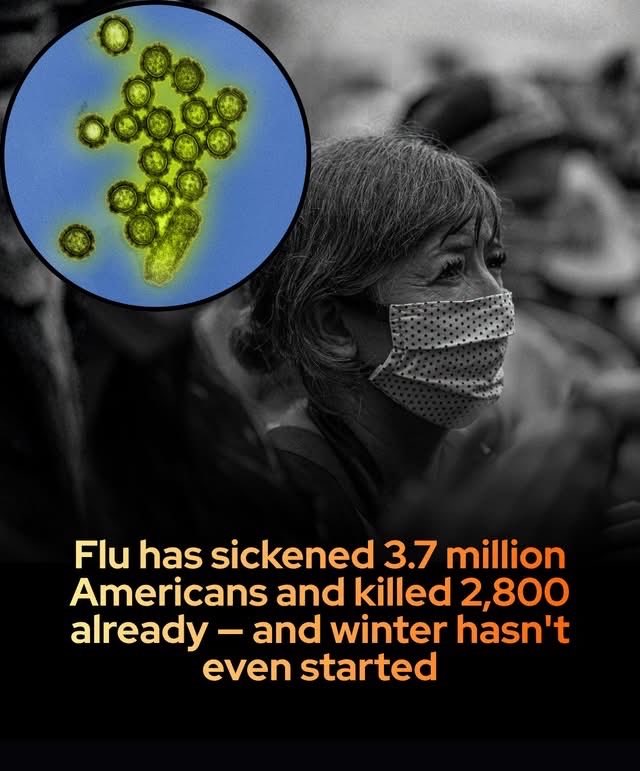
U.S. flu hospitalizations are at their highest for this time of year in decades.
Flu has already sickened an estimated 3.7 million Americans and killed about 2,800 this season, and winter hasn't even started.
The CDC's latest weekly flu report, covering the week that ended November 14, says activity is climbing almost everywhere.
The agency estimates at least 3.7 million illnesses, 50,000 hospitalizations and 2,800 deaths so far this season, and the rate of flu hospitalizations is the highest seen at this point in the season since 2010. Seven children have died. Nearly all of the virus going around is an H1N1 strain, the same family behind the 2009 swine flu pandemic, and the South has been hit especially hard, with Texas, South Carolina and Tennessee among the busiest states.
The timing is bad, because Thanksgiving travel and family gatherings give the virus plenty of new chances to spread. The CDC's forecasts expect hospital admissions to keep rising into early December. The good news is that lab tests show this season's vaccine closely matches almost all of the viruses tested so far, and doctors say it is not too late to get a shot before the holidays.
To be clear, an early start doesn't necessarily mean a worse season overall, and the CDC currently rates severity as low across all age groups. Also, these death and illness figures are model estimates that will change week to week. But getting vaccinated now still gives your body about two weeks to build protection before the peak.
source: Centers for Disease Control and Prevention. (2026, November 20). Weekly U.S. influenza surveillance report: Key updates for week 45, ending November 14, 2026. FluView.
Science in Frames retweeted
Sperm counts have been falling worldwide. Men on GLP-1 drugs moved them in the other direction.
Doctors in Bucharest, Romania, followed 108 men with obesity, type 2 diabetes or both for a full year after they started semaglutide (the drug in Ozempic and Wegovy) or liraglutide (Victoza and Saxenda).
The men lost about 20 kilograms (44 pounds) on average, and their semen tests changed too. Sperm concentration rose from about 63 to 87 million per milliliter, the share of sperm swimming forward jumped from 23% to 38%, and the share with a normal shape went from about 3.1% to 4.5%. Meanwhile, total testosterone rose by about 30% and estrogen fell. The study is published in the journal Biomedicines.
Obesity and diabetes are known to drag down testosterone and sperm quality, and male factors are involved in roughly half of couples' fertility problems. With millions of men of reproductive age now on these drugs, knowing what they do to fertility matters, and this is one of the larger year-long looks so far.
That said, the study had no comparison group, so it can't show the drugs caused the changes, and some or all of it may simply come from the weight loss. Also, about a third of the men who started dropped out, and nobody measured whether the men were actually more fertile. The authors say it doesn't justify using these drugs as a fertility treatment yet, but it makes a strong case for proper controlled trials.
source: Persu, C., Ciofu, I., Proca, T., Popescu, G. S., Cartas, R. N., Chirca, N., & Cauni, V. (2026). Twelve months of GLP-1 receptor agonist therapy is associated with improved sperm quality and hormonal profile in men with obesity and/or type 2 diabetes: A prospective cohort study. Biomedicines, 14(11), 2546.

Science in Frames retweeted
The Pacific Ocean is hotter than has ever been recorded.
El Niño is a natural climate pattern in which a huge pool of warm water spreads across the tropical Pacific, and scientists measure its strength by how much warmer than normal the sea surface is in a stretch of the central Pacific.
In September, that number hit 3.11°C, beating the daily record set in 2015, and September as a whole was the warmest month for that region since records began in the mid-1800s.
Analyzing 656 forecast runs from 14 climate models, Carbon Brief found that this event is likely to peak around 4°C in December, more than a degree above the previous record. Climate scientist Zeke Hausfather called it "simply staggering" and said it "may end up being the strongest El Niño event in the past millennium."
El Niño reshuffles weather around the planet by changing where the ocean releases heat into the air. This one has already fueled fires in Indonesia and powerful typhoons in the western Pacific, and because global temperatures lag the Pacific by a few months, Carbon Brief puts the chance that 2027 becomes the hottest year on record at 96%.
That said, no forecast model has ever been tested against an El Niño this large, and the models ran a little warm earlier this year, so the exact peak is still uncertain. Also, the thousand-year comparison is a scientist's estimate based on climate records reconstructed from sources like corals, not direct measurements. Even so, the next few weeks will show just how big this event gets, and how much of the world's weather it rewrites.
source: Carbon Brief. (2026, November 6). 'Simply staggering': Rapidly developing 'super El Niño' on track to peak in December. Carbon Brief.

Science in Frames retweeted
🚨 Scientists Just Spoke to People Inside Their Dreams — And Got Answers Back.
What if your dreams were no longer a silent world locked inside your mind?
In a groundbreaking scientific breakthrough, researchers have achieved the first-ever two-way communication with people while they were dreaming. Yes — while participants were asleep and actively dreaming, scientists were able to ask them questions… and receive answers in real time through eye movements and subtle facial signals.
For centuries, dreams were seen as mysterious experiences that vanished the moment we woke up. But this discovery changes everything. It proves that the dreaming mind may be far more aware, responsive, and connected than we ever imagined.
During REM sleep — the stage where vivid dreams happen — participants answered simple math questions, responded yes or no, and even held basic conversations while remaining fully asleep. Imagine realizing you are dreaming… and someone from the outside world speaks to you.
The possibilities are enormous.
Scientists believe this technology could one day help treat nightmares, PTSD, trauma, anxiety, and sleep disorders by allowing therapists to interact with patients during their dreams. Researchers also think dream communication could unlock new ways to study memory, creativity, learning, and consciousness itself.
Some experts believe this could eventually lead to dream-based training simulations, enhanced problem-solving during sleep, or even exploring the subconscious mind in ways never before possible.
For the first time in human history, dreams are no longer completely unreachable.
The line between sleep and reality is beginning to blur — and your mind may soon be able to talk back.

Science in Frames retweeted
A cancer drug that once only existed in the bark of old trees can now be made in the leaves of a fast-growing plant.
Taxol, also called paclitaxel, is a chemotherapy drug used against breast, ovarian and lung cancers. Plants make it through a long chain of chemical steps, and for decades nobody knew all of them.
A team led by Sotirios Kampranis at the University of Copenhagen finally pieced the full recipe together by testing combinations of enzymes and tracking each intermediate chemical.
They then moved more than 20 genes from the Pacific yew into Nicotiana benthamiana, a fast-growing relative of tobacco that labs use as a living factory, and the plant produced taxol at levels comparable to yew tree material. The work is published in Nature Chemical Biology.
When taxol was discovered, it was stripped from the bark of Pacific yews, which killed trees that take 70 to 100 years to mature, and about two trees were needed to treat one patient. Today it's made from yew needles and cell cultures, but that's still costly, and the active ingredient sells for more than $20,000 a kilogram. A plant that grows in weeks could change that.
That said, the genes were only switched on temporarily in the leaves, and making plants that pass the whole recipe on to their offspring is what the team calls the next big challenge. On top of that, nobody has scaled it up yet. But Kampranis says the approach could eventually make taxol cheaper and easier to get, especially in low-income countries.
source: University of Copenhagen. (2026, November 23). Recipe for one of the world's most important cancer drugs uncovered: Tobacco plants could produce the medicine [Press release]. Study by Fan, Z., Kampranis, S. C., and colleagues, Nature Chemical Biology.

Science in Frames retweeted
GPS, satellite internet, and weather forecasts would all go dark within days of one nuclear detonation in orbit.
Basically all sattelites would die.
Physicists at the University of Wisconsin-Madison and Princeton modeled a 1-megaton nuclear device exploding 500 km (310 miles) above the South Atlantic and tracked what would happen to about 13,000 satellites. The flash itself would disable fewer than 3% of them.
The real damage comes from an artificial radiation belt: the blast pumps charged particles into Earth's magnetic field, and they keep hitting satellites on every orbit. In the main scenario, about 25% fail after one day, 78% after three days and 98% within a week.
Even satellites built to handle three times the radiation only last a few days longer, and a much smaller 100-kiloton bomb still wipes out about 90% within a month.
This isn't purely hypothetical. In 1962, the U.S. Starfish Prime test exploded 1.4 megatons about 400 km above the Pacific, knocked out streetlights in Hawaii, and its radiation belt crippled several satellites, including Telstar 1, the first to relay live TV. Today we depend on satellites for GPS, weather forecasts, banking and internet.
That said, the study is a preprint that hasn't been peer reviewed yet, and its failure points use illustrative radiation limits rather than real specs for each spacecraft. But the authors say the results make a strong case for keeping nuclear weapons out of space, something the 1967 Outer Space Treaty already bans.
source: Petersen, Z., Qin, H., Thiele, S., & Philippe, S. (2026). Effects of a nuclear detonation in low Earth orbit. arXiv preprint arXiv:2611.09827.

Science in Frames retweeted
Scientists analyzed over 1,000 cases of alleged human reincarnation — and found a very bizarre pattern.
For more than 60 years, the University of Virginia's Division of Perceptual Studies has collected cases of young children whose families say they talk about memories of a previous life.
A team led by cognitive neuroscientist Saeedeh Sadeghi analyzed 1,678 of these cases in which investigators had identified a specific person the child seemed to describe. In the 1,319 cases with clear dates, the median gap between that person's death and the child's birth was 16 months.
But the gap was shorter when the death was sudden, such as an accident, violence or an unexpected medical crisis: about 12 months, compared with 21 months for deaths people saw coming.
The pattern held after the team accounted for factors like whether the families already knew each other and what they believed about reincarnation.
This is not evidence that reincarnation is real, and the researchers say they are staying agnostic about what's behind it. The cases rely on family accounts and investigators' judgments about which past person matches a child's statements, and sudden deaths tend to be talked about more, which could make them easier to link to a child's stories.
The effect is also small, explaining only about 2 to 3 percent of the variation in timing. Still, it's an odd pattern in one of the largest collections of these reports ever studied.
source: Sadeghi, S., et al. (2026). A large-scale analysis of temporal patterns in children's purported past-life memories: Shorter intervals following unexpected deaths. Psychology of Consciousness: Theory, Research, and Practice.

Science in Frames retweeted
Want to control your dreams? Neuroscientists figured out how you can train your brain to wake up inside your dreams.
In fact, people learned how to lucid dream after just one month of training.
Researchers at the University of Trento in Italy recruited 38 students who couldn't remember having a lucid dream, one where you realize you're dreaming, in the past three years.
One group meditated to sharpen awareness of their own thoughts, then explored strange VR worlds where objects defied physics and scenes changed abruptly, practicing reality checks along the way.
Twice a week for a month, they trained while keeping dream diaries. That group reported about four times as many lucid dreams as a group that only did reality checks, and far more than a group that practiced in realistic VR.
The idea is that rehearsing "is this real?" in dreamlike settings carries over into actual dreams. Lucid dreaming is being studied as a way to ease nightmares and explore consciousness. This was a small study, and because only one group meditated, it can't tell whether the meditation or the weird VR did the trick; the team is now testing it without meditation.
source: Signorelli, A., De Pisapia, N., et al. (2026). Virtual reality as a metacognitive training tool for lucid dreaming. Frontiers in Psychology.
Live Science. (2026, October 30). Neuroscientists reveal method to train people to have lucid dreams.

Science in Frames retweeted
Research shows cancer risk cancels it out literally any benefit of alcohol.
It doesn’t help your body. It‘s literally killing you.
An expert team led by Kevin Shield of the University of Toronto, with researchers from Columbia University and elsewhere, reviewed more than 7,200 scientific articles on alcohol-related diseases and injuries.
They combined those findings with large national health datasets to estimate lifetime risks at different drinking levels. They found no overall protective effect at any amount.
Risk rose for both men and women above one drink a day, and at 14 drinks a week, the equivalent of two a day, about 1 in 25 people would be expected to die from alcohol-caused disease or injury.
The idea that moderate drinking is good for your heart has been popular for decades. Small amounts may slightly lower the risk of some heart problems, but the researchers found that cancer, liver disease and other harms outweigh it.
The report was commissioned to inform the latest US dietary guidelines, and an accompanying editorial says its findings were sidelined.
source: George, S., Naimi, T. S., Keyes, K. M., Rehm, J., Justice, A., Shield, K. D., et al. (2026). Alcohol intake and health study: No protective effect at low levels, with mortality increasing to 1 in 25 at 14 drinks per week. Journal of Studies on Alcohol and Drugs, 87(4), 621.

Science in Frames retweeted
A 60-year-old man with melanoma that had spread to his lymph nodes received a custom mRNA cancer vaccine.
Now, Russian doctors say it worked.
The patient is a 60-year-old man from Russia's Kursk region whose skin melanoma, first found in 2021, came back in 2025 and spread to his lymph nodes.
In April, doctors in Moscow gave him the first dose of NeoOncovac, a vaccine developed by the Gamaleya Center and the National Medical Research Radiological Centre. It's built from the genetic profile of each patient's own tumor, so it teaches the immune system to recognize that specific cancer and attack it, working alongside standard immunotherapy drugs.
Now Alexander Gintsburg, the Gamaleya Center's scientific director, says the man has completed the full course, his metastases have disappeared, and monthly whole-body CT scans over roughly four months have found no new tumors.
Melanoma that spreads is one of the hardest skin cancers to beat, and personalized mRNA vaccines are one of the most closely watched ideas in cancer research right now, with Moderna and Merck testing a similar shot in large trials. Russia's health ministry has already cleared NeoOncovac for clinical use in melanoma, which makes this first case a high-profile test.
That said, this is one patient, described in interviews by the vaccine's own developers, and no data has been published or peer reviewed. Also, he was getting surgery and immunotherapy too, so it's impossible to say how much the vaccine itself did. Doctors plan to keep scanning him for the next three years, and results from more patients will show whether this early success holds up.
source: Gazeta.Ru. (2026, November 11). Interview with Alexander Gintsburg, scientific director of the Gamaleya National Research Center for Epidemiology and Microbiology, on the first patient treated with the NeoOncovac personalized cancer vaccine. Gazeta.Ru.

Science in Frames retweeted
AI has taken over all the creative domains. We’ve gotten everything backwards.
As generative artificial intelligence moves rapidly into creative domains like writing and digital art, a growing public backlash demands a shift in tech priorities toward automating dangerous physical labor instead.
For decades, the promise of robotics and automation was clear: deploy machines to shoulder the world's dirtiest, most dangerous, and physically demanding jobs, from deep-sea waste cleanup to underground mining operations.
Yet, the current wave of artificial intelligence has inverted that vision. Rather than prioritizing physical safety and relieving workers from hazardous labor, tech innovation has poured heavily into generative tools that replicate human writing, visual art, and executive presentations.
This pivot leaves millions of creative professionals facing unexpected economic displacement while high-risk manual labor remains disproportionately reliant on human hands.
This unexpected technological trajectory has sparked a profound cultural debate about societal priorities and the true purpose of automation. Critics argue that automating human creativity strip-mines the very activities that bring fulfillment and meaning to human life, while failing to solve urgent environmental and industrial hazards.
As algorithmic models increasingly dominate content generation, public pressure is mounting on developers and policymakers to realign robotic engineering with its original purpose—protecting human lives from physical danger rather than replacing human self-expression.
source: Pew Research Center. (2025). U.S. Workers Are More Worried Than Hopeful About Future AI Use in the Workplace. Pew Research Center.

Science in Frames retweeted
The plastic in your takeout container fuels colon cancer by starving out one of your gut's bodyguards.
Researchers at Central South University in China gave mice a chemical treatment that triggers colorectal cancer, then fed some of them polystyrene nanoplastics, particles about 50 nanometers wide.
Polystyrene is the plastic in foam takeout boxes, cups and lots of food packaging. The plastic-fed mice developed far more tumors. Tagged with a glowing marker, the particles were seen piling up inside the cells lining the colon and damaging their tiny finger-like surface.
The plastic also depleted Faecalibaculum rodentium, a gut bacterium that makes propionate, a compound that helps protect against tumors, and it ramped up Th17 cells, a type of immune cell that drives inflammation.
The study, published in Molecular Cancer, matters because colorectal cancer is rising fast in younger adults, and scientists are hunting for reasons why. The American Cancer Society expects about 158,850 new U.S. cases this year, and nanoplastics are now found almost everywhere, from bottled water to human blood.
That said, this was done in mice whose cancer was triggered by chemicals, at doses likely well above what people normally take in, and the protective bacterium is a rodent species. Still, it shows a clear pathway from plastic to gut microbes to cancer, and the authors say the microbiome could become a target for blunting pollution-linked cancer risk.
source: Jiang, F., Jiang, Z., Zhang, P., et al. (2026). Polystyrene nanoplastics promote colorectal tumorigenesis via gut microbiota-metabolite-Th17 cell axis. Molecular Cancer.

Science in Frames retweeted
Research shows cancer risk cancels it out literally any benefit of alcohol.
It doesn’t help your body. It‘s literally killing you.
An expert team led by Kevin Shield of the University of Toronto, with researchers from Columbia University and elsewhere, reviewed more than 7,200 scientific articles on alcohol-related diseases and injuries.
They combined those findings with large national health datasets to estimate lifetime risks at different drinking levels. They found no overall protective effect at any amount.
Risk rose for both men and women above one drink a day, and at 14 drinks a week, the equivalent of two a day, about 1 in 25 people would be expected to die from alcohol-caused disease or injury.
The idea that moderate drinking is good for your heart has been popular for decades. Small amounts may slightly lower the risk of some heart problems, but the researchers found that cancer, liver disease and other harms outweigh it.
The report was commissioned to inform the latest US dietary guidelines, and an accompanying editorial says its findings were sidelined.
source: George, S., Naimi, T. S., Keyes, K. M., Rehm, J., Justice, A., Shield, K. D., et al. (2026). Alcohol intake and health study: No protective effect at low levels, with mortality increasing to 1 in 25 at 14 drinks per week. Journal of Studies on Alcohol and Drugs, 87(4), 621.

Science in Frames retweeted
A nasal treatment just reversed age-related memory loss, bringing recall back to youthful levels in old mice.
The team now plans to start trials in humans.
Researchers at the University of Sydney packed mRNA, the same kind of genetic instructions used in COVID vaccines, into tiny fat bubbles and gave it as nose drops.
The mRNA tells cells in the nose to make BDNF, a protein that keeps brain cells healthy and helps them form new connections, and from there it can reach the brain without having to cross the blood-brain barrier.
In 18-month-old mice, which is elderly for a mouse, the drops brought learning and memory up to the level of young mice and more than doubled the number of newly forming brain cells. In mice bred to develop Alzheimer's, twice-weekly drops kept memory from sliding further.
BDNF levels fall as we age and drop even further in Alzheimer's, but the protein itself is hard to deliver because it breaks down quickly and can't easily get into the brain. Getting the body to make its own BDNF right next to the brain gets around both problems with a simple, needle-free treatment.
That said, this has only been tested in mice, and as the team points out, human noses are quite different from mouse noses. Also, the drops protected memory without clearing the amyloid plaques that build up in Alzheimer's. The researchers now plan animal safety studies and hope to start the first human trials within about two years.
source: Bergamasco, M., Clark, T., Loo, L., Fujikake, K., Carr, R., Scarborough, H., Ponta, A., Holsinger, R. M. D., & Neely, G. G. (2026). Non-invasive Bdnf mRNA therapy improves cognition in ageing and Alzheimer's mouse models. Advanced Science.

Science in Frames retweeted
Erythritol, the sweetener in countless keto and sugar-free foods, damages the brain’s barrier and is linked to a 25% higher odds of stroke, new research shows.
Researchers at Huazhong University of Science and Technology in Wuhan, China, used a method called Mendelian randomization, which uses genetic variants as a natural experiment.
They looked at people whose genes push their blood levels of erythritol higher, and found they had about 25% higher odds of ischemic stroke, the kind caused by a blocked blood vessel.
It was the strongest link among the sweeteners they tested, and it held after accounting for blood pressure, diabetes and cholesterol. Computer analyses then flagged three genes, MMP9, TLR4 and HIF1A, involved in inflammation, low oxygen and damage to blood vessel walls.
The study, in the International Journal of Molecular Sciences, adds to earlier warnings. A 2023 Cleveland Clinic study of more than 4,000 people tied higher erythritol levels to heart attack and stroke and found it made platelets clot more easily. In 2025, University of Colorado Boulder researchers showed that one drink's worth of erythritol made brain blood vessel cells produce less of the molecules that relax vessels and break up clots. Stroke strikes more than 795,000 Americans a year.
That said, this new work relied on genetics and computer modeling and didn't track what anyone actually ate, and the authors say it isn't direct proof that erythritol causes stroke. Still, with three different kinds of evidence now pointing the same way, it strengthens the case for clinical trials on a sweetener millions of people use every day.
source: Zhong, A., Yu, F., Xia, C., et al. (2026). Risk of erythritol-associated ischemic stroke: Integrated genetic, transcriptomic, and machine learning evidence. International Journal of Molecular Sciences, 27(17), 7811.
