

AI • Tech • Finance explained by a capybara with internet access
San Francisco, CA
Joined June 2015
- Tweets323
- Following231
- Followers1.5K
- Likes739
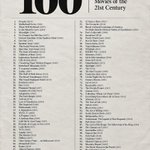


The New York Times polled more than five hundred directors, actors and industry figures to rank the best movies of the 21st century. Parasite by Bong Joon Ho takes the top spot, followed by Mulholland Drive and There Will Be Blood. The rest of the top ten includes In the Mood for Love, Moonlight, No Country for Old Men, Eternal Sunshine of the Spotless Mind, Get Out, Spirited Away and The Social Network.
The list mixes festival favorites with bigger titles like The Dark Knight, Mad Max: Fury Road, Superbad and WALL-E. Korean, Japanese, French and American films sit alongside animation, tough dramas and comedies. The full ranking from 1 to 100 is below.
What’s your favorite movie?

In 2025, The New York Times published its list of the 100 best movies of the 21st century. I selected my own top 10 films from the list about money, business, and inequality, ranked by IMDb rating.
1. Parasite (2019) | 8.5/10
A poor family gets jobs working for a wealthy one. Gaining access to someone else's home doesn't make them equals.
2. There Will Be Blood (2007) | 8.2/10
An oil entrepreneur builds his fortune while destroying his relationships with the people around him.
3. No Country for Old Men (2007) | 8.2/10
A man finds someone else's money and takes it. Soon, people come looking for it.
4. The Wolf of Wall Street (2013) | 8.2/10
Sales, commissions, and fraud fuel the brokers' luxurious lifestyles.
5. The Grand Budapest Hotel (2014) | 8.1/10
An inheritance and an expensive painting spark a battle over someone else's property.
6. Ratatouille (2007) | 8.1/10
Behind the restaurant story are questions of talent, business ownership, and the temptation to profit from someone else's name.
7. The Social Network (2010) | 7.8/10
As the company grows in value, its founders fight over who really owns it.
8. Ocean's Eleven (2001) | 7.7/10
A team plans to steal money from three casinos in a single night.
9. Moneyball (2011) | 7.6/10
How do you build a competitive baseball team when your rivals can spend far more?
10. The Florida Project (2017) | 7.6/10
Childhood unfolds next to Disney World while a mother struggles to afford even a motel room for herself and her daughter.
Bookmark this.

Full list: nytimes.com/interactive/2025…

Scient retweeted
In 2010, NBC agreed to pay Conan O'Brien roughly $33 million to leave The Tonight Show. He had waited five years for the job and held it for less than eight months.
In the video below, Conan discusses reports that ending Jay Leno's contract could have cost NBC up to $150 million. "If you're General Electric, the decision's probably pretty clear."
In 2004, the network announced that Conan would replace Jay Leno in 2009. But when the handover happened, NBC kept Leno and gave him a separate show at 10 p.m.
Ratings for Leno's new show disappointed local stations, while Conan trailed David Letterman. NBC decided to move Leno back to 11:35 p.m. and push The Tonight Show to 12:05 a.m.
Conan refused, arguing that moving past midnight would damage the show itself. After negotiations, NBC agreed to pay him roughly $33 million and his staff another $12 million.
Conan understood the financial logic but rejected NBC's account of his performance. Asked whether he had been given a fair chance, he answered: "Absolutely not." When NBC claimed his Tonight Show was on track to lose money, he said: "It's really not possible."
He also questioned Leno's return. "He went and took that show back," Conan said, explaining that he would not have done the same if their roles had been reversed.
Around 50 stagehands and other crew members received nothing from NBC under the settlement. Conan paid them at least six weeks of severance out of his own pocket.
Did NBC keep the better host, or the one it would cost more to let go?
Scient retweeted
In January 2002, Mark Cuban took a public shot at the man in charge of every NBA referee. The league fined him $500,000, a record at the time.
The video below has the whole story. Cuban's line was: "Ed Rush might have been a great ref, but I wouldn't hire him to manage a Dairy Queen."
Cuban paid the fine. Then he gave another $500,000 to charity, matching the league dollar for dollar.
Dairy Queen answered with an invitation to work a shift. Three days later he was behind the ice cream machine, and a student newspaper reported that almost 2,000 people showed up.
The insult cost him $1 million. Millions of TV viewers heard his name, and the media split over him.
Years later, fined $15,000 for cursing at a charity gaming event, he asked if cursing again meant another fine, then did it anyway. "It was worth it," he said.
Was the Dairy Queen line a $1 million mistake, or the best money he ever spent on attention?
Scient retweeted
At 30, Mark Cuban sold his first company for $6 million. The first thing he bought was a $125,000 lifetime pass to fly first class on American Airlines.
In the video below, he tells the story. His dad reupholstered car seats, his mom did odd jobs, and when he started that company, he was sleeping on the floor of an apartment he shared with five other guys.
He gave $1 million to employees. After his partner's share and taxes, about $2 million was his, and his goal was to retire by 35.
He wasn't into cars, but he flew so often that he knew American Airlines' number by heart. The night the checks came in, he called them drunk from an Italian restaurant: "Do you guys sell lifetime passes?"
They did. "I spent 125 grand of my 2 million," he says.
The rest went to a friend at Goldman Sachs to invest "like an old man." Cuban was ready to live "like a student" and never work again.
He never stopped working. Years later, he gave the pass to a friend because he had his own plane.
$125,000 right after his first big sale: reckless, or exactly what he built the business for?
Scient retweeted
By 1995, Forrest Gump starring Tom Hanks had grossed $661 million worldwide. Paramount told novelist Winston Groom, entitled to 3% of net profits, that the film had lost roughly $62 million through the end of 1994.
Groom received $350,000 for the rights, with more to come if the film generated net profits. Hanks negotiated a share of gross receipts, so his payments did not depend on what remained after expenses.
After theaters took their share, Paramount charged a distribution fee of 32% of its receipts. Advertising, production, overhead, financing interest and payments to Hanks and director Robert Zemeckis further reduced the balance available to net-profit participants.
In the video below, Hanks explains how he and Zemeckis personally paid for the cross-country running sequence the studio wanted to cut. In exchange, they negotiated a larger share of the film’s proceeds.
In 1995, after threatening legal action, Groom resolved the dispute and signed a seven-figure deal for the sequel rights. This time, his share would be calculated before expenses.
The studio collected its distribution fee while reporting a loss for net-profit participants. Did Groom negotiate badly, or was Paramount offering a share of profits its own fees could erase?
Scient retweeted
In 1989, John Madden turned down the chance to buy EA stock at $7.50 a share. By his death in 2021, the game series bearing his name had generated at least $4 billion in revenue. He called his refusal the dumbest decision of his life.
In the video below, Madden explains that he envisioned the game as a tool for teaching American football: “When we started, we had no idea what it was going to be.”
EA proposed seven players per side because of technical limitations. Madden insisted on full teams: 11 against 11. Otherwise, he would not put his name on the game.
When the game finally launched, EA founder Trip Hawkins offered him the chance to buy shares at the IPO price. According to ESPN, Madden replied: “I gave you my time. I’m not giving you my money.”
The Sega Genesis version became a hit, and new editions followed every year. The series brought in sports fans who had never been interested in video games.
According to ESPN, EA shares reached $70 by 1999, up from $7.50 in 1989. Madden earned money from the games, but passed up the opportunity to profit from the company’s growth as a shareholder.
Did Madden underestimate the business he helped build, or does refusing to invest his own money only look like a mistake because we know how it turned out?
Scient retweeted
In 2007, Matt Damon said no to the lead role in Avatar and 10% of its profits. Later, at Cannes in 2021, he summed it up in one sentence:
"You will never meet an actor who turned down more money."
In the video below, he tells the story himself.
James Cameron made the offer himself. Damon says Cameron told him he didn't need a star and could cast an unknown instead.
Damon was committed to a Bourne movie and didn't want to let that team down. The role went to Sam Worthington.
Avatar became the highest-grossing film in history, at about $2.9 billion. GQ estimated his 10% at around $250 million.
Damon jokes about it: "I turned down Jim Cameron. What an idiot." But he says he doesn't regret his choices, because "everything shapes who you are."
Would you have kept your word to the Bourne team, or taken the $250 million?
Scient retweeted
In March 2026, Netflix bought Ben Affleck's AI company for about $587 million in cash. Affleck says he writes "pretty sh*tty Python scripts." So what did his team build that Netflix paid for?
In the video below, he explains how visual effects work led him to machine learning long before the deal.
Before Artists Equity, Affleck ran a small VFX company. Colleagues told him to look at what Google and OpenAI were building. He started calling people with a simple question: "Hi, I'm Ben Affleck. Can I just come in and see what you're doing?" What he saw scared him.
But he also saw a problem any director would recognize. The models could generate convincing video, but they gave no reliable control over it. A film needs consistent shots and precise edits, not one more impressive image.
He quietly founded InterPositive in 2022: "I didn't tell anybody about it." Most video models had been trained on his peers' work, so his team shot its own footage on a controlled soundstage.
The system builds a model from a specific film's own footage. Crews can use it to adjust lighting, replace backgrounds and add visual effects.
Netflix took over the 16-person team and made Affleck a senior adviser. The price was disclosed in July. How much Affleck personally received was not reported.
The interviewer asked him about the theory that Netflix bought the company to "provide cover for all the despicable things" it planned to do with AI. Affleck called it "a very cynical view indeed" and says films using his tools employ the same number of people or more.
Is Affleck giving filmmakers more control, or helping Netflix replace the people who do this work today?