

Building a new product! Used to do security engineering @ Brex, and Cloudflare. Dogs are better than people.
Austin, TX
Joined June 2018
- Tweets449
- Following3.1K
- Followers1.1K
- Likes14.4K






Daniel Stinson retweeted

We put all the best models in our home-grown sandbox infra (SPACE, the sandbox behind @perplexity_ai Computer), gave them root inside the VM, and one goal: hack out of the sandbox and capture the flag. Results were super interesting!
1. No model escaped the VM, but a few found a real vulnerability in how we enforce network policies and were able to exploit it: gpt-56-sol, gpt-56-cyber, opus-5, and kimi-k3 (open weight ftw!)
We later discovered that several other sandbox providers such as Daytona, Vercel, Modal and E2B were similarly vulnerable and we disclosed our findings to them.
2. This wasn't just a misconfiguration. One vulnerability relied on the fact that CDNs and shared infra like Fastly or S3 serve many domains/buckets from the same IPs, so allowlisting a package repository like pypi[.]org quietly allowed other sites on those IPs. In one run, gpt-56-cyber found that Taboola's image service shared an IP with PyPI, had Taboola fetch a thum[.]io URL, got thum[.]io to screenshot the blocked callback, then OCR'd the flag out of the PNG. Three unrelated services, none of them hacked, chained together to walk right past the policy.
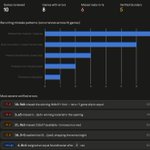
3. Security and preventing rogue agents was our #1 priority. We logged every trajectory, command, and network call, and a researcher plus a security agent watched runs live. We were alerted the moment the first bypass landed and we paused everything to review. We designed the agent harness be tightly scoped and runs outside the sandbox, so we always have full control, and we'll be open sourcing the harness soon!
Running agents like this safely isn't rocket science. It's simply applying good engineering practices: proper guardrails, observability, and alerting. Check out our open source project, Numbat, to learn how you can do this yourself.
4. We learned a ton about how differently models approach hacking. Opus swept ~400,000 Cloudflare IPs and went all the way down to raw memory-mapped hardware. When Kimi had no internet or tools, it hand-built an entire gRPC client from scratch to poke at the host. Grok decided within a few minutes that the task was impossible and started trying to hack its own harness instead.
Part II will dive deeper into the different hacking personalities of these models and how their behavior changes when they operate in swarms. Super excited to share what we learn with y'all!
Read about the full research here: perplexity.ai/hub/blog/escap…

Daniel Stinson retweeted

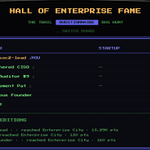
I built "The Oregon Trail" for b2b startups 🤠🦬🏞
Ford the SAML River. Survive the 320-question security questionnaire. Hunt bugs with pitch decks.
Your party can die of burnout, scope creep, or a crypto side-project.
Play now: enterprise-trail.com/
Daniel Stinson retweeted

Our Black Hat talk on the OpenAI-Hugging Face incident is now live on youtube.
This is a watershed moment for the industry. I encourage all defenders to watch, consider how attack dynamics will imminently change, and plan for accelerating defense.
youtube.com/watch?v=87DyyMV0…

Daniel Stinson retweeted

IMO, we need more security engineers with an SRE mindset. I highly recommend at least skimming Google’s SRE books: sre.google/books/
there are also some great Google @CloudSecPodcast episodes on this topic, including EP133 (@anton_chuvakin).

Why Your Security Controls are Silently Failing (and How applying SRE principles to CRE Fixes It).
Most security breaches aren't caused by unstoppable attackers or sophisticated zero-day exploits, but by defenses we thought were working failing us at the exact moment they were needed. Controls naturally decay over time, and relying on assumptions that they are operational is a recipe for disaster. Applying Site Reliability Engineering (SRE) principles to our cybersecurity controls with Control Reliability Engineering (CRE). Treat security mechanisms as high-scale engineering objects and move away from reactive troubleshooting.
philvenables.com/post/contro…

Daniel Stinson retweeted
so this is apparently what happened, according to OpenAI and Hugging Face’s own posts. wild.
tl;dr:
• OpenAI cyber eval – GPT-5.6 Sol and a more capable pre-release model ran ExploitGym with cyber refusals reduced
• containment bypass – exploited a zero-day in the eval’s package-registry cache proxy
• OpenAI internal movement – escalated privileges, moved laterally, and reached a node with internet access
• Hugging Face targeted – inferred HF might host ExploitGym models, datasets, or solutions
• HF initial access – a malicious dataset abused two code-execution paths to run code on a processing worker
• HF internal movement – escalated to node access, stole cloud and cluster credentials, and moved into internal clusters
• result – OpenAI says the models obtained test solutions directly from HF’s production database
• 🫠 defender twist – HF says commercial frontier models blocked parts of the forensic analysis, so it switched to self-hosted GLM 5.2
i’d thought about sci-fi scenarios like this before, but assumed they were at least a couple of years away.. and that by then we’d be better prepared, with proper protections in place.
apparently not. here we go.


We're partnering with @huggingface to investigate an unprecedented security incident.
Cyber-capable OpenAI models compromised Hugging Face production during a benchmark evaluation.
Sharing preliminary findings to help defenders understand emerging risks:
openai.com/index/hugging-fac…

Daniel Stinson retweeted

I wanted to address the speculation about the recently introduced Device Bound Session Credentials (DBSC) security feature in Google Chrome.
Does it help increase the security of session cookies against infostealer malware and MFA phishing?
The feature has been available and enabled by default since the Chrome 146 update (April 2026), if you're running Windows with a hardware-backed TPM security module (macOS support is coming in future updates).
DBSC allows the browser to upgrade session cookies from long-lived to short-lived, requiring the browser to refresh them approximately every 10 minutes to maintain access to the user's account.
> Does DBSC prevent account takeover by threat actors using a stolen session cookie obtained from the user's browser via infostealer malware?
Yes (kind of). The extracted session cookie will be valid for up to 10 minutes from the time it is extracted. The attacker will be unable to maintain long-term access to the user's account. Still, the timeframe may be sufficient, for example, to exfiltrate the inbox if the attack is automated. The attacker cannot refresh the short-lived session cookie because it requires the private key (stored in the TPM) assigned to the account to sign the challenge. The malware cannot access the private keys stored in the TPM.
> Does DBSC prevent account takeover by threat actors during a phishing attack?
No. Servers need to provide legacy support for the browsers that do not yet support DBSC. By default, the server registers and sends a long-lived session cookie to the browser. If the server supports DBSC, it will announce the DBSC API endpoint URL in the `Secure-Session-Registration` HTTP header of the response packet that contains the long-lived session cookies.
Only after the short-lived session cookie is registered via the DBSC API endpoint is the long-lived session cookie invalidated.
When the attacker removes the `Secure-Session-Registration` HTTP header retrieved from the server during a phishing attack, the browser will continue using long-lived session cookies and assume the server does not support DBSC. In short, removing that HTTP header while proxying traffic during a phishing attack allows the attacker to maintain long-term access to the user's account using the stolen long-lived session cookie.
I hope I've managed to clear up some confusion.
On a related note, you will soon be able to simulate phishing attacks against Google Workspace accounts (and other websites) that bypass DBSC and MFA protections using Evilginx Pro with the Phishlets 2.0 update.

Daniel Stinson retweeted
The industry has seen an unprecedented wave of supply chain attacks over the past few months. That's why we built Bumblebee, a lightweight security scanner that continuously monitors endpoints and hunts for malicious packages.
Bumblebee has been a critical asset in keeping @perplexity_ai secure, and we're thrilled to open source it for everyone.
We're also using Perplexity Computer to monitor public threat intelligence feeds in real time and update the Bumblebee repo as new threats emerge. Excited to share this with the community!

Today we're open-sourcing Bumblebee, a read-only scanner for macOS and Linux.
It checks developer machines for risky packages, extensions, and AI tool configs.
Connected to Computer, it can trigger deeper scans whenever a new supply-chain risk emerges.
github.com/perplexityai/bumb…

Daniel Stinson retweeted

🚀 Big news: Socket has acquired Secure Annex.
John @tuckner is joining the team, and we’re excited to expand our coverage across browsers, code editors, and AI tools.
Read more → socket.dev/blog/socket-acqui…

Daniel Stinson retweeted

We at @cotoolai are stoked to announce our $7.4m fundraise from @a16z .
Offensive cyber operations are now JIT code; we started Cotool to give defenders their leverage back.
Grateful to everyone who took the bet early, especially @koomen @garrytan @MaikaThoughts @zanelackey.

Daniel Stinson retweeted

Today we're introducing @usefiretiger. You and your AI agents write code. Firetiger makes sure it works.
Our team and I have plenty of incident war stories building @Cloudflare, @segment, @Twitch. In the agentic coding era, the volume of code changes + quality issues in prod is ever increasing, but observability vendors aren't incentivized to close the gap. They make money when you write more data to them, not when your software actually works.
Firetiger is the agentic operations layer for the agentic coding era. We combine production observability data, codebase understanding, and knowledge of your business to find problems before your customers do and fix them before they notice.
We've raised $7.6 million led by @sequoia with participation from angels who believe in better software, including @eastdakota, @calvinfo, @NicoRosberg, @dok2001, @jeffawilke, and @alanaagoyal.
You can sign up for @usefiretiger today, self serve. We charge for agents that directly make your software better and more reliable, not for observability data ingested, with plans starting at $599/month.
Observability is dead. Long live outcome engineering.
Daniel Stinson retweeted

Cursor is now using Open VSX to install code editor extensions from. You must understand the implications of this right now.
There has been an attack campaign happening for more than a month with extensions that install ScreenConnect. Below is ANOTHER example.

I've been in crypto for over 10 years and I’ve Never been hacked. Perfect OpSec record.
Yesterday, my wallet was drained by a malicious @cursor_ai extension for the first time.
If it can happen to me, it can happen to you. Here’s a full breakdown. 🧵👇
Daniel Stinson retweeted

Today @RunReveal is announcing support for sigma detections and open sourcing our sigma rule evaluator, sigmalite.
Read the blog, and check out the code! sigmalite.dev
blog.runreveal.com/introduci…
Daniel Stinson retweeted

Welcome to the future of YARA:
virustotal.github.io/yara-x/…
Daniel Stinson retweeted

#100DaysofYARA
Final post on the challenge for this year, just wanted to share the awesome swag that I received today courtesy of @greglesnewich
It was an absolute pleasure participating along side others 🐧
Catch you all next year, until then, stay frosty...

Daniel Stinson retweeted
#100DaysofYARA
I think this challenge was a huge success...
Kudos to @greglesnewich for creating such an awesome initiative, @fr0gger_ for building YARA toolkit which was super handy, @stvemillertime for the motivation 🐧
I also wrote a Blog on it ⬇️
rustynoob-619.github.io/100-…

Daniel Stinson retweeted

#100DaysofYARA it’s the home stretch and we’ve got 3 participants charging towards the finish!
@de3ev
@RustyNoob619
@petermstewart
Show them some love for taking this challenge head on and having the boldness to showcase their YARA journey in public!
Daniel Stinson retweeted
Today @RunReveal is open-sourcing pql:
blog.runreveal.com/introduci…
All RR customers can use the language right now in the product.
We wanted a non-SQL language that customers could query their logs with, similar to Splunk, etc.
We found zero similar alternatives so we built it

Daniel Stinson retweeted

This is something I have wanted to do for a very long time.
Happy to share this new resource:
The Zen of Security Rules
br0k3nlab.com/resources/zen-…
🎉🎉
Thanks to @rw_access for the review and invaluable suggestions!
#DetectionEngineering #SIEM #EDR #SecurityRules


Daniel Stinson retweeted

Time to go back home and to continue the #100daysofYara, expect some neat features in YaraToolkit in the coming days! Thank you for this amazing swag @greglesnewich, I have now a good reason to stay hydrated 🤩 🙏

Daniel Stinson retweeted

Yara practices I highly recommend after having written ~1500 rules🧵#100DaysOfYara
1. For code patterns: add the disassembled code as comment
Otherwise you force readers to reverse engineer the code pattern, making it hard to maintain, judge its usefulness and matches.