







Pinned Tweet
Two inches of silver metal at the toes decide whether this plaza shot reads as fashion or as a corporate brochure.
Run the thumb test. Put your thumb over both toe caps and look again: glass towers, a black knit, a black mini, grey sheer tights, hands on the waist. Competent, expensive, forgettable. It reads like an annual report cover. Lift the thumb and the whole frame gets a point. Every vertical line in the glass falls toward those two bright tips.
The single switch: Soft = curtain-wall glass + ribbed curved facade + all-black knit and mini + smoky sheer legs. Hard = the silver metal caps on black pointed pumps. That is the only cold, reflective, noisy thing in the picture, so leave it alone.
Why the architecture helps: the camera sits almost on the wet paving and tilts up. The tile seams run from between her feet straight back to the vanishing point. The left towers lean in, the curved building on the right bends around her like a rib cage. All of that geometry funnels down, and what it lands on is the shoe tip. A low wide stance only looks powerful when the ground lines finish at something hard.
What not to add: no shiny bag, no metal belt, no glasses, no earrings catching light. Each one is a second Hard, and the toe caps stop being the full stop at the bottom of the sentence. Keep the knit matte. Let the tights carry a soft sheen, not a second highlight.
Steal this: on any glass-and-stone plaza, dress everything above the ankle in one quiet color. Spend the whole budget on one hard detail at floor level, then shoot from the floor so the building points at it.
Prompt keys: extreme low angle wide, A-stance hands on waist, black knit + black mini, grey glossy sheer tights, black pointed pumps with silver toe caps, glass towers + curved ribbed facade, wet stone paving, overcast cool light, film grain.
つま先の銀色の金属、たった数センチ。それでこの広場の一枚が「ファッション」になるか「会社案内」になるかが決まる。
親指テストをやってみて。両足のトゥキャップを親指で隠して見直す。ガラスのタワー、黒のニット、黒のミニ、グレーのシアータイツ、腰に手。ちゃんとしていて、高そうで、記憶に残らない。年次報告書の表紙みたい。親指を外すと、フレームに急に焦点ができる。ガラスの縦線が全部、あの二つの光る先端へ落ちていく。
スイッチは一つだけ。Soft=カーテンウォール+リブの曲面ファサード+黒ニットとミニ+スモーキーなシアーの脚。Hard=黒いポインテッドパンプスの銀のトゥキャップ。冷たく反射して主張するのはそこだけ。だから触らない。
建築が効く理由:カメラは濡れた石畳すれすれから見上げている。目地は両足のあいだから消失点へまっすぐ伸び、左のタワーは内側へ倒れ込み、右の曲面ビルは肋骨のように彼女を囲む。幾何学がぜんぶ下へ流れて、行き着く先がつま先。低くて広いスタンスが強く見えるのは、地面の線が硬い何かで終わるときだけ。
足さないもの:光るバッグ、金属ベルト、眼鏡、光るピアス。どれも二つ目の Hard になって、トゥキャップが文末の句点じゃなくなる。ニットはマットのまま。タイツは柔らかい艶まで。二つ目のハイライトにしない。
盗むなら:ガラスと石の広場では、足首から上を静かな一色でまとめる。予算は床の高さの硬いディテール一点に全部使って、床から撮る。建物がそこを指すように。
#streetstyle #lowangle #pointedtoe #ストリートスナップ #フィルム写真


The face has to stay off the camera, with the head back and the eyes almost shut.
She sits on the tiled ledge in a brown trench, one hand down on the tiles, brown heels on the pavement. The face is tipped up into the window light, not toward the lens, and the lids are nearly closed. Neon colors the glass and the shoulder of the coat. Bring the chin down, or open the eyes on the camera, and the same ledge becomes a direct portrait. Leave the head where it is, and the expression stays in the neck and the closed lids, not in a look at the lens.
The heels can remain on the ground through either version. What changes is only the head.
Prompt keys: head tipped back, eyes nearly closed, face off the camera, brown trench, tiled window ledge, brown heels, neon in the window.
顔はカメラから外し、頭を後ろに、目はほとんど閉じたまま。
タイルの台沿に座り、茶色のトレンチ、片手はタイルの上、茶色のヒールが地面についている。顔は窓の光へ向いて上がり、カメラへではない。まぶたはほとんど閉じている。ネオンがガラスと、コートの肩に色をつけている。顎を下ろすか、カメラに目を開けば、同じ台沿が、正面のポートレートになる。頭をそのままにすれば、表情は首と閉じたまぶたにあり、カメラを見る目にはない。
ヒールは、どちらの場合も地面に残せる。変わるのは、頭だけだ。
Prompt keys: 後ろに倒した頭、ほぼ閉じた目、カメラから外した顔、茶色のトレンチ、タイルの窓沿、茶色のヒール、窓のネオン。

8
346
The doorway only holds if you stay back far enough for a full seated figure.
The orange-red doors stand on both sides of the opening. Inside, she sits facing the camera, hands together on her knees, in a dark coat and a plaid scarf, light jeans, dark sneakers on the floor, a bag on the seat beside her. The overhead light is even and warm. Come in too close, or cut at the waist, and the doors still frame something, but her feet and the bench go. From outside, at this distance, the opening still contains the whole sit.
If you try another frame, keep the sit and the look to the camera. Walk the distance until both doors remain at the sides and the sneakers are still on the floor.
Prompt keys: night doorway, orange-red doors, full seated figure, facing the camera, hands together on the knees, dark coat, plaid scarf, light jeans, dark sneakers.
扉の外で、座った全身が残る距離まで下がらないと、この開口は成立しない。
オレンジがかった赤い扉が、開口の両側にある。車内に座り、こちらを見ている。両手は膝の上で揃えている。暗いコート、格子のスカーフ、薄い色のジーンズ、足元は暗いスニーカー。横の席にバッグ。上の灯は暖かく、むらが少ない。近づきすぎるか、腰の位置で切ると、扉は残っても、足と座席は消える。外から、この距離なら、開口のなかに座った全身が収まっている。
別の一枚を試すなら、座りと、カメラへの視線はそのまま。両側の扉が残り、スニーカーが床に残るところまで、距離を歩く。
Prompt keys: 夜の開口、オレンジがかった赤い扉、座った全身、カメラを向く、膝の上で揃えた両手、暗いコート、格子のスカーフ、薄い色のジーンズ、暗いスニーカー。

1
8
370
The wand has to stay off the face, leaving a gap for the smile.
She is on the yellow seat, smiling at the camera, a white wand held up beside her cheek. The blowing ring sits close, but it does not cross the mouth or the eyes. That small space is the decision. Bring the wand in front of the face, and the smile is blocked. Drop it to her lap, and you have only the smile, with the wand out of the way. Keep the gap — wand up at the cheek, face still clear — and both can be read at once. The bottle in the other hand stays lower, out of that same line. Bubbles can hang in the air around the gap; they do not replace it.
For the next take, leave her on the seat and keep the smile. Move only how close the wand sits to the face, and watch that gap.
Prompt keys: wand off the face, gap to the smile, yellow seat, bunny-ear hat, pink knit, green scarf, bottle held lower, soap bubbles in the air.
吹き口は顔から離し、笑顔とのあいだに隙間を残す。
黄色い席に座り、こちらに笑っている。白いワンドを、頰の横に上げている。吹き口の輪は近いが、口にも目にも重なっていない。その小さな隙間が、決めるところだ。ワンドを顔の前に出せば、笑顔は隠れる。膝まで下ろせば、笑顔だけが残り、ワンドは脇へ外れる。頰の横に上げたまま、顔を開けておけば、両方読める。もう一方の手のボトルは、それより下にあり、同じ線に入らない。まわりのシャボン玉は、その隙間の代わりにはならない。
次に試すなら、席と笑顔はそのまま。動かすのは、ワンドが顔にどれだけ近いかだけ。隙間を見る。
Prompt keys: 顔から離したワンド、笑顔との隙間、黄色い席、ウサギの耳の帽子、ピンクのニット、緑のスカーフ、下に持ったボトル、空中のシャボン玉。

6
360
The look back has to come from the counter, while she is still leaning on it.
She is at the stall in a white tank and dark shorts, one hand on the wooden edge, her body still turned to the wood, the face coming around to the camera. A white cup sits under the hanging lamp. If she steps off the counter to look back, the turn happens in the aisle, and the lean is gone. The two have to stay together: weight on the wood, face coming back from there.
A closer stand keeps the cup and the wood of the counter large. A step into the aisle makes a row of stalls with a smaller figure. Either can be done on purpose. What you should not split is the lean and the look.
Prompt keys: stall counter lean, look back from the lean, white tank, dark shorts, one hand on the wood, white cup, hanging lamp.
振り返りは、台に身を預けたまま行う。
白いタンクトップに暗い色のショートパンツで屋台の前に立ち、片手は木の縁、体はまだ台のほうを向いたまま、顔だけこちらへ戻っている。白いカップが吊りランプの下にある。振り返るために台を離れると、その動きは通路で起き、預けは消える。ふたつは一緒でないといけない。体重は木の上、顔はその位置から戻る。
近づいて撮れば、カップも、台の木目も大きく残る。通路へ一歩出れば、屋台の列のなかの、より小さな人になる。どちらも、意図してできる。分けてはいけないのは、預けと振り返りだ。
Prompt keys: 屋台の台に身を預ける、預けたまま振り返る、白いタンクトップ、暗い色のショートパンツ、木に置いた片手、白いカップ、吊りランプ。

6
241
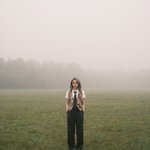
She has to stay small in this field.
She stands in the grass with her hands in her pockets, in a white shirt, a patterned vest, a tie, and dark trousers. Glasses are on. A wide run of green sits around her, and a pale sky of fog rises above, with a soft tree line far back. She is a standing figure in that space, not a close portrait.
For the next take, keep the same stance and the same clothes. Change only how far back you stand. Walk in, or crop to the waist, and the field tightens around her. Stay back until she remains a small figure in the grass, with that pale air still above her, and a stretch of green still in front of her feet.
Prompt keys: small figure in a grassy field, pale fog, distant tree line, hands in pockets, white shirt, patterned vest, tie, dark trousers, glasses.
この草地では、彼女は小さくいる。
草の中に立ち、両手をポケットに入れている。白いシャツ、柄のベスト、ネクタイ、暗い色のパンツ。眼鏡をかけている。まわりには広い緑、上には淡い霧の空、遠くにやわらかい樹の列。その空間に立つ人の写真だ。
次を撮るなら、立ち方も服もそのまま。変えるのは、どこまで離れて立つかだけ。近づくか、腰の位置で切ると、草地は狭くなる。彼女が草の中の小さな人のままで、上に淡い空が残り、足元の手前にも緑が残る距離にいる。
Prompt keys: 草地の小さな人、淡い霧、遠い樹の列、ポケットに入れた手、白いシャツ、柄のベスト、ネクタイ、暗い色のパンツ、眼鏡。

1
3
392
The portrait starts at the feet, with the pool behind her.
She sits on the backrest of the orange sofa, facing us, both hands at her cheeks. Dark glasses cover the eyes, and a smile is still there beneath them. White flats and white socks rest on the seat cushions in the foreground. A grey shirt, a khaki skirt. Behind her the pool is a sheet of turquoise, and beyond the water a room is lit. The shoes, the smile, and the bright room form a vertical line through the picture.
For the next take, keep the glasses, the hands at her face, and the full seated figure. Change only the framing. Crop above the shoes, and the orange seat becomes a narrow strip. Leave the shoes and cushions visible, and the foreground gives the pool some distance. The room can stay small at the top; its light is enough.
Prompt keys: sit on orange sofa backrest, white flats resting on seat cushions, sunglasses, hands at cheeks, smile, grey shirt and khaki skirt, turquoise pool and lit room behind.
この写真は、足もとから始まる。プールは、その後ろに。
オレンジのソファの背もたれに座り、こちらを向いて、両手を頰に当てている。目を覆うサングラス、その下には笑顔。白い靴と白いソックスが、手前の座面に載っている。グレーのシャツ、カーキのスカート。後ろは水色のプール、その先には灯のついた部屋。靴、笑顔、明るい部屋が、画面の中央に縦の線をつくる。
次を撮るなら、サングラスも、頰の手も、座った全身もそのまま。変えるのは切り取り方だけ。靴の上で切ると、オレンジの座面は細い帯になる。靴とクッションまで残せば、手前の空間がプールとの距離をつくる。上の部屋は小さくていい。灯が見えれば十分だ。
Prompt keys: オレンジのソファの背もたれに座る、座面に載せた白い靴、サングラス、頰に当てた手、笑顔、グレーのシャツとカーキのスカート、後ろの水色のプールと灯のついた部屋。

4
467
From above, the pews stay in rows, and she stands in one of them.
The viewpoint is high, looking down into the church — not a straight drop from the ceiling, but high enough that the dark wooden benches recede as parallel lines toward the far steps. She stands in a white square-neck dress between two rows, one hand on each pew back. Light from the side window crosses the wood and the dress. At this height the face is small, and it is still present.
For the next take, keep the dress and both hands on the pews. Change only the height. Come down to the floor, and the rows become a wall of wood around a standing figure. Stay up here, and the benches keep their shape, with her placed in one gap.
Prompt keys: church from above, pew rows, stand between two pew rows, hands on both pew backs, white square-neck dress, side window light, face small but present.
上から見ると、長椅子は列のまま、彼女はその一列に立っている。
高い位置から教会を見下ろしている。天井からの真っすぐな落下ではない。暗い木の長椅子が、平行な列として奥の段へ見える高さだ。白いスクエアネックのドレスで、二つの列のあいだに立ち、両手で両側の背もたれを持っている。横の窓の光が、木とドレスを横切る。この高さでは顔は小さい。それでも、そこにある。
次を撮るなら、ドレスも、両側の手もそのまま。変えるのは高さだけ。床まで降りると、列は周囲の木の壁になり、立っている人の写真になる。この高さに残れば、長椅子は列の形を保ち、彼女はその隙間にいる。
Prompt keys: 上からの教会、長椅子の列、列のあいだに立つ、両側の背もたれに手、白いスクエアネックのドレス、横窓の光、小さくてもそこにある。

4
313
The aisle has to stay in the picture, with her seated in the middle of the stacks.
She sits in the corridor on a pile of books, a black cap on her head, both hands at her cheeks, her eyes closed, a small smile on her mouth. A black sleeveless dress, and black flats on the grey-green carpet. The shelves run back on both sides, and a line of ceiling lights follows the same path. That centered sit is what holds the picture together. The cap belongs to this corridor; it does not need to fill the frame on its own.
For the next take, keep the sit, the closed eyes, and the hands at her face. Change only how much of the aisle you leave around her. Come in until the near shelves fall out of the picture, and you have a closer portrait in a library. Stay back until both stacks still run past her and the lights still recede, and the corridor does the work.
Prompt keys: library aisle, sit on books, black graduation cap, hands at cheeks, eyes closed, black sleeveless dress, black flats, shelves and ceiling lights receding.
通路を残して、棚のまん中に座らせる。
本の通路に座り、黒い帽子をかぶり、両手を頰に当て、目を閉じ、口元に小さな笑み。黒いノースリーブのドレス、グレーがかった緑のカーペットに黒い平底の靴。左右の棚が奥へ走り、天井の灯も同じ方向に続く。まん中に座っているから、この写真は成り立つ。帽子は、この通路の中にあるから効く。帽子だけで画面を埋めなくていい。
次を撮るなら、座りも、閉じた目も、頰の手もそのまま。変えるのは、通路をどれだけ残すかだけ。寄って手前の棚が外れると、図書館の近景になる。両方の棚がまだ横を通り、灯が奥へ続く位置にいれば、通路が働く。
Prompt keys: 図書館の通路、本の上に座る、黒い学士帽、頰に当てた手、閉じた目、黒いノースリーブのドレス、黒い平底の靴、奥へ続く棚と天井の灯。

She is winking into the close crop: one eye shut, the other still looking.
She is close inside the car, in a pale fuzzy knit, holding a pale peach bouquet up toward her face. Window light catches her hair. The eye on the left of the frame is closed. The other stays open, and the mouth holds a small smile. The open eye still meets the camera.
The crop is already this close, and the bouquet is already at the face. For a next take, ask for a small smile. Close one eye gently, without wrinkling the nose. Keep the head angle and the bouquet position unchanged. Then make a second frame with both eyes open, and compare the two looks. The window light and the knit do not need to change. What you are testing is only the expression.
Prompt keys: inside the car, pale peach bouquet at the face, wink with one eye closed, pale fuzzy knit, window light, close crop.
寄った構図のなかで、片眼を閉じ、開いた目で見ている。それがウインクだ。
車内のかなり近く、ふんわりした淡いニットを着て、ピーチ色の花束を顔のほうへ持ち上げている。窓の光が髪に当たっている。画面の左の目は閉じ、もう一方は開いたまま。口元には薄い笑み。開いた目は、まだカメラを見ている。
すでに寄っていて、花束も顔のそばにある。次に撮るなら、薄い笑みをお願いする。片眼は、鼻にしわを寄せずに、そっと閉じる。顔の角度と花束の位置はそのまま。そのうえで、両目を開けた一枚も撮って、二つの表情を見比べる。窓の光もニットも変えなくていい。試すのは、表情だけ。
Prompt keys: 車内、顔のそばのピーチ色の花束、片眼を閉じたウインク、ふんわりした淡いニット、窓の光、寄った構図。

15
617
She is a clear figure under the lanterns, against streaked people.
She stands planted in the dark under the orange lanterns, both hands on a clear bottle at her chest, in a black sleeveless knit with a small heart opening, a pleated skirt, knee socks and shiny loafers, and a small bag at her side. People behind her are streaked. She is a clear figure; they are not. That contrast is what the picture shows, not a second subject to arrange.
If you try a next take, take the following as advice. Aim for a clear figure against streaked people. If her edges go soft too, that contrast disappears. If the people come out as clearly as she does, you get a sharp group in the same lights — another picture. Keep both hands on the bottle, and keep that contrast.
Prompt keys: clear figure under orange lanterns, streaked people, bottle in both hands, black sleeveless knit with heart opening, pleated skirt, knee socks, shiny loafers.
提灯の下で、彼女ははっきり、まわりの人は筋になっている。
暗いなか、オレンジの提灯の下に立って、透明な瓶を両手で胸の前に持っている。黒いノースリーブのニットにハート型のくり抜き、プリーツのスカート、膝下のソックス、光るローファー。小さなバッグが脇に下がる。後ろの人は筋になって見える。彼女ははっきり写り、まわりはそうではない。その対比が画面に出ているのであって、もう一人の被写体ではない。
次を試すなら、ここから先はアドバイスだ。彼女ははっきり、人は筋のままを目指す。彼女の輪郭までにじむと、その対比は消える。まわりまで同じようにはっきり写れば、同じ灯の下の、全員がシャープな集まりになる。それも別の写真だ。瓶は両手のまま、その対比を残す。
Prompt keys: オレンジの提灯の下ではっきりした人、筋になった人、両手の瓶、ハート型のくり抜きの黒のノースリーブ、プリーツスカート、膝下ソックス、光るローファー。

13
631
Keep the sea wide, and only let the face come back.
She is on the rocks in a thin leopard-print slip, her back half-turned, looking over her shoulder. A little hair lifts across the cheek. The sea is on the left, and the rocks extend to the right. The light is a warm backlight. The face stays readable in that light, not lost as a silhouette. Because the look has come only part of the way back, the same wide frame still holds the back, the thin strap, and the water behind her.
If she turns square to the camera, the sea remains in the picture, but it sits behind a facing portrait, and the line of the back is gone. I would keep the landscape width and change only how far the head turns. There is no need to cut this down into a tall close portrait just to enlarge the face. If you try this, keep the seat on the rock and the wide frame. Change only the turn of the head.
Prompt keys: wide seaside, look back over the shoulder, leopard-print slip, rocks, warm backlight, hair across the cheek, readable face.
海は広く残して、戻すのは顔だけ。
豹柄の細いスリップで岩に座り、背中をやや向けたまま、肩越しにこちらを見ている。髪が頰に少しかかる。海は左にあり、岩が右へ伸びている。暖かい逆光。その光のなかでも顔は読める。シルエットにはなっていない。振り返りが途中までだから、同じ広い画面のまま、背中も細いストラップも、後ろの海も残っている。
体まで正面に向ければ、海は画面に残っても、向き合ったポートレートの背景になり、背中のラインは消える。横の広さは保ったまま、変えるのは顔の戻り具合だけにしたい。顔を大きくしたくて、縦に寄って切る必要はない。試すなら、岩の上の座りと広い画面はそのまま。変えるのは、顔がどれだけ戻るかだけ。
Prompt keys: 横に広い海辺、肩越しの振り返り、豹柄のスリップ、岩、暖かい逆光、頰にかかる髪、読める顔。

19
626
This spiral only works if you are looking down it, and she has to look up.
The wooden rail curves away, the white uprights drop, and the pale steps keep turning out of sight. She stands in a light blue lace dress with a faint floral pattern, one hand at her hair, the other on the rail, her face lifted toward the camera. You are already above her. The height is moderate, not a dizzy drop, and that is enough: from here the stair keeps its spiral, and she has to look up to meet the camera.
Come down to her eye line on the same landing and the curve flattens into a run of steps behind a standing figure. The dress, the hand in the hair, and the hand on the wood can all remain. What changes is only how high you stand. I would get that height right before asking her to lean farther than she already is. If you try this, start above her so the spiral stays visible under the rail. A level view gives a different picture of the same stair.
Prompt keys: spiral stair from above, look up, light blue lace dress, hand at hair, hand on wooden rail, white uprights, pale steps.
この螺旋は、上から見て、彼女に上を向かせてこそ形になる。
木の手すりがカーブして遠ざかり、白い支柱が落ち、淡い段が奥へ巻いていく。淡いブルーのレースのドレスに、控えめな花。片手は髪、片手は手すり、顔はこちらを向いて上がっている。すでに上から見ている。目が回る高さではない。それでも十分で、この位置なら螺旋の形が残り、彼女は上を見るしかない。
同じ踊り場で目線の高さまで降りると、カーブは普通の段の並びに見え、人物の後ろに階段があるだけの構図になる。ドレスも、髪に置いた手も、手すりの手も、そのままでいい。変えるのは、立つ高さだけ。いまより深く身を傾けさせる前に、この高さを決めたい。試すなら、上から撮って、手すりの下に螺旋を残す。目線の高さで撮れば、同じ階段でも別の写真になる。
Prompt keys: 上からの螺旋階段、上を見る、淡いブルーのレースのドレス、髪に置いた手、木の手すり、白い支柱、淡い段。

The face stays sideways on this bench. That is already the picture.
She sits on the wooden slats in a black coat over a black knit, a tan hem and dark tights just showing under the coat. Both hands are stacked on the back of the bench, and her chin rests on them. The face is turned toward the cooler sky and the lit leaves, not into the camera. The stacked hands are a rest for the chin, not a gesture offered to the lens, and the side light on the cheek already separates her from the dark coat. The sideways look is what the rest of the pose is built around.
If she turns to meet the camera, you still have the same bench, the same coat, and the same stacked hands, but the sit becomes a direct portrait. I would rather keep the chin down and let the eyes stay out to the side, or turn them on purpose and accept the change. A new coat will not settle a look that has already come around. If you try this, keep the stacked hands and the dusk around her. Change only the direction of the gaze.
Prompt keys: park bench at dusk, chin on stacked hands, look sideways, black coat and knit, tan hem, dark tights, autumn leaves.
このベンチでは、顔はすでに横を向いている。
木のベンチに座り、黒いコートの下に黒いニット。裾に薄い茶色とダークなタイツが見える。両手を重ねて背もたれに置き、その手にあごを預けている。顔は、涼しい空と、光を受けた葉のほうへ向いている。こちらを見てはいない。重ねた手は、あごを預けるための休みで、見せるためのジェスチャーではない。頬の横光が、黒いコートから顔を分けてもいる。この座りは、その横を向いた目線のうえに組まれている。
カメラのほうへ顔を回せば、ベンチもコートも重ねた手も同じまま、正面のポートレートになる。あごは手の上に置いたまま目線を横に残すか、向き直ると決めてその変化を受け取るか、どちらかだ。向き直った目線は、コートを替えても戻らない。試すなら、重ねた手と暮れ方はそのまま。変えるのは、目線の向きだけ。
Prompt keys: 暮れ方の公園のベンチ、重ねた手にあご、横を見る、黒いコートとニット、薄い茶色の裾、ダークなタイツ、秋の葉。

Keep looking down the street. The person holding the camera should stay at my shoulder.
AT THE SHOULDER
I leaned on the stone sill in a loose white shirt, looking along the street, not at the camera. A small cup sits beside my arm. The shutter is at my back. In black and white, the other person is standing just inside, at my shoulder. From there they can see the side of my face and still leave the street in front of my hands. If they walk around to face me, I will have to turn, and that side view is gone.
AROUND IN FRONT
On another try, they can step in front of the window and ask me to look at them. Keep the shirt, the sill, and the cup. Change only where the other person stands. At the shoulder, I can keep looking out. In front, it becomes a face turned toward the holder. I would rather keep looking down the street and let the view stay where it is.
If you shoot this, stand at my shoulder and do not call me to turn.
Prompt keys: black-and-white window sill, looking down the street, white shirt, small cup, holder at the shoulder, stone ledge.
通りのほうを見続ける。カメラを持っている人は、私の肩の位置にいるべきだ。
AT THE SHOULDER
白いゆったりしたシャツで石の出窓に寄り、カメラではなく、通りの先を見ていた。腕のそばに小さなカップ。背中側にシャッター。白黒のまま、持っている人はすぐ内側、肩の位置に立っている。そこなら横顔が見え、手の前に通りも残る。正面へ回り込まれたら、私は向かざるを得ず、その横からの顔は消える。
AROUND IN FRONT
もう一度なら、窓の前に出て、こちらを見てと頼んでもいい。シャツも、出窓も、カップもそのまま。変えるのは、持っている人の立つ位置だけ。肩の位置なら、外を見たままにできる。正面へ出れば、持っている人に向いた顔になる。私は通りを見たままにして、その景色を動かしたくない。
撮るなら、肩の位置に立って、振り返らせない。
Prompt keys: 白黒の出窓、通りを見る、白いシャツ、小さなカップ、肩の位置で持つ、石の台。

The seat back has to stay large, or this stops being a portrait in a carriage.
CLOSE IN THE AISLE
I leaned on the wooden seat back, arms folded, and looked at the person standing in the aisle. The brown jacket and the dotted sheer cuffs can stay. Warm lamps run down the carriage behind me. What matters is how close that person stands. Here the wood already fills the lower part of the picture, and my face sits just above it. That is someone holding the camera in the aisle, close enough for a portrait, not a view of an empty train.
STEP BACK
If they take a step back, the lamps and the empty seats take over, and I shrink. Keep the lean and the look toward them. Change only how close they stand to the seat back. A step in keeps the wood large. A step back turns the carriage into the subject. You do not need a new pose to feel the difference, and you do not need to invent a lower viewpoint than this one.
If you try this, walk the aisle until the seat back fills the bottom, and ask me only to look at you.
Prompt keys: old train carriage, warm overhead lamps, lean on wooden seat back, look toward the holder, aisle stand close, brown jacket with dotted sheer cuffs.
木の座席の背が、大きく残らなければ、これは客車のポートレートではなくなる。
CLOSE IN THE AISLE
木の背に身を預け、腕を重ね、通路に立つ人を見た。茶色のジャケットと、黒いドットのシアーな袖口はそのままでいい。暖かい灯が、後ろの客車へと続いている。大事なのは、その人がどれだけ近くに立つかだ。ここでは、木がもう画面の下を大きく占め、そのすぐ上に顔がある。通路でカメラを持った人が、ポートレートになる距離にいる。空の列車の眺めではない。
STEP BACK
一歩下がると、灯と空席が大きくなり、私は小さくなる。寄りと、向こうを見る視線はそのまま。変えるのは、座席の背までの距離だけ。一歩入れば、木は大きく残る。一歩下がれば、客車が主役になる。その差を感じるために、新しいポーズは要らない。この写真にない、より低い位置を発明する必要もない。
試すなら、背が画面の下を埋めるまで通路を歩いて、私には、あなたを見てとだけ頼む。
Prompt keys: 古い客車、暖かい天井の灯、木の座席の背に寄り、持っている人を見る、通路で近くに立つ、ドットのシアー袖の茶ジャケット。

Leave the glass between us.
LEAVE THE GLASS
I leaned on the table in an off-white cardigan, one hand in my hair, looking to the side, not at the person across from me. A glass of water sits in the near space between the camera and my arms. The window light is already on my face. If you slide the glass aside, you get a clearer view of me, and you lose the sense that someone is sitting opposite, shooting over the table. This is a portrait taken from a seat, not a picture cleared of the table.
SLIDE IT ASIDE
On another try, move the glass out of the way and keep the same lean and the same hand in my hair. Change only whether the glass stays in front of the camera. I would leave it there. You do not need to rearrange the room. The other person just sits across the table and lets the glass stay close.
If you shoot this, do not pick the glass up to get a cleaner portrait.
Prompt keys: cafe window light, off-white cardigan, hand in hair, look aside, water glass left in front, holder across the table.
グラスは、私たちのあいだに置いたままにする。
LEAVE THE GLASS
オフホワイトのカーディガンでテーブルに寄り、片手を髪へ、向こうの人ではなく横を見ていた。水の入ったグラスが、カメラと腕のあいだの手前にある。窓の光は、もう顔の上にある。グラスを横へ退ければ、私はよりはっきり見える。その代わり、向かいに座ってテーブル越しに撮っている感じは薄くなる。これは席から撮ったポートレートであって、テーブルを片づけた写真ではない。
SLIDE IT ASIDE
もう一度なら、寄りも髪の手もそのままに、グラスだけ退けてもいい。変えるのは、グラスがカメラの前に残るかだけ。私は残したい。部屋を整える必要はない。持っている人は向かいに座って、グラスを近くに置いておけばいい。
撮るなら、きれいなポートレートにするために、グラスを取り上げない。
Prompt keys: カフェの窓光、オフホワイトのカーディガン、髪の手、横を見る、手前に残した水のグラス、テーブルの向かいで持つ。

The smile goes to the window, not to the person across the table.
TOWARD THE WINDOW
I sat in a dark sweater, one hand in my hair, and smiled toward the glass. The other person was at the table, with the camera at table height, not standing over me. In black and white, that is enough: a cafe seat, and a smile that is not aimed at the camera. If they say my name, I will turn, and the smile changes.
ACROSS THE TABLE
On another try, they can ask me to look over. Keep the sweater, the hand in my hair, and the seat by the window. Change only where the smile is aimed: out the glass, or back across the table. I would keep it on the window and let the person holding the camera stay quiet. You do not need to rearrange the table to feel the shift.
If you try this, sit at the table and do not call me back to look at you.
Prompt keys: black-and-white cafe window, smile toward the glass, hand in hair, dark sweater, holder at the table, table-height camera.
笑顔は、テーブルの向こうの人ではなく、窓へ向かっている。
TOWARD THE WINDOW
暗いセーターで座り、片手を髪へ、ガラスのほうへ微笑んだ。持っている人はテーブルにいて、カメラはテーブルの高さ、上から見下ろしてはいない。白黒のままで、それで足りる。カフェの席と、カメラに向けていない笑顔。名前を呼ばれたら私は振り向き、笑顔は変わる。
ACROSS THE TABLE
もう一度なら、こちらを見てと頼んでもいい。セーターも、髪の手も、窓際の席もそのまま。変えるのは、笑顔の向きだけ。ガラスの外か、テーブルの向こうか。私は窓に残して、カメラを持っている人には黙っていてほしい。その差を感じるために、テーブルを並べ直す必要はない。
試すなら、テーブルに座って、振り返らせない。
Prompt keys: 白黒のカフェの窓、ガラスへ向かう笑顔、髪の手、暗いセーター、テーブルで持つ、テーブルの高さのカメラ。
