

Web Design & SEO: https://xitter.cf/t.co/HLoI80ebs0 Virtual Staging: https://xitter.cf/t.co/09mi624se6 Voice Agent: https://xitter.cf/t.co/zEUKGmwzjn
Atlanta, GA
Joined July 2016
- Tweets627
- Following110
- Followers92
- Likes314




Pinned Tweet
Too busy with daily operations to build a website from scratch?
Here's a plug-and-play template built for your Home Service business, optimized to convert.
- trust signals that make homeowners pick up the phone
- before/after proof of work that sells itself
- clean, professional design ready to go live fast
Not a cookie-cutter theme. Not a $5k custom project. Just something in between.
simonx14.sg-host.com/
Getting ranked on Google and getting cited by AI are two different games.
Google rewards links and authority. AI rewards specificity and context.
When someone asks an AI who to hire for commercial flooring in Atlanta, it doesn't check your backlinks. It checks whether your content clearly answers the specifics(service, location, outcome).
Content written to solve a specific problem are the ones that gets cited.
Your Google rating is not the only rating that matters anymore.
AI search pulls from directories, review sites, and list pages to decide who to recommend. A 5.0 on Google will not save you if you have a 4.0 scattered across 10 other directories.
Find 2-3 that’s dragging down and send your next 10 customers there.
This costs nothing and it's one of the easiest things you can control in how AI search sees your business.
Commercial buyers don't care who else is on your client list. They care what changed for them.
”Companies we worked with” does not answer “what problem did they solve and how fast”.
Stop collecting names and start documenting results.
I've been a perfectionist most of my life.
It becomes a problem when it holds you back, makes you miss opportunities, or keeps you from taking action.
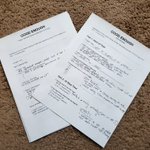
Over the past few weeks, I tested a worksheet call Good Enough.
Before each task, I wrote down what I feared would happen if I stopped on time. Afterward, I checked whether those fears came true, whether I stopped on time or not.
The results have been encouraging, so I'm building an app version, starting with an MVP.
Excited to share the build soon. 🛠️ 🙂

ALT Good Enough worksheets

ALT Good Enough MVP
Most visitors will skim a generic "Great service, highly recommend" review.
There's a difference between proof that converts and proof that gets ignored.
A review that reads "They fixed our drainage issue in one visit, no return trips" removes a specific objection before it's asked.
After every job, ask your customer what problem you solved and how long it took.
That answer becomes your most effective review.
Your reviews exist. Your results exist. Your before-and-afters exist.
They're just not on the page where someone is deciding.
Most businesses bury proof at the bottom or on a separate testimonials page.
Visitors don't scroll that far before they commit to anything.
The sequence that converts:
- state the outcome you deliver
- show proof it happened
- then ask for the next step
You're losing leads not because you lack evidence, but because you placed it where no one looks.
Switching to a new shiny tool will not solve your problems.
A new CRM, a new scheduling app, a new outreach platform won't fix inconsistent follow-through. This only changes the tool and not the behavior.
The people who build real traction aren't running better software. They've committed to one process long enough for it to work.
If the manual version isn't working, automating will just breaks at scale.
Home services that grows fast are not doing anything fancy.
They pick up the phone, show up on time, send same-day quotes, follow-up on estimate that didn't close, and ask reviews before leaving the driveway.
All obvious(not easy) but nobody does them with consistency.
The boring(critical) stuff done every time is the edge.

Five tries at something is barely a warm-up.
Most people decide something doesn't work before they've done it enough times to know.
Ten outreach messages, five posts, three cold calls. That's not a sample size, that's a start.
The data you need only shows up after volume.
You can't optimize what you haven't actually tried.
Adding more pages won't fix your local rankings if the pages you have don't tell Google what they're for.
A site with 30 vague service pages ranks worse than one with 5 specific ones.
"General contracting" is a category. "Kitchen remodels in Atlanta" is an answer to a real search.
Google doesn't reward effort. It rewards specificity.
If your pages are trying to rank for everything, they're ranking for nothing.
Your Google Business Profile and your website are not the same tool.
Maps gets you found. Your site gets you hired.
When you build both to do the same job, neither does it well.
Maps brings the lead. Your site is supposed to close it.
If your website is optimized to attract traffic but not convert it, you're leaving the most important job unfinished.

Your service pages are not ranking because Google doesn't know what they’re for.
Most home service sites try to cram everything into one page, making it harder to match specific intent.
The structure is simple: one page per service per location.
"Pest Control in Atlanta" and "Termite Control in Atlanta" are two different things, giving Google a clear signal.
You're not ranking because your individual pages are doing too much, not because they’re empty.
Day 1 of 5: Ingredient Scanner App
- build MVP playbook
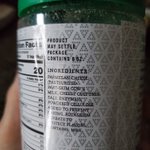
- pull ingredient(food label) dataset
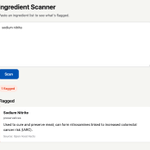
- flag bad ingredients
Context: This micro app is part of a larger experiment called Good Enough, which is the real experiment I'm testing.

ALT ingredient scanner playbook
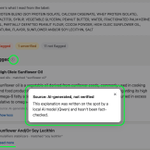
Day 4 of 5. Verified UI refinement are working and description of each makes sense. Also fix issue app not being able to read large dimension .heic photos.


Your CTA isn't the problem. Everything before it is.
“Book a call” works when the visitor already trusts you, understands your offer, and believes you can solve their problem, but most pages haven't earned that by the time the button appears.
The CTA gets blamed when conversion drops, even though it's only the final step.
If the copy hasn't made the case, changing the button won't fix it. Stop optimizing the CTA and write the copy that earns the click.