
Investor by day, history buff & football fanatic by night. ⚽️ Debating life's big questions one philosophical tweet at a time.
Singapore
Joined August 2021
- Tweets1.6K
- Following202
- Followers152
- Likes676



Uber has proved it can make transportation capacity more productive.
That is not the next question.
Waymo wants riders to choose Waymo.
Amazon can put Uber Eats behind the Prime relationship.
AI agents may eventually compare both on the customer’s behalf.
So, availability is no longer enough.
Uber needs a reason to be selected.
That is where Uber One becomes more interesting.
If membership benefits improve the actual offer price, pickup, service quality, rewards then the agent can still choose Uber even when Uber does not own the interface.
The next moat may be simple: not being available but being worth choosing.
nikhs.substack.com/p/uber-3q…
🤖 Made with AI

Nik_Maestro retweeted

Getting a lot of good debate here. My answers to some of the points made:
$UBER the company is fine. Bookings +20% a year. Last quarter +22%, $58B. Profits running ahead of sales. $10B of free cash flow. A utility.
The stock is not trading the business. It is trading robotaxi headlines.
SF, summer 2025. Waymos like cockroaches. Seamless. Impressive.
Uber is dead. Long live Waymo? Not so fast.
Waymo is real. 500k rides a week. 4,000+ cars. 14 cities. Still losing money, or close. $150–200k a car. About $2 a mile out, $1.40 back.
Hardware costs will collapse. They have not collapsed yet.
Tesla: cameras only. Works almost always. I own three. The “almost” is the problem. Rain. Snow. Range. Assume Elon solves it.
Uber is dead? Long live Waymo and Tesla?
Utilization. That is the whole game. Two hours on the road costs almost as much as ten.
People move at the same time. Peak 100 cars. Off-peak 20.
Buy 100: riders love you. 80 cars collect expensive dust. Extinction.
Buy 20: beautiful utilization. 5pm is hell. Riders leave. Extinction.
This is Uber.
Peak: Waymo or an HV. Off-peak: both. Love without the idle fleet. Utilization without the hate.
Waymo pays ~20% for that. Uber takes 28% on humans — that includes insurance. Extra hours more than cover the take.
SF, LA, Phoenix. AVs are not new there. Uber’s share is up, not down.
Management is not in denial. 7 cities live. 15 by year-end. Dozens of AV partners. Not a two-horse race.
London: 15 robot Mustangs on Uber. ~100,000 Ubers already there.
We may have this backwards. Cheaper rides grow the pie.
London black cabs: 22k → 13.8k. Ubers: ~100k. Cabs shrank. The market for hailed cars exploded.
Same movie. Prices fall. Market grows. Uber sits in the middle. Robots and humans. Same app.

Robotaxis will be a bond-like business, and $Uber wins.
Everyone is excited about Tesla robotaxis. I think the robotaxi business will get commoditized fast and turn into a bond-like business.
I'm making one big assumption here: self-driving technology will not belong to Tesla and Waymo alone. It will become a commodity, as ubiquitous as electricity, water, or the internet. Once that happens, whoever owns a robotaxi is competing with every other owner for a very limited return.
Turo is a good example. When owners first started renting their cars on Turo, the returns were attractive. Then competition showed up, and those returns got competed down to a small premium over corporate bonds, maybe 3% to 5%. The same will happen with self-driving cars.
The winner isn't the company that owns the cars but the one that connects car owners with passengers. That's Uber.
Palantir’s contracts are getting shorter.
That sounds bearish.
It may not be.
Palantir’s strongest argument is increasingly that the contract itself does not create the lock-in.
The customer owns the weights.
But the workflows, permissions, evaluations and retraining loops accumulate inside the Ontology.
Leaving can therefore become expensive even without a five-year commitment.
That is potentially a better business.
But it is also harder for investors to measure.
The contract is visible. The reconstruction cost is not.
nikhs.substack.com/p/palanti…
Lam Research is becoming more important to semiconductor manufacturing.
That part of the thesis is working.
3D DRAM, backside power, advanced packaging and more complex NAND all require more etch and deposition.
But Q1 forced an important correction.
Technical importance is not the same as pricing power.
ASML can charge for the scarcity of its machines.
Lam still must keep winning more process steps.
The toll is real.
The question is how much of it Lam gets to keep.
nikhs.substack.com/p/lam-res…

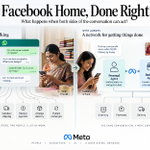
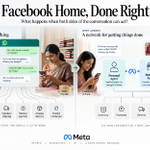
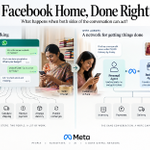
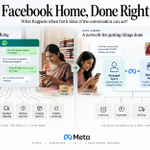
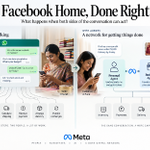
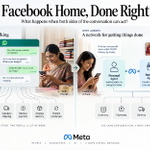
Meta’s agent thesis got stronger this quarter.
Muse passed 10 million users in six weeks.
Shopping is already its most popular use case.
But the most important development was somewhere else.
Meta created a new non-voting share class after internal forecasts contemplated raising hundreds of billions of dollars over several years.
That changes the investment question.
The issue is no longer simply whether Meta can build a valuable agent network.
It is how much capital it takes to build and how much of the resulting value each existing shareholder gets to keep.
nikhs.substack.com/p/meta-3q…
🤖 Made with AI

The most interesting thing TSMC said this quarter was that it is buying from another foundry.
GlobalFoundries will supply silicon interposers because TSMC does not have enough back-end capacity.
At first glance, that sounds like outsourcing.
I think it shows something more important.
AI chips are no longer just about the transistor. Logic, memory, interposers, substrates, power and cooling increasingly must work as one system.
TSMC does not need to manufacture every part.
It needs to remain the company responsible for making the whole thing work.
That is where the learning accumulates: yield, thermal behavior, materials, packaging and the handoffs between components.
The market already understands that TSMC will grow rapidly over the next two years.
The bigger question is whether this integration advantage survives the capacity buildout and keeps compounding after the shortage ends.
nikhs.substack.com/p/tsmc-3q…
In 2012, ASML’s customers paid because EUV did not yet work.
In 2026, they are paying because it works and they cannot get enough of it.
Customer advances have surged. Orders require deposits “enough to hurt.” ASML is rationing future capacity. And customers have accepted higher prices on its most critical tools.
That is the important change.
Scarcity has allowed ASML to renegotiate how much of the value it creates it gets to keep.
But ASML is also spending heavily to remove that scarcity.
So the investment question is no longer whether demand is strong.
It is whether today’s pricing power becomes tomorrow’s margin.
nikhs.substack.com/p/asml-3q…
What we said earlier. Meta's muse is aimed at smb not th fortune 500.

MongoDB fell 29% in six weeks.
The obvious story is the CEO departure.
I think the bigger story is that the market may have MongoDB in the wrong drawer.
Most software gets paid per seat. MongoDB Atlas gets paid for reads, writes, storage and compute.
If agents do more work, MongoDB can sell more of what it already monetizes.
Snowflake showed how powerful that reclassification can be. MongoDB may be next.
The key: our base case does not require it. At roughly today’s multiple, we still get to about $640 in three years.
AI is not the thesis. It is the mechanism that could force the market to refile the business.
MongoDB Is in the Wrong Drawer
nikhs.substack.com/p/mongodb…
Memory cycles eventually end.
That does not mean all their value has to disappear with them.
Micron is signing customers years forward, taking deposits and gaining better visibility into demand before new supply arrives.
The important question now is not whether today’s margins last forever.
It is what Micron does with the cash while they last.
If contracts support disciplined investment and excess cash retires shares at sensible prices, a temporary shortage can leave a permanent benefit per share.
My latest piece is about selling the cycle forward.
nikhs.substack.com/p/micron-…