

https://nitter.gq/t.co/YZtDAdykYf curiosity put to work | move fast without losing the details.
New Jersey
Joined February 2026
- Tweets137
- Following239
- Followers6
- Likes108




Pinned Tweet
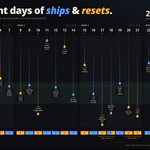
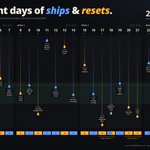
Started some benchmarking local AI models on Intel's Arc Pro B65 (32GB): 3 models, 2 llama.cpp backends, 7 rounds. Decided to document the process.
attack the findings, question the data, roast it.
Looking for feedback to further improve this process.

the 3-6 month core update recovery figure should end a lot of retainers that promise results in 30 days. probably won't tho 🫠... nitter.gq/TheCoolestCool/status/…

Google just exposed a huge SEO mistake 🤯
Exposed internal estimates for 23 crawling, indexing & search processes.
Some key numbers:
- Link signal processing: Up to 3 weeks
- Indexing after crawling: ~90 minutes
- Core update recovery: 3–6 months
- Existing page recrawls: ~30 days
- New URL discovery: ~20 hours
- Site migrations: 1–3 months
- Title changes: 1–2 days
Simply put, Google just gave marketers a better way to diagnose SEO problems before throwing more resources.
In case you’ve updated 20 pages but haven’t seen rankings move. Here’s what I’d do before rewriting anything:
1. Open Google Search Console. Use URL Inspection to check when Google last crawled your priority pages.
2. Compare crawl dates with your content update dates. If Google hasn't revisited a page, don't judge the rewrite by its rankings yet.
3. Once Google has recrawled it, compare impressions, queries & conversions against your baseline. If visibility improved but conversions didn't, investigate intent & the offer before creating more content.
Btw, I'd also maintain a simple change log: URL, update date, last crawl, indexing status & performance.
That way, you're not guessing whether an SEO change worked.
You're building a record of what Google has seen, what actually improved & where your next investment belongs.

llama.cpp is the reason intel arc is a real local ai option and not a forum argument. most of my b65 benchmarks start with a git pull. nitter.gq/ItsmeAjayKV/status/211…

llama.cpp official account is here, @llama_cpp
One of the most important piece of open-source software that helped Local LLM become so widespread.
Go ahead and follow.
good one. run a second filter for the ai-search era:
^(how|what|why|which|can|does|is)\b.{40,}
long, question-shaped queries are the ones ai overviews answer first. if you rank for them and clicks are flat, that's where the impressions went. nitter.gq/wespreadjam/status/211…

steal our favorite SEO hack:
- Go to Google Search Console
- Performance > Search results
- Add filter > Query > Custom (regex)
- Paste this:
"\b(vs|versus|alternative|alternatives|competitor|competitors|compare|comparison|pricing|price|cost|review|reviews|best)\b"
this shows you searches from people already comparing options, checking pricing, reading reviews, or deciding what to buy.
basically your highest-intent Google traffic hidden inside Search Console.
sort by high impressions + low clicks.
then take the page already ranking and add the exact comparison, pricing, alternative, or review section they’re looking for near the top.
done right, this will increase CTR, bring in a lot more qualified traffic, and convert more of the searches you already rank for.
same finding on intel. on my arc b65 the runtime gap ran 1.7x to 5.5x on the same model. your engine choice is a bigger spec than your gpu choice. nobody puts it on the box. nitter.gq/0xironyAditya/status/2…

if you’re stuck on one llm engine assuming it’s the best, check again
tested qwen 3.8 27b on 3090 (350w, 64k ctx) with 4 serving engines
hyperqwen: fastest at everything except loading. 180 tok/s avg, and 448 tok/s total at 8 users
tensorfold: same exl3 files as exllamav3 but writes faster thanks to dflash2 (170 tok/s). then takes 104s to start on a 50k prompt
exllamav3: 114 tok/s, solid on long prompts, but serves one request at a time. stays at ~62 total even with 8 users
llama.cpp: slowest writer (97 tok/s), loads in 16s, and topped livebench (61.8)
most importantly, no quality drop. all 4 landed within 3.5 points on livebench (58.3–61.8), which is noise at 180 questions
if you’re the only user, any of these is fine. if you’re serving a few people, it’s not close