
Lucsob (@sobcuer) header
Lucsob (@sobcuer) profile picture

Nephrologist. Hospital Universitario Central de Asturias. PhD. Universidad de Oviedo

Oviedo, Spain
Joined September 2016
Photo by Lucsob (@sobcuer)Photo by Lucsob (@sobcuer)Photo by Lucsob (@sobcuer)Photo by Lucsob (@sobcuer)Photo by Lucsob (@sobcuer)Photo by Lucsob (@sobcuer)Photo by Lucsob (@sobcuer)Photo by Lucsob (@sobcuer)Photo by Lucsob (@sobcuer)Photo by Lucsob (@sobcuer)
🔴 ORION-4: inclisiran (siRNA anti-PCSK9, 2 dosis/año) reduce de forma significativa los MACE en >16.000 pacientes con ASCVD. Es el primer ensayo de eventos positivo con una terapia de ARN de interferencia.
Falta conocer la magnitud del efecto: publicación en el 1S 2027.
2
20
80
3,550
La enfermedad renal diabética no albuminúrica (ERD-NA) ya representa el 20%–40% de toda la enfermedad renal diabética y hasta el 39%–55% de los casos con TFGe reducida. 👇🧵 @redGDPS @Diabetes_SEMI @SENefrologia @SLANH_ @diabeteSEEN @SEDiabetes @PerlaZambrano @JonathanNefro @IcyfaSemi @GT_Pluri_SEMI
4
75
233
7,193
academic.oup.com/ajh/article… Renal denervation for hypertension management: past, current evidence, and future directions #HotOffThePress
1
8
18
869
Lucsob retweeted
Presented at #ScientificSessions26: In patients with previous ischemic stroke or transient ischemic attack, a systolic blood-pressure target below 120 mm Hg was associated with fewer major cardiovascular events than a target below 140 mm Hg. Full OPTIMAL-STROKE trial results: nej.md/3UasT1O @AHAScience
12
157
17
472
46,977
🔴🔴Lp(a)HORIZON (@NEJM): pelacarsén 80 mg/mes bajó la Lp(a) de 236 a 64 nmol/L… y NO redujo eventos. MACE-4: 12,3 % vs 12,1 %; HR 1,02 (0,90–1,15) a 4,7 años. n = 8322 con ECV y Lp(a) ≥70 mg/dL. Bajar la Lp(a) no es lo mismo que bajar eventos. 🧵
3
20
49
3,465
🫀 ¿Y si la patogenicidad de la Lp(a) no la da la apo(a)? Podemos hacernos esta pregunta después de #HORIZON. 🤔 🧬 Pelacarsén inhibe la síntesis de apo(a), pero no actúa directamente sobre la producción de las partículas LDL con apoB. 🔬 HORIZON, en cuatro datos: 👥 8.350 pacientes con enfermedad cardiovascular y Lp(a) ≥70 mg/dl. 💉 Pelacarsén 80 mg/mes frente a placebo. ⏳ Seguimiento mediano: 4,7 años. 📉 Lp(a) a los 12 meses: 64,4 frente a 233,4 nmol/l. 🎯 Eventos cardiovasculares: 12,3% frente a 12,1%. ➡️ HR 1,02; IC95% 0,90–1,15; p=0,76. Baja la Lp(a), pero no disminuyen los eventos. 💭 ¿Podría la persistencia de las partículas con apoB ayudar a explicar el resultado? Una hipótesis que el ensayo no resuelve. #HORIZON #LipoproteínaA #LaSecTeLleva #AHA26
5
13
38
2,536
Lucsob retweeted
Among patients with hypertension due to primary aldosteronism, reductions in blood pressure and the aldosterone-to-renin ratio persisted for 2 years after completion of an extended course of aldosterone synthase inhibition. Full study results: nej.md/4jXjULO #ScientificSessions26 | @AHAScience
3
44
3
172
22,166
Lucsob retweeted
Presented at #ScientificSessions26: In patients with type 2 diabetes and high cardiovascular risk, a systolic blood-pressure target below 120 mm Hg did not result in fewer major cardiovascular events than a target below 140 mm Hg. Full OPTIMAL-DIABETES trial results: nej.md/3UZYKCy @AHAScience
10
114
13
370
35,375
Rompamos la barrera de la interfase entre Urologia y Nefrologia en el manejo de litiasis renal, la sinergia de ambas especialidades mejoraría notoriamente el pronóstico de estos pacientes NDT 2026 academic.oup.com/ndt/advance…
4
33
141
6,740
🌱 ¿Una dieta más vegetal es segura incluso con eGFR muy bajo? Un RCT recién publicado estudió 36 pacientes con ERC avanzada (eGFR mediana 13 ml/min/1.73 m²): dieta normoproteica, pero con 70% vs 50% de proteína vegetal durante 4 semanas. El grupo 70% vegetal redujo TMAO (−4.6 μg/mL) y mejoró bicarbonato y perfil de microbiota, sin aumento significativo del K⁺. 🎯 No demuestra nefroprotección ni seguridad a largo plazo, pero cuestiona la restricción automática de alimentos vegetales solo por tener ERC avanzada. 📚 Am J Kidney Dis. 21 Sep 2026. DOI: 10.1053/j.ajkd.2026.07.008 #CKD #Nefrología
4
6
688
El abordaje de la hematuria🩸 macro y microscópica siempre será divertido y entretenido para el nefrólogo, en la nueva versión del Core Curriculum sugieren un abordaje acorde a la evidencia más reciente AJKD 2026 10.1053/j.ajkd.2026.05.013
87
334
9,886
Lucsob retweeted
In #ChronicKidneyDisease, the urinary albumin creatinine ratio and urinary protein creatinine ratio provided clinically similar risk prediction for kidney and cardiovascular outcomes in a large cohort with established disease. Although the urinary albumin-creatinine ratio was more strongly associated with kidney failure statistically, it did not provide meaningfully better discrimination, reclassification, or decision support than the urinary protein-creatinine ratio. ja.ma/4xRC6Ka
7
77
221
17,718
Un animador de Pixar que trabajó en Ratatouille, WALL-E y Up se tomó un año sabático de la empresa para volver a España y hacer esto. 5 minutos que ganaron el LA Shorts Fest. ALMA de Rodrigo Blaas, es terrorífico sin sustos.
357
9,725
529
65,825
5,524,771
🫘🫀Manejo Actual del Síndrome Hepato-Renal 💉Terlipresina vs Norepinefrina 🎯Objetivo de Presión Arterial 💧Albúmina para Todos? 💊Diuréticos en Sobrecarga 🩸Terapia de Reemplazo Renal 📖JASN 2026 Artículo Completo👇🏻✅🆓 t.me/DeCaUMX
1
116
1
347
14,531
Entusiasmado por haber participado como autor en actualización del @UpToDate con el tema: Use of peritoneal dialysis for the treatment of acute kidney injury in adults En conjunto de autoridades internacionales expertos en el tópico UpToDate 2026 uptodate.com/contents/use-of…
12
26
243
5,540
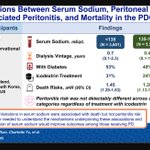
❤️🫘 Síndrome cardiorrenal tipo 1 + AKI estadio 2: ¿iniciar diálisis peritoneal precozmente evita que el paciente se deteriore? La lógica parece convincente: 💧 retirar volumen antes 🧂 eliminar sodio 🫀 disminuir congestión 🫘 evitar progresión del AKI. Pero el RCT STARRT-PD nos obliga a ser prudentes. Pacientes con síndrome cardiorrenal tipo 1 + AKI estadio 2 fueron aleatorizados a: 🔵 DP precoz: iniciar dentro de las primeras 24 h vs ⚪ estrategia convencional: esperar hasta 72 h y comenzar únicamente si alcanzaban AKI estadio 3 o aparecía una indicación clínica. Resultado: ☠️ Mortalidad a 30 días: 65% DP precoz vs 40% convencional RR 1.68; IC95% 0.92–3.07; p=0.07 ➡️ sin beneficio significativo y con una señal numérica preocupante. Además: 💧 balance hídrico a 5 días: similar 🧂 eliminación de sodio: similar. Y aparece un dato especialmente importante: 100% recibió diálisis en la estrategia precoz… frente a solo 40% en la convencional. 🎯 Takeaway clínico: iniciar diálisis antes simplemente porque el paciente tiene AKI + congestión no garantiza beneficio y puede exponer a diálisis a pacientes que nunca la habrían necesitado. 🩺 Aplicación práctica para el nefrólogo: en síndrome cardiorrenal tipo 1, AKI estadio 2 por sí solo no debería ser una indicación automática de DP precoz. Optimiza primero descongestión farmacológica, perfusión, PA y causas reversibles; inicia KRT cuando exista una indicación clínica clara. ⚠️ El ensayo fue muy pequeño: solo 53 pacientes en el análisis modificado por intención de tratar. No permite concluir que la DP precoz aumente mortalidad, pero tampoco proporciona una señal para adelantar rutinariamente su inicio. 💡 Una creatinina que aumenta nos dice que el riñón está enfermo. No necesariamente nos dice que necesita diálisis hoy. #Cardiorrenal #AKI #DiálisisPeritoneal #Nefrología #cardiologia #nefrologo 📚 Bibliografía: Parapiboon W, et al. Early-start vs. conventional-start peritoneal dialysis in AKI from cardiorenal syndrome type 1: a randomized controlled trial (STARRT-PD). International Urology and Nephrology. 2026. DOI: 10.1007/s11255-026-05185-2.
11
26
1,260
Our latest study, just published in @TheLancet, reports the first successful transition from porcine kidney #xenotransplantation to human kidney transplantation. A genetically engineered pig kidney provided >9 months (271 days) of dialysis-free kidney function before successful human transplantation, supporting xenotransplantation as a potential bridge while preserving future transplant options. Beyond the clinical milestone, the study provides new insights into late microvascular inflammation and innate immune activation that will help shape future immunosuppressive strategies and donor genetic engineering. Link to article: thelancet.com/journals/lance… @mgh_transplant @MGHSurgery @MGBResearchNews @MGBKidneys @eGenesisBio
8
61
13
220
20,300
Lucsob retweeted
𝗣𝗹𝗮𝗰𝗲𝗺𝗲𝗻𝘁 𝗼𝗳 𝗮 𝗖𝗮𝘁𝗵𝗲𝘁𝗲𝗿 𝗳𝗼𝗿 𝗔𝗰𝘂𝘁𝗲 𝗣𝗲𝗿𝗶𝘁𝗼𝗻𝗲𝗮𝗹 𝗗𝗶𝗮𝗹𝘆𝘀𝗶𝘀 Once you are sure that the catheter is in the correct position and drains well, secure it in place using 2-0 synthetic sutures. A purse-string suture will reduce the risk of leakage and catheter migration. Learn more: nej.md/46bUmlO
1
20
1
134
37,706
Lucsob retweeted
Placement of a catheter for emergency peritoneal dialysis can be a relatively low-risk, low-cost procedure performed by a nephrologist at the bedside without the need for operating room resources. A minimally invasive insertion technique can allow peritoneal dialysis to be used as a suitable alternative to hemodialysis in patients requiring emergency kidney-replacement therapy. For catheter insertion, begin by using the number 11 scalpel to create a transverse 2-cm incision approximately 1.5 cm deep along the midline. Use Kelly forceps to dissect down to the rectus muscle. This will help you advance the catheter toward the peritoneal space. The average length of the catheter used is 15 cm from the distal tip to the sphere. Patients with a larger body habitus and adipose tissue may require a longer length given the added distance required to reach the rectus muscle. This added length can be determined by inserting the Kelly forceps into the incision and measuring the distance between the rectus muscle and the skin surface. With the mobile sphere on the catheter positioned at the estimated depth for placement, insert the catheter and trocar into the incision site. If the patient is conscious and able to follow directions, ask the patient to lift the abdomen to provide countertraction for the trocar. Direct the catheter caudally at an angle of 60 to 80 degrees. Apply firm, constant pressure to the trocar. As the catheter enters the peritoneal space, you should feel and possibly hear one or two pops, and then the catheter should slide through without resistance. Once the catheter and trocar have been inserted to the appropriate depth, remove the trocar. Learn more in “Placement of a Catheter for Acute Peritoneal Dialysis,” a Video in Clinical Medicine: nej.md/46bUmlO
7
78
12
285
123,752
🪨 ¿Necesitamos realmente una orina de 24 horas para decidir cómo prevenir la recurrencia de litiasis cálcica? El ensayo aleatorizado URINE comparó dos estrategias en pacientes con litiasis cálcica idiopática recurrente: 🔬 Tratamiento selectivo: dieta + fármacos ajustados según orina de 24 h. vs 💊 Tratamiento empírico: recomendaciones dietéticas + indapamida y citrato de potasio independientemente del estudio metabólico. A las 8 semanas: 👉 Supersaturación de oxalato cálcico: 4.7 vs 5.0; p=0.81 👉 Supersaturación de fosfato cálcico: 1.3 vs 1.4; p=0.58 Sin diferencias tampoco en volumen urinario, calcio, oxalato, citrato, ácido úrico o sodio. ) 🎯 Takeaway clínico: La estrategia metabólica personalizada no demostró superioridad a corto plazo frente a un tratamiento empírico estructurado. Eso no significa que la orina de 24 h haya dejado de ser útil. Significa que debemos preguntarnos: ¿en qué pacientes realmente cambia nuestra conducta? 🩺 Aplicación práctica para el nefrólogo: • Mantén evaluación metabólica especialmente en recurridores complejos, litiasis de alto riesgo, enfermedad sistémica o fracaso terapéutico. • Un enfoque empírico estructurado podría ser razonable cuando existe dificultad real para obtener estudios de 24 h. • El ensayo incluyó solo 56 pacientes y evaluó supersaturación a 8 semanas, no recurrencia clínica a largo plazo. • Por ello, todavía no justifica abandonar la evaluación metabólica individualizada. 💡 Quizá la medicina de precisión no consiste en solicitar más estudios a todos… sino en saber cuándo un estudio realmente cambiará el tratamiento. #LitiasisRenal #Orina24h #Nefrolitiasis #Nefrología #nefrologia #nefro 📚 Bibliografía: Hsi RS, Lee AX, Koyama T, et al. Urinary Supersaturation in a Randomized Trial Among Individuals with Recurrent Nephrolithiasis Comparing Empiric Versus Selective Preventive Therapy: The URINE Trial. Journal of Urology. 2026. DOI: 10.1097/JU.0000000000005194.
7
13
817