


TrueDog retweeted

Today I'm writing a weekend guide on how to do DD when shorting $NBIS:
First, you look at hyperscaler earnings for AI cloud read through:
> $GOOGL: reports record AI cloud demand + backlog + margin increases from earnings
> $AMZN: reports record AI Cloud demand + backlog + margin increases from earnings
> $META: reports higher than expected prices for available capacity from earnings.
Now, time to look at Nebius:
-> $NBIS: Growing hundreds of percent to $7-9B ARR by Q4. Growing margins, and guided 4GW+ contracted power.
-> Sees Uber/Waymo splitting, putting more focus on Avride
-> Sees Clickhouse growing rapidly every quarter.
Okay looks bad! But next, you need a hedge?
-> Wow! A $NIKE brand executive, after the stock dropped 75% over the past 5 years, went to $LULU to save that brand next? Lululemon seems good.
Conclusion: Short Nebius and go long on $LULU
TrueDog retweeted

New High Conviction Buy: $INSM
Market Cap: $22.4B
Portfolio Allocation: 5%
Current Price: $103
Average Analyst Price Target: $215
Insmed ( $INSM ) is one of those rare situations where Wall Street seems to be focused on the next quarter, while some of the smartest biotech investors are looking several years ahead. We have seen similar pattern in all our recent wining picks.
The company develops medicines for serious lung diseases with few effective treatment options. Its lead product, Brinsupri, was recently launched for patients with bronchiectasis suffering from recurrent lung infections.
Earlier this year, the stock fell nearly 50% after the initial launch failed to meet the market’s extremely high expectations. Investors had expected an explosive rollout, but early prescription growth came in slower than hoped, leading many to question whether the launch was falling apart.
So far, that doesn’t appear to be the case.
Prescription trends have continued to improve, physicians remain optimistic, and several recent reports from JPMorgan, UBS and other research firms support our view that the market became overly focused on the first few months of prescriptions while missing the much bigger story. They also believe Brinsupri still has the potential to become a multi-billion-dollar drug as physician adoption expands and reimbursement improves over time.
From a technical standpoint, the stock also appears to have found a bottom after the 50% decline, with selling pressure easing while the underlying business continues to execute.
That alone would make Insmed interesting. But the pipeline may be even more valuable.
The company’s inhaled treprostinil program for pulmonary arterial hypertension (PAH) could become another major growth driver, with important clinical data expected in 2026. If successful, Insmed would evolve from a one-product company into a diversified rare disease leader with multiple blockbuster opportunities.
Wall Street still sees substantial upside. Average analyst price targets remain well above today’s share price, with many analysts believing the recent selloff reflects timing rather than a deterioration in the long-term opportunity.
Perhaps the most interesting signal, however, comes from who owns the stock.
This isn’t a company being accumulated by generalist momentum funds. It is owned by some of the most respected healthcare investors in the world.
RTW Investments: 7.9% of its portfolio.
Baker Bros. Advisors: 7.0%.
Stanley Druckenmiller: 6.4%.
And perhaps most impressively, Darwin Global Management, one of biotech’s premier specialist hedge funds, has made Insmed roughly 68% of its disclosed public equity portfolio.
That level of concentration is almost unheard of. Specialist biotech investors spend years building relationships with physicians, researchers and management teams. While no investor is always right, seeing multiple world-class healthcare investors independently build such meaningful positions deserves attention.
The investment case ultimately comes down to one question.
If Brinsupri continues executing as prescription trends suggest, and the PAH program delivers positive clinical data next year, today’s valuation could look surprisingly inexpensive in hindsight.
The market is pricing execution risk.
The specialists appear to believe the market is underestimating the probability of success.
That’s exactly the kind of disconnect that often creates the best long-term investment opportunities.
Brokers research attached below.

TrueDog retweeted

$QS "Boosting Intelligence Density of AI Factories," (Part 2 of their AI data center series) outlines how their solid-state lithium-metal battery technology can be integrated directly into high-density AI data centers to maximize computational real estate and optimize power .

Every square foot of an AI factory costs a fortune. So does every watt of wasted power. Part 2 of our intelligence density series is live. →quantumscape.com/boosting-in…

TrueDog retweeted
$WGS Update: Bullish fireside chat at Goldman today, and the founder, director, and hedge fund manager purchased additional shares, paying as much as $56.50 per share.
Per today’s filing, Eli Casdin bought another 200,000 shares of $WGS at prices ranging from $52.80 to $56.50 per share.
Just in case you’re wondering if you’re too late to the party, apparently the smart money is still a happy buyer at $56.5.
After the recent buying spree, Casdin and Meister now control approximately 35% of GeneDx, the company they helped bring public through a SPAC and a company that no one knows better than they do.
The market’s problem with GeneDx is not growth. The company is still growing roughly 37% per year.
The problem is reimbursement.
Today, a whole genome test is reimbursed at roughly half the rate of a whole exome test.
Think of it this way. A whole exome test is like watching the trailer for a movie. A whole genome test is like watching the entire movie.
Yet today, the healthcare system pays more for the trailer than it does for the full movie.
I don’t think that makes sense, and I don’t think it will stay that way forever. And obviously management and the smart money think the same.
The reason is simple. Reimbursement systems move slowly. New technologies often become clinically useful long before insurance companies and government payors update their payment schedules.
I also just got off the GeneDx Fireside Chat at Goldman. This is obvious: temporary problems, strong growth, an AI beneficiary, and a dataset built over 20 years that would take enormous amounts of time and capital to replicate. Long-term winner. To me, it’s as clear as day and night. Listen to it yourself.
ir.genedx.com/news-events/ev…
Management says this issue will take months to fix, not years.
My thesis is not that GeneDx goes back to its pre-Q1 valuation of $70 once reimbursement improves.
My thesis is that by the time reimbursement improves, which according to management and involved hedge funds is a question of when, not if, GeneDx will be a fundamentally different company: larger, stronger, and far more valuable than it is today.
I think the average analyst 12 month price target of $90 is conservative.
The company is currently growing roughly 37% per year. If that growth continues, revenue, adoption, and earnings power will be substantially higher by the time the reimbursement issue is resolved.

TrueDog retweeted
The Insiders Who Built $WGS Are Backing Up the Truck
Every great hedge fund has that one legendary trade that defines the firm for decades.
This could be that moment for Casdin and Corvex.
The funds buying the $WGS earnings crash aren’t random hedge funds or ordinary insiders.
Casdin and Corvex were there from the beginning. CM Life Sciences was the SPAC sponsored by affiliates of Casdin Capital and Corvex, and Sema4 completed that deal in July 2021. Sema4 then acquired GeneDx in April 2022, and the company later became GeneDx Holdings, $WGS .
These are not hopeful founders that are going down with the ship, these are Wall Street veterans who have been around for decades. You can find countless interviews with them on CNBC and across financial media over the years. They have seen bubbles, crashes, frauds, turnarounds, and every type of market cycle imaginable.
And now they are backing up the truck on this crash.
Why? Because this may be their anomaly opportunity, the once-in-a-lifetime type of setup every great investor waits years for, where they have complete informational superiority over everyone else.
A situation where the market suddenly panics in a business they understand better than anyone alive because they effectively helped create the company and lived through every stage of its evolution.
So when Casdin adds massive exposure and Meister keeps buying aggressively, they are not reacting to a headline. They know the SPAC, the GeneDx acquisition, the old Sema4 mistakes, the turnaround, the reimbursement model, the payer issues, and the quality of the core exome and genome business better than anyone on the outside.
This is also an extremely niche industry that very few funds or analysts truly understand. Genomic diagnostics, reimbursement dynamics, payer behavior, exome utilization, and lab economics are highly specialized areas where surface-level analysis can be dangerously misleading.
That is why the timing matters so much.
The recent “blunder” was not that demand disappeared. Q1 volume grew strongly, but revenue missed because blended reimbursement came in lower than expected and noncore lines underperformed. The issue appears tied to execution and mix, not a collapse in demand for the core business.
That distinction is everything.
If the story were permanently broken, insiders who have lived inside this company for years would not be adding aggressively right after the market punished the stock.
After the collapse, Corvex-related entities came in and bought 1.2M shares between May 7–11 for roughly $46.8M in the mid-$30s.
And he still wasn’t done.
On May 15, he reported another $13.7M purchase.
In total approximately $60M in one week, CONVICTION.
Casdin also recently increased his economic exposure through swaps tied to 850,000 notional shares. The position now represents approximately 28% of his fund, based on the fund’s value at the end of Q1.
(At the time of writing, Casdin had purchased an additional 500,000 shares.)
The market is pricing $WGS like the Q1 miss exposed a structurally broken business.
The people closest to the entire history of the company seem to believe something very different.
No one knows the story better than them, no one.
GeneDx now trades around $40, at an EV of 2.2x revised 2026 implied revenue, while the industry trades closer to double that multiple. My base-case scenario is a $75 price target over the next 12 months based on valuation alone.
Separately, average analyst price targets still sit near $80 even after recent downgrades.
Operationally, test volume still grew 34% YoY, the company now has insurance contracts covering ~80% of U.S. covered lives, and its proprietary genomic dataset continues compounding with every additional test.
If the current reimbursement and execution issues prove temporary, the upside from today’s valuation could still be measured in hundreds of percent over the medium to long term.
Portfolio allocation: 30%

TrueDog retweeted

It’s hilarious watching Trump, Vance, Musk, and Thiel pretend to fight the ”global elite.”
They run the administration, own the platforms, control the media, hold the data, and have all the money.
Who exactly are they fighting?
They are the deep state they warn you about

TrueDog retweeted

Trump's WLFI: borrowed real money against fake tokens, sold to wallets tied to North Korea & Iran, token crashed 82%, then quietly deleted the family's names from the website. This is your president. This is corruption with a ticker symbol. $WLFI
TrueDog retweeted
$STAA +17% after hours as my contrarian thesis is validated. More on that tomorrow. No wonder Broadwood hedge fund did not sell at $30.75 - the China thesis is fully intact. This is going much higher.

𝗦𝗧𝗔𝗔𝗥 𝗦𝘂𝗿𝗴𝗶𝗰𝗮𝗹 𝗹𝗼𝗼𝗸𝘀 𝗹𝗶𝗸𝗲 𝗮 𝗰𝗹𝗮𝘀𝘀𝗶𝗰 𝗰𝗼𝗻𝘁𝗿𝗮𝗿𝗶𝗮𝗻 𝘀𝗲𝘁𝘂𝗽, 𝗯𝘂𝘁 𝗽𝗮𝘁𝗶𝗲𝗻𝗰𝗲 𝗶𝘀 𝗿𝗲𝗾𝘂𝗶𝗿𝗲𝗱
$17.40 stock price | ~$187M cash | Enterprise value ~$700–725M
STAAR Surgical ( $STAA ) today sits in an uncomfortable place in the market, which is often where the more interesting opportunities begin.
The company is small, with a market capitalization of roughly $850 million and an enterprise value closer to $700 million once you account for its ~$187 million in cash and no debt. It operates in the shadow of much larger players like Alcon ( $ALC ), Johnson & Johnson ( $JNJ ), and Bausch + Lomb ( $BLCO ), yet it occupies a part of the market those players do not fully control.
STAAR’s business is simple to describe and difficult to replicate. It implants a lens inside the eye to correct vision, rather than reshaping the cornea like LASIK. The procedure is particularly effective for myopia, or nearsightedness, a condition where distant objects appear blurry because the eye focuses images incorrectly. Myopia is rising globally, especially in Asia, which is one reason the category has grown so quickly.
The company’s approach has clear advantages in certain cases. It is reversible, it preserves the cornea, and it often delivers better outcomes for patients with moderate to severe myopia who are not ideal candidates for LASIK. It also requires surgeon training, regulatory approvals, and years of accumulated experience, which together create a real, if not absolute, moat.
For years, the story worked. Growth was strong, margins were high, and China became the engine. Then the company ran into a classic problem, not of demand disappearing but of inventory building up in the channel. Management stopped shipments to reset the system, and reported sales collapsed, especially in China. The market treated that as a broken story rather than a reset.
The stock followed, falling to around $17.40.
At the same time, strategic interest emerged. About a year and a half ago, there were credible discussions around a sale above $50 per share. More recently, Alcon ( $ALC ) made a firm cash offer that was ultimately raised to about $30.75 per share.
That deal failed.
Broadwood Partners, the largest shareholder and a holder for more than 15 years, blocked it. They argued the process was poorly timed and did not reflect the true value of the business. They were also critical of how the go-shop was conducted, describing it as rushed and restrictive, limiting the ability of other bidders to properly engage and complete due diligence.
Broadwood’s position is not that the company should never be sold. It is that it should not be sold here. They have indicated they would be open to a transaction, but only after the business stabilizes and reflects normalized performance. They had no interest in selling at around $30 in the middle of a downturn.
From their perspective, that would have meant selling a unique asset at a cyclical low. They continue to believe the company is worth significantly more.
That leaves the stock in a familiar contrarian position. A differentiated business, a real moat, a strong balance sheet, and a product still being adopted globally, but a narrative dominated by one disrupted geography.
The question is no longer what STAAR does.
The question is whether China was a temporary reset or a permanent peak.
Broadwood is clearly betting the house on the answer. They knew rejecting a $30.75 offer would likely send the stock lower, and it did, yet they still blocked the deal. The position represents roughly 20% of their fund, implying unusually high conviction.
Either way, this is not a short-term situation. The setup may be contrarian, but the resolution will take time, so no rush to buy.

TrueDog retweeted

Dear @JDVance: Gas prices are up. Grocery prices are up. We are in a war against Iran.
Why are you in Hungary campaigning for a Hungarian politician who is also a puppet for Putin? Like, WTF are you doing?

NEW: Bloomberg News obtained a transcript of a 17 October call between Viktor Orban and Vladimir Putin, where Orban compared their relationship to a “mouse” ready to help the Russian “lion” as needed.
“Yesterday our friendship rose to such a high level that I can help in any way,” Orban told the Russian dictator on the call. “In any matter where I can be of assistance, I am at your service.”
Meanwhile, JD Vance is campaigning in Hungary today and tomorrow for Viktor Orban ahead of Sunday’s election, where polls show the Kremlin-backed kleptocrat is expected to lose.
TrueDog retweeted

Some of you need to take a basic civics lesson on the United States federal government. There is nothing Democrats can do to stop what's going on right now. You gave Republicans all the power. Start calling for THEM to do something.
TrueDog retweeted

I've taught European history for 30 years. Americans have always asked me how the Holocaust was possible, how Germans could have enabled a madman reveling in mass murder to carry out his plans. Now we can see in real time how this is enabled; now we have front-row seats.

TrueDog retweeted

Franklin Graham says Donald Trump has been raised up by God and urges loyalty in the midterms.
It sickens me when “Christians” claim that Trump has been raised up by God, because Trump is the antithesis of Jesus’ teachings. Instead of love, he portrays hatred; instead of forgiveness, vengeance; instead of meekness, narcissistic egoism. And the list goes on.
But I am no longer surprised by Franklin Graham. This is the same man who has appeared on multiple russian propaganda channels, praised Vladimir Putin repeatedly, and urged people to pray for Putin’s “wisdom.” Not once has he called for Putin’s repentance.
It is because of people like Franklin Graham that many atheists want nothing to do with the church.
“The greatest single cause of atheism in the world today is Christians who acknowledge Jesus with their lips, walk out the door, and deny Him by their lifestyle. That is what an unbelieving world simply finds unbelievable.” – Brennan Manning

TrueDog retweeted

Important to note, the FCC Chairman himself is stating that CBS’s new ownership is “Trump winning.” That should deeply embarrass and offend CBS’s leadership. When the FCC Chair brags that you’re state TV for the Trump administration, a reassessment of one’s values is in order.

TrueDog retweeted

Why isn’t this visit by a Russian delegation to Washington who is providing targeting information about US forces to Iran not a national outrage and not getting any coverage?


TrueDog retweeted
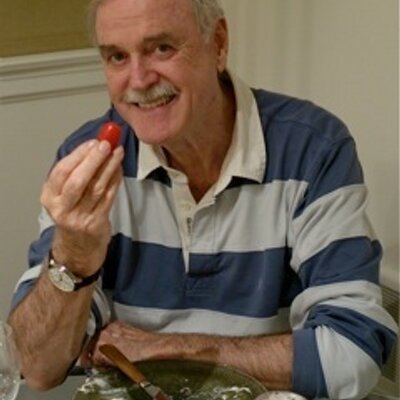
Hard to believe this isn't a Monty Python sketch
TrueDog retweeted

TRADERS FLAG $1.5B S&P 500 FUTURES BUY AND $192M OIL FUTURES SELL FIVE MINUTES BEFORE TRUMP ANNOUNCEMENT; INSIDER TRADING
TrueDog retweeted

Private equity firms bought 500 hospitals. Death rates in their emergency rooms went up 13%. They fired 12% of the staff. Then they paid themselves billions in dividends.
A Harvard study just confirmed what doctors already knew: people are dying so investors can hit quarterly targets.
Exactly what happens. A PE firm buys a hospital using debt. The debt gets placed on the hospital's balance sheet, not the firm's. Now the hospital owes hundreds of millions it never borrowed. To service that debt, the hospital cuts costs. Costs mean nurses.
The numbers from the Harvard/University of Chicago study are horrifying. After PE acquisition, emergency department salary spending dropped 18.2%. ICU salary spending dropped 15.9%. Hospital-wide employees were cut 11.6%. Emergency department deaths rose 13%, seven additional deaths per 10,000 visits.
A separate study found patients undergoing surgery at PE-acquired hospitals had 17% higher odds of dying within 90 days.
Steward Health Care, owned by Cerberus Capital, filed bankruptcy with $9 billion in debt after closing hospitals across Massachusetts. The CEO lived on a $40 million yacht while emergency rooms went dark. Eight hospitals serving 2 million people nearly disappeared because a PE fund extracted more cash than the system could survive.
The private equity industry has poured over $1 trillion into healthcare. They operate a quarter of ERs nationwide. This isn't going away.
The investing angle nobody talks about.
Non-PE hospital operators like HCA Healthcare (HCA) and Tenet (THC) are the direct beneficiaries. Every time a PE hospital closes or deteriorates, patients flow to the nearest competitor. HCA has returned 1,200% since 2011. Patient volume from PE closures is a structural tailwind nobody's pricing in.
Medical staffing firms (AMN Healthcare, Cross Country) charge premium rates specifically because PE hospitals cut staff. The staffing shortage IS the business model for these companies.
The disruption play: outpatient surgical centers (SCA Health, now part of UnitedHealth) are pulling profitable procedures out of hospitals entirely. PE-owned hospitals lose their highest-margin surgeries to outpatient, and the death spiral accelerates.
Pull up tradevision and monitor healthcare M&A alerts, hospital closure filings, and patient volume migration data. When a PE-owned hospital announces "restructuring," the patient volume shift to competitors like HCA starts within 30 days. That 30-day window is when the competitor's earnings revisions haven't updated yet. Free to try.
(a private equity firm bought your local hospital. borrowed $500 million in the hospital's name. fired 12% of the nurses. emergency room deaths rose 13%. then they paid themselves dividends. nobody went to prison. they're currently buying another hospital.)
TrueDog retweeted

Did Donald Trump really just claim that Middle Eastern terrorists are terrorists because of their "genetics?"
How is this not becoming 1930s Germany?
“They’re sick people and a lot of them were let in here. They shouldn’t have been let in. Others are just bad. They go bad. Something wrong. There’s something wrong there. The genetics are not exactly… they aren’t exactly your genetics.”
TrueDog retweeted

What is happening in oil futures is hard to explain.
All you have to do is look at those live tanker maps for Hormuz to know the fundamental situation.
Every few days we get 100s of tankers behind demand.
And futures are down 33% from Sunday night.
