

Sleep Paralysis Expert | Bridging Science & Spirituality | Exploring Consciousness & Non-Human Intelligence | Lucid Dreaming & Altered States
London, England
Joined May 2013
- Tweets3.1K
- Following163
- Followers11.8K
- Likes1.7K


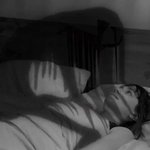





Some people report that repeated sleep paralysis encounters seem to build on earlier ones. A being may behave with familiarity or continue a previous interaction.
This raises an important question: can the encounter itself appear to have a memory?
People with recurrent sleep paralysis sometimes report encountering a being repeatedly and recognising it as the same individual.
How do they know it is the same one?
I explore this question in my latest article:
sheilaprycebrooks.substack.c…
We are very quick to ask what caused an unusual experience. Was it neurological? Psychological? Spiritual? Something else?
But there is an earlier question that often gets missed:
What actually happened?
Description should come before explanation.
Sleep paralysis is usually described as being awake but unable to move.
But what about everything else people experience during it: presences, communication, leaving the body or encounters with deceased loved ones?
The paralysis is only part of the story.
Delighted to see my new Psi Encyclopedia article published by the Society for Psychical Research. It also introduces Threshold Contact Experience (TCE) as an emerging framework for understanding the wider sleep paralysis experience.

The SPR's Psi Encyclopedia - Sleep paralysis is a REM-related state of waking immobility, but reports often include sensed presences, apparitional figures and voices, altered environments, and out-of-body movements: psi-encyclopedia.spr.ac.uk/a…
During sleep paralysis, some people report asking a presence a question and receiving an answer.
Others describe it changing its behaviour in response to what they do.
If something seems to understand and respond to you, how do we make sense of that?
A presence during sleep paralysis may simply be there
But when it responds to what you say, think or do, the structure of the experience changes
Presence has become Interaction
That distinction matters if we want to understand what is actually happening within the experience
What if experiences historically classified as #SleepParalysis aren’t defined solely by loss of control?
Many experiencers describe developing greater agency over time.
My latest article explores agency as a core feature of Threshold Contact Experience. buff.ly/Z82igOF
Many people who experience sleep paralysis remember the room as vividly as the experience itself.
Why?
My latest article explores environment as a core feature of Threshold Contact Experience buff.ly/IOMsajD
#SleepParalysis #TCE #Consciousness
The conversation is getting bigger than sleep paralysis.
My latest Substack article explores the Threshold Contact Experience (TCE) and why questions about consciousness, dreams, contact, spirituality, transformation, and meaning increasingly emerge. buff.ly/E9v8S9S
Many people experiencing sleep paralysis are not only trying to understand what happened during an episode. They’re also trying to understand how it relates to dreams, intuitions, synchronicities, beliefs, and other experiences across their lives.
buff.ly/sUBZWTo
We group dreams, sleep paralysis, and night terrors by when they occur.
But that says little about what actually happens within them.
When you compare the features, the boundaries don’t hold as well as we assume.
Dreams and sleep paralysis are often treated as separate.
But people report the same kinds of experiences in both.
The difference is usually how they’re interpreted.
Some experiences we call dreams don’t behave like dreams.
They repeat, follow structure, and involve interaction.
I’ve begun mapping this as Dream Contact, part of the Threshold Contact Experience framework.
buff.ly/YXSxFVf
Dreams and sleep paralysis are treated as different categories.
But some dream experiences repeat, show structure, and involve interaction.
At that point, the distinction becomes less clear.
A framework does not impose meaning.
It makes patterns visible.
And once patterns are visible, they can no longer be ignored.
The boundary between sleep and waking is not empty.
It may be one of the most active thresholds of human experience.
Sleep paralysis is usually explained before it’s properly described.
What’s missing isn’t explanation, it’s structure.
A framework for Threshold Contact Experience (TCE).
buff.ly/nXXFP4a