

Associate Professor of Economics, @MTSU. member of @PERIatMTSU. Formerly @colgateECON. I study economic history, the postal service, and weird aspects of voting
Nashville, TN
Joined April 2023
- Tweets1.4K
- Following568
- Followers284
- Likes1.5K




Steven Sprick Schuster retweeted

Mid-decade gerrymandering is a terrible, norm-busting precedent, and I welcome the karma that resulted.

Things looking very dire for House Rs. They’ve lost three of the four of the House seats in FL that Rs gerrymandered to block Dem path to majority. The fourth, Dem Rep. Soto’s race, is in a dog fight with Soto up by about 0.5 point with 96 percent in.
Spartz is also trailing
cnn.com/2026/11/03/politics/…
Steven Sprick Schuster retweeted
Republicans seem to have gerrymandered themselves out of seats by creating close districts that they are losing in a blue wave. If this result holds, the poetic justice will live in infamy forever.
Steven Sprick Schuster retweeted

Ahem.

Steven Sprick Schuster retweeted

My quick search indicates that taxpayers paid $26 million to build this stadium, which now lacks a tenant. gastongazette.com/story/news…


Steven Sprick Schuster retweeted

Does that mean that the price Americans pay for imported Irish whiskey will go down?
Yes, of course.
Because the tariff has been removed.
So, what does that say about the effect on prices of other tariffed items?

Steven Sprick Schuster retweeted

Going to nominate the @DataColada team who have been sued for following the data and attacked by a prominent hedge fund manager

Wow…Roland Fryer and @BillAckman have created a $1 million prize for academic truth-telling, the Carob Trust Prize for Academic Courage.
“The prize awards $1 million each to as many as five social scientists a year who have demonstrated intellectual independence, published findings that were attacked rather than answered, and been validated by the evidence—despite the professional cost. The selection criteria are designed to distinguish courage from contrarianism: Nominees must show a sustained commitment to following logic and evidence regardless of pressure, a willingness to ask questions others avoid, and work that has shifted academic debate, public discourse or policy—often despite being misread, mischaracterized or vilified at the time of publication.”

Steven Sprick Schuster retweeted

KC's interest rate for special obligation bonds is 5.725%, compared to 4.25% for general obligation bonds. This means the city could have saved enough money to cover about $117m in other needs, if only it had allowed a public vote on a Royals stadium. fieldofschemes.com/2026/08/2…

Steven Sprick Schuster retweeted

Yesterday Arday said something like 'I haven't murdered anybody. It's just academia' to The Times and I just can't stop thinking about it. There is somebody out there whose career ended because Arday got their job.
Steven Sprick Schuster retweeted

Is anyone calling this an existential threat? Oh yeah, that’s only when athletes seek fair value. Got it.


Steven Sprick Schuster retweeted

What happened to the Rockefeller, Carnegie and Astor by the way?
According to the “law of capitalism” (r>g) their wealth should have grown ineluctably faster than GDP unless there is a wealth tax.
By now, assuming a 4% spread between r and g, these families fortunes should represent roughly 200% of GDP. Is that actually true?
Or maybe somehow the wealth of these families got ultimately diluted in other ways? Maybe we should wonder in what ways

Steven Sprick Schuster retweeted

Everyone who cares about climate should understand this. Texas, with no pro-climate policies, has blown passed California in clean energy. In large part because Texas has less red tape and makes it easier to build.


Steven Sprick Schuster retweeted

The bizarre thing about this deal is much of the benefit of having the Chiefs stay in the KC area will seep across state lines to Missouri, where most of the metro population lives, while Kansas taxpayers assume all of the costs.

After reading through the 33-page term sheet for the Chiefs' new stadium in Kansas, I think it's one of the most lopsided stadium deals in NFL history.
Kansas is essentially giving the Chiefs $3 billion (stadium funding + mixed-use development funding + tax incentives), yet getting virtually nothing in return.
The Chiefs get to keep 100% of the revenue from all stadium activities, including ticket sales, concessions, sponsorships, naming rights deals, personal seat licenses, and more. That applies to NFL games and all other events (concerts, basketball games, etc.).
Kansas will own the stadium, with the Chiefs paying $7 million in rent annually. But that money doesn't go back to the state; it goes into an account the Chiefs can use for renovations, repairs, and operational expenses.
That means the Chiefs can use their own rent money to hire stadium security, parking staff, and concession vendors throughout the season.
I know Kansas had to offer a great deal to get the Chiefs to leave Arrowhead, but this is worse than I expected.
Here's a full breakdown of everything I found in the term sheet: huddleup.substack.com/p/the-…

Steven Sprick Schuster retweeted

This short video by the WSJ is an amazing explanation what happened inside last Friday's jobs report and the subsequent controversy surrounding the large revisions to May and June. Worth watching! wsj.com/video/series/news-ex…

Steven Sprick Schuster retweeted

If you were making a list of the costs or drawbacks to cell phone bans in schools, what would you include?


Steven Sprick Schuster retweeted
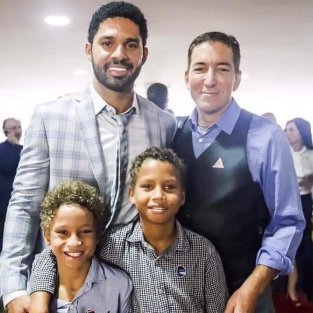
In 2014, Antonin Scalia -- probably the most beloved-by-conservatives Supreme Court justice over the last 5 decades -- was asked whether "undocumented immigrants" are entitled to Constitutional protections such as due process.
When he said they are, Ruth Bader Ginsburg agreed:
Steven Sprick Schuster retweeted

After 21 years at my dream job, I’m very sad to announce my early retirement from the National Institutes of Health. My life’s work has been to scientifically study how our food environment affects what we eat, and how what we eat affects our physiology. Lately, I’ve focused on unravelling the reasons why diets high in ultra-processed food are linked to epidemic proportions of chronic diseases such as diabetes and obesity. Our research leads the world on this topic.
Given recent bipartisan goals to prevent diet-related chronic diseases, and new agency leadership professing to prioritize scientific investigation of ultra-processed foods, I had hoped to expand our research program with ambitious plans to more rapidly and efficiently determine how our food is likely making Americans chronically sick.
Unfortunately, recent events have made me question whether NIH continues to be a place where I can freely conduct unbiased science. Specifically, I experienced censorship in the reporting of our research because of agency concerns that it did not appear to fully support preconceived narratives of my agency’s leadership about ultra-processed food addiction.
I was hoping this was an aberration. So, weeks ago I wrote to my agency’s leadership expressing my concerns and requested time to discuss these issues, but I never received a response. Without any reassurance there wouldn’t be continued censorship or meddling in our research, I felt compelled to accept early retirement to preserve health insurance for my family. (Resigning later in protest of any future meddling or censorship would result in losing that benefit.) Due to very tight deadlines to make this decision, I don’t yet have plans for my future career.
The NIH has been a wonderful place because it allows scientists to take risks, form unique collaborations, and do studies difficult to conduct elsewhere. I’m proud of what we’ve accomplished and I’m fortunate to have had such wonderful colleagues and scientific collaborators. I hope to someday return to government service and lead a research program that will continue to provide gold-standard science to make Americans healthy.

Steven Sprick Schuster retweeted

"What happens when you raise taxes on an item" is among the most charted water in the social sciences. – at Medford, MA


Steven Sprick Schuster retweeted

Being bused to an inner-city school durably sensitized students to issues of inequality and fairness, making them more likely to support the Democratic Party more than forty years later, from Ethan Kaplan, @jspenkuch, and Cody Tuttle nber.org/papers/w33365

Steven Sprick Schuster retweeted

"The U.S. Postal Savings System and the collapse of building and loan associations during the Great Depression," by @sebafle of @IE_UC, Matthew Jaremski of @USUAggies, and @ssprickschuster of @MTSU.
#GreatDepression #RealEstate
doi.org/10.1002/soej.12632

