Frenemies forever: when parasitic fungi become an insect's secret weapon - Wendrix - New Phytologist - Wiley Online Library nph.onlinelibrary.wiley.com/…
The Soil Mystery That Could Change How Farmers Fight Crop Disease youtu.be/Jz6Qu_oMl_g?si=qJNM… via @YouTube
Steve Marek retweeted
植物は、病原体や傷ついた細胞から生じる物質を感知して、自らを守る免疫システムを持つ。植物が微生物や細胞壁の成分から生じる糖を見分け、免疫を働かせる仕組みを解明。植物が病原体の攻撃を察知し、適切に防御する仕組みの理解に。Science
science.org/doi/10.1126/scie…
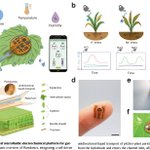
A multiplexed wearable microfluidic platform for non-invasive sweat-inspired monitoring of plant guttation biomarkers. Nat Commun (2026). doi.org/10.1038/s41467-026-7…
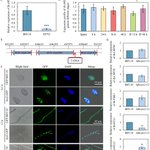
Microbial volatile humulene orchestrates plant–microbe alliance to establish disease-suppressive rhizosphere nph.onlinelibrary.wiley.com/…
Steve Marek retweeted
🌱 Call for Papers | Plant Fungal Diseases and Crop Protection, 3rd Edition
Journal of Fungi invites researchers to contribute to its Special Issue on advances in understanding and controlling fungal diseases affecting plants and agricultural crops.
mdpi.com/journal/jof/special…
Mechanisms and balanced regulation of plant immunity. Nat Rev Mol Cell Biol 27, 803–820 (2026). doi.org/10.1038/s41580-026-0…
Steve Marek retweeted
🌱 Advances in the Control of Plant Fungal Pathogens
Plant-pathogenic fungi threaten crop productivity and food quality, creating an urgent need for more sustainable disease-management strategies.
📖 Read the review: doi.org/10.3390/jof12050331
#JournalOfFungi #PlantPathology
Steve Marek retweeted
Deadline extended: Submit by November 30, 2026!
Call for papers: Submit to the forthcoming MPMI Focus Issue, "Plant Immune Receptors in the Spotlight," by October 31, 2026!
Editors: @mpcontreras4, @sardineboy_DING, @ClemMarchal, @MariSchuster, and @WilsonLab
Learn more 👉 apsjournals.apsnet.org/mpmir…
This focus issue seeks to capture exciting developments across all areas of immune receptor biology that are pertinent to enhancing our understanding of the plant–pathogen interaction. The editors welcome submissions that investigate infection-related receptors—and the outcomes of receptor activation—at the molecular, cellular, structural, network, and/or evolutionary level in any plant host or pathogen system. Studies with clear translational potential are particularly encouraged. Submissions may include original research articles, short communications, or reviews that examine emerging trends and offer fresh perspectives on specific aspects of this broad and rapidly developing field. Through this collection, the editors hope to highlight major breakthroughs in receptor biology, identify critical knowledge gaps that continue to limit progress, and help pave the way toward practical solutions for sustainable disease management in agriculture.
#MPMI #Receptors #PlantScience #ReceptorBiology
Steve Marek retweeted
We are recruiting a Postdoc to work on the genetics of rust resistance in wheat. Check out the position announcement and apply if you are interested! higheredjobs.com/region/deta…
Steve Marek retweeted
How does the clubroot pathogen evolve to overcome crop resistance? A global question needed a global collaboration 🌍🧬
Four years ago, this project started with a simple question: Could we bring isolates from other countries into our lab? Luckily, many colleagues from over 20 countries around the world said yes!
Together with Stephen Strelkov and Maxim Prokchorchik, we combined three datasets: 192 isolates from 24 countries and 53 chromosome-level genome assemblies, forming the most comprehensive Plasmodiophora brassicae pangenome to date.
This work, led and central to @asimjaved777 (Bravo 🥳! #ProudPI), with major contributions from Florent, Sandra Gomez, @SohamBio, and many more, reveals:
🧬 Clonal expansion alongside genomic evidence of recombination, consistent with sexual reproduction.
🧬 A hotspot of structural variation and ankyrin-repeat effector diversification on chromosome 17.
🧬 Differences in predicted effector structures and host interactions associated with CRa resistance breakdown.
And chaperones are back in the spotlight! The identification of co-chaperone DJC31 as a candidate effector target builds on our earlier work highlighting ankyrins as a dominant effector family, targeting host translation machinery (See: elifesciences.org/articles/1…).
The main message: even a compact, highly conserved pathogen genome can hold considerable potential for adaptation, with consequences for resistance durability.
This effort received essential support through the CARP program by @canolacouncil funded by @AlbertaCanola , @ManitobaCanola, @SaskOilseeds, and @westerngrains. By @RDARAlberta , @NSERC_CRSNG Discovery and Alliance Programs, Génome Québec Programme d’intégration de la génomique, and by @BioplatformsAus / NCRIS.
Thank you to everyone who made it possible! The final database and sequences will be publicly available upon manuscript acceptance.
Now begin The Hunger Games, a.k.a. The Submission and Revisions Game. 😅 We don’t know where this paper will land, but we are incredibly proud of what we built together.
Link to preprint 🔗 : biorxiv.org/content/10.64898…
Steve Marek retweeted
A phage-encoded small RNA that mimics chimeric guide to inhibit CRISPR-Cas9
"a phage encodes the sgRNA decoy to sequester Cas9"
sciencedirect.com/science/ar…
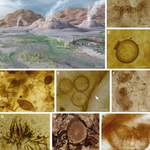
When ‘T. rex’ died, a new giant fungus named ‘D-rex’ took over - The fungus discovered in China grows over a foot high and dates back 65 million years. popsci.com/science/new-giant…
Unearthing a fungal giant: Dianjunaceae fam. nov., a novel Paleocene lineage of Xylariales harboring Dianjunus rex gen. et sp. nov doi.org/10.3389/ffunb.2026.1…
Steve Marek retweeted
New and evolving user programs will combine genomics with AI, automated experimentation and complementary capabilities across DOE user facilities — giving researchers integrated approaches hard to assemble in a single lab.
More in our new strategic plan: jointgeno.me/stratplanreleas…

ALT JOINT GENOME INSTITUTE Strategic Plan: AI-Driven Genomics to Accelerate Biological Discovery Our goal is to make it easier for users to move from experiments to scientific discovery. By bringing together complementary technologies, expertise and facilities across DOE, we can enable new types of science and help researchers address increasingly complex questions that are central to the DOE mission. Tanja Woyke Deputy for User Programs SCAN to read the JGI’s 2026 Strategic Plan BERKELEY LAB
Steve Marek retweeted
New publication about trap morphogenesis from the lab. We thank the editor and the reviewers for their constructive feedback during the review process which improved the quality of our work. Congrats @ChihYen_Kuo!! We wish you the best of luck for your next chapter in Geneva 🥳
How does a predatory fungus build a trap to capture a nematode? New work by @fungi_worms lab reveals how prey signals reorganize conserved polarity and cytoskeletal machinery to redirect hyphal growth, form a trap, & then switch gears to penetrate the prey hubs.la/Q04BzS4D0
Steve Marek retweeted
Anthracnose is likely the most prevalent stalk rot in the eastern United States. Affected plants have shredded pith and die prematurely. Anthracnose also causes a distinctive blackening of the stalk rind.
The fungus overwinters in corn residue and infects plants through the roots or by spores that splash onto the stalk or are carried by insects that may introduce them into feeding wounds. The disease usually does not appear until late in the season and occurs more severely where corn follows corn, especially in reduced tillage.
Resistance to anthracnose is available in some hybrids. If a hybrid is resistant to stalk rot, it is not necessarily resistant to the leaf blight phase. Rotation and tillage will reduce inoculum.
@alisonrISU @MartinChilvers1 @badgercropdoc @TamraJacksonZ @alabamaED @MandyBish1 @DTelenko #corn @NationalCorn @maddishires @baldpathologist @travisfaske
Steve Marek retweeted
Highly Cited Papers in Fungal Biocontrol | Journal of Fungi
How can fungi and other microorganisms contribute to sustainable disease management and crop protection?
🔗 Read the full selection: mdpi.com/about/announcements…
#JournalOfFungi #FungalBiocontrol #Mycology #Biocontrol