

Host of the Tall Oaks Podcast. Advisory work focused on retirement planning & management. Heavy focus on portfolio management and tax planning. Posts ≠ advice.
St George, Utah
Joined May 2022
- Tweets5.8K
- Following638
- Followers917
- Likes9.6K





While the Anthropic S-1 is fascinating, I have zero edge. I don’t believe the market will price an IPO on purely classical fundamentals and I’m not a specialized equity analyst in the sector to even try and begin to understand the nuances of pricing it “correctly”.
Once it trades, we will begin to be able to derive more understanding from price, which is the thing that ultimately matters the most.
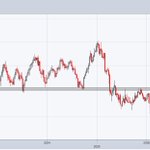
The DXY looks to be holding a key level after breaking out of a base. This is forming potentially significant momentum on a weekly timeframe.
I am not going to pretend to know what it might mean definitively for risk-assets, but I remain long dollar for now...

A quick rule of thumb:
You can check your spreadsheet detailing your entire net worth including all of your rental properties with full rent role details in public, or you can act like a jackass to people around you.
You should do neither.
But under no circumstances, never do both simultaneously.
Branden DuCharme, CMT, CFP® retweeted

Well, well, well… maybe change is in the air…

Ken Griffin explains why the rise of passive investing only works as long as active managers keep doing the research that sets prices
“So what’s very interesting is the rise of passive investing plays to the realization that markets are either efficient or semi-efficient."
"And it’s a way for investors to have low-cost exposure to either broad indices, to the world as a whole, or to specific sectors without having to pay the fees of active management."
"It’s been revolutionary for the world, this embracing of passive investing. But passive investing only works if there’s a meaningful community of people involved in fundamental research who are helping to set the pricing of securities."
"So passive investing requires the existence of capable, successful, and competitive traditional asset managers for the theory that underlies passive investing to actually play out, to actually manifest itself."
"So the rise of short-term investors helps to ensure that markets are efficient with respect to news that’s rapidly evolving. But we should really try to make sure that we take every step possible to make it that traditional asset managers have the ability to have prosperous and successful firms because they are so critical in the price discovery process that passive investing depends upon.”
Avoid these people like the plague.

I’ve observed a phenomenon with a subset of people I've spoken to in discovery.
Let’s call them "Mike".
Mike is a high performer. His net worth is 7-8 figures.
Mike has a chip on his shoulder.
the source of that chip is unknown, but sometimes admitted outright.
Mike sees money as a measuring stick...
more is better, especially if it's more than his friends, family, or coworkers.
No "number" will likely ever be enough for Mike.
Mike is ultra fee-sensitive across the board.
He wants the best advice, the best service, the best outcomes...for the lowest possible fee.
You have a minimum fee? Make an exception. He says he won’t be that much work.
Mike treats professionals poorly.
His emails are short, transactional, and borderline disrespectful. (often more bark than bite, especially when speaking live
Mike wants the world delivered yesterday.
Mike takes on high risk in his portfolio, then uses recent short-term wins as evidence of his investing prowess.
Mike is always looking for a tax avoidance edge (even if it lives in the IRS' gray area, or crosses the line completely). He'll never get audited. Find him a CPA who will look the other way. Someone aggressive!
Mike loves seeking out exclusive private investments. Not for the fundamentals, but rather so he has something to talk about at cocktail parties or on the golf course.
Mike is wealthy.
Mike is also deeply unhappy.
Don’t be like Mike.

“Banks don’t go out of business for taking risk. They go out of business for applying leverage to things they can account for as riskless.”
- @ConvexityDredge

Ounces = pounds and pounds = pain.
When I was in a recon platoon, we’d do anything to save weight. We’d cut the handles of our toothbrushes shorter even.
So take the Glock on weight alone since reliability and accuracy are not concerns in either model.
Most people are surprised to learn though that cutting a side arm from our kit altogether was usually the right answer. They’re largely overrated for most ops. Don’t complicate your life when it doesn’t need to be.


Just a reminder, there is an inverse relationship between the amount of people calling for black Monday and its likelihood of happening.
Everyone seems to be getting hella bearish. A couple questions I’m asking myself… if you have answers, chime in.
1. Has NDX ever had a true bear market immediately following a failed breakout of a 4 month long inverse head and shoulders breakout to new all time highs?
2. Have bear markets ever started when consensus within ~5% of new highs was that a bubble is popping?
Honest question. I’m too lazy to have looked at this point. Seems unlikely.
That’s not bad luck. As @MebFaber will always remind you, Uncle Charlie made it clear. Liquor, ladies and leverage.

Leopold Aschenbrenner might genuinely be the unluckiest motherfucker alive.
After getting absolutely destroyed in July and being forced to liquidate much of his AI portfolio, he reportedly came back swinging in early September, buying hundreds of millions of dollars worth of options premium.
Look at how those stocks have performed since September 8:
$CRWV: -37.4%
$SKHY: -25.8%
$SNDK: -23.8%
$DRAM: -22.9%
$BE: -18.1%
$INTC: -9.4%
$AMD: +9.1%
Six out of seven are underwater, with an average decline of roughly 18.6%.
And remember, we're talking about someone who reportedly rebuilt exposure through leveraged options, not just common shares.
Imagine surviving a massive forced liquidation, watching your favorite stocks recover, deciding it's finally safe to get back in, and then getting hit by ANOTHER brutal selloff barely a month later.
The worst part about options is that you can be absolutely right about the long-term AI infrastructure thesis and still lose a fortune because your timing was wrong.
I genuinely feel for the guy.
The market has absolutely no mercy.

An advisor/CFP from another firm reached out recently and wanted a second opinion on how their investment committee was running the firm models.
Realizing I’m playing Monday Morning Quarterback, here was the most glaring thing to me. The fee budget was all wrong.
We often look at portfolios and want to manage costs, it’s a very reasonable thing to want to keep in check. I think we can (or should be able to) agree that there are fees worth paying, fees not worth paying, and subjective opinions in the middle.
So, if you feel like a well diversified portfolio could have a total expense ratio of ~0.50 (don’t lose your shit Jack, it’s an example), what you should consider is where that budget is best allocated.
The correct answer is different for everyone and depends on the objectives of the clients and the forward looking assumptions of the allocator/PM.
However, I believe using your expense budget buying higher cost actively managed equity funds and making major factor bets (like long LC value + long Micro cap growth), leaving you with the option of just buying $AGG for your bond allocation is likely universally the wrong answer.
Here is how I would prioritize.
—> Good alts earn the fee budget first
—> active managed fixed income has a proven track record of out performing. There is more available edge.
—> international managers
—> US value or Small Cap
—> Core equity… and honestly, if you have fee budget left at this point, you may not have done the other ones correctly.
Too each their own. Just my $0.02.