
Tech worker at FAANG sharing my investment advise on how I became a millionaire.
US
Joined June 2026
- Tweets677
- Following831
- Followers387
- Likes133



When did you realize that there are real opportunities in the stock market that you can leverage?
For me it was mid way through the financial crises when I realized that trade will eventually picked up and I invested into a company dealing in shipping containers that was absolutely battered.
1
40
Anyone tried to build their personal meal service by giving their instacart credentials to an AI bot and have it order things for you on a regular basis?
43
Have you ever asked AI to look at your stock portfolio? Did it tell you something useful? Or at least something accurate?
82
Can AI Analyze an Investment Portfolio? My Hands-On ChatGPT Experimen youtu.be/ApG72rtAnTQ?si=kKZ6… via @YouTube
1
124
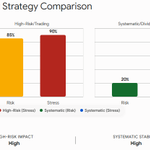
Why are most investors perpetually stressed? Because they chase high-beta volatility to look rich, while ignoring the core mechanics of survival.
Real wealth isn’t about timing the market—it’s about building a system that removes the need to panic.
The 3 Rules of Systemic Wealth:
1 . Kill high-interest debt to buy emotional stability during drawdowns.
2. Hold quality through volatility—the hardest part isn't buying, it's NOT touching it.
3. Build an "un-rushed" income engine ($SCHD/Indexes) that pays you to wait.
If you could gift ONE ticker to your kids for a 30-year hold, what are you picking?

87
I used to treat retirement like a legacy software project: I had a spreadsheet, a fixed savings rate, and a target "release date" at age 65.
Then I realized the logic was flawed. Age is a vanity metric; financial independence is a system architecture problem.
4
1
43
Financial independence isn't about escaping a W-2 job—it’s about securing the autonomy to code, build, and solve problems on your own terms.
I’m no longer planning for an age; I’m engineering a self-sustaining income stream.
Full breakdown here: sweinvestment.blogspot.com/2…
7
I switched to Dividend Growth Investing (DGI).
Traditional FIRE relies on selling shares (exposed to volatility). Dividend FIRE relies on collecting cash flow (principal stays intact).
My portfolio architecture now prioritizes recurring yield via $SCHD over capital gains.
6
A childhood lesson in the dot-com bubble taught me about "Sequence of Returns Risk." Selling principal during a bear market is like deleting production data to save storage—it permanently cripples your system.
I needed a more robust defense than systematic liquidation.
5
I refactored my model using the 4% Rule:
Target = Annual Expenses * 25.
Instead of asking "How old will I be?", I started asking "How large does my asset base need to be?"Once you define your baseline burn rate, retirement becomes a math problem, not a calendar event.
13
I stepped away from the options desk because the emotional noise was overriding my logic.
After a few months of focusing on long-term fundamental analysis, I’m finally adding options back into the workflow next week—but with a hard-coded constraint:
If the setup doesn't meet my automated risk-to-reward parameters, I don't click buy. My new strategy is to be a boring executor, not an exciting gambler.
The goal isn't to hit a home run; it’s to keep the capital alive long enough for the law of large numbers to work. 🧱⚖️ #TradingPsychology #Options
23
When my net worth crossed $1M, I diversified into physical gold as a "system hedge"—an offline, off-grid asset class.
But I eventually stopped buying.
In software, a function that returns no value is dead code. In finance, gold is the same: it preserves capital, but it generates zero runtime yield. To retire early, you need a self-sustaining cash-flow engine, not just a static vault.
Gold is the insurance policy; dividend growth is the operational infrastructure.
Where do you draw the line between "wealth preservation" and "wealth generation" in your portfolio?
22
High-income software engineering is one of the ultimate wealth pipelines. But high income $\neq$ high net worth. In fact, a massive percentage of tech pros are living paycheck to paycheck on $250k+.Let's refactor our financial architecture using lessons from the classic The Millionaire Next Door. 🧵
14
34
If you want to read my full system breakdown of The Millionaire Next Door and how to apply its timeless data directly to a software engineering career, check out the complete post here:
👉 sweinvestment.blogspot.com/2…
7
A high W-2 salary in tech is a massive advantage. But it’s only a leverage tool.
If you don't build a system to capture that cash flow and convert it into self-sustaining income-producing assets (like dividend-growth equities), you're just renting your freedom.
6
To refactor your financial life using the Millionaire Next Door architecture:
1. Automate your savings/investing pipelines first (Pay Yourself First).
2. Decouple your self-worth from your physical assets (no vanity upgrades).
3. Track your net worth, not your spending limits.
4
Providing heavy financial handouts to adult children usually results in them becoming lifelong UAWs.
To build multi-generational wealth, you must teach self-reliance, system resource management, and frugality—no matter how high your salary scales.
4
Another critical system vulnerability the book highlights is Economic Outpatient Care (EOC)—the practice of parents continuously subsidizing their adult children's lifestyles.
The data shows this acts like a bad dependency: it destroys the child's financial discipline.
4