

CIO @Hyperfusionio HPC/AI, Bitcoin since 2011, VC 35+ years in IT, Unix/Network engineer fpga/chip design ex-CIO,CSO @BitfuryGroup #LN⚡ $hut 8 $cifr
Dubai UAE, Geneva, Munich
Joined November 2013
- Tweets4.5K
- Following3.8K
- Followers11.8K
- Likes41.2K







Pinned Tweet
@Hyperfusionio signing a Memorandum of Understanding w the DIFC Innovation Hub @InnovHubDIFC and @DubaiAiCampus led by CEO @MohdAlblooshi_ to annonce @hyperfusionio support and collaboration for the Dubai AI & Web3 Festival
#DIFCInnovationHub
linkedin.com/feed/update/urn…
@quentin234

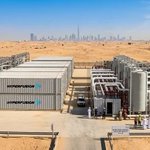
Aleria and Hyperfusion to Build Modular AI Data Center Designed with NVIDIA Vera Rubin in Abu Dhabi
apnews.com/press-release/ein…
#AIInfrastructure #NVIDIA #VeraRubin #AbuDhabi #SovereignAI #Hyperfusion
@hyperfusionio @aleria_ai

lnkd.in/eRvDRTmW
For nearly a year, our team has worked alongside Aleria and NVIDIA on a question most of the industry was still treating as theoretical: can you build infrastructure for Vera Rubin that comes online as fast as the chip itself?
Every rack generation now arrives with new power, cooling and density requirements. Conventional data centers take years to plan and build. By the time they’re ready, the silicon has already moved on. We kept seeing the same pattern: customers could secure GPUs, but they couldn’t find anywhere ready to run them.
So we stopped adapting buildings and started designing around the chip.
That meant a lot of late nights. Long engineering sessions on rack densities above 200 kW. Getting direct-to-chip liquid cooling right for the Gulf. Designing a 45°C warm-water loop that rejects heat in 45-degree summers without wasting water. Building redundancy into every layer. And through all of it, the constant discipline of moving as much as possible into the factory so the site work stays short.
Yesterday, Aleria and Hyperfusion announced the result: a 10 MW modular AI data center in Abu Dhabi, designed from the ground up for NVIDIA Vera Rubin. It’s under construction now and targeting service entry in Q1 2027, less than six months from ground-break to activation.
To Eric Leandri and the Aleria team, thank you for betting on this with us early. To the NVIDIA teams who challenged our engineering at every step, thank you; the design is better for it. And to the Hyperfusion team, especially those on site in Abu Dhabi right now: this is yours.
The infrastructure finally moves at the speed of AI.
We’re just getting started.
#AIInfrastructure #NVIDIA #VeraRubin #AbuDhabi #SovereignAI #Hyperfusion
@hyperfusionio @quentin234

Alex Petrov retweeted

Your 2FA codes can now stay offline.
ERA Wallet keeps your authentication codes off your phone - away from infostealers, malware, and remote attacks.
And the risk is real: stolen passwords and session cookies are involved in 86% of breaches.
Your keys deserve offline security.
So does your 2FA.
Alex Petrov retweeted

DeepGEMM Ascend is now open source.
We achieved 99.8% of the hardware limit on GEMM and 98% on MegaMoE.
github.com/deepseek-ai/DeepG…

Alex Petrov retweeted

@Mintos joins UN:BLOCK Fintech Forum as a Partner!
With 700K+ users, €800M+ AUM and €13B+ invested since 2015, Mintos is shaping digital investing in Europe.
Meet the team in Riga on 15 October!
🎟️ti.to/unblock/fintech

Alex Petrov retweeted

Dit is Solarfeld Erlasee in #Beieren. In 2006 was het nog het grootste zonnepark ter wereld.
Het park wordt nu afgebroken omdat de 20-jarige EEG-#subsidieperiode (Einspeisevergütung) is afgelopen. De exploitanten vinden verder exploiteren economisch niet meer rendabel. Laat me raden, tijd voor modernere panelen met nieuwe subsidie??🧐
Alex Petrov retweeted

Researchers spent 500 hours and $70,000 and found LG TVs logging plain text transcripts in standby, mapping every device in the house, and feeding it to LG's ad arm
Unplug the internet and it saves the files until you plug back in.
LG says its TVs don't record ambient conversations.
The evidence begs to differ.
216 million of these are sitting in living rooms.
Where are the regulators?
Writer: Daniel
Readers added context they thought people might want to know
The findings and video clip here are from Gamers Nexus' investigation, which receives no credit or link.
youtube.com/watch?v=6IFVTc…
x.com/gamersnexus/st…

Alex Petrov retweeted

**ACQUISITION NEWS**
@AMD to acquire AI hardware startup @taalas_inc !
Why ? 17,000 tokens per second per user.
youtu.be/3MKRjt59hh4

Alex Petrov retweeted

GPS navigation includes a publicly broadcast 176-bit special-message field that have carried high-entropy payloads for years. It looks like a one-way encrypted control or key-distribution channel. Effectively a GPS-transmitted, world-reachable number station. The publicly receivable GPS navigation signal appears to leak operational metadata about military cryptographic logistics? @sjmurdoch lsc-pagepro.mydigitalpublica…


Congrats @paybis !

Latvijas Banka izsniedz divas licences SIA "Paybis Europe". 🥇 Šis ir pirmais kriptoaktīvu pakalpojumu sniedzējs Latvijā, kurš vienlaikus saņem darbības atļauju arī maksājumu pakalpojumu sniegšanai.
🔗 Plašāka informācija: bank.lv/aktualitates-banklv/…

Alex Petrov retweeted

America is turning to #naturalgas to power #AI #DataCenters, despite its higher carbon intensity.
Connection costs:
#Naturalgas $24/kW
#Solar $253/kW
#Wind $335/kW
The huge cost difference is due to renewables' massive geographical/infrastructure hurdles.
More details👇

Alex Petrov retweeted

La Spagna aveva il settore solare in più rapida crescita in Europa. Una legge sui sussidi del 2007 garantiva enormi pagamenti fissi per l'elettricità solare, e gli investitori vi si riversarono a frotte.
Poi l'economia è crollata, e il governo non poteva più permettersi i sussidi.
Tra il 2010 e il 2012, la Spagna ha retroattivamente tagliato i sussidi che aveva già promesso. Migliaia di operatori solari sono falliti, con oltre 62.000 investitori colpiti. Le banche hanno messo in perdita 30 miliardi di dollari. E gli investitori internazionali hanno citato in giudizio la Spagna in oltre 40 casi di arbitrato.
In tutto il paese, impianti solari mezzi costruiti e abbandonati giacciono inattivi. Infrastrutture fantasma di una politica fallita.
La Spagna ha cercato di spingere un boom solare con i sussidi. Invece, ha prodotto una delle più grandi bancarotte rinnovabili al mondo.
Qualcuno lo vuol dire a Bonelli &Co?


Alex Petrov retweeted

On January 1, 2026, the European wind industry implemented a self-imposed landfill ban on turbine blades.
This has left many countries scrambling silently for solutions. Landfill has become the next unwanted crisis, yet it's the conversation no one wants to have. Germany, Finland, and the Netherlands have banned blade landfills, and so for a time they are being exported to countries like the UK or France, where they can still be buried.
Banning waste like turbine blades doesn't make it vanish though—it just puts it on a truck to a neighbour's backyard. Low-scale solutions are often cited as the answer, like turning blades into noise barriers, bridges or playground equipment.
How do you turn 43 million tons of blade waste from turbines into park benches and koala crossings? How many park benches does one planet actually need?
Modern recycling for glass and carbon fibre often requires pyrolysis (high-heat chemical decomposition). To recycle a 'green' blade, you must burn an immense amount of energy to break down the resins.
We are trading a physical waste problem for a new energy demand problem. People love a quirky solution that highlights the absurdity of the problem—like the image of a massive 80-metre blade being used as a single, very long bus shelter.
Even 'green' solutions have a physical footprint that can't be wished away by a spreadsheet. – at Bega, New South Wales

Alex Petrov retweeted
Every wind turbine and solar panel on earth today is expected to be decommissioned and replaced long before Net Zero in 2050.
We aren't just building a new energy grid, we're initiating the world’s largest, most resource-intensive replacement cycle. The staggering cost of these recurring cycles is expected to add trillions to an already massive price tag.
McKinsey Global estimates the transition requires $9.2 trillion per year, totaling $275 trillion by 2050. However, these figures are only the baseline - they don't account for the new price ceiling driven by the physical failure and required replacement of first-generation infrastructure.
Most of today’s 225,000 wind turbines (over 1.2 TW capacity) will exceed their 20–30 year lifespans by 2050. This necessitates waves of decommissioning or 'repowering' on a scale never seen before.
With wingspans rivaling an Airbus A380 or Boeing 747, these massive composite structures are fueling blade graveyards that present a disposal challenge unmatched in human history. Projections suggest 43 million tonnes of blade waste and 60–80 million tonnes of solar PV waste by 2050.
A global rebuild of this scale must compete for finite resources. China currently refines 90% of the global rare earth supply, creating a precarious geopolitical dependency for the permanent magnet technology required for modern turbines.
* Rare earths: Neodymium and praseodymium for magnets; dysprosium and terbium for heat resistance.
* Essential metals: Massive quantities of copper for wiring, tungsten for components, and tin for soldering.
* Physical scale: Larger direct-drive turbines require 0.5–2 tonnes of rare-earth magnets per MW, supported by vast quantities of steel and concrete.
A 'second transition' is destined to become a third, and a fourth—replacing the entire global inventory every few decades. This demands a WWII-scale 'D-Day' mobilisation of capital and labor, occurring just as subsidies fade and private investment thins due to uneven returns.
Furthermore, the 'diesel paradox' remains: heavy mining equipment is still powered by the very same fossil fuels the transition seeks to eliminate.
The math suggests a looming collision between physical reality and political agendas.
Image: The Casper Regional Landfill in Wyoming has become a global focal point for 'clean energy waste'. – at Bega, New South Wales


Alex Petrov retweeted

The UK has 32 GW of installed wind capacity, but that is the brochure figure.
Over the weekend, output fell to just 0.6 GW (less than 2%). And it happened overnight, when solar was at zero. So Britain had a renewable fleet on paper, but functionally nothing arriving on the grid.
For hours, wind stayed below 10% of capacity.
Batteries do not fix that. They smooth short gaps. They cannot carry a country through long wind droughts. So the real system still needs gas.
Ready, paid for, and able to run immediately at 100% capacity whenever weather-based power drops out.
That is the hidden cost.
Build the renewables, then build the backup, then pretend the first system replaced the second.
Alex Petrov retweeted

most hardware wallets solve one problem. keeping your private keys offline.
@era_wallet looked at that and asked a different question:
what good is an offline wallet if you still can't read what you're signing?
🧵🔻
🤝 Paid partnership
