

The small business resource you can ask. Resources, free tools, and HelperX Bot @ https://nitter.gq/t.co/XYCReTnNpu | Business Directory @ https://nitter.gq/t.co/NqpgKJlCtK
Canada
Joined August 2012
- Tweets13.5K
- Following833
- Followers1.3K
- Likes807





Trying to improve your website, content, social media, email and ads at once can spread a small team thin.
Here's a tighter approach.
Here is one way to organize a 90-day sprint. Adjust the timing and order to the problem you find:
Days 1-15: Diagnose. Audit your offer clarity, trust signals, analytics, and customer conversations. Find the constraint closest to revenue.
Days 16-30: Fix your revenue pages. Rewrite headlines, clarify your offer, improve CTAs, add proof, explain pricing. Focus only on pages that influence buying decisions.
Days 31-45: Strengthen follow-up. Build welcome sequences, quote follow-ups, abandoned cart reminders. Every lead should get a clear next step.
Days 46-70: Pick one channel. Not three. One. SEO, paid ads, referrals, or partnerships. Give it enough sustained focus to learn what works.
Days 71-90: Review and plan. Compare the results with your starting point and customer feedback. Run controlled tests only when you have enough traffic and a clear question. Plan the next sprint.
Choose a manageable constraint and finish the improvement before adding more projects.

Two questions that cut through most SEO confusion:
1. If I do this well, does it improve the site's ability to grow over time — or is it a one-time bump?
2. Can I execute it consistently with what I already have — or does it depend on external parties or budget I don't currently have?
That's the Impact × Control lens.
Potential impact, high control: internal links, site structure and updates to useful existing pages. You can usually make these changes yourself, but their value depends on what is currently wrong or missing.
Potential impact, lower control: earning relevant links. You can create something worth referencing and introduce it to the right people; you cannot decide whether they link.
Use the answers alongside evidence of the problem, likely effort and business relevance. A task you can control is useful only if it addresses something that matters.
techhelp.ca/how-to-win-at-se…

Confused customers may leave without telling you what went wrong.
If someone can't figure out what you sell, which option fits them, how your pricing works, or what they're supposed to do next, they may close the tab instead of asking for help.
Confusion adds effort at the moment someone is trying to decide.
A few places where confusion tends to hide:
→ Pricing pages with too many tiers and unclear differences
→ Service descriptions full of jargon your customers don't use
→ Multiple CTAs competing on the same page
→ Product comparisons that don't actually help someone choose
Watch someone try to choose. Use what they struggle with to improve the language, explain the differences between options and make the next step clear.
Your job isn't to explain everything. It's to make the right choice feel easy.
More on the 12 customer types and how to respond to each:
techhelp.ca/types-of-custome…

WordPress Studio’s redesign puts an AI agent beside a live preview, with MCP support for Claude Code, Codex and Cursor. #WordPress #AI techhelp.ca/wordpress-studio… via @techhelpcanada

Dropbox plans a $350M Tigris deal as it launches DBX Agent Cloud, moving beyond file storage into AI infrastructure for developers and enterprises. #AI #Cloud techhelp.ca/dropbox-tigris-a… via @techhelpcanada

Keanu Reeves is returning as John Wick in Lionsgate’s animated prequel, a story built around the Impossible Task that started the legend. #JohnWick #KeanuReeves techhelp.ca/keanu-reeves-joh… via @techhelpcanada

Grimes is lending her voice and likeness to Gods Don’t Give Gifts, an AI-generated sci-fi film planned for U.S. theaters on Dec. 4. #AI #Film techhelp.ca/grimes-ai-genera… via @techhelpcanada

The Odyssey is heading back to theatres on Dec. 11, including IMAX and IMAX 70mm, after a $1.8B global run that made it IMAX’s biggest release. #TheOdyssey #IMAX70mm techhelp.ca/the-odyssey-imax… via @techhelpcanada

Canada’s Budget 2026 would expand SR&ED to some commercialization expenses, including regulatory approvals and IP protection tied to eligible R&D projects. #SRED #CanadianTech techhelp.ca/budget-2026-sred… via @techhelpcanada

A disappointing result can tell you what to change without making the whole plan worthless.
Before a major pivot, ask:
→ What do customers already value?
→ What do feedback and performance data suggest is failing?
→ What is the smallest change that would test that explanation?
Decide what result would justify continuing, changing direction or stopping. That makes the next decision easier to judge than “we will try harder.”
You may need a different offer, delivery method or audience. First, understand what the current attempt has taught you.
Subscribe for practical business-decision notes → techhelp.ca/subscribe/

Dropbox is adding AI that can propose a plan, then organize, rename, edit, and transcribe existing files after approval. The key issue is control. #Dropbox #AI techhelp.ca/dropbox-ai-agent… via @techhelpcanada

HubSpot’s Q3 results show AI changing software buying, from proof-heavy sales cycles to credit-based pricing and weaker inbound demand. #AI #SaaS techhelp.ca/hubspot-ai-prici… via @techhelpcanada

OpenAI’s ChatGPT Images 2.6 adds faster generation, GIF creation, saved reference images and new API controls for creative workflows. #ChatGPT #AI techhelp.ca/chatgpt-images-2… via @techhelpcanada

OpenAI’s Pierre deal and Meta’s Conductor buy point to a new phase of AI coding: less about prompts, more about the workflow around agents. #AI #Coding techhelp.ca/openai-meta-ai-c… via @techhelpcanada

Google is adding NABP accreditation as another telemedicine ad certification route in Canada, the UK and the US. The change gives advertisers another path, but Google approval still applies. #GoogleAds #Telemedicine techhelp.ca/google-nabp-tele… via @techhelpcanada

The LA–Long Beach port labour deadline has moved to Nov. 20, easing the immediate strike risk while watchmen talks continue at a record-volume gateway. #SupplyChain #Ports techhelp.ca/los-angeles-long… via @techhelpcanada

If one company handles your accounting, payroll, invoicing, payments, and tax filing — that's convenient.
It's also concentration risk.
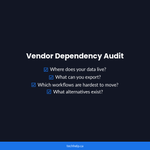
You don't need to switch anything tomorrow. You do need to know where your data lives, what you can export, which workflows are hardest to move, and what alternatives exist if you ever had to leave.
Spend an hour on that audit now so you're not figuring it out under pressure later.
This applies to any platform your business depends on — not just accounting software.
Convenient isn't the same as resilient.

A well-placed emoji can signal tone or mark a key point in a social post. Use it sparingly, and keep the meaning clear in the words too.
But finding the right combination usually means scrolling through your phone's emoji keyboard, trying to remember where that one icon is, or Googling "checkmark emoji" for the third time this week.
We built Emoji Hub to skip that. Search by keyword, build combos, copy with one click, and paste directly into your post.
Small tool. Surprisingly useful when you're writing social content on deadline.
→ techhelp.ca/emoji/
You can practise behaviours that make your ideas clearer and your conversations more engaging.
Research on charismatic leadership has tested training in tactics such as vivid examples, expressive delivery and connecting ideas to shared values.
You don't need to be the loudest person in the room. You need to be the one who makes people feel seen.
Here's why that matters financially: opportunities arrive through people. Promotions, partnerships, referrals, client trust. Clear, attentive conversations can help people understand your work and remember when to refer you.
The practical version:
→ Listen more than you pitch
→ Tell clear, specific stories instead of vague generalizations
→ Ask follow-up questions that show you actually heard what someone said
→ Make interactions feel human rather than transactional
Charisma isn't charm. It's paying attention and making it show.
More on the less obvious skills that support business decisions and relationships:
techhelp.ca/the-money-skills…

Crawl budget isn't a daily quota to chase. Learn when it matters and how to help Google reach the pages that deserve attention. #SEO #TechnicalSEO techhelp.ca/crawl-budget/?ut… via @gabecanada
