
AGI safety researcher at @GoogleDeepMind, leading https://xitter.cf/t.co/gBAjHPCTcL switching to https://xitter.cf/t.co/aIojqeDT0I
London
Joined August 2017
- Tweets222
- Following710
- Followers1.9K
- Likes9.7K



Tom Everitt retweeted

Agreed. Mass surveillance violates the Fourth Amendment and has a chilling effect on freedom of expression. Surveillance systems are prone to misuse for political or discriminatory purposes.

Tom Everitt retweeted

SoTA’s Human Augmentation Hackathon, 26-27th July
We’re seeking new tools that foster human-AI symbiosis. What you build will expand our capabilities, rather than writing us out of the story.
Success will be judged against the following criteria:
- Is your demo better than alternative methods of achieving the same result?
- Would your demo be worse without the AI component?
- Would your demo be worse without a human?
Read the latest letter to SoTA and register to join below

pretty cool effort to distribute economic power in the age of powerful AI

With @luke_drago_, I’m cofounding Workshop Labs, a public benefit corporation preventing human disempowerment from AI.
See below for:
-impact case
-what we’re building
-what we hope the future looks like
-what we’re hiring for
Tom Everitt retweeted

Someone needs to use this as the basis of an unsupervised environment design algorithm to give AI designers direct control over agent behavior

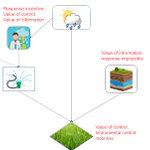
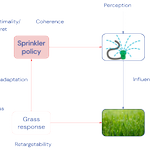
Causality is about predicting how interventions affect outcomes.
Can we use causality to predict how environment changes affect agent behavior?
We explore this idea in a new paper

Can we trust a black-box system, when all we know is its past behaviour? 🤖🤔
In a new #ICML2025 paper we derive fundamental bounds on the predictability of black-box agents. This is a critical question for #AgentSafety. 🧵

new world models paper, this time with task-generality rather than robustness

Are world models necessary to achieve human-level agents, or is there a model-free short-cut?
Our new #ICML2025 paper tackles this question from first principles, and finds a surprising answer, agents _are_ world models… 🧵

interestingly, task generality doesn't require a causal model, and so is less demanding than robustness in this sense
arxiv.org/abs/2506.01622
arxiv.org/abs/2402.10877
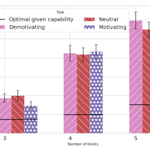
What if LLMs are sometimes capable of doing a task but don't try hard enough to do it?
In a new paper, we use subtasks to assess capabilities. Perhaps surprisingly, LLMs often fail to fully employ their capabilities, i.e. they are not fully *goal-directed* 🧵

Our definition also predicts other indicators of goal-directedness, such as propensity to rebuild a fallen tower, and persistence at Progress Ratio Tasks. (In PRTs, you can quit at any time, and face diminishing returns. They are commonly used to assess human goal-directedness.)


Link to paper: arxiv.org/abs/2504.11844v1
Joint work with: @ggarbacea @alexis_bellot_ @jonathanrichens @HenryPapadatos @Simeon_Cps @rohinmshah from @googledeepmind @UChicago and SaferAI

We hope our measure of goal-directedness will help designers be more deliberate about what agentic properties they instill in their AI systems, to maximize utility while minimizing risks
Tom Everitt retweeted

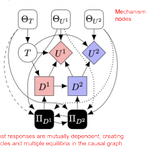
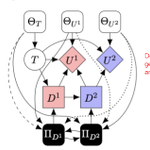
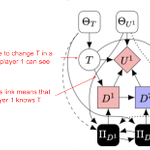
In real-life, agents with different subjective beliefs interact in a shared objective reality. They have higher-order beliefs about each other's beliefs and goals, which is required for phenomena involving theory-of-mind, like deception
Our paper formalises this in causal models

One thing that I really like about this is that my content is much less determined by who I follow, than by which posts I like. This means I can express my approval for a post, without worrying that similar content will now flood my feed.
BlueSky is an alternative social media network, that is open-source and decentralised. It's super easy to set up. And no one can manipulate the content you see by tweaking the content selection algorithm 🧵
You don't get shadowbanned by mentioning a competitor network or website, or by including a link in your post. You can choose yourself which content moderation filters to apply.