

Father, Technologist, Autodidact. Malthus Disrespector, Pro-Human.
Up North, UK
Joined April 2007
- Tweets13.8K
- Following3.9K
- Followers2.3K
- Likes33.8K




Rob Blake ∞ retweeted

I've been trying this out today and it's really, really good - feels snappy, nice UI, works with most of the sites I've tried - more notes here simonwillison.net/2026/Nov/2…


Ladybird is now in alpha 🐞
Downloads for macOS and Linux available on our website.
ladybird.org/posts/alpha/
Rob Blake ∞ retweeted

The Prime Minister wisely dropped Keir Starmer's digital ID proposals when he came to power.
Last week's deal with the EU commits us to discussing digital wallets "to enhance cooperation on digital and technology matters", "covering digital wallets and credentials".
That is digital ID by another name, but the Prime Minister doesn’t want to admit it.
My question to the Prime Minister today
Rob Blake ∞ retweeted

Jensen is restored.
Journos are ruined.
The coup is defeated.
Open source AI is protected.
And the acceleration continues.


NVIDIA Board reinstates Jensen Huang as President, CEO and Board Director.
Read the release: nvidianews.nvidia.com/news/n…

Rob Blake ∞ retweeted

Mao attempted the same thing with the Cultural Revolution.
So did the Khmer Rouge in Cambodia.
The Nazis also burned books.
Today, a number of countries restrict and control access to Internet content.
The least we can say is that they are less than democratic.
Rob Blake ∞ retweeted
Dario's spiel since GPT-2 has always been about hyping the dangers so that open models would be made illegal and *he* would stay in control.
He left OpenAI because he wasn't going to have control.
It's like the Ottoman Empire banning the printing press for Arabic so they would keep in control of the dogma.
It stops the population from freely accessing diverse knowledge.
It's a new form of medieval obscurantism.
Rob Blake ∞ retweeted

John von Neumann helped invent the modern computer, and he got furious when one of his grad students made programming easier.
The student, Don Gillies, was stuck hand-translating programs into binary for von Neumann's machine at Princeton. So he wrote a program to do the translating for him, which he later said was the first assembler. Von Neumann told him you don't use a valuable scientific computing instrument for clerical work.
And honestly, for the early 1950s he had a point. The machine was the precious thing back then, and a grad student's afternoon was close to free.
That math flipped fast. John Backus, who led the FORTRAN team at IBM, later wrote that by 1954 a computer center's programmers usually cost at least as much as the computer itself, and a quarter to half of the machine's time went to debugging their code. Human time had become the thing worth saving.
So Backus's team built a language where you write something close to algebra and the machine writes the code. A lot of experienced programmers hated it. Backus said many of them saw themselves as "members of a priesthood," guarding skills too complex for ordinary people. He also wrote that they rightly saw their work as a creative art, and he took that seriously. His team was convinced FORTRAN would never catch on unless its programs came out almost as efficient as hand-coded ones, so that's where most of their effort went. Once it delivered, people could stop worrying about the machine code underneath. Most programmers working today have never read the assembly their code turns into.
That's the question this video is asking. What was every programming language reaching for?
Karpathy, who's at Anthropic now, posted in January that he's "mostly programming in English now" and admitted it hurts the ego a bit. In Sonar's new survey, developers say AI writes or heavily assists about 65% of the code they commit, up from 42% a year ago.
So we're back in 1957, fighting over whether you can trust what the machine wrote without reading it. Only 45% of those developers think AI code is even functionally correct, and the share who say they always check it before committing still dropped from 48% to 39% in a year. 76% admit they generate AI code faster than they can verify it.
That's where the old-school programmer comes back in. By this summer, software job postings on Indeed were up almost 15% since Claude Code launched, while postings overall fell 7%. 71% of that rebound went to senior roles, mostly people who know the new tools too. Knowing what's actually happening underneath, the same skill the priesthood guarded, is what checking all that code takes.
Grace Hopper had the answer in the 1950s. She wanted people to write programs in plain English, and she was told computers didn't understand English. She died in 1992, about 30 years before they did.

Rob Blake ∞ retweeted

لينوس تورفالدز وهو من هو يعتبر ال ai
مثل ال compiler
وما حد يفترض يقرأ ورا الكومبالير. لكن التوازن في الطرح دع الآلة تقوم بما تجيده الآلة. الآلة لم تستبدل المزارع. الآلة استبدلت الثور. لا تكن العتال الذي يحمل الأوزار على ظهره. كن سائق القطار. أصبح لدينا صنبور تفتحه ينزل كود.
Rob Blake ∞ retweeted

what i’ve come to understand and hold true in my head but am always revisiting…
1. we don’t have enough raw resources (memory, cpu, power, data centers) - this won’t go away for perhaps up to 6 to 10 years
2. There is minimal to no moat for the prop labs; except selling poison and cure. They will make money selling expensive expensive cyber tokens in response to the security problems created by AI
3. AI fundamentally has changed work and there’s no going back. The box is open and businesses need fewer humans to run a businesses.
4. AI is an economic munition. If a country depends upon AI (and they will) and their access is suspended then a country will be economically crippled by such sanctions.
5. Openweight models are typically three months behind prop labs. They are a critical counter to $ant.
6. Countries must develop their own sovereign open weight models which codify their culture/customs to protect/encode their nations value structures to protect against cultural homogenization.
7. Distillation is competition and fair game. How it is done is should be the focus of conversation (not “if” it’s allowed) - ie distillation currently happens through theft/credit card fraud - that isn’t good!
Though tough thoughts am pondering about:
8. Training on pre-existing IP is perhaps not theft of IP. The same way that a human reading a book, seeing an idea, learning concepts and then remixing that concept isn’t a copyright violation. Mathematics isn’t IP/copyright theft.

Rob Blake ∞ retweeted

One of my favourite places in the world. Reflect for a moment on the fact that this was built by an unknown architect as a purely commercial middle-market trading hub in the booming 18th century textile trade. Business & commerce is not the enemy of beauty. Functionalism is.


Rob Blake ∞ retweeted

A brief history of AI Coding since Nov 2025:
Nov 2025: Opus 4.5 releases, OpenClaw gets built
Dec 2025: community agrees that models get good enough to handle 95% of coding tasks
Jan 2026: Ralph loops get popular, early efforts on loops/orchestration
Feb: Everyone feels knackered, too much strategic decision-making, fears around cognitive debt begin
Mar: Skills explosion as community converges around easy-to-share processes (superpowers already ahead of the game here)
Apr: most SOTA devs haven't written a line of code in months
May: "The unreasonable effectiveness of HTML" - more interest in richer review surfaces
Jun: "Loop Engineering" wins vaguepost of the year, signals more hype around process
Jul: Every talk in every conference becomes "here is my software factory"
Aug: Opus 5 speaks incomprehensibly, interest in ASD-STE100 peaks
Sep: Grok Bot gets popular, more interest in long-running "manager" threads which retain context and delegate work
Oct: The promised speed gains haven't materialised, "dark factory" feels a long way off still
Nov: No-slop manifesto releases, reading the code still appears essential
TL;DR: no-one is writing code anymore, and we are still figuring out what that means
Rob Blake ∞ retweeted

EmDash 1.5 is here, with collaborative editing.
Your team can now write together in real time. Revisions keep every version you save, new sites stay out of search until launch, and moving from WordPress is smoother.
Here's what's new 🧵

ALT EmDash 1.5 release card. The EmDash logo with "1.5" and "Write together, in real time." sit in a white glow, ringed by rows of grey text lines with a few in collaborators' colors, name flags for Noah, Matt and Maya at line ends, and Ana's cursor just after the tagline. The corners read "New release, November 13, 2026" and "34 community contributors".


Rob Blake ∞ retweeted

"It all seems to have exploded and I'm delighted!"
Historian Tom Holland explains who King Athelstan was and why we should be celebrating England's birthday next July after the government has pledged to organise a "fitting commemoration" for the occasion.
Rob Blake ∞ retweeted

Æthelstan-mania reaches the Guardian, as I make the case for marking England's 1100th birthday next July.
theguardian.com/commentisfre…

Rob Blake ∞ retweeted
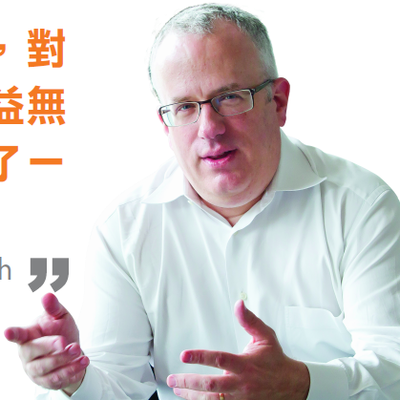
The Derp State is out to ban open weight models, cartelize labs with frontier models, make sure no one can go off the grid. This is as dumb as it sounds, it can't work. But they will try, because they're stupid and evil.

Rob Blake ∞ retweeted

Tomorrow's column for @thetimes. Why Athelstan was one of our greatest kings - and why we at @TheRestHistory support @NeilDotObrien's campaign to put England's founding father on the fourth plinth in Trafalgar Square.
thetimes.com/comment/columni…


Rob Blake ∞ retweeted
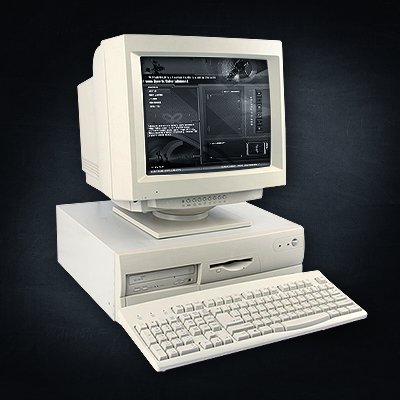
Happy 36th Birthday World Wide Web!
On 12 November 1990, British scientist Tim Berners-Lee set out his proposals for creating the WorldWideWeb: Proposal for a HyperText Project.

ALT On 12 November 1990, British scientist Tim Berners-Lee set out his proposals for creating the WorldWideWeb: Proposal for a HyperText Project.

