

Postdoc at @IRP_UW studying financial lives of low-income households. Also interested in gender, time-use, & labor force participation. @UWConsumerScience PhD.
Madison, Wisconsin
Joined March 2017
- Tweets57
- Following438
- Followers130
- Likes847




Mothers in shared vs sole physical custody arrangements are more likely to remain employed, less likely to report work-family conflict, and likely to experience greater earnings in the long-term after divorce, after accounting for pre-divorce levels of earnings & employment.

Qualitative anecdotes illustrate how divorced mothers navigate employment and parenting obligations over the post-divorce period, juggling work schedules, benefits, pay, and child support receipts, and how parenting ideals figure in their decisions regarding work.
Available open access at @FARE_NCFR: doi.org/10.1111/fare.13062

Excited to share a product of the collaboration between @INVEST_Flagship and @IRP_UW researchers on economic implications of shared care in Finland vs WI! Read our latest open access in the Journal of Family and Economic Issues: doi.org/10.1007/s10834-024-0… @HakovirtaMia @AnMiettinen

Shared physical custody, a living arrangement where children live part of the time with each parent after divorce, has been increasing in Western countries. This has implications for economic wellbeing of families. Our new paper in Social Service Review sheds light on this. (1/4)

The lack of net impact of shared placement on needs-adjusted income can be attributed to lower child support receipts and higher cost-savings relative to otherwise similar sole placement mothers balancing each other out. (3/4) journals.uchicago.edu/doi/10…

The paper has a lot more on the economics of shared placement, including different ways we divided up children's time in the home to arrive at our preferred measure of household size. It also showcases the cool administrative data we get to use @IRP_UW! (4/4)


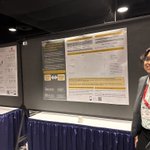
We got a poster award for our research on children’s living arrangements and economic wellbeing of separated mothers in Finland and Wisconsin @ #PAA2023! @HakovirtaMia
Thanks @IRP_UW @UW_CDE and @UWConsumerSci for all the support!


Trisha Chanda retweeted

@UWConsumerSci take on a pile of seafood in New Orleans!
@SomalisChy @trisha_chanda @UWSoHE #PAA2023 #poptwitter

Trisha Chanda retweeted
In addition to rigorous academic training, @UWConsumerSci PhD program prepares students with state-of-the-art gingerbread house building skills
Check them out at @UWSoHE

Trisha Chanda retweeted

PhD Student @trisha_chanda was recently published in the Journal of Family and Economic Issues. Read a brief Q&A we had with her below.
Thank you for your time and expertise on this valuable research, Trisha! humanecology.wisc.edu/resear…
Trisha Chanda retweeted

1. “What is a household?” A constant debate at each interviewer training. Formal definition of people living under the same roof and eating from the same kitchen for at least 6 of the prior 12 months does not cut it with our interviewers.
Trisha Chanda retweeted

Excited to share that the @TheAAPSS Volume on Single-Parent Families and Public Policy is now out! @HakovirtaMia, Mari Haapanen, Dan Meyer, and I contributed with a comparative analysis of child support policy in high-income countries. @BrookingsInst event on 12/1! @RutgersSSW

Trisha Chanda retweeted

Great #2022APPAM panel: Economic Wellbeing of Complex and Separated Families: Changing Norms, Uncertainty, and Public Policy. IRP Graduate Research Fellow @trisha_chanda organizer & presenting + IRP affiliates @MariaCancianDC @BlahaOsborne @ARPilarz @LennaNepom. Fri 11/18 2:30pm.

A new measure of potential economic wellbeing shows WI mothers are twice as vulnerable as fathers going into divorce, with heterogeneity by age of child. My new article out on the Journal of Family and Economic Issues: rdcu.be/cZJJ3
@IRP_UW @UW_CDE @UWSoHE

Had the opportunity to meet and get feedback from the experts behind the scenes at @umpsid, what a great afternoon! @UW_CDE @IRP_UW

.@trisha_chanda, doctoral student @UWSoHE continues our afternoon answering the question "Do union dissolutions lead to lower maternal time investments in children?" using #CDS and #PSIDdata.
