

Computational artist and designer. Algorithmic mosaics: images built from thousands of pieces. I build my own tools (Mozaix). https://nitter.gq/t.co/b9XlHAl6ET
- Tweets45.7K
- Following1.6K
- Followers5K
- Likes81.7K


ALT Algorithmic mosaic portrait of a young African woman in a colourful headwrap, looking straight at the viewer. Her face and wrap are built from hundreds of tiles of African textile patterns in terracotta, rose, indigo and gold. "Will You?" from African Bricks by Charis Tsevis.

ALT Close-up of the same mosaic around one eye: every tile is a different printed pattern, zigzags, dots, diamonds and stripes in browns, pinks and terracotta, separated by thin dark lines.

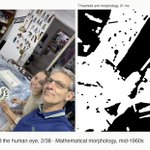
ALT Two panels: a selfie of a woman and a man in a studio, with tools hanging on the wall behind them, and the same photo reduced to a few large black and white shapes by a threshold and morphology.


ALT The Skiagrafia desktop interface, showing an image segmented into semantic layers and masks.


ALT Portrait of the poet C. P. Cavafy made of fragments of his handwritten Greek manuscripts

ALT Portrait of Frederick Douglass made of thousands of handwritten signatures from Massachusetts anti-slavery petitions

ALT Portrait of Ludwig van Beethoven made of handwritten words in pencil and ink from his conversation books

ALT Portrait of Florence Nightingale made of handwritten words from her letters, in pinks and whites on a dark purple ground, with rays of words spreading from a lamp's light

ALT Diophantine's window in dark mode: Encrypt and Decrypt tabs, a choice of ZIP, 7z, GPG or VeraCrypt, a password field with Generate, keyfile and recovery-phrase options, and a drop area for files.

ALT Three panels. Left: loose scattered app icons on grey, the fill layer of a portrait. Middle: a thin outline of eyes, brows, nose and braids in tiny icons on grey. Right: the finished portrait of a young woman with braids made of app icons, in warm reds against blue and green.

ALT Four stacked bands of one mosaic, from a close detail of pale photographs and black paint at the top to the whole profile portrait of Abbott Thayer at the bottom.


ALT A portrait of a young woman with braids made as a mosaic of small irregular cells in warm oranges, pinks, purples and teal, separated by thin dark cracks like old ceramic glaze.

ALT Two panels: a selfie of a woman and a man in a studio, with tools hanging on the wall behind them, and the same photo drawn as fine grey edge lines by the Roberts cross.

ALT Four panels of the same photo of a woman on a staircase hanging a large mosaic portrait of a man made of octagonal tiles: the photo; its depth map in greys, the portrait and the woman light, the far wall dark; the woman and the portrait cut out together on white; and a fine line drawing of the whole scene

ALT Mosaic key art of three smiling nurses in blue scrubs standing shoulder to shoulder, two women and a bearded man, built from small photographs of nurses, with photographs drifting away at the edges.

ALT Detail of the key art at full size: small photographs of nurses at work and at a conference form a smile.

ALT Mosaic portrait of a smiling nurse built from small healthcare icons in blue, violet and turquoise, with books, syringes, monitors and hearts fading into a pale background.

ALT Detail of the icon portrait: a smiling nurse’s eyes, nose and mouth made of small blue, violet and peach healthcare icons, with clipboards, books and hearts at the left.

ALT A pebble mosaic floor from Pella, ancient Macedonia, with pale figures against a dark ground.

ALT Two halves of one image. Top: a portrait built from small tan, olive and brown dots. Bottom: the same portrait built from thousands of tiny photographs of soldiers.

ALT CrewListr Pro on the Mac with sample data: three people on a sailing yacht, two cleared for export; the selected passport's fields (name, document number, nationality, dates) each confirmed with a blue check.

ALT CrewListr Pro's fleet screen with sample yachts: name, flag, port of registry and registration number held once per yacht, with a preview of how they print on the crew list.