

I ship SaaS, games and apps in public. Four are live. I post what actually happened.
Joined June 2026
- Tweets1.2K
- Following388
- Followers150
- Likes1.9K




Pinned Tweet
I've written code for 15 years. now i build saas, games and apps with AI, in public, without leaning on it. four are live:
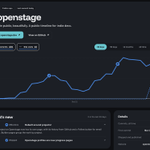
- openstage: your github commits become a public progress page (mine is in the first reply, it updates itself)
- trained on: which AI tools train on what you type, with the contract clause quoted
- wheels off: a 3d skate game that runs in the browser
- the goal atlas: world cup history, 1930 to 2026
follow for what I ship each weekday, what breaks and how I fix it, and the real numbers, zeros included.
what's the last build-in-public post that made you try the product?
I read all 12 skills in an SEO pack before installing it. one of them passed its link building to a SKILL.md hosted by the author's paid product.
so a skill can load instructions you never reviewed. grep the pack for URLs before you install it.
1
2
34
Found a bug where Firefox ran none of my Rails app's JavaScript on pages with a chart. Chrome and Safari were fine, so I caught it when a box didn't animate after a refresh in Firefox, but did after I switched tabs and came back.
The charts' bundle was starting to load as a module before the page's import map. It sat above the map in the head, and the HTTP Link header preloaded it with rel=modulepreload. Firefox then ignores the import map, so application.js never loads, and neither do Turbo or Stimulus.
It took both changes to fix: the import map moved to the top of the head, and the bundle came out of the Link header. Each one alone still failed.
If your Rails app runs importmap next to a separate module bundle, test it in Firefox. My agent ran this one in Firefox to prove the fix, and a test now fails if the head's order breaks again. Do your agents test your apps in more than one browser? I know mine do now.
1
2
95
Two people who signed up to Openstage asked me how to set up site visits. That's how you know when something has to be improved.
So I rebuilt the dashboard around that question.
Click a project and its numbers slide in from the right, with a line each for commits, site visits and MRR, where you set the number up or choose what visitors see.
Site visits now has its own setup page, three steps, and it waits on screen until your first visit is counted.
Reply with the number you'd most want on a project's public page, and I'll tell you whether Openstage can show it today.
1
48
the first art pass on Wheels Off cost 14 to 18 draw calls a frame, on about 480. that bought manhole covers, tarmac patches, cracks, gutters, tire tracks and dust when the board lands. no new image assets and nothing added to the shadow pass.
22
I made a 53-second promo video for Openstage without opening a video editor, and paid nothing beyond the Claude plan I already had.
Claude Code built it with HyperFrames, which writes the video as HTML and renders it on your own machine. If you've never edited a video, try the following steps:
1. Write the script as a table first: seconds, what the voice says, what's on screen.
2. Show your real product. It captured my live pages at 2x and drew the charts from the page's own data.
3. Use a synthetic voice. Azure's free Speech tier read mine and returned each word's timing, which became the subtitles.
4. Check the music for Content ID. Pixabay allows commercial use, but 4 of my 5 picks were registered for claims.
5. Keep it to about 7 words on screen at once, with a cut every 2 to 4 seconds.
6. Render one section first, then give notes by timestamp. One of mine: "10s to 22s is too long without voice."
Six renders, all in one day.
Reply with your product and I'll tell you which screen I'd open its video on.
3
6
127
if you got curious about openstage, you can preview and claim your profile here:
openstage.dev/?ref=x

1
23
4 signups for every 20 cold DMs I send, roughly. each DM links the person's Openstage preview, built from their own public repos, and asks what it's missing or what can be improved. the answers have been worth more than the signups.
2
6
100
This week, Openstage's analytics page revamp goes live with five new tabs, and every chart marks the day something shipped. Then I'll start on the dashboard revamp.
3
4
82
since it's the weekend, I won't be checking my stats every hour. It will be every 59 minutes.
2
2
63
I moved a production Rails app from 7.1 to 8.1 in one day. One thing broke.
I didn't want to wait. 8.0's security support ended on Nov 7, and 18 of the 21 advisories in the Nov 4 release cover 7.1 with no 7.1 patch coming.
How I did it:
1. One version at a time: 7.2, then 8.0, then 8.1, each in its own commit.
2. I ran the full suite of 1,694 tests at every step and never moved on with a failure or a deprecation warning.
3. I took every new default except YJIT, which stayed off because my host gave each service 512 MB.
4. Before deploying, I built the production image and booted it against a throwaway database.
5. After deploying, I checked the health endpoint. It answers JSON on 8.1 and never did on 7.1, so I knew the new code was live. Then I compared a share image with the one from before, and it was the same 74,919 bytes.
The break came on 7.2. A total of 26 tests failed with "svgload_buffer: operation is blocked". Active Storage was loaded but I never used it, and since 7.2.4 it turns off libvips' untrusted loaders for the whole process, SVG included.
My share images are SVG turned into PNG, so they would have failed in production. I stopped loading Active Storage and allowed the SVG loader back, since every SVG is my own.
Have you upgraded your Rails app recently? What would you have done differently?
80
Thanks Ayush 🚀🚀🚀

This open stage thing is a damn cool project that I came across. I just claimed mine. You guys can check it out as well. Do tell me if my open stage looks good or not.
openstage.dev/YourAKShaw

1
2
63
You can now see how your work would look on Openstage without signing up. Type your GitHub username on the landing page and it builds your stage from public GitHub, with your projects and a year of commits on one page.
If your public year is quiet, the preview lists up to 6 of your public repos instead, and the count of private contributions when your GitHub profile shows it.
The latest builders to sign up did it after I sent them their own preview in a DM.
Reply with your GitHub username and I'll reply with a screenshot of your stage.

4
2
83
And yours is just waiting to be claimed

claimed my stage on openstage
it builds the page straight from public github: 11 projects, aer-1 up top, the standard's name on every description
openstage.dev/zambodotdev

100. It's the HTTP code for Continue, and as of today, it's how many of you follow me.
I want to keep meeting all you cool people, so I'll continue. If you're building in public or into AI, gaming and tech, let's connect.
🚀 🚀
23
13
256
Rails 7.2 turns YJIT on by default, up to 128MB. Render gives each service 512MB and Openstage already hits that, so YJIT had to stay off. Besides pricing, that's one more reason I'm moving to my own server this week.
Has anyone else measured YJIT on a Rails app?
1
1
96