




Umar retweeted

Reverse Engineer Anything and removing malware/spyware from your own devices sits so close to the cyber guardrails that phrasing or word choice can mean the difference between a refusal and smooth sailing. The rumors that Claude was nerfed started on reddit, and in those threads many comments point out that Claude will still do it if you rephrase it. OpenAI is treating the similar refusals with codex as accidental decision-boundary issues and says they're getting fixed. I expect Anthropic will do the same. It's pointless and counterproductive to try to restrict this. Let people do what they want with their own property. They'll do it anyway with less restrictive models, and fighting it just means losing subscriptions and a resentful public.

Umar retweeted

My interview with Sam Altman (@sama):
0:00 Intro
0:52 When Will AI Discover New Treatments?
3:31 Why AI Hasn’t Killed Coding Jobs
11:47 Personal AI Assistants
15:39 Why Are We Busier Than Ever?
20:10 Why the AI Consciousness Debate Worries Sam
26:09 ChatGPT Is Too Agreeable
30:03 OpenAI’s Bet on Chips and Cheaper Compute
34:20 Why AI Needs a New Kind of Computer
37:41 Sam on Pressure: “Pick the Big Thing”
42:18 Why “AI Will Cure Cancer” Isn’t Enough
Umar retweeted

The Ferrari CEO praised @Tesla's new Roadster unveil today:
"It certainly shows that in the automotive world there's still a lot to be done. We have to keep dreaming. As a European, thank you for showing us how that, even in an old world, you can still innovate and dare."
He gave the Roadster launch 10 out of 10 for technology and 10 out of 10 for presentation.

Umar retweeted

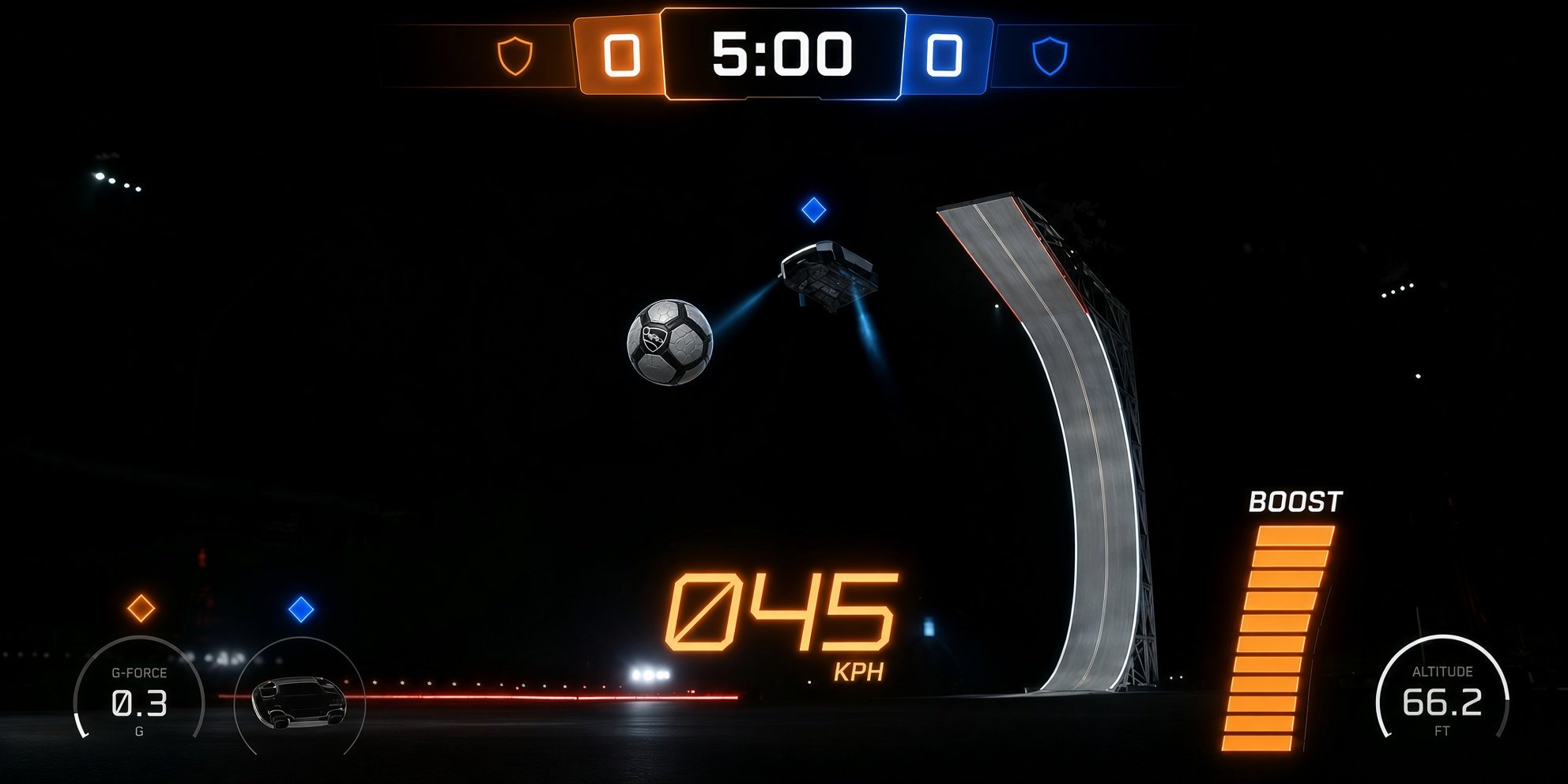
Anyway, you guys DO realize that this Roadster is planning stage technology for low gravity moon and Mars vehicles right?
Because that's what all the research into shoving these thrusters into a small vehicle is really for.
Remember. Everything Elon does is about space.



Umar retweeted
If your trials aren't turning into payments, run this before you change anything.
Paste this prompt with your App Store Connect export/connection:
"Compare these two date windows. For each: downloads, proceeds, proceeds per download, trial starts, trial-to-paid by country. Flag anything else that changed between windows (price, version, geography). Don't call it a win unless proceeds per download moved."
When I did this on one app: proceeds +12%, downloads −13%, proceeds per download +29%.



Umar retweeted
I removed the 3-day free trial from one of my apps.
Across two 13-day comparison windows, App Store earnings were 12% higher afterwards, with 13% fewer downloads.
If your trials aren't becoming payments, test no trial option at the same price. Compare earnings per new user over the same window.
Umar retweeted

Today we announced the Claude-led discovery of a molecular machine that we suspect could represent a new gene editing mechanism. Its precise function, biotechnological utility (if any), or level of significance is not yet clear, but at minimum it is work I would have been proud to do as a PhD student. The work was done mostly, though not entirely, by Claude: our life sciences team suggested a broad area of research, Claude read through the literature and a bunch of genome data and discovered something interesting, then Claude proposed experiments to verify the discovery and our team carried them out.
It’s easy to dismiss this as a one-off or curiosity, but we’ve repeatedly seen a pattern where AI performance in new intellectual domains goes from weak to superhuman in a matter of a few years. In 2023 models struggled to do math at the level of an average high-school student. In 2024 they started to do well on math competitions for the best high-schoolers in the country, in 2025 they started to solve minor open problems, in early 2026 more significant open problems, and in late 2026 they are beginning to solve the top few open problems in all of mathematics. We believe AI for biology is on a similar exponential trend.
The main difference between biology and mathematics, of course, is that math can be done purely theoretically, while biology requires experimentation. Some have used this to draw the conclusion that AI’s utility in biology will be limited. We think this is wrong. As we’ve demonstrated today, humans can collaborate with AI to perform the experiments, validate key results in a few weeks and, if necessary, work with the AI to iterate on what they find. Eventually it may even be possible for Claude itself to safely perform the experiments by autonomously controlling lab equipment, with appropriate safeguards in place, but we aren’t doing that today (our lab is also a BSL1/BSL2 facility that doesn't handle materials dangerous to humans).
More broadly, biomedical advancement has many stages — from fundamental biology discoveries, to translational research, to drug discovery, clinical trials, and finally the actual delivery of medicines and health care to patients. We are also interested in these later stages, but even simply accelerating the first stage of fundamental biological discoveries has the potential to speed up and broaden the entire pipeline. Improving our understanding of biology and sharpening biologists’ tools can drive forward all of the later stages, for example by identifying new drug targets, finding new therapeutic modalities, allowing for more precise measurement, and speeding up the experimental loop which itself further accelerates our understanding of biology. This will not in itself speed up clinical trial times, but if it succeeds it could greatly increase the number of promising candidates that go into the pipeline — an increase in throughput even though latency remains.
In Machines of Loving Grace, I wrote about AI’s potential to “cure most diseases in 5-10 years” — a goal that sounds impossible, but one I believe is just barely possible if AI is applied to every stage of the pipeline. The first step is showing that AI can first help with, and then drive, biological discoveries.
Claude’s discovery is the latest in a line of related prior work that goes back decades, beginning with systems like CRISPR, and continuing with discoveries like the bridge recombinase and VIPR in the past few years. Recently, there has been heightened interest in systems based on reverse transcriptase (RT) enzymes, the enzyme underlying the system Claude identified. And most recently, a Stanford team working independently described a novel RT system with an associated non-coding array that is in some ways similar to the one Claude found, though they are distinct systems that evolved independently from each other. I believe that we’re at the very beginning of finding such systems and developing them into powerful tools for biotechnology.
I’m proud of the resources Anthropic has invested in accelerating the public benefits of AI through the life sciences, and we’re aiming both to grow our life sciences team and to work with other scientists to extend this approach to a broad range of problems. If you have a proposal for a research collaboration or are interested in joining our life sciences team, please reach out.

Claude has discovered a previously unknown enzyme system hidden in the DNA of bacteriophages. Beside the enzyme’s gene sits a long array of repeating DNA—a structure that looks somewhat similar to CRISPR.
We don’t yet understand what this system does, but only a handful of known systems share its features, and all of them are able to cut, copy, and paste DNA. Historically, the discovery of such programmable systems has helped revolutionize medicine. CRISPR, for instance, is now the foundation of genetic medicines. But it will take much more work to learn what this system does, and whether it can be put to similar use.
Read more: anthropic.com/news/claude-di…


Umar retweeted

Grok 4.7 is here.
It's a notable improvement over Grok 4.6 at the same price and speed.

Umar retweeted

Through the VOICE trial, Terry is using his Neuralink implant to help fine-tune a brain-to-voice interface for himself and others who can’t speak. He trained the algorithm first by miming speech as best he could, then by simply thinking the words and hearing them come out in his own natural voice.
Powered by Grok Voice from @spacexai