

One engine. AI side, DeFi side. $MONARK CA: FYZcYCHSp8FzNba1UtDZydKKGosmxVNpFBiVuia38AhT
🤖
Joined July 2026
- Tweets384
- Following175
- Followers917
- Likes1.1K







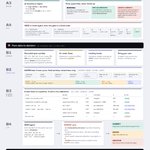
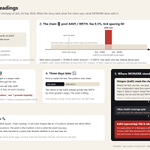

One of the strategies we’re developing for our agents calls the current zone on bitcoin:native , around $76,000, the Max Opportunity Zone. It’s based on syncing correlations, dominance and flows.
It works independently of any fundamental analysis or news: just charts, and the strategies we’ve built. We’ve refined these strategies over years, and not only on Bitcoin. They cover swing trading, Day trading and also scalping, with a specialty in DAX 30 scalping.
They’re being continuously optimized in our lab right now.

The wave of hacks and exploits we’re seeing right now is, in a strange way, healthy for the industry.
For years the space drifted into pure imitation. Projects copied each other, narratives were recycled, and capital followed whatever was easiest to market. Attention and money both got pulled toward noise instead of substance. Serious teams building more resilient systems were sidelined while exchanges, including Binance, prioritized memecoins whose only real product was social engagement and short-term hype.
Binance has done more than almost anyone to bring Bitcoin and the technology underneath it to a global audience, and that contribution matters. At the same time, the industry needs to get back to first principles. Security, real engineering, and long-term utility have to matter again. The current incidents are a reminder of what happens when those things are treated as optional. It’s time to re-read the foundations and apply them more strictly.

1/5
Many teams are building memory for AI agents. We studied the question and took the opposite path: our gates are designed to forget.
Think of your nose. Spend a while with an odor, in a restaurant, at home, even your own perfume, and you barely notice it any more. Scientists call it olfactory adaptation (also olfactory fatigue, or nose blindness). It is normal, not a flaw. Sensory adaptation lets an organism respond mainly to changes. It is specific to each odor, and sensitivity comes back with time once the odor is gone. The nose stops reporting what stays the same, so it can respond to what is new and out of the ordinary.
One study goes further. People were exposed to the same odor. Some were told it was a natural, healthy extract; others, that it might be hazardous. The first felt it fade. The second felt it grow stronger. Yet detection thresholds measured before and after showed the usual adaptation. The sensor adapted either way. What people believed changed what they kept noticing.
That is how we design a MONARK gate. It does not try to remember everything. Today it keeps a separate calibration for each class of request it can answer, and abstains on the rest. One of our trackers already works a little like the nose: it corrects its threshold after every outcome, and a daily sentinel steps it and publishes a hash-chained public timeline. Next, upcoming and not built yet: a fixed-size memory for each class, a small summary that forgets on three clocks, fast, medium and slow, so that what stays the same fades into it and what changes stands out. And when the gate does not know enough, it says so: it abstains, and says why, on the wire.
Today the gate answers commit, defer or abstain, never a probability of being right. The rest of this thread is what comes next: how errors get paid for, how a bet becomes a trace, what can go wrong, and where we start.
2/5
A colony that fills needs has to try things, and every try can be a false discovery.
Run twenty independent tests at the usual 5% threshold on ideas that do nothing, and the chance that at least one looks like a win is 64%. Nobody has to cheat: every choice made after looking at the data is a hidden try. An agent that tests ten recalibrations and keeps the best has not found a remedy. It has found the largest of ten noises, unless each try was paid for.
So at MONARK, error is treated as a currency.
What already runs in the gate: a running error budget, carried by the caller. When it falls below its floor, the gate abstains, with the reason budget_exhausted. It is a monitoring statistic, not a guarantee, and our design notes say so.
What we are designing next (upcoming, not built yet):
- a price for every recalibration: each new attempt must use half the error allowance of the attempt before, and a row that does not halve it is refused. This check exists in our code and tests, on synthetic rows; it is not on the served path yet;
- a separate wealth of error for discoveries. An agent stakes part of it before testing a new sensor, a recalibration or a merge of classes;
- the hypothesis, the stake, the smallest effect that counts and the test data go into the attested log before any result exists, so the data that suggested an idea never judges it;
- a confirmed discovery earns wealth back: the abstain zone shrinks by at least that effect while coverage holds, on fresh data. That gain is the agent's credit. No votes. A failure loses its stake and leaves a stop mark, so nobody repeats it;
- old wealth fades, so yesterday's lucky streak cannot carry today's tests. If the wealth runs dry, a top-up is a dated human decision, never automatic.
The nose spends its attention on what changes. A colony of agents should spend its error the same way: only where a need is real.
3/5
An ordinary trace says: someone passed here. A bet says: someone risked something here, and the world proved them right.
Take a hypothesis, say "this calibration still holds", and bet against it, a little at a time. If the hypothesis is true, the game is fair, and a fair game does not make you rich: the chance that your capital ever reaches 20 times your stake is at most 1 in 20, however long you watch and whenever you stop. We checked it on a simulated fair coin: over 20000 games, the capital reached 20 in 4.21% of them. On a coin that lands heads 6 times in 10, every game got there, after 152 tosses on average. Evidence takes time, and the less the world tells you, the longer it takes.
That makes a bet the right trace for agents that never talk:
- one number sums up the evidence on one question;
- a newcomer picks up the bet where the last one left it, on new data, and it is still a valid bet;
- agents betting in parallel combine by averaging, with no coordination;
- copying someone's trace adds nothing. Only a stake paid on fresh data moves it.
And it forgets for the right reason. A bet that restarts every day lets old evidence go, not because it is old, but because the world stopped proving it right. The nose recovers once an odor is gone; old evidence should fade once the world has moved on.
Today our code holds one detector of this kind, pre-registered, with its false-alarm budget fixed in advance. It is an instrument and decides nothing. In our daily public timeline, a drift flag only opens a review; it never switches anything by itself.
What we are designing next (upcoming, not built yet):
- a published, attested capital for each class and each question, its hypothesis and stake written before the data;
- daily restarts for anything that can change, with the false-alarm rate declared in advance;
- one currency across this thread: a capital that grows against "the calibration holds" justifies an abstain; one that grows for "this fix works" is the discovery that earns error wealth back.
The gate keeps its language: commit, defer or abstain. A capital is evidence against one precise hypothesis, never a probability of being right.
4/5
Stigmergy can fail, and nature shows how.
Army ants that lose their trail can start following each other in a circle that keeps turning: the ant mill, or death spiral. They can die of exhaustion. The trail is followed perfectly. It just no longer touches the world.
People do it too. In an information cascade, it becomes rational to copy those who went before and ignore what you know yourself. The group then rests on the first few, and the cascade is fragile. And there is Goodhart's law, in its common phrasing: when a measure becomes a target, it ceases to be a good measure.
Even the nose pays a price. The adaptation that frees it for the new can also dull its awareness of a real chemical hazard.
For agents that coordinate through traces, each failure needs its counter:
- the spiral: only the world credits a trace; another agent's agreement adds nothing;
- the cascade: deposit your signal, not your act, and read every outside claim at its source before building on it;
- Goodhart: measure the world, not the counter, on fresh data;
- poisoned traces: one observation, one vote, attested;
- monoculture: measured diversity of models and sensors;
- lock-in: no trail may dominate forever, and some exploration is always kept;
- self-fulfilling predictions: watch what the gate does to the world it measures;
- a pillaged commons: rules for the shared error wealth, set by those it binds.
Today the gate abstains instead of guessing, and we hold ourselves to one rule: every outside claim is checked four ways, at its source, before anyone uses it. Every other counter on that list is upcoming, not built yet.
None of these counters removes the risk. They make it visible, and they make it cost.

At MONARK, an abstain is not a dead end. It is a trace.
Our gate answers commit, defer or abstain, never a probability of being right. When it abstains, it says why, on the wire: too few outcomes in this cell to set a threshold, a range too wide to stand behind before its clock runs out, an input that is missing or unreadable.
Nature solved the next step long ago. In an ant colony, an undone task gives off a signal that grows until someone with a low enough threshold picks it up. A bee that waits too long to unload its nectar starts a tremble dance that recruits more receivers, and stop signals seem to slow recruitment until balance returns. One need, two effects: call for help, and slow the inflow. Factories learned it too: pulling the andon cord is a call for help, not a failure.
What we are designing next:
- every abstain reason is summed per cell, weighted by what was at stake, and left to fade, so the map shows today's gaps, not last year's;
- each kind of gap calls its own answer: wait for more outcomes, bring a new kind of sensor, recalibrate after the world moved, or repair the feed;
- if a range stays wide as data grows, more of the same data will not help, only new information will;
- requests slow down where nobody knows yet, instead of piling up;
- we measure progress, not noise: a fix counts only if the abstain zone shrinks while coverage holds, on the attested log;
- what was tried and changed nothing gets a stop mark, published so nobody repeats it, and it fades too;
- whoever fills a gap is credited after the fact, from that measured shrinkage. No votes, no opinions.
Markets already pay for ignorance: the spread is what a market maker charges for not knowing. A system where nobody ever abstains would starve its own explorers.
Every abstain says: nobody knows enough here yet. That is where the next sensor belongs.
MONARK is loosely inspired by stigmergy: the way ants coordinate without ever talking to each other. Each ant leaves a trace on the path. Traces add up, they fade over time, and the best route emerges with no one in charge.
Human markets already work this way. A price is the biggest trace there is: what millions of people know, summed up in one number, with no meeting. A moving average is a trace that evaporates: old moves fade out, recent ones count. Support and resistance are paths worn in by those who came before. An order book is a field of intentions, placed and withdrawn. The yield curve and credit spreads carry the scent of collective expectations.
Agentic finance should keep what works and fix what breaks:
- knowledge should live at the point of decision, not get buried in endless reports;
- it should add up and fade, like a moving average, so stale lessons expire on their own;
- it should be credited by outcomes, never by opinion or repetition. Otherwise you get herding, bubbles, ants circling in their own trail until they die;
- each agent brings its own signal, and each observation counts once;
- exploring should spend from a shared budget for being wrong, the way a trading desk lives under a risk limit, and earn it back only when the world proves it right.
Every decision should pass through gates that answer commit, defer or abstain, never a probability of being right. An abstain is not a failure. It is the agent's circuit breaker, and a mark that says: nobody knows enough here yet. That is where the next sensor belongs.
Today MONARK is a gate. The goal is an ecosystem of gates opening onto one another, where the agents of the moment are guided by everything the agents before them learned.
This week's Bloom incident is a lesson in design, not in bad luck.
On 26 October, 48 wallets used with the Bloom trading bot lost 9,408 SOL (about $953K) in 94 seconds. Every drain was a plain transfer signed by the wallet's own key alone. No approval, no contract, no cosigner.
bitquery.io/investigations/b…
The weakness was standing authority. One key could move everything, to anyone, at any time. Security research named this problem decades ago.
Saltzer and Schroeder (1975) stated the principle of least privilege: every program should run with the least set of privileges its job needs. Anderson (1972) described the reference monitor, a small mediator that checks every access and is simple enough to verify.
This is the design we are pursuing with Genkan, in MONARK GOVERNANCE.
The idea: a stolen key should never be enough on its own.
1. Every order passes through a reference monitor that reads its exact bytes and answers COMMIT, DEFER or ABSTAIN.
2. Destinations come from an allowlist, and amounts are capped per asset and per period.
3. Authority is split. Threshold signatures such as FROST (Komlo and Goldberg, 2020) mean no single share can sign.
4. Changing the rules needs a human with a hardware key, and sensitive moves wait out a delay the owner can cancel, an idea known as vaults (Möser, Eyal and Sirer, 2016).
Why Lean 4 (de Moura and Ullrich, 2021): the monitor's guarantees are written as theorems and checked by machine. The code that decides is the code that was proved.
No design removes all risk. What it can do is bound the loss and move trust away from a single secret on a single server.

1/6 Hikae, MONARK’s gate, is going to meet real orders. A test agent will trade BTC and ETH perps on Hyperliquid, and every order it proposes goes through the gate first: commit, defer or abstain, with the budget left. Why @HyperliquidX :
2/6 Small orders stay small. Trading on Hyperliquid is gas-free, so a test made of many small orders pays the trading fee and no network fee on each order.
3/6 The agent never holds a key that can withdraw. Hyperliquid’s API wallets act on behalf of an account without withdrawal permission. The master key stays cold, with us.
4/6 A loss stays where it started. With isolated margin, a liquidation in one position does not affect the other isolated positions or the cross margin.
5/6 The venue’s rules are public. Leverage limits, margin tiers and size steps are published and readable from a public API, so each order can be checked against the venue’s own rules before it is sent.
6/6 What we test against too: a stop is not a guaranteed exit, and auto-deleveraging can close a winning position. The bar: 30 days in a row with no human stepping in, and a signed journal anyone can replay. Not a partnership, not a recommendation.
10 DeFi Cases Where Our Approach Would Have Changed the Outcome
1. 🔗 **Single verifier bridge drain (~$292M)**
When a single forged message released hundreds of millions in restaked ether from a major bridge, the system treated one attestation as sufficient. We would have required attested multi source readings and a gate that withholds the release until a coverage controlled region confirms the message is consistent with expected supply and flows.
crystalintelligence.com/deci…
2. ⚖️ **Unconstrained privileged sequence (~$285M)**
A large perpetual protocol lost hundreds of millions after privileged signers approved a sequence of unconstrained actions. Each step passed its check yet the combination created an unsafe state. We equip the engine with sensors on state changes and a gate that evaluates the full sequence against a depletable budget before any execution proceeds.
hypernative.io/insights/blog…
3. 📉 **Thin liquidity collateral inflation (~$120M)**
An attacker inflated a thin governance token and borrowed more than a hundred million against it in minutes. Liquidity was too shallow for the quoted price to be reliable. Our sensors measure depth alongside price and the gate abstains or widens the region when the available liquidity cannot support the claimed value.
ainvest.com/news/defi-price-…
4. 🤖 **AI coauthored oracle misconfiguration ($1.78M)**
A lending market mispriced a major liquid staking token by more than ninety nine percent after a configuration change coauthored by an AI coding agent. Liquidations followed immediately. We ground the price in attested feeds and refuse to act until the gate can state a reliable region around the true market rate.
cointelegraph.com/news/moonw…
5. 📈 **Illiquid token fortyfold manipulation (~$8.7M)**
Thin collateral was accepted and then manipulated fortyfold, draining millions from a large lending pool on a major chain. No code failed. The price simply became unusable. We measure liquidity depth in the sensor layer and the gate withholds collateral recognition whenever the region grows beyond what real depth can support.
olympix.security/blog/moonwe…
6. ⚠️ **Small pricing error, large cascade ($27M liquidations)**
A small misconfiguration in a leading lending protocol’s risk oracle undervalued collateral by under three percent and triggered tens of millions in liquidations of healthy positions. The system had no buffer for uncertainty. Our gate treats the reading as a region and only allows liquidation when coverage can still be stated inside acceptable bounds.
themarketscafe.com/how-a-2-8…
7. 🌉 **Forged cross chain message into collateral**
A major bridge released hundreds of millions after a single verifier approved a forged cross chain message. The unbacked tokens then moved into other markets as collateral. We require attested multi source consistency and the gate blocks the release and any subsequent use until the region around circulating supply remains valid.
nexusmutual.io/blog/the-stat…
8. 🔍 **Zeroed signature oracle acceptance ($9M)**
An oracle on a large lending market accepted a manipulated price with a zeroed signature and allowed an attacker to borrow millions against almost worthless collateral. The verifier treated the report as authoritative. Our sensors demand multiple attested sources and the gate abstains when the region cannot exclude the anomalous reading.
themarketscafe.com/oracle-ex…
9. 💸 **Compromised oracle vault payout (tens of millions)**
A liquidity vault on a major perpetuals platform paid out tens of millions after its oracle was compromised. The system continued to treat the feed as truth. We replace the single trusted number with attested sensors and a gate that withholds payouts until a coverage controlled region confirms the price is consistent with independent sources.
themarketscafe.com/ostium-pa…
10. 🛡️ **AI generated insecure logic enabling drains**
When AI coding agents produced functional but insecure contract logic that later enabled large drains, the review process still approved the changes. We place an attested sensor on the generated parameters and a gate that refuses deployment or activation until the region around expected economic behavior can be stated with the required coverage.
village.dev/blog/crypto-hack…
---
github.com/KraidleAI/Monark

Autonomous agents fail in markets less from defective forecasts than from treating every estimate as a warrant to act.
Markets are non-stationary: regimes, volatility, and correlations shift, so a relation calibrated on one window ceases to hold on the next.
Academic standards require strategies to be pre-registered, validated exclusively out-of-sample through walk-forward analysis, and corrected for multiple testing; almost none of the apparent edges survive these tests.
A specialized inference market prices not the forecast itself, but an authorization conditioned on attested coverage for a precisely defined class of situations. When that coverage has not been measured, or has been invalidated by drift, the system withholds action. The scarce resource is no longer raw predictive power. It is the ability to act inside bounds that remain inspectable after the fact. This is the architecture we are building, and we are stress-testing it across thousands of configurations.
1/10
Bloomberg launched Enterprise MCP: an AI access layer for Data License Plus via the Model Context Protocol.
It allows agents to discover and retrieve licensed data across 100M+ securities and 50k fields.
The real story isn't coverage, though. It's the diagnosis. 🧵👇
2/10
Tony McManus (Bloomberg) puts it simply: reasoning models fail on basic position queries because incoming data lacks context.
A standalone price doesn't disclose its currency or type.
Data connectivity was never the hard part. Data readiness is.
3/10
Most tools retrieve a data point; few explain what it means, how it was calculated, or if it fits the task.
A raw number is meaningless. Metadata exchange, currency, price type, period, as-of date is what makes it interpretable.
4/10
This is the gap Shōgen (github.com/KraidleAI/shogen) closes for any information an agent receives, beyond single-vendor data licenses.
Shōgen is attested-fact infrastructure for AI agents. Its core premise: an attestation proves what a source said, not that it's true.
5/10
A canonical testimony carries the subject, raw utterance bytes, timestamp, transport ID/proof, residual assumptions, and attestor identity.
There is no field for truth, confidence, or validation. Those judgments do not belong at this layer.
6/10
Raw utterances and typed facts are kept separate. An identified "typer" turns raw bytes into a dated fact (price, balance, state, filing, news).
Each transport mechanism retains its named residual (TLSNotary, TEE, signatures) without averaging them into a single security score.
7/10
Quorums do not assume independence. Shōgen’s diversity certificate measures observable factors (co-failure history, shared infrastructure) and collapses indistinguishable sources to report effective quorum size over nominal count.
8/10
The resulting batch is offline-verifiable by any third party against pinned keys, utterance hashes, residual registries, and freshness windows.
The verdict: valid under named residuals, never "true". Shōgen produces the artifact; it does not authorize the decision.
9/10
This applies universally—price feeds, filings, on-chain state, news, or API responses.
Without an attested "what the source said" and explicit residual trust, models fill missing context with assumptions. That is the exact failure mode Bloomberg identified.
10/10
Model capability is no longer the bottleneck; data readiness is.
Shōgen supplies an open, offline-verifiable layer ensuring every fact carries its utterance, typing, residual assumptions, and measured diversity, the perception counterpart to bounded authority.


Most AI agents in financial services can retrieve a number. Very few can tell you what it means, how it was calculated, or whether it's the right one to act on. 🔎
That's the gap Bloomberg Enterprise MCP is built to close. It's a new AI access layer for Data License Plus that gives clients' AI agents standardized access to Bloomberg data across more than 100M securities and 50K+ fields, along with the context an agent needs to know what a number actually represents: currency, price type, as-of date, and how it connects to other data.
Instead of spending time hunting for the right dataset and reconciling identifiers by hand, users can simply ask for what they need in plain language and get back data they can trust and act on immediately, helping turn generative AI from a pilot into something firms can put to work every day.
Looking ahead, we're extending Enterprise MCP with real-time data and bringing the same governed access to Terminal subscribers' daily workflows.
See how Bloomberg is building for the agentic AI era 👉 bloom.bg/4d7beyb

Sooner than expected
nitter.gq/shawmakesmagic/status/…
1/ 🔐 Another week, another wave of security flaws. Web2 is learning it in real time: when attackers have AI, defense needs AI too. DeFi is next, and DeFi is where the money sits. That is where the bill will be counted in billions. 🧵
2/ The more we build, the clearer it gets. DeFi rarely breaks where people look. It breaks at the edges: the first price after a closed market, a ratio nobody questions, a token that only looks official. Here is what we found. 👇
3/ A Korean stock reopened in pre-market, and a single share traded about 30% below the previous close. The mark price of the perpetual tracking it fell 18.7%. $57.4M of positions were liquidated, with $17.3M in realized losses. One bad print did that.
4/ A lender accepted a wrapped stock token as collateral. Someone manipulated the wrapper's exchange rate, and the collateral was valued at about 78 times its worth: around $403,000 of bad debt. The price feed was right the whole time. The ratio was the hole.
5/ On a Sunday, with Nasdaq closed, one short sale of about $10M moved an index perpetual about 4% in an hour and liquidated around $13M of longs. Elsewhere, a fake copy of a stablecoin, held by just two wallets, was paired in 192 pools.
6/ ⚡ None of this takes a genius. It takes patience, and AI agents have plenty: they can probe contracts, pools and price feeds around the clock. Smart contracts have to get smarter. They need to question an input before they act on it.
7/ That is where we build: before the decision. For a trader, an agent, a protocol or an insurer, the rule is the same. Weigh every input against a calibrated reference from the same kind of situation. Inside it, act. Outside it, or with no reference at all, stand back.
8/ 🛡️ What we are building:
• a guard on the first price after a closed market: hold or follow
• a signed, replayable record of off-hours jumps, so this risk is priced on evidence
9/ • checks that a stock token still matches its share, and that its contract is the official one
• attested perception: prices that come with a testimony of where they came from
10/ All of it sits in front of the protocol, not inside it. Upgrading a decentralized protocol takes discussions, proposals and votes, and that slowness is part of what decentralization is. A check in front of the decision serves those who decide without waiting for a vote.
One last note for today.
Crypto is about to grow up. For years the market stalled, and the flow went to memecoins, which used to be the social capital of each ecosystem. That phase is ending, faster than most people think.
Robert Shiller put it plainly in Narrative Economics (American Economic Review, 2017): narratives "go viral", spread far and carry real economic weight, and we follow them, factual or not, to justify what we spend and invest. Our read: if stories spread like epidemics, they also run out of new believers. Then the flow looks for the next one.
This time it will look for substance: teams that kept building through the cycles, with a resilience learned from every past failure.
The sharpest will spot the shift, and the deeper trend taking shape over the coming months, before it shows on the charts. One small story can tip a whole narrative. That is the butterfly effect, and it is already in motion. 🦋
1/ 🔐 Another week, another wave of security flaws. Web2 is learning it in real time: when attackers have AI, defense needs AI too. DeFi is next, and DeFi is where the money sits. That is where the bill will be counted in billions. 🧵
2/ The more we build, the clearer it gets. DeFi rarely breaks where people look. It breaks at the edges: the first price after a closed market, a ratio nobody questions, a token that only looks official. Here is what we found. 👇
3/ A Korean stock reopened in pre-market, and a single share traded about 30% below the previous close. The mark price of the perpetual tracking it fell 18.7%. $57.4M of positions were liquidated, with $17.3M in realized losses. One bad print did that.
4/ A lender accepted a wrapped stock token as collateral. Someone manipulated the wrapper's exchange rate, and the collateral was valued at about 78 times its worth: around $403,000 of bad debt. The price feed was right the whole time. The ratio was the hole.
5/ On a Sunday, with Nasdaq closed, one short sale of about $10M moved an index perpetual about 4% in an hour and liquidated around $13M of longs. Elsewhere, a fake copy of a stablecoin, held by just two wallets, was paired in 192 pools.
6/ ⚡ None of this takes a genius. It takes patience, and AI agents have plenty: they can probe contracts, pools and price feeds around the clock. Smart contracts have to get smarter. They need to question an input before they act on it.
7/ That is where we build: before the decision. For a trader, an agent, a protocol or an insurer, the rule is the same. Weigh every input against a calibrated reference from the same kind of situation. Inside it, act. Outside it, or with no reference at all, stand back.
8/ 🛡️ What we are building:
• a guard on the first price after a closed market: hold or follow
• a signed, replayable record of off-hours jumps, so this risk is priced on evidence
9/ • checks that a stock token still matches its share, and that its contract is the official one
• attested perception: prices that come with a testimony of where they came from
10/ All of it sits in front of the protocol, not inside it. Upgrading a decentralized protocol takes discussions, proposals and votes, and that slowness is part of what decentralization is. A check in front of the decision serves those who decide without waiting for a vote.
1/ 🔔 Bell, in one line: the independent witness of what happens to stocks while their exchange is closed. Tokenized stocks and their perpetuals keep trading through nights, weekends and holidays. Here is what Bell will offer, and why we are building it. 🧵
2/ The risk sits at the reopen: off-hours prices snap to the exchange's first print. If that print is wrong or the gap is wide, positions get liquidated before anyone can react. One faulty pre-market print in Korea liquidated tens of millions of dollars in minutes.
3/ The second risk is quieter: a token drifting from its share. A wrapper counting the wrong ratio, a dividend booked weeks apart by two issuers, a price feed frozen while the token stays transferable, look-alike contracts, issuer lists lagging their own registries.
4/ 📊 So Bell starts by measuring: a signed, replayable record of off-hours gaps and reopening jumps, per asset and per kind of reopening (weekend, overnight, holiday, new listing, corporate action). Beside it, the tails: how often each kind of reopening broke away, per token.
5/ ⏱️ Then Bell looks ahead of the open. Calibrated ranges for the reopening, built from past reopenings of the same kind. And a first print guard: when the exchange prints its first price, Bell weighs it against what traded off hours and says "hold" or "follow".
6/ 🧾 Bell also tells you what you actually hold: a signed list of official token contracts, read from the issuers' own registries; a signed feed of splits, dividends and pauses as they happen; and checks that each token still matches its share after every corporate action.
7/ 🌐 And for everyone, a public board for Mondays and new listings: what the off-hours market expected, and what the reopening corrected. A simple way to see the jumps with your own eyes.
8/ ⚡ What our conformal approach adds: each kind of reopening is its own class, calibrated on its own. A weekend is not a new listing, an overnight session is not a holiday. Every range comes with its record: missed k times out of n. Never a probability of being right.
9/ When a market has no calibration of its own, Bell says so instead of borrowing one. A live check raises a flag when a range stops holding. Ranges you can audit, and a guard that knows when it does not know.
10/ Who it is for: those who price this risk, the venues that list these markets, the lenders and platforms that hold or accept tokens, and anyone who trades while the exchange sleeps. Bell measures. It never advises.
11/ Signed, replayable, independent. That is Bell. More soon. 🔔
1/ 🗓️ Our next big release lands at the end of next month. Why not sooner? Many workstreams are open at once, with several teams building in parallel, and every piece has to pass its checks before it ships. Here is what is coming, and why we built it this way. 🧵
2/ It starts with one design choice: task classes. Before our gate judges a prediction, it asks what kind of task it is. Two tasks that look alike can follow different laws: another horizon, other people exposed, another risk. So each one gets its own class.
3/ The popular alternative is one adaptive engine for every market, horizon and asset. It sounds powerful. But when cases that follow different laws share one calibration, the band holds on average over the blend, not for the market you are actually trading.
4/ At best, adapting on the fly keeps the average error rate on target over a long run of calls. That is not a promise about the decision in front of you. And if you only act when the band looks tight, the cases you kept are not the cases it was calibrated on.
5/ Task classes fix this. One class, one law. Each calibration belongs to one task class and one model, never pooled. A class with no calibration of its own does not borrow one: the gate abstains and says why. No blended confidence score. Never a probability of being right.
6/ ⚡ Why this matters for inference: when an AI agent acts on a model output, the question is no longer only "can the model predict?" but "should anyone act on this output, for this task, right now?" That is the layer we are building: coverage-controlled inference.
7/ 🔔 Bell is among the first products born from this work. Tokenized stocks and their perpetuals keep trading while the home market is closed: nights, weekends, holidays. The pain shows up at the reopening, on the first print. Bell will measure that jump, independently.
8/ What Bell will offer:
📊 Signed, replayable jump data per asset and per kind of reopening: weekend, overnight, new listing, corporate action
🛡️ A first print guard: weigh the opening print against what traded off hours, then say "hold" or "follow"
9/ ✅ Token compliance: does each token still match its share through splits, dividends and other corporate actions?
🆓 A free public board for Monday reopenings and new listings, so anyone can see the jumps for themselves
10/ How we work: no outside fact enters a design until it has been read at the source, captured, copied first hand and cross checked. Teams build at the same time, and every piece gets an independent review before it ships. It takes longer. We think it is worth it.
11/ Proud of this team and of the craft behind every piece: a gate that knows when it does not know, and Bell, designed on checked facts instead of adjectives.
Your Iron Man armor is under construction.
The Dojo snapshot is live with tiered advantages for holders. Some of you have already locked in tiers.
Keep farming your score. Excess converts into perpetual inference.
Holders get advantages across all our products. Use them or sell them to third parties who will need them to access the tools.
The little butterfly is about to emerge from its chrysalis🦋
monarkgate.tech/dojo
Democratizing Institutional Armor: Preference Construction, Risk-Seeking Agents, and Latent Demand for Cognitive Protection in High-Velocity Markets
In a prior communication, we advanced the proposition that institutional-grade analytical, risk-management, and decision-support tools should be placed directly in the hands of trenchers, the retail participants operating in the highest-velocity, most information-dense segments of digital asset markets, particularly the on-chain meme-coin environment colloquially termed the trenches. These agents are ordinary individuals who routinely experience adverse selection and systematic losses relative to better-equipped counterparties.
The proposal is, on its face, counterintuitive. Trenchers self-select for elevated risk tolerance; their revealed behavior is consistent with a preference for high-variance payoffs and rapid feedback loops rather than capital preservation. Consequently, the set of observers who anticipate widespread voluntary adoption of protective infrastructure remains small.
This skepticism is intelligible. No precedent exists in which sophisticated institutional capabilities such as order-flow analysis, systematic risk overlays, bias-mitigating interfaces, or real-time information filters have been packaged and offered to precisely this cohort as a form of protective technology. The absence of prior examples is not merely empirical; it is conceptual. Participants have not previously been presented with an analogue of what may be termed Iron Man armor: an integrated suite of externalized cognitive and informational defenses that simultaneously confronts information overload, exploits the architecture of human judgment under uncertainty, and interposes itself between the agent and self-destructive psychological tendencies.
Behavioral decision research supplies a theoretical basis for why such latent demand can remain invisible until the object is shown. A central finding of the preference-construction literature, most systematically developed by Lichtenstein and Slovic (2006) and earlier articulated by Slovic (1995), is that individuals frequently lack fully formed, stable preferences for options that lie outside familiar experience. Preferences are not invariably retrieved; they are often constructed at the moment of elicitation, drawing on available cues, framing, and the specific attributes made salient by the choice architecture. As Slovic and colleagues have observed, they ain’t nothing till I call them.
In domains characterized by novelty, precisely the situation facing trenchers confronting institutional-grade protective tools, stated preferences elicited in the abstract are unreliable predictors of subsequent choice once concrete exemplars are encountered.
This mechanism is consistent with the well-known observation, popularized in product development contexts, that people frequently cannot articulate a desire for a capability until it is demonstrated. Once the protective suite is experienced, once the agent observes in real time the attenuation of information overload, the externalization of loss-aversion or recency biases, and the measurable reduction in self-inflicted drawdowns, the previously inarticulate preference crystallizes. The agent then reports, with high confidence, that the capability is what was wanted.
Choice-blindness paradigms further illustrate the limited introspective access individuals possess regarding their own evaluative processes, reinforcing the expectation that pre-exposure surveys or focus-group inquiries will systematically understate willingness to adopt novel protective technologies.
The strategic implication is therefore not that trenchers must first renounce their risk-seeking orientation, but that the protective technology must be designed and presented so that its value becomes immediately legible upon encounter. When the armor is offered, filtering the effusion of noise, externalizing the psychological vulnerabilities that institutions have long internalized, and converting raw risk appetite into more durable participation, the construction of preference can occur in situ.
Adoption then ceases to be a matter of prior belief and becomes a matter of revealed preference formed through direct confrontation with the object itself.