

Helping B2B SaaS Brands Win with Positioning, Messaging & GTM | Founder at Neuranize
Chennai, India
Joined January 2010
- Tweets518
- Following1K
- Followers165
- Likes1K


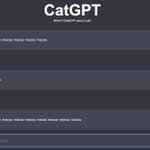


Vibe-coded apps are fun… until they leak 60GB of your data.
The Tea - Dating Safety for Women App promised a “safe space” for women.
1M downloads. No.1 on the App Store. A sleek, aesthetic UI. Trending everywhere.
1
280
They look amazing. They go viral.
But here’s the question founders and CEOs need to answer:
Are they actually secure or just pretty?
Because a cool UI won’t protect your users or your reputation when 60GB of sensitive data goes public.
1
40
Imagine being 14.
You open Instagram after school, post a photo and within minutes… strangers flood your DMs.
Some leave “comments” you don’t understand.
Others ask for pictures.
You feel uncomfortable, but you don’t know what to do.
1
42
Why now?
Because lawsuits, mental health crises and growing distrust are forcing tech giants to answer a tough question:
Is engagement worth risking user safety?
The truth: User protection is no longer a “feature.” It’s survival.
1
13
Trust is the new growth lever.
What do you think?
Are these updates enough or is it too late for platforms to rebuild trust?
#socialmedia #techethics #meta
10
Most SaaS founders don’t have a growth problem.
They have a positioning problem and it’s killing their GTM.
You can hire the best team, pour cash into ads, even build a world-class product…
2
1
33
But if your positioning sucks:
✔ No one knows why you exist
✔ You look like every competitor
✔ Price becomes your only weapon
1
13
Positioning isn’t just marketing fluff.
It’s your growth engine.
Without it, even the smartest GTM strategy will stall.
What’s the hardest part of positioning your product right now?
#positioning #messaging #GTM
8
I once spent 30 days building a feature no one wanted.
It wasn’t buggy. It worked perfectly.
But no one used it.
We thought brands would love a campaign templating system.
They didn’t.
Because they didn’t want templates, they wanted results.
1
16
That one mistake reshaped how we build Neuranize.
Now every feature answers one question:
“Will this drive outcomes tomorrow?”
Today, we help B2B brands run creator-led campaigns with AI, from match to lead scoring.
No fluff. Just performance.
1
13
If you’re building, don’t just ask “can we ship this?”
Ask: “Will anyone care?”
#startups #founderjourney #b2bmarketing #creatoreconomy
7
Vignesh Pothan retweeted

If you're a B2B SaaS and you're not getting traffic from ChatGPT, Google, Bing, Perplexity, Claude and Gemini, you're falling behind. End of story. Organic traffic is the lifeblood of any proper business; paid ads stop when the money runs out. Let me show you how to get it today with no details left out. You may want to bookmark this post because it'll get a bit long.
And if you want a case study: Follow me + RT this post + comment “X B2B SaaS SEO/AIO Guide 2025” Let’s begin...
Backlinks still drive 80% of visibility across search and AI platforms. It builds authority and brand recognition.
Whether it's Google, ChatGPT, Gemini, Claude, or Perplexity, if you don’t have backlinks from trusted sources, you're invisible.
You can build them manually (explained below), but if you want it (and everything else handled for you), SEO Stuff's Gold Plan includes 3 DR50+ backlinks, 10 SEO/AIO optimized articles and a full strategy guide including stealing your competitors' traffic: seo-stuff.com/gold-plan-pack…
That said, if you don't want to use SEO Stuff (seo-stuff.com/), here's how to do it all yourself:
To actually scale your B2B SaaS with search and AI, you need alignment across:
User intent
Semantic structuring
Conversion-driven UX
Here’s the full roadmap:
Step 1: Target High-Intent, Bottom-Funnel Queries
Most SaaS content still targets “what is” queries. That’s not where the money is.
Use SEO Stuff or a competitive keyword tool to find:
KD under 35
CPC over $4
Clear buyer context
Examples:
“CRM for mental health clinics”
“Time tracking for remote software teams”
“Automated billing software for agencies”
These drive ready-to-buy traffic that AI platforms love to surface.
Step 2: Build Use Case and Persona Pages
Don’t rely on a single /features/ page.
Instead, create targeted commercial pages like:
/crm-for-healthcare
/automation-for-finance-teams
/project-tracking-for-agencies
Each page should include:
300–500+ words of pain-point-first copy
Embedded short demo or walkthrough
Schema markup (Product, Review, FAQ)
CTA: “Start Trial,” “Watch Demo,” “Compare Plans”
These pages convert traffic across both traditional search and AI output.
Step 3: Create Long-Form, AI-Indexed Blog Clusters
Your blog is not a content calendar. It’s a revenue engine.
Structure it like this:
TOFU: “How Remote Sales Teams Stay Organized in 2025”
MOFU: “Best CRM Tools for B2B Startups”
BOFU: “[Your Tool] vs [Competitor]: Full Comparison”
Use semantic SEO and entity embedding so your content surfaces in ChatGPT, Perplexity, Claude, and Gemini.
SEO Stuff’s strategy plan handles this for you, btw.
Step 4: Authority Content = Backlinks That Actually Rank
Skip generic guest posts. Write content that earns links by default.
Examples:
“2025 SaaS Buyer Trends: Data from 2,000 Companies”
“AI Automation Benchmarks: Industry Breakdown by Sector”
“How [Client] Cut Costs 37% Using [Your Tool]: Full Report”
Pitch this to SaaS newsletters, analyst firms, and research roundups.
Use embedded citations + clean page structure. These surface in LLM outputs.
Step 5: Structured Data = Higher Visibility in AI and Search
AI platforms rely on schema to interpret and summarize your content.
You need:
SoftwareApplication + Product schema
Review schema (aggregate ratings, benefits)
FAQ schema (real questions from your ICP)
Article schema for every blog post
Bonus: Upload your sitemap to Search Console + Bing Webmaster Tools monthly.
SEO Stuff also ensures your content gets indexed ASAP, btw.
Step 6: Take Over Competitor Queries
This is one of the fastest ways to generate BOFU traffic.
“HubSpot vs Salesforce: Which CRM Is Right for You?”
“Best Alternatives to [Competitor] in 2025”
“Why We Switched from [Competitor] to [Your Tool]”
Backlink these from your TOFU blog content. Use image-rich layouts. Add side-by-side features tables and use Schema.
Step 7: AI-Optimized Video Content Embedded Across Pages
AI platforms heavily weight multimedia.
Create:
“How to Automate X in [Your Tool] in Under 5 Minutes”
“3 Features You’re Missing in Your CRM Setup”
“Client Walkthrough: From Chaos to Clarity with [Your SaaS]”
Embed them on product pages, blog posts, and comparison guides.
Use VideoObject schema and transcript embeds.
Step 8: Retarget Search Visitors with Precision Ads
Once someone visits a BOFU blog or demo page, retarget them with:
Case studies
Demo invites
Free playbooks
Example:
“Still researching automation tools? See how [Your Client] scaled pipeline 3x.”
You already paid to earn the click. Retarget to close the loop.
Step 9: 90-Day B2B SaaS SEO + AI Search Optimization Plan
Days 1–30:
Fix site speed, broken links, and mobile UX
Implement schema and update title tags
Add internal links from authority pages
Days 31–60:
Launch 3–5 high-intent blog posts
Publish 2–3 persona-based commercial pages
Build 10+ backlinks to BOFU and feature pages
Days 61–90:
Release original research + pitch it
Launch retargeting for SEO visitors
Refresh top content with updated CTAs and media
Mistakes to Avoid in 2025:
Publishing blog posts with no structured data
Targeting keywords with no commercial intent
Ignoring AI Overview optimization
Treating /features/ like a brochure instead of a conversion page
Building links to random blogs instead of funnel content
SaaS companies that fix this now will dominate across:
Traditional SERPs
ChatGPT responses
Perplexity answers
Gemini summaries
Claude output
Bing AI Overviews
You don’t need 10X traffic. You need qualified traffic that actually buys.
Follow this system. Report back in 90 days.
Or, if you want a white-glove SEO + AI Optimization system that does all this for you, check my site: alexgrobermanlabs.com/servic…
And if you want a case study:
Follow me + RT this post + comment “X B2B SaaS SEO/AIO Guide 2025”
Vignesh Pothan retweeted
I created my LinkedIn just 26 weeks ago. Absolute easiest algo to crack of any social media and it's not even close. Since then I’ve built 6,200+ connections, passed 1.29 million impressions, reached 425,000+ members and added ~$25,000 in monthly pipeline. ~$10,000 of that came from SEO Stuff alone (seo stuff dot com, fyi, if you're trying to boost your visibility in Google + ChatGPT in 6-8 weeks).
No BS. No automation. Just a focused content strategy and high-leverage engagement. Here’s the exact system I’ve been using...
Also, if you want the full strategy, including how to use engagement groups the right way, follow me, share this post, and comment “x LinkedIn growth secrets 2025.” You need to do all 3. If you do 1 of 3 or 2 of 3 you won't get a DM.
My system has 2 key components:
1. Content Output
2. Content Engagement
Let's start with content output.
I post 3 times per day, 7 days a week.
The more I post, the more my reach compounds. It’s simple math.
Weekend posts consistently outperform. Less noise = more visibility.
Here’s how output scales:
10 posts = 1 solid performer
30 posts = 3 to 4 strong ones
50+ posts = something takes off
Afternoons usually work best for me. But you need to test and double down on what performs.
Stop overanalyzing underperforming posts. Consistency is the algorithm.
Format Performance (Ranked Best to Worst):
Carousels – Step-by-step playbooks, frameworks (2x reach)
GIFs and videos – Quick demos or walk-throughs (1.5x reach)
Tweet-style images – Bold insights or quick stats (1.1x reach, softening a lot; this ain't 2024 anymore)
Static images – Infographics or charts (baseline)
Text-only posts – Concise, high-signal thoughts (around 70 percent of baseline)
Carousels are still the highest-performing content format.
Tweet-style image reach has dipped slightly. Still valuable, but use them strategically.
CTAs that convert:
“Comment X if you want Y”
“DM me for more context or a walkthrough”
So what about content engagement?
LinkedIn amplifies interaction. Every like, comment, or share pulls your post into new networks.
Spend 75 percent of your time engaging:
Like relevant posts
Leave meaningful, high-effort comments
Re-share content with your own point of view
Connect with anyone interacting with your content
Engage with:
Founders and operators
Creators in your niche
Marketers and ghostwriters
Also, just fyi, engagement groups still work. Just saying.
Find or form a group of 5 to 10 active creators.
Support each other in the first hour with:
Likes
Comments
Shares
Need help finding one? Drop a comment and I’ll connect you.
Bonus:
DM repeat engagers
Show up in the comments of fast-growing creators in your space
Daily LinkedIn Checklist:
Comment on 20 or more posts
Like 50 or more posts
Reply to every comment on your own posts
DM 5 new connections in your vertical
LinkedIn continues to outperform every other platform in B2B reach and revenue potential.
If you’re trying to grow traffic, generate inbound leads, or build brand trust, this is where to start.
And if you want the full playbook I’m using, follow me, share this post, and comment “x LinkedIn growth secrets 2025.”


Most startups fail not because they’re building bad products - but because they’re not creating economic advantage.
If you're not saving someone time, making someone money or helping them reduce effort...
You're not essential. You're optional.
1
22
At BrandCollab, we’re focused on solving this:
→ For brands: Skip cold DMs, skip wasted budget. Get matched with vetted creators. Run campaigns fast.
→ For creators: No outreach, no pitch decks. Land paid B2B brand deals directly in your inbox.
We’re not here to add noise.
1
29
We’re here to give economic advantage or we don’t deserve to exist.
Founders: ask yourself
Who’s winning financially because you exist?
If you don’t have a clear answer, go back to the whiteboard.
#buildinpublic #indiedev #b2b #InfluencerMarketing
30