

System and big data engineer. Open-source contributor. Long-form writing at https://nitter.gq/t.co/Fp55cLHgoK
Joined December 2010
- Tweets1.8K
- Following364
- Followers288
- Likes3.9K







All modern cryptography is based on elliptic curves, but it's only now that I bothered to check how they look.
The real-valued curve is not quite how I imagined an ellipse, but not much more exiting. The modular arithmetic one is of course all the fun.
(Arithmetic modulo 101 for readability)

47
Kindle stand version 1. Full height, matte charcoal PLA, variable layer height, adhesive feet, ballast pockets, 340g of full weight.


50
Practical 3D printing: made a mount so that my piano power brick is nicely tucked behind the piano, and not lying on the floor.
Required 3 test prints to arrive at the right mounting ring dimensions and design (with one of design ending up AI hallucinations).


1
1
57
This May, one doctor in Portugal accessed medical records of thousands people (up to 100K by some estimates) without concent. Including mine.
Reportedly, he was a victim of phishing, but who in hell has designed a system where one account can access 1000s records in a day and not be stopped automatically? Also, why was there no official communication, or does GDPR not apply to governments?

45
Printed a Kindle stand. Version 0, intentionally low-profile to print quickly and check fit, but turned out better than expected.


2
68
My Portuguese language journey has hit the next wall - subjunctive mood, or Presente do Conjuntivo. It is much more widely used than in English, and its regular construction goes via first person of present. Naturally, I have now made an (updated) cheatsheet.
portuguese.vladimirprus.com/…

2
56
Semax is a magical drug from USSR. It's a nasal spray that promises to dramatically improve your memory and attention.
I have looked at the most recent RCT, 2018, from Russia. It's a utter and complete train-wreck.
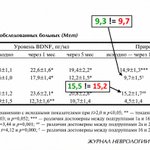
For starters, their main result table has arithmetic errors. They report deltas after 1 and 5 months of treatments, and those deltas don't reproduce. But it's just a starter:
🤖 Made with AI

- Their methodology only mentions the χ² test. Yes, for continuous variables.
- Their tables appear to use t-test instead, and values match independent-groups t-test.
- No explanation why not pairwise t-test, or ANOVA, or anything else.
- Later, they apply the t-test for a 6-point muscle strength scale
- One subgroup is randomised 30 to 20
- The "placebo" group did not receive a placebo, it "did not receive Semax"
1
1
35
The article is in Russian, but you can sent it to your favourite AI to receive a much longer list of issues. It's probably the worst article I ever saw.
If that were an actual medical breakthrough, surely we'd expect better RCTs that this?
mediasphera.ru/issues/zhurna…
1
19
I've got the Superlogical/Rex multiplexer full stack (Mac/iOS/Linux), and it's very nice indeed. Highlights:
- The UI with session/tab hierarchy
- Status display: tab names, progress, alerts
- Access from iOS back to my Mac and cloud pods
Whether the last point is good for the mental health is a big question, but technically it's solid.

2
168
Now that Modular MAX is fully source-available, I went to benchmark it against vLLM on our use cases. The first tests were disappointing on latency.
After a day, the robots found a nice fix and reduced latency 2x, now winning over vLLM.
Not yet sure if this is upstreamable.

1
56
Vladimir Prus retweeted

With the new results showing that 3-SAT can be solved in subexponential time, let me explain the confusing ways theoretical computer scientists talk about "exponential time".
There are two very different notions of exponential time in use:
1. The class E of problems solvable in 2^O(n) time, or equivalently O(2^(kn)) for some constant k, or O(c^n) for some constant c > 1.
2. The much broader class EXPTIME of problems solvable in O(2^(n^k)) time for some constant k.
The second is a misnomer: it’s the exponential of a polynomial, not just an exponential. But it’s the one complexity theorists usually mean, because it’s closed under polynomial-time reductions. In particular, every problem in NP is in EXPTIME.
Similarly, there are two notions of subexponential time:
1. 2^o(n): for every ε > 0, time O(2^(εn)), i.e. faster than O(c^n) for every constant c > 1. This one doesn’t have a standard class name.
2. The much smaller class SUBEXP: time O(2^(n^ε)) for every ε > 0.
The results announced by OpenAI and Anthropic run in approximately 2^(n /√log n) time. That makes 3-SAT subexponential in the first, weaker sense.
Proving 3-SAT is in SUBEXP would be a much bigger result. SUBEXP is closed under polynomial-time reductions and 3-SAT is NP-complete, so every problem in NP would then be solvable in subexponential time.
AI has just proven that the k-SAT problem is not actually exponential. When I read the news, I nearly fell off from the chair, because the k-SAT is the cornerstone problem in the entire complexity theory, and the result might have meant that P=NP.
However, it turns out k-SAT, if the proof survives human validation, is slightly sub-exponential.
In P!=NP we still trust.

93
Vladimir Prus retweeted

The refutation of the Exponential Time Hypothesis is somewhat deflationary when you look into the details.
The Exponential Time Hypothesis says that a certain problem (3-satisfiability) cannot be solved in less than 2^n time.
They gave an algorithm that solves it in 2^(n/√log(n)) time.
It feels like mathematical superintelligence is pushing the edges of human mathematics and only changing the landscape slightly.


Tailscale had 11 vulnerabilities reported over the weekend, so I suggest that everybody urgently double-down on their Tailscale use. That's right, double-down.
The AI worked hard, and the most critical issue is ssh privilege escalation that requires an attacker to already be on the tailnet, device approved, Tailscale SSH enabled, and ACL permitting said SSH.
There are no vulnerabilities that an outsider can exploit from square one.
1
1
78
Vladimir Prus retweeted

It is never okay to circumvent proper established coordination efforts for security disclosures.
It causes harm for others, and while it does give the person some short term gratification, it burns more bridges than it will ever open.


Google has published initial postmortem for the UK region outage
- Power failed in zone b, and then both primary and secondary backup generators failed to start. Batteries ran out after 7 minutes.
- The failover to other zones has "saturated available compute slots"
So, it was not DNS. It was "failover is always harder than in the book".
2
108
Data Engineers, please make sure that all your jobs are
- Deterministic (produce same output if rerun), and
- Back-fillable (correct outputs if input data is corrected)
This sounds obviously good, but it's also easy to accidentally break.
Just ask robots to audit the code and directly test for these two things. Your future self will be very happy.
3
73