

Ecommerce Business
Lahore/Pakistan
Joined May 2010
- Tweets5.8K
- Following321
- Followers72
- Likes505










Wasim Ahmad retweeted

APTMA: $1 BILLION IMPROVEMENT IN NET TEXTILE EXPORTS FOLLOWING EFS REFORMS
APTMA congratulates the Government of Pakistan, SIFC and FBR on reforms that have helped reduce import dependence and strengthen domestic value addition.
In FY2026, textile imports declined from $7.36 billion to $6.46 billion, while net textile exports increased from $10.55 billion to $11.48 billion — an improvement of approximately $930 million. Gross textile exports remained stable at around $17.9 billion.
Pakistan’s integrated textile value chain, from cotton farming and ginning to spinning, weaving, processing and finished products, is a national industrial asset that must be preserved.
APTMA Chairman Asad Shafi emphasised that sustainable export growth requires equal tax treatment for locally manufactured and imported textile inputs, continued facilitation for genuine exporters, and stronger enforcement against misuse of EFS.
High energy tariffs, taxation and financing costs continue to undermine domestic competitiveness.
Pakistan’s export policy must prioritise not merely higher gross exports, but greater net foreign exchange earnings, domestic value addition and a stronger textile industry.
#APTMA #PakistanTextiles #Exports #EFS


Wasim Ahmad retweeted
APTMA Raises Serious Concerns Over Faceless Customs Assessment and Proposed Relocation of Central Appraising Unit to Islamabad
In a letter to FBR Chairman Rashid Mahmood Langrial, APTMA Chairman Asad Shafi has called for urgent reforms to Pakistan’s customs assessment system, citing mounting delays, arbitrary valuations, rising clearance costs and disruptions to export-oriented manufacturing.
The reported findings of FBR’s own review committee raise serious concerns:
• Average assessment time increased from 25.6 to 40.2 hours.
• Clearance within 48 hours declined from 84% to 70%.
• Review requests more than doubled, from 6% to 14%.
• Laboratory referrals nearly doubled.
APTMA has urged FBR to retain the Central Appraising Unit in Karachi, suspend further rollout pending independent review, introduce binding clearance timelines, restore specialist assessment expertise and protect exporters from detention charges arising from administrative delays.
Customs modernisation must facilitate trade, not increase the cost of doing business. Efficient clearance, predictable procedures and uninterrupted access to imported inputs are essential to Pakistan’s export competitiveness.
APTMA has requested an early meeting with FBR leadership to pursue practical, time-bound solutions.
#APTMA #PakistanTextiles #Exports #TradeFacilitation


Wasim Ahmad retweeted

INDUSTRY DEMANDED LOWER INTEREST RATES. SBP WENT THE OTHER WAY.
In this powerful 3-minute address, a former APTMA Punjab Chairman questions Pakistan’s economic priorities and warns of the consequences for industrial competitiveness.
Since this address, SBP has reportedly increased its policy rate by another 50 basis points.
His concerns are difficult to ignore:
▪️ Trillions spent servicing government debt while businesses struggle with expensive financing.
▪️ Double-digit interest rates despite significantly lower inflation.
▪️ Electricity costs, taxation and borrowing rates that leave Pakistani manufacturers struggling to compete with China, India, Bangladesh and Vietnam.
His demands: single-digit interest rates, eventually reaching 6%, and electricity at 9 US cents/kWh.
But perhaps his most powerful statement is also the simplest:
“The buyer has not sworn to buy from Pakistan.”
International buyers have choices. Pakistan cannot expect export orders without offering competitive prices, quality and reliability.
Macroeconomic stability is essential. But what happens when the numbers improve while the factories struggle?
WATCH THE FULL 3-MINUTE ADDRESS.
#APTMAUncut #PakistanTextiles #TextileCrisis
Wasim Ahmad retweeted
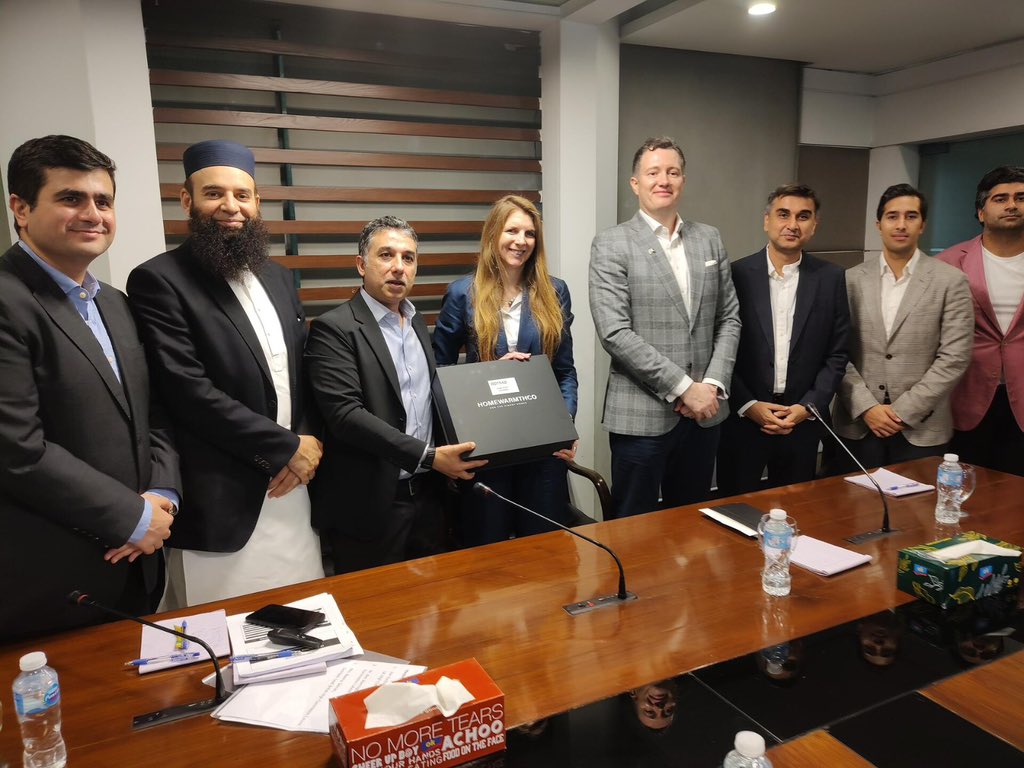
APTMA HOSTS BRITISH HIGH COMMISSIONER TO STRENGTHEN UK–PAKISTAN TEXTILE TRADE 🇵🇰🇬🇧
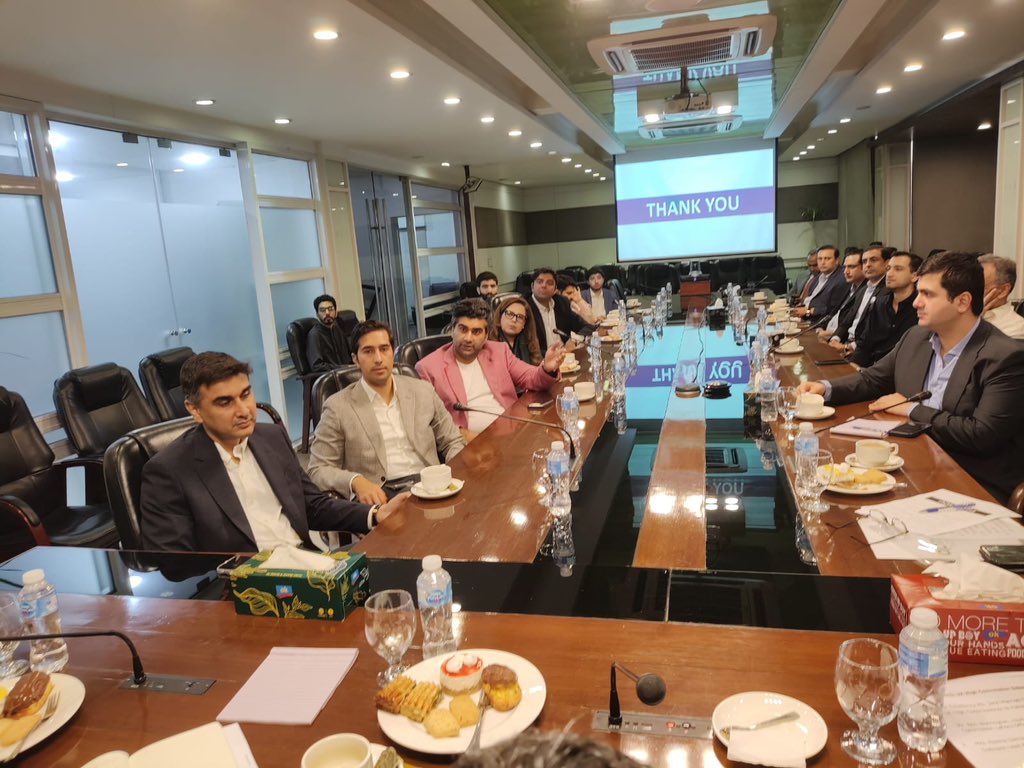
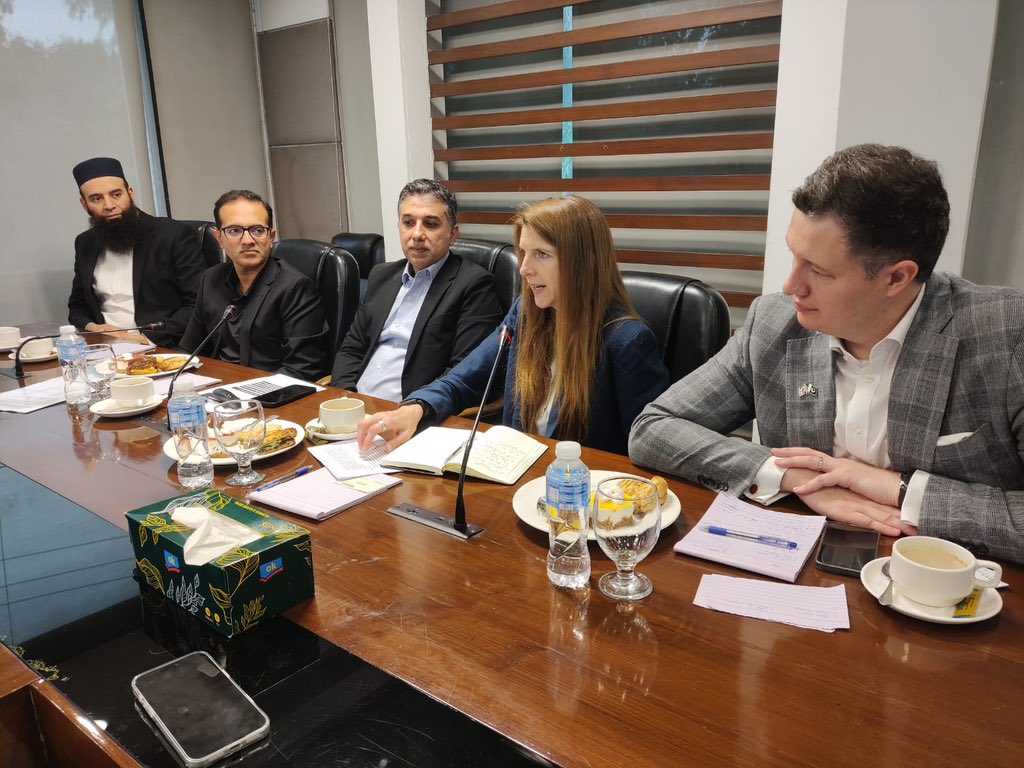
The All Pakistan Textile Mills Association (APTMA) welcomed H.E. Jane Marriott CMG OBE, British High Commissioner to Pakistan, at APTMA House, Lahore, for an interactive engagement focused on expanding bilateral trade, investment, market access and technical cooperation across Pakistan’s textile and apparel value chain.
The High Commissioner, accompanied by Mr. Ben Warrington, Head of the British High Commission’s Lahore Office, and Mrs. Reema Salman, Outreach Lead, engaged with APTMA leadership and senior industry representatives on opportunities to strengthen direct commercial linkages with British high-street brands, retailers and sourcing organisations.
Chairman APTMA, Mr. Asad Shafi, emphasised that UK–Pakistan cooperation must translate into practical, commercially meaningful partnerships. He highlighted opportunities for collaboration with British universities, textile laboratories, testing facilities, research institutions and technical specialists to advance product development, sustainability, quality assurance and innovation.
The discussions focused on several priorities:
• Greater access to UK retailers, brands and sourcing networks
• Technical collaboration in specialised and high-value textiles
• Joint research, innovation and product development
• Sustainability, international compliance and skills enhancement
• Stronger institutional linkages, investment and export opportunities
The High Commissioner appreciated the diversity and sustainability efforts of Pakistan’s textile industry and encouraged exporters to strengthen compliance, participate in UK trade exhibitions and engage directly with British buyers and technical experts.
Mr. Muhammad Siddique Bhatti, Chairman APTMA North, reaffirmed the industry’s commitment to developing durable partnerships that improve productivity, strengthen technical capabilities and expand Pakistan’s presence in the UK market.
APTMA also stressed the importance of establishing a practical framework for continued cooperation with the British High Commission and relevant UK institutions, ensuring that dialogue leads to concrete initiatives across spinning, weaving, processing, garments and home textiles.
The objective is clear: stronger institutional cooperation, deeper buyer–manufacturer linkages and a more competitive, innovative and export-oriented Pakistani textile industry.
#APTMA #PakistanUK #TextileExports #TradeCooperation #PakistanTextiles

Wasim Ahmad retweeted
GSP+ AT RISK. WHERE IS THE GOVERNMENT’S IMPLEMENTATION ROADMAP?
Pakistan’s textile industry earned €732 MILLION in EU tariff exemptions in 2024.
Industry leaders are meeting the EU Ambassador. But who is delivering measurable progress on Pakistan’s national commitments?
The Ministry of Commerce has initiated an action plan. Where are the deadlines, implementation milestones and publicly verifiable results?
GSP+ cannot be secured through meetings alone.
lnkd.in/p/dt4ySJh7
#APTMAUncut #PakistanTextiles #GSPPlus

Wasim Ahmad retweeted
Pakistan Cannot Export Its Domestic Inefficiencies
In an article published in Business Recorder on October 20, 2026, Mr. Asad Shafi, Chairman, All Pakistan Textile Mills Association (APTMA), highlights the structural challenges undermining Pakistan’s export competitiveness and the urgent need for a policy framework that supports industrial growth, investment and employment.
Over the past decade, Pakistan’s goods exports increased by US$9.3 billion, of which US$5.5 billion, or nearly 60 percent, was contributed by the textile sector. Despite successive global disruptions, economic instability and rising domestic costs, the textile industry has remained Pakistan’s principal engine of export growth.
However, persistently high energy tariffs, expensive financing, declining domestic cotton production, excessive taxation and regulatory inefficiencies continue to place Pakistani manufacturers at a disadvantage against regional competitors. Industrial electricity tariffs of approximately 11–12 cents/kWh, financing costs of 11.5 percent and a corporate tax rate of 29 percent, alongside numerous additional levies, constrain investment, production and export expansion.
The article underscores the need to restore regional competitiveness through electricity at 7 cents/kWh, industrial gas at US$7/MMBtu and financing at 7 percent, complemented by rationalised taxation, timely refunds and a predictable regulatory environment. It also advocates a performance-linked Drawback of Local Taxes and Levies (DLTL) mechanism to encourage incremental exports, employment generation and foreign exchange earnings.
Pakistan’s integrated textile value chain remains a significant national competitive advantage. Protecting its viability, particularly across energy-intensive upstream industries, is essential to sustaining downstream value addition and expanding exports.
Pakistan cannot sustainably increase exports while burdening its industries with costs that its international competitors do not face. Export competitiveness must begin with domestic policy reform.
Read the complete article by Mr. Asad Shafi, Chairman, All Pakistan Textile Mills Association (APTMA), in Business Recorder:
brecorder.com/news/40445009/…
#APTMA #PakistanTextiles #ExportCompetitiveness

Wasim Ahmad retweeted
What can Pakistan learn from Bangladesh and Vietnam’s textile export growth?
At TEXtalks 2026, Muhammad Ali Chaudhry and Faisal Jawed discuss three challenges shaping Pakistan’s textile future:
• Export competitiveness
• Domestic cotton supply
• EU GSP+ market access
Three interconnected issues. One question: how does Pakistan build a more competitive textile industry?
Selected excerpts from TEXtalks 2026, Lahore.
Wasim Ahmad retweeted
APTMA welcomes the Government of Punjab’s proposed participation in the upcoming 400 MW CTBCM power auction.
APTMA members have indicated initial demand of 25–50 MW for competitively priced electricity.
APTMA seeks B2B/G2B collaboration to reduce energy costs, revive industry and strengthen exports.
#APTMA #CTBCM #PakistanTextiles


Wasim Ahmad retweeted
APTMA Chairman Asad Shafi has urged Punjab CM @MaryamNSharif to suspend the 0.90% Infrastructure Development Cess on industrial imports.
The levy risks double taxation, raises manufacturing costs and undermines export competitiveness.
APTMA calls for urgent consultation before implementation.

Wasim Ahmad retweeted
APTMA welcomes Pakistan Customs’ crackdown on illicit textile imports and EFS misuse.
Key concerns:
• Cotton yarn imports down 42% after EFS exclusion
• MM yarn imports up 318%
• MM fabric imports up 1,207%
APTMA urges EFS reforms, stricter enforcement and fair taxation to protect local industry and jobs.
#APTMA #PakistanTextiles


Wasim Ahmad retweeted
Pakistan has strong textile manufacturing capabilities and a rapidly evolving retail sector.
Yet manufacturers and retailers often operate in silos, with limited visibility into each other’s capabilities, sourcing requirements and product development cycles.
The first APTMA × CAP working session was an important step towards bridging that gap.
A look back at the discussions at APTMA House, Lahore.
🎥 Video courtesy: Chainstore Association of Pakistan (CAP).
Wasim Ahmad retweeted
PAKISTAN’S TEXTILE OPPORTUNITY IS ALSO AT HOME.
Our mills have invested billions in manufacturing capacity. Yet local retailers still source fabrics from abroad.
APTMA–CAP dialogue seeks to bridge this gap.
Can Pakistan’s manufacturers and brands build a stronger domestic supply chain?
#APTMAUncut


Wasim Ahmad retweeted
𝗖𝗼𝗻𝗻𝗲𝗰𝘁𝗶𝗻𝗴 𝗣𝗮𝗸𝗶𝘀𝘁𝗮𝗻’𝘀 𝗠𝗮𝗻𝘂𝗳𝗮𝗰𝘁𝘂𝗿𝗲𝗿𝘀 & 𝗥𝗲𝘁𝗮𝗶𝗹 𝗕𝗿𝗮𝗻𝗱𝘀 | 𝗔𝗣𝗧𝗠𝗔 × 𝗖𝗔𝗣
APTMA, in collaboration with the Chainstore Association of Pakistan (CAP), hosted its inaugural 𝗠𝗮𝗻𝘂𝗳𝗮𝗰𝘁𝘂𝗿𝗶𝗻𝗴 × 𝗥𝗲𝘁𝗮𝗶𝗹 𝗪𝗼𝗿𝗸𝗶𝗻𝗴 𝗦𝗲𝘀𝘀𝗶𝗼𝗻 at APTMA House, Lahore, bringing together leading textile manufacturers, retail brands, business owners and technical teams.
𝗧𝗵𝗲 𝗼𝗯𝗷𝗲𝗰𝘁𝗶𝘃𝗲: Strengthen local supply chains, develop internationally competitive products and create opportunities for Pakistani brands to expand into global markets.
Speaking at the session, APTMA Chairman 𝗔𝘀𝗮𝗱 𝗦𝗵𝗮𝗳𝗶 highlighted the strength of Pakistan’s homegrown retail brands and the opportunity to capture greater value through product development, design, branding and international distribution.
He emphasised that globally competitive Pakistani brands require equally competitive local manufacturing and supply chains.
The session moved beyond conventional dialogue. Retailers presented imported articles and discussed their sourcing requirements, while manufacturers explored opportunities for local development, addressing practical challenges around sampling, quality, pricing, minimum order quantities and delivery timelines.
The discussions highlighted considerable potential for both sectors to collaborate on developing products currently sourced internationally.
The initiative supports the broader export vision of APTMA Patron-in-Chief 𝗗𝗿. 𝗚𝗼𝗵𝗮𝗿 𝗘𝗷𝗮𝘇, targeting an additional 𝗨𝗦𝗗 𝟯 𝗯𝗶𝗹𝗹𝗶𝗼𝗻 in textile exports within 12 months and 𝗨𝗦𝗗 𝟭𝟬 𝗯𝗶𝗹𝗹𝗶𝗼𝗻 over the coming years, through value addition, industrial collaboration and the global expansion of Pakistani brands.
The session brought together representatives from Cross Stitch, Maria.B, Limelight, Sapphire, Nishat Linen, Outfitters, Zeitgeist, Cougar, Royal Tag, Charcoal and Wewear, alongside manufacturers including Kohinoor Mills, Nagina Group, Shahzad Textile Mills, Resham Textile Mills, Din Textile Mills, Din Industries and Crescent Textile Mills, among others.
The working session was coordinated and moderated by 𝗠𝘂𝗵𝗮𝗺𝗺𝗮𝗱 𝗔𝗹𝗶 𝗖𝗵𝗮𝘂𝗱𝗵𝗿𝘆, Vice Chairman, APTMA Punjab ZMC, with participation from 𝗪𝗮𝘀𝗶𝗳 𝗦𝗶𝗸𝗮𝗻𝗱𝗮𝗿 𝗕𝘂𝘁𝘁, Chairman CAP, and 𝗥𝗮𝗻𝗮 𝗧𝗮𝗿𝗶𝗾, Patron CAP.
APTMA intends to build on this engagement through continued buyer–supplier interaction, joint product development and closer coordination between the manufacturing and retail sectors.
𝗙𝗿𝗼𝗺 𝗺𝗮𝗻𝘂𝗳𝗮𝗰𝘁𝘂𝗿𝗶𝗻𝗴 𝗳𝗼𝗿 𝗴𝗹𝗼𝗯𝗮𝗹 𝗯𝗿𝗮𝗻𝗱𝘀 𝘁𝗼 𝗯𝘂𝗶𝗹𝗱𝗶𝗻𝗴 𝗣𝗮𝗸𝗶𝘀𝘁𝗮𝗻𝗶 𝗯𝗿𝗮𝗻𝗱𝘀 𝗳𝗼𝗿 𝗴𝗹𝗼𝗯𝗮𝗹 𝗺𝗮𝗿𝗸𝗲𝘁𝘀.
#APTMA #MadeInPakistan #TextileExports #Manufacturing #Retail #Pakistan


Wasim Ahmad retweeted
🌱 WORLD COTTON DAY 2026 | FROM COTTON REVIVAL TO COTTON LEADERSHIP
At NIGAB/NARC Islamabad, APTMA’s former Chairman Kamran Arshad called for collective action to put farmers’ prosperity, reliable cotton supply & textile competitiveness at the heart of Pakistan’s cotton revival.
The way forward:
🌱 Better seed & innovation
🔬 Research that reaches farmers
🤝 Stronger grower–ginner–mill linkages
🏭 Modern ginning & better quality
📈 Profitable farming supporting competitive textiles
Through the APTMA Cotton Foundation, work continues on Grow More Cotton, farmer advisory, improved seed & germplasm, sustainability and traceability.
Progress on the Pakistan Cotton Board must now translate into effective implementation.
Strong farmers → Strong cotton → Strong textiles → Strong exports 🇵🇰
#WorldCottonDay #PakistanCotton #APTMA #PakistanTextiles


Wasim Ahmad retweeted
APTMA has taken up the issue of Punjab Infrastructure Development Cess being charged on EFS Goods Declarations filed at Karachi ports by Punjab-based exporters.
EFS imports are duty & tax exempt under the Export Facilitation Scheme and should accordingly remain exempt from the cess.
APTMA has requested Pakistan Single Window, in consultation with PRA & FBR, to correct the system configuration and issue a clarification for exporters.
#APTMA #EFS #PakistanTextiles #Exports


Wasim Ahmad retweeted
APTMA hosted the President/CEO of EXIM Bank of Pakistan and his team for an interactive session with the textile industry on strengthening export finance and competitiveness.
Key areas discussed included:
• Rs 1.5 trillion export finance facilities
• Rs 350 billion long-term financing facility
• Export credit insurance & guarantees
• Financing for indirect exporters and SMEs
• Greater access to international sources of liquidity
• Supporting new investment and export-oriented capacity
EXIM Bank reaffirmed its commitment to work closely with exporters, while APTMA members raised practical questions on eligibility, implementation and access to financing.
Both sides agreed to continue the engagement and work towards greater clarity and more effective support for Pakistan’s exporters.
#APTMA #PakistanTextiles #Exports #EXIMBank


Wasim Ahmad retweeted
Pakistan’s textile industry has the capacity to deliver an additional $3 BILLION in exports this year — and $10 BILLION over the next 2–3 years.
Newly elected APTMA Chairman Asad Shafi sets out the industry’s priorities:
• Competitive & predictable energy
• Export financing at competitive rates
• Faster tax refunds & improved liquidity
• Greater investment in value addition
• Stronger manufacturer–brand linkages
• Taking Pakistani brands into global markets
“Pakistan does not need to build an export industry from scratch.” The capacity, skills and complete textile value chain already exist.
The objective now: manufacture more, value-add more, and capture a greater share of the final value in global markets.
#APTMA #PakistanTextiles #TextileExports #MadeInPakistan


Wasim Ahmad retweeted
GSP+ IS NOT A GUARANTEE.
The EU Ambassador’s visit highlights what lies ahead: tougher requirements, greater scrutiny and factory-level preparedness.
A proposed APTMA–EU working group could take engagement directly to the factory floor.
A stronger partnership. A more competitive Pakistan.
#APTMAUncut #GSPPlus

APTMA hosted H.E. Raimundas Karoblis, EU Ambassador to Pakistan, in Lahore for a constructive discussion on GSP+ and the future of Pakistan–EU trade relations.
The meeting highlighted the significant benefits of GSP+, the additional requirements under the new framework taking effect in 2027, and the importance of preparing for reapplication by the end of 2028.
Members expressed a positive outlook on the partnership while emphasising the need for continued government-level reforms to meet existing and emerging GSP+ benchmarks.
A proposal was put forward to establish a joint working group connecting Pakistani textile manufacturers, from upstream to downstream, with European sourcing houses and technical advisers. The objective would be to strengthen transparency, sustainability, productivity and export readiness through practical engagement at the factory level.
Members also highlighted the need for adequate inspection capacity across Pakistan’s extensive textile industry, given the importance of GSP+ to the country’s exports and employment.
The Ambassador expressed his hope that Pakistan would meet the additional requirements.
The meeting brought together leading textile manufacturers representing Arshad Group, Colony Textile, Cross Stitch, Din Textile, Ghazi International Fabrics, Kamal Limited, Nagina Group, Resham Textile, Saad Textile, Shahzad Textile, Siara Textile, Style Textile and US Denim Limited.
Also present were APTMA Secretary General and Aptma Energy Advisor, and members of APTMA’s staff.
A fruitful exchange reaffirming the importance of sustained engagement, shared responsibility and stronger Pakistan–EU trade cooperation.
#APTMA #GSPPlus #PakistanEU #TextileExports


Wasim Ahmad retweeted
🔴 LIVE | EU AMBASSADOR VISITS APTMA
H.E. Raimundas Karoblis, EU Ambassador to Pakistan, meets APTMA leadership and members in Lahore to discuss GSP+, bilateral trade, and the future of Pakistan–EU textile cooperation.
View Live:
youtube.com/live/4hsoHldOV7M…
#APTMA #GSPPlus #PakistanEU

Wasim Ahmad retweeted
🇵🇰🇪🇺 GSP+ HAS DELIVERED — IN EXPORTS AND JOBS.
Pakistan’s value-added textile exports to the EU have reached $6.304bn — exceeding the $5.86bn level projected for 2026.
But GSP+ is about more than trade. It supports millions of Pakistani jobs and has accelerated investment, compliance, sustainability and skills across the textile value chain.
As Pakistan prepares for the next GSP+ cycle, preserving this market access must remain a national economic priority.
Chairman APTMA Kamran Arshad & Sarah Javaid write in Business Recorder:
Read: “The GSP+ dividend: exports and employment”
Source: Business Recorder
brecorder.com/news/amp/40439…
#APTMA #PakistanTextiles #GSPPlus #Exports #EU
