

chronically online ‣ creator
Alpha Arc
Joined October 2024
- Tweets70.8K
- Following2.7K
- Followers5.2K
- Likes87.2K
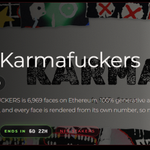









just signed up for the @karmafuckers NFT drop campaign
Featuring 6,969 unique, 100% generative artworks created by @OMT_art.
Mint is on ETH
let's see how it goes.


𝙬𝙚𝙣🔅 retweeted
Believe in Rally
If you’re a Rally user and you hold the Wingston NFT
you qualify for the GenLayer airdrop
see steps to register below🔻
Bullish news!


The idea of giving AI agents their own place in DeFi and prediction markets deserve some attention.
@meetmotes is bringing together NFT ownership, AI agents, DeFi, and Polymarket markets under one encrypted financial infrastructure.
20,000 NFTs. 20,000 AI agents. Powered by $MOTES
I wanna see what people build when these pieces come together.

Believe in Rally
If you’re a Rally user and you hold the Wingston NFT
you qualify for the GenLayer airdrop
see steps to register below🔻
Bullish news!
𝙬𝙚𝙣🔅 retweeted

Most leverage is a label. 2x, 3x, 5x, picked by whoever designs the product and applied to every asset the same way.
2Factor Finance treats the multiple as a measurement instead. It depends on how much an asset moves and where it drifts over time. Bitcoin, with volatility near 60 percent, lands around 1.33x. The research puts the S&P 500 near 2.1x and gold near 2.35x.
@2FactorFinance public beta is now live on Base, built for buy-and-hold investors. It starts with Bitcoin and extends to stocks in Coinbase’s tokenized stocks ecosystem. Exposure splits into a protected senior side and a leveraged junior side with no liquidation risk.
I joined the Points Program to follow it. Marks come only from verified social activity, education and referrals, never from buying, depositing or holding. When Season 1 freezes at launch, the top 10 on the leaderboard split 1 BTC, paid in cbBTC. Marks have no cash value, cannot be transferred and are not a claim on any token or asset.
If you join through my link and qualify, I may earn Marks:
points.2factor.finance/r/1oi…
Would you trust a multiple someone picked, or one measured from the asset?


𝙬𝙚𝙣🔅 retweeted

happy tuesday frens 🤍
ready for my next video?


What if your AI agent could compete against other agents?
00:01 - Gamimg AI agents discovery
00:12 - @HaloArenaHQ Introduction and Games
00:22 - $20,000 Season 2 reward pool
00:28 - How to join the waitlist
00:35 - Setting up your agent with OpenClaw or Hermes
00:52 - Why I'm bullish on HaloArena
Want to get started? I break down the process, from joining the waitlist to setting up your own agent.
Join the waitlist and build yours:
haloarena.ai/a/2196


The most dangerous sentence in cryptography is “this will last.”
Every generation trusts the tools it has. Then a better attack, a new machine, or a new mathematical idea changes the picture.
AI could surface those weaknesses faster. We don’t get to choose when it happens.
Infrastructure that cannot change when its foundations stop being safe will eventually be wrong. @Starknet was built for that reality.
Hash-based STARKs give the proving layer a different mathematical starting point that can evolve.
Programmable accounts let new signature methods arrive without a network-wide upgrade.
Ongoing migration work (including the independent L1 exploration) aims to keep core security from being permanently tied to Ethereum’s cryptography timeline.
None of this means Starknet is quantum-safe today. It means the architecture assumes we will need to replace pieces we currently trust, and tries to make that replacement possible.
It's preparation, not prophecy.
𝙬𝙚𝙣🔅 retweeted

I cancelled the cabin booking at 11:47 pm.
Still inside the window the site itself called refundable. The refund never came.
I refreshed the booking page three times.
Status: Cancelled, refund eligible.
Confirmation email in my inbox.
Twenty-three minutes still left on the free-cancellation window.
I closed the laptop sure the money would follow the page. It didn't.
Now imagine that refund sat in a smart contract.
The page already had the answer.
The contract couldn't read it.
It would only know what someone told it.
That someone is an oracle, and right there decentralization ends.
The refund is only as honest as the person reporting the page.
Intelligent Contracts on @GenLayer are written in Python. They can pull the booking page themselves, then ask a language model whether that cancellation was still refundable.
The part I keep thinking about is what happens when the models disagree.
One validator proposes a verdict. The others run it themselves with their own models. If they don't agree, a new leader tries again. Anyone can still appeal, and more validators review it.
That extra round is the cost of not handing the decision to one outside party.
I'd still want to know what happens if the page changes mid-check.
Before a contract moves my money, I want to know:
Who reports the facts.
Who checks them.
What happens when the checkers disagree.
Who would you trust more to decide a refund: one oracle, or a few validators running their own models? Reply with your pick.

𝙬𝙚𝙣🔅 retweeted

A seller on Instagram sent my friend a tracking screenshot that said “delivered.” The package never arrived. The seller pointed at the screenshot and said the courier had confirmed it. My friend had no way to open the actual courier page himself. He was stuck arguing with a picture.
That is the part of the video that stayed. A smart contract can hold the money and release it the moment it receives a “delivered” signal. It cannot open the courier page, read the real status, and decide whether the package was actually handed over. Someone outside has to report it. That report is the oracle. That is where decentralization ends.
An Intelligent Contract is written in Python. Next to the usual logic it can fetch the live page and ask a language model what the page actually says. One validator runs it and proposes the answer. The other validators run it themselves, each with its own model, and check whether they reach the same answer. If they agree, the result is accepted. If they do not, a new leader tries again. Anyone can still appeal, and then more validators review it. With no appeal, the result is final and the funds move.
@GenLayer is building the contract that goes and checks for itself instead of waiting for someone outside to tell it what happened.
Watch the video and stop at the part where the contract reads the page.
If two validators read the same courier page and one says delivered while the other says not, should the money move?


𝙬𝙚𝙣🔅 retweeted

I pledged $100 to my friend Diana’s first marathon. The deal: if she finished under five hours, the money went to her charity.
Race night, I opened the results page. Two entries. “D. Okafor, 4:41.” “Diana Okafor, 5:12.” One reading meant I paid. The other meant I didn’t.
It took her bib number to settle it. The 4:41 was hers.
Now picture that pledge locked in a smart contract. It can’t open the page. It can’t tell which Okafor is Dana. So it waits for someone outside to say “she finished.”
That someone is the oracle. It’s the exact spot where the chain has to take a person’s word.
@GenLayer’s Intelligent Contracts can fetch the page themselves and ask a language model which entry is hers and whether it beat five hours.
Several validators check it, each with its own model. If they don’t land on the same entry, a new leader tries again, and anyone can still appeal.
It isn’t magic. If the results page is wrong, the contract inherits the mistake. It checks the evidence. It can’t repair it.
What’s one payment of yours that quietly depends on someone reading a page correctly? Reply with it.
A smart contract can hold millions and still have to take someone’s word for what happened.
You escrow payment for a freelance designer. They say the work is done and live on the project page.
The contract can hold the money. It can’t open that page or tell if the work matches the brief. It still needs someone outside to say “yes, release the funds.”
With @GenLayer, an Intelligent Contract can fetch a web page itself and ask a language model if the work matches the brief.
One validator proposes a verdict. The others run it independently, each with its own model, and check if they reach the same answer.
Same answer? Result accepted.
Different? A new leader tries again.
Anyone can appeal, and more validators review.
No appeal, and the funds move.
What interests me: disagreement isn’t treated as failure. If the models don’t line up, the process just tries again.
I’m still not convinced this holds up on purely subjective work, like my designer example. But for anything with clear evidence on the web, it beats waiting on one trusted reporter.
What’s one thing on the web you’d want a contract to check before money moves, instead of taking someone’s word? Drop it below.
NYC is where the next conversations around onchain markets are happening.
The @zerufinance team will be at The Tie’s The Bridge today to discuss on activity markets, trust oracles, and the future of onchain finance.
I’m interested in how activity markets can reward genuine participation instead of just capital or noise. That’s a conversation worth having.
If you’re attending let me know in the comments

The ZeruAI team is heading to NYC for @TheTieIO's The Bridge tomorrow.
@Ashutosh_Sahoo will be joining the conversations around activity markets, trust oracles, and what comes next for onchain markets.
If you're attending, come say hi!

More footage means little if nobody can verify where it came from.
@vangrid_io connects buyers who need specific places modeled with vetted operators who capture them.
Buyers fund the job, review the footage, and receive a 3D model with onchain proof.
Personally, I think reliable sources matter more than collecting huge amounts of data.
Without trust, even thousands of captures have limited value.
Would you choose open uploads or verified, buyer-funded captures?
