


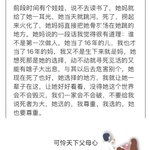


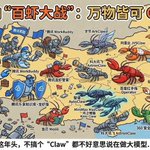

我去相亲,女方问:“你真没交过女朋友?”我说:“没有。”她又问:“你们单位那么多女性,没人对你有意思?”我诚实地说:“真的没有,她们都看不上我。”女方思考后说:“那我们也不合适。”我:“为什么?”她:“如果别人都看不上你,我凭什么要看上你?难道我眼瞎吗?”
Anthropic 的生物研究团队用 Claude 解析了细菌 vault 粒子的首个 3D 结构。
这种桶状粒子困扰了学界几十年,现在还在细菌里找到了同类。
AI 帮科研解析结构,正在变成实打实的生产力。
nitter.gq/AnthropicAI/status/211…

We’re sharing how our biology research team worked with Claude to map the first 3D structure of a vault particle from bacterial life.
Vault particles are a longstanding mystery. They are barrel-shaped objects, among the largest protein structures found in our cells. They were first discovered by Leonard Rome and Nancy Kedersha in 1986, but their function remains unknown.
With Claude, we’ve found results that might bring us closer to solving that mystery.
Until now, vaults were only known in the cells of complex things like animals and plants. We have shown that similar proteins from bacteria (and the viruses that infect them) can also assemble into vaults. Finding the structures in these simpler forms of life may make it easier to investigate their function in our own cells.
For our life sciences team, the project was also a demonstration of the potential (and the limitations) of using AI to accelerate science.
In our full piece, we discuss how Claude was able to dramatically speed up some stages—manually determining the vault particle’s structure would have taken weeks to months of painstaking work, but here it took days. We also discuss how Claude made some simple mistakes along the way, and how we collaborated with our machine learning researchers to address them.
Read more: anthropic.com/research/inves…


XiaoHai retweeted

kenjilambert.com/
meu portfoliozito novo amigos, caso puderem compartilhar! ❤️
Anthropic 的研究原型 FlashProve:用零知识证明(zkSNARK)给 AI 回答附一张“收据”,
证明它出自事先承诺的模型权重,又不泄露权重本身。
目前在 Llama 4 Maverick 上验证,单张 H100 约 110 tokens/秒,但证明成本是推理的 70–95 倍,离落地还有距离。
nitter.gq/AnthropicAI/status/211…
New Anthropic research: progress on provable inference for large language models.
Here, we introduce FlashProve. Building on established cryptographic techniques, FlashProve allows developers to verify whether a given response came from a given AI model. It’s substantially more efficient than prior open-source methods for doing so.
These proofs have a range of applications. They can, for instance, make it harder for attackers to hijack a chat, or enable safety evaluators to verify that the model they’re testing is the same one being served to customers.
For our full write-up, see here: anthropic.com/research/prova…
Further progress in provable inference will likely be an important part of improving trust in AI deployment. To that end, we're open-sourcing FlashProve’s code, here: github.com/anthropics/FlashP…
We’re grateful to our collaborators: Alessandro Chiesa, @GiacomoFenzi, @gwberg95, @miranda__christ, Rahul Dalal (rdalal.github.io) and Ben Mayer (@transmissions11).

这个思路有点意思:让 Claude 回答完之后,再给刚才这段对话打一个初步的“安全分”,用模型自己来标记潜在滥用。Anthropic 说从今年 6 月用上这套 self-assessment 之后,确实捞出了其他手段漏掉的滥用案例。用模型管模型,成本比纯人工红队低得多,值得盯一下后续数据。 nitter.gq/AnthropicAI/status/211…
We’ve trained Claude to flag potential misuse in conversations, a technique we call self-assessment. Right after it responds, Claude gives a preliminary safety assessment of the conversation.
Since we began using self-assessment in June, it has surfaced misuse that our other safeguards weren’t designed to catch.
Because Claude has already read the conversation, self-assessment is very efficient. And unlike classifiers, which target a discrete set of harms, it draws on Claude’s own judgment, so it gets more accurate as our models improve.
Read more on our new Safeguards blog:
safeguards.anthropic.com/202…


