

20 / AI engineer | coding tools / dm open @CELE8EX
Joined May 2024
- Tweets13.5K
- Following351
- Followers2.1K
- Likes40K




Myttle retweeted
Most AI answers about contracts sound sure, this one shows its work.
On XERJ's examples page, Reader is asked how much notice is needed to stop an automatic renewal.
→ it finds "ninety (90) days'" in the clause
→ reads it as a duration: DUR("ninety (90) days") = 90
→ answers 90, confidence 0.92, in 80 ms by XERJ's count
The contract text stays untouched, so every step can be checked against the document.
XERJ lists Reader at $0.01 per 1M input tokens with free output.
On the same list, Claude Haiku 5.5 is $0.10 and Claude Opus 5.5 is $4.
Waitlist is open at platform.xerj.ai

I've built a new AI model that is not allowed to generate text. Instead, it produces a verifiable program that answers your prompt using the original reference.
XERJ Reader-1 is a neurosymbolic model for working with data. It points to the exact words in your document, writes a small program over them, and exact code computes the answer:
• 20-90x faster
• 10-1,000x cheaper (output tokens free)
• every answer is a program you can replay
The shortest path to automating data work.
Most AI answers about contracts sound sure, this one shows its work.
On XERJ's examples page, Reader is asked how much notice is needed to stop an automatic renewal.
→ it finds "ninety (90) days'" in the clause
→ reads it as a duration: DUR("ninety (90) days") = 90
→ answers 90, confidence 0.92, in 80 ms by XERJ's count
The contract text stays untouched, so every step can be checked against the document.
XERJ lists Reader at $0.01 per 1M input tokens with free output.
On the same list, Claude Haiku 5.5 is $0.10 and Claude Opus 5.5 is $4.
Waitlist is open at platform.xerj.ai
I've built a new AI model that is not allowed to generate text. Instead, it produces a verifiable program that answers your prompt using the original reference.
XERJ Reader-1 is a neurosymbolic model for working with data. It points to the exact words in your document, writes a small program over them, and exact code computes the answer:
• 20-90x faster
• 10-1,000x cheaper (output tokens free)
• every answer is a program you can replay
The shortest path to automating data work.
Everyone posted Fable 5.2 benchmarks, few posted what it built.
So I put the 8 things from Anthropic's release notes on one page.
01 /fermat: 1,000 agents, 30 hours, a proof a computer can check
02 /sandbox: a hole left on purpose, 39% → 3.1%
03 /hardware: 3 working devices from one paragraph
04 /robots: 64.9% vs 27.6% on Fable 5.1
05 /price: $8 / $40, down from $10 / $50
06 /speed: up to 30% faster
07 /frontiercode: High effort ≈ Opus 5.5 on Max
08 /physics: two open black-hole problems solved
The first Fermat attempt took 11 days and a human. This one took 30 hours.
Save it for the next time someone asks what changed.

Fable 5.2 and Mythos 5.2 are a step above Opus 5.5 in almost all the capabilities we evaluated.
Testers have found that they communicate more clearly than past Fable and Mythos models. They generate outputs up to 30% faster than Fable 5.1 and Mythos 5.1.

2
22
543
Myttle retweeted
Jeff Dean left Google after 27 years.
three weeks into his new company,
he has 20 loops running.
he co-built MapReduce and Bigtable.
in August he walked out with Sanjay Ghemawat,
the partner he's coded with at one keyboard for decades,
and started Discovery Loop.
this week he explained how it runs:
→ hundreds of interviews, mostly at one cafe
→ teammates share one session with the agent
→ infra for "hundreds of thousands of agents"
→ about twenty improvement loops already on
a loop is simple.
it watches one number, tries one small change,
keeps it only if the number moves, reverts if not.
nobody has to ask.
most of us use Claude Code like a chat.
type a bug, wait, type the next one.
his team builds things that improve while nobody types.
so i wrote it up as a one-page paper:
the loop as three formulas, a LOOP.md you paste
into Claude Code, and four loops to start tonight.
bookmark it.
the company of the future is twenty loops
and a few people watching them.

Jeff Dean left Google after 27 years.
three weeks into his new company,
he has 20 loops running.
he co-built MapReduce and Bigtable.
in August he walked out with Sanjay Ghemawat,
the partner he's coded with at one keyboard for decades,
and started Discovery Loop.
this week he explained how it runs:
→ hundreds of interviews, mostly at one cafe
→ teammates share one session with the agent
→ infra for "hundreds of thousands of agents"
→ about twenty improvement loops already on
a loop is simple.
it watches one number, tries one small change,
keeps it only if the number moves, reverts if not.
nobody has to ask.
most of us use Claude Code like a chat.
type a bug, wait, type the next one.
his team builds things that improve while nobody types.
so i wrote it up as a one-page paper:
the loop as three formulas, a LOOP.md you paste
into Claude Code, and four loops to start tonight.
bookmark it.
the company of the future is twenty loops
and a few people watching them.
Myttle retweeted
agents can finally touch things.
a phone, a desktop, and the stuff in between.
8 open-source repos, all free, all shipping this month:
ON A PHONE
01 Mika
works Android apps on a hidden screen while you keep scrolling. 6,985 stars in 8 days
github.com/wangzan101/Mika
02 iphone-use
Claude Code reads a real iPhone as text, then taps and swipes in any app
github.com/leeguooooo/iphone…
03 Phone Harness MCP
a real iPhone or Android in the cloud, added to Claude as a connector
github.com/phone-harness/mcp
ON A DESKTOP
04 AutoCua
a team of agents that works a Mac, Windows, Linux and the browser
github.com/ComputerUseAgent/…
05 browser-use
the classic. agents that use real websites, 120K stars
github.com/browser-use/brows…
REAL LIFE
06 agentring
when the agent needs a decision, it calls you like a real person
github.com/mutonby/agentring
07 Co-op Anything
point an agent at a single-player game, it builds co-op so friends can join
github.com/cranebeaker/coop-…
08 OpenMuse
a personal agent with a browser, terminal and files that keeps working
github.com/CopilotKit/OpenMu…
a year ago agents could only talk.
now they open apps, call you and mod games.
which one gets your permission first, and which one never will?
agents can finally touch things.
a phone, a desktop, and the stuff in between.
8 open-source repos, all free, all shipping this month:
ON A PHONE
01 Mika
works Android apps on a hidden screen while you keep scrolling. 6,985 stars in 8 days
github.com/wangzan101/Mika
02 iphone-use
Claude Code reads a real iPhone as text, then taps and swipes in any app
github.com/leeguooooo/iphone…
03 Phone Harness MCP
a real iPhone or Android in the cloud, added to Claude as a connector
github.com/phone-harness/mcp
ON A DESKTOP
04 AutoCua
a team of agents that works a Mac, Windows, Linux and the browser
github.com/ComputerUseAgent/…
05 browser-use
the classic. agents that use real websites, 120K stars
github.com/browser-use/brows…
REAL LIFE
06 agentring
when the agent needs a decision, it calls you like a real person
github.com/mutonby/agentring
07 Co-op Anything
point an agent at a single-player game, it builds co-op so friends can join
github.com/cranebeaker/coop-…
08 OpenMuse
a personal agent with a browser, terminal and files that keeps working
github.com/CopilotKit/OpenMu…
a year ago agents could only talk.
now they open apps, call you and mod games.
which one gets your permission first, and which one never will?
Myttle retweeted
Fable 5.2 just made Opus 5.5 on Max the expensive option.
Anthropic's own test: Fable 5.2 on High effort scores about level with Opus 5.5 on Max, for roughly half the cost per task.
And it got cheaper today. $8/$40 per 1M tokens, down from $10/$50.
The part most people will scroll past:
→ Ultra and Team Premium got free Fable resets
→ 1 to 3, by how long you've subscribed
→ Pro gets a week of Fable 5.2 plus one reset
→ resets work until March 8
Don't spend the reset on chat. Save it for the one long task that usually eats your whole week.
Biggest jump in the table is robotics: 27.6% to 64.9%.

Fable 5.2 just made Opus 5.5 on Max the expensive option.
Anthropic's own test: Fable 5.2 on High effort scores about level with Opus 5.5 on Max, for roughly half the cost per task.
And it got cheaper today. $8/$40 per 1M tokens, down from $10/$50.
The part most people will scroll past:
→ Ultra and Team Premium got free Fable resets
→ 1 to 3, by how long you've subscribed
→ Pro gets a week of Fable 5.2 plus one reset
→ resets work until March 8
Don't spend the reset on chat. Save it for the one long task that usually eats your whole week.
Biggest jump in the table is robotics: 27.6% to 64.9%.
Myttle retweeted
Fable 5.2 just made Opus 5.5 on Max the expensive option.
Anthropic's own test: Fable 5.2 on High effort scores about level with Opus 5.5 on Max, for roughly half the cost per task.
And it got cheaper today. $8/$40 per 1M tokens, down from $10/$50.
The part most people will scroll past:
→ Ultra and Team Premium got free Fable resets
→ 1 to 3, by how long you've subscribed
→ Pro gets a week of Fable 5.2 plus one reset
→ resets work until March 8
Don't spend the reset on chat. Save it for the one long task that usually eats your whole week.
Biggest jump in the table is robotics: 27.6% to 64.9%.

Fable 5.2 just made Opus 5.5 on Max the expensive option.
Anthropic's own test: Fable 5.2 on High effort scores about level with Opus 5.5 on Max, for roughly half the cost per task.
And it got cheaper today. $8/$40 per 1M tokens, down from $10/$50.
The part most people will scroll past:
→ Ultra and Team Premium got free Fable resets
→ 1 to 3, by how long you've subscribed
→ Pro gets a week of Fable 5.2 plus one reset
→ resets work until March 8
Don't spend the reset on chat. Save it for the one long task that usually eats your whole week.
Biggest jump in the table is robotics: 27.6% to 64.9%.
Myttle retweeted
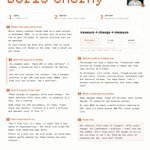
the guy who created Claude Code barely writes code anymore.
Boris Cherny built it as a side project in 2024.
by late 2025 he went a whole month without opening an IDE.
Opus wrote around 200 PRs, every single line.
so what does he actually do all day?
he hands the model three lines:
→ a goal: "make p95 ci time <10 mins"
→ a way to measure it after every change
→ how hard to try: "don't stop till it's done"
then he asks for a chart of progress every day.
CPU, memory, CI times, frame rates, latency.
anything with a number, he lets Claude hill-climb.
the part everyone skips:
he holds Claude's production code
to a higher bar than human code.
tests, fuzzers, adversarial review, every day.
the freedom only works because the meter is strict.
i put his whole loop on one page,
with a brief you can paste tonight.
if you can't measure it, you're still the one writing it.

the guy who created Claude Code barely writes code anymore.
Boris Cherny built it as a side project in 2024.
by late 2025 he went a whole month without opening an IDE.
Opus wrote around 200 PRs, every single line.
so what does he actually do all day?
he hands the model three lines:
→ a goal: "make p95 ci time <10 mins"
→ a way to measure it after every change
→ how hard to try: "don't stop till it's done"
then he asks for a chart of progress every day.
CPU, memory, CI times, frame rates, latency.
anything with a number, he lets Claude hill-climb.
the part everyone skips:
he holds Claude's production code
to a higher bar than human code.
tests, fuzzers, adversarial review, every day.
the freedom only works because the meter is strict.
i put his whole loop on one page,
with a brief you can paste tonight.
if you can't measure it, you're still the one writing it.
Myttle retweeted
Claude Code’s own docs describe a setup most people never turn on.
One model plans, another builds, a stronger one checks the work. It’s all on one page.
→ opusplan: Opus plans, Sonnet builds
→ effort set per subagent
→ Haiku for quick file sweeps
→ advisor checks before “done”
→ ultrathink: one deeper turn
The advisor steps in before Claude commits to an approach, when the same error repeats, and before it calls the task finished.
Medium is the default effort on Opus 5.5. Most people never touch the slider.
code.claude.com/docs/en/mode…

THIS IS ACTUAL F*CKING GOLD
Anthropic just shared one of the best tricks for Claude Code.
The idea: run Sonnet, Haiku and Opus 5.5 together, each one doing only the job it's best at.
Opus-level judgment on every big call, without paying Opus rates for every routine turn.
You just launch Claude Code like this:
claude --model sonnet --advisor opus
here's the split:
→ Sonnet 5.5 runs the session and writes the code
→ Haiku 5.5 explores files and docs in parallel
→ Opus 5.5 stays on call as advisor for the big calls
→ you stop spending Opus on work that doesn't need it
Opus only steps in at three moments:
→ before a plan locks
→ when the same error shows up twice
→ before calling it done
Sonnet builds. Haiku explores. Opus reviews.
JEV engineering is the same move one layer down: the forks that need no thinker (which file, which tool, retry or stop) go to JEV in milliseconds, and the big models only see the ones that split
the full tree
> Sonnet 5.5 runs the main session and edits code
> search maps the repo on Haiku 5.5
> grep finds call sites on Haiku 5.5
> docs pulls the API reference on Haiku 5.5
> Opus 5.5 on call as advisor, reads the whole transcript when consulted
> JEV routes micro-forks in milliseconds
paste the tree and this prompt into Claude Code ↓
"Rebuild my Claude Code setup around this tree:
1. Run the main session on Sonnet 5.5 with Opus 5.5 as advisor.
2. Create three read-only Haiku 5.5 subagents: search (maps the repo), grep (finds call sites), docs (pulls the API reference).
3. Add one rule to CLAUDE.md: consult the advisor before locking a plan, after the same error twice, and before calling a task done.
4. Route fast deterministic forks (tool choice, path selection, retries) through JEV.
Show me every change as a diff first. No edits until I say go."
↳ code.claude.com/docs/en/advi…
save it, you'll use this every single day.
Claude Code’s own docs describe a setup most people never turn on.
One model plans, another builds, a stronger one checks the work. It’s all on one page.
→ opusplan: Opus plans, Sonnet builds
→ effort set per subagent
→ Haiku for quick file sweeps
→ advisor checks before “done”
→ ultrathink: one deeper turn
The advisor steps in before Claude commits to an approach, when the same error repeats, and before it calls the task finished.
Medium is the default effort on Opus 5.5. Most people never touch the slider.
code.claude.com/docs/en/mode…
THIS IS ACTUAL F*CKING GOLD
Anthropic just shared one of the best tricks for Claude Code.
The idea: run Sonnet, Haiku and Opus 5.5 together, each one doing only the job it's best at.
Opus-level judgment on every big call, without paying Opus rates for every routine turn.
You just launch Claude Code like this:
claude --model sonnet --advisor opus
here's the split:
→ Sonnet 5.5 runs the session and writes the code
→ Haiku 5.5 explores files and docs in parallel
→ Opus 5.5 stays on call as advisor for the big calls
→ you stop spending Opus on work that doesn't need it
Opus only steps in at three moments:
→ before a plan locks
→ when the same error shows up twice
→ before calling it done
Sonnet builds. Haiku explores. Opus reviews.
JEV engineering is the same move one layer down: the forks that need no thinker (which file, which tool, retry or stop) go to JEV in milliseconds, and the big models only see the ones that split
the full tree
> Sonnet 5.5 runs the main session and edits code
> search maps the repo on Haiku 5.5
> grep finds call sites on Haiku 5.5
> docs pulls the API reference on Haiku 5.5
> Opus 5.5 on call as advisor, reads the whole transcript when consulted
> JEV routes micro-forks in milliseconds
paste the tree and this prompt into Claude Code ↓
"Rebuild my Claude Code setup around this tree:
1. Run the main session on Sonnet 5.5 with Opus 5.5 as advisor.
2. Create three read-only Haiku 5.5 subagents: search (maps the repo), grep (finds call sites), docs (pulls the API reference).
3. Add one rule to CLAUDE.md: consult the advisor before locking a plan, after the same error twice, and before calling a task done.
4. Route fast deterministic forks (tool choice, path selection, retries) through JEV.
Show me every change as a diff first. No edits until I say go."
↳ code.claude.com/docs/en/advi…
save it, you'll use this every single day.
Myttle retweeted
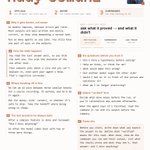
4 million people read Addy Osmani's warning about agents.
almost nobody kept the part you can actually use.
his point is simple.
the better the models get, the fewer obvious mistakes they make.
so you stop looking.
you read every line.
then you skim.
then you scan.
he calls that cognitive surrender.
his fix isn't using agents less.
it's checking differently:
→ guess the answer before you ask
→ ask what would have to be true for it to be wrong
→ when a test goes green, ask what it didn't prove
and one question at the very end of every task:
"did I miss anything?"
he says the model comes back with two or three more things.
so often that he always asks.
i put all six of his checks on one page,
with a prompt that runs them for you.
the scariest bugs now are the ones that look finished.

4 million people read Addy Osmani's warning about agents.
almost nobody kept the part you can actually use.
his point is simple.
the better the models get, the fewer obvious mistakes they make.
so you stop looking.
you read every line.
then you skim.
then you scan.
he calls that cognitive surrender.
his fix isn't using agents less.
it's checking differently:
→ guess the answer before you ask
→ ask what would have to be true for it to be wrong
→ when a test goes green, ask what it didn't prove
and one question at the very end of every task:
"did I miss anything?"
he says the model comes back with two or three more things.
so often that he always asks.
i put all six of his checks on one page,
with a prompt that runs them for you.
the scariest bugs now are the ones that look finished.
Myttle retweeted
someone put a whole macOS inside a terminal,
so an agent can click around without touching yours.
1,859 stars in two days.
the terminal is where agents live now,
and people are rebuilding it around them.
8 open-source repos that upgrade yours:
01 claude-code-filetree
a live file tree that lights up wherever Claude reads or edits
github.com/data-goblin/claud…
02 Flightdeck
context, cost and every agent step, live in your terminal
github.com/scasella/claude-f…
03 Agent Standup
every agent session you run, as one live team call
github.com/Atoll92/agent-sta…
04 prismantis
Claude Code replies as real tables, charts and diagrams
github.com/NahumLitvin/prism…
05 herdr-core
terminals that stay alive after you leave, agents start agents
github.com/herdrdev/herdr-co…
06 ThinkTerm
close the window, your sessions keep running
github.com/RoversX/ThinkTerm
07 jevgrep
find code by asking what it does. 3,177 stars
github.com/dzhng/jevgrep
08 terminal-mac
the macOS one. a separate desktop for computer-use agents
github.com/govijr/terminal-m…
all free. none of them ask you to switch editors.
a year ago the terminal was a black box you typed into.
now it shows you what the agent is doing.
Myttle retweeted
the memory just left the model.
same day, two teams, same idea.
Notion gave ChatGPT, Claude and other agents
one shared brain: what one learns, the next can use.
hours earlier, Living Brain shipped one memory
for ChatGPT, Claude, Cursor, Codex and your own agents.
write in one, recall in any.
sounds like a feature. it's a shift.
until now everything you taught an assistant
stayed inside that one tool.
your stack, your rules, your client.
switch tools and you start from zero.
so you stayed. the memory was the lock.
now the lock moves to you:
→ the model is compute you rent per answer
→ the memory is the asset, and you keep it
→ switching models gets cheap
→ losing your memory gets expensive
Living Brain claims 92.2% on LoCoMo, a long-memory test,
and up to 22.6x fewer tokens per question.
Notion's launch passed 6,400 bookmarks in a day.
the smartest model wins a benchmark.
the one that remembers you wins the year.
Myttle retweeted
Anthropic just lost the person who shaped Claude Code.
Cat Wu helped take Claude Code from a small internal tool to an industry-defining product. Her goodbye post passed 4.5M views.
Two years ago she asked it to build an RL environment and steered it for tens of hours without writing a single line herself. That's how she joined the team.
She leaves behind a playbook for building on models that change every few months:
→ plan in short sprints
→ demo, don't write docs
→ retest old ideas with every model
→ do the simple thing
I turned it into a one-page cheat sheet: her 4 rules, a TOO_HARD.md to rerun on every model, the Claude Code commands that make it work, and a prompt to paste.
The roadmap is dead. The retest list is the new roadmap.


Some news: I’m joining OpenAI to lead product management for Core Products!
I have a lot of respect for OpenAI for showing the world that scaling works, for bringing AI to over a billion people, and for believing great products are core to the mission.
I’m excited to work with @thsottiaux, an incredible PM team, and everyone across OpenAI. Together, we’ll build agents that have your back and your team’s, and keep you in control, so you get more time for the people and work you love.
Lots to learn, and lots to build. Please keep your feedback coming!