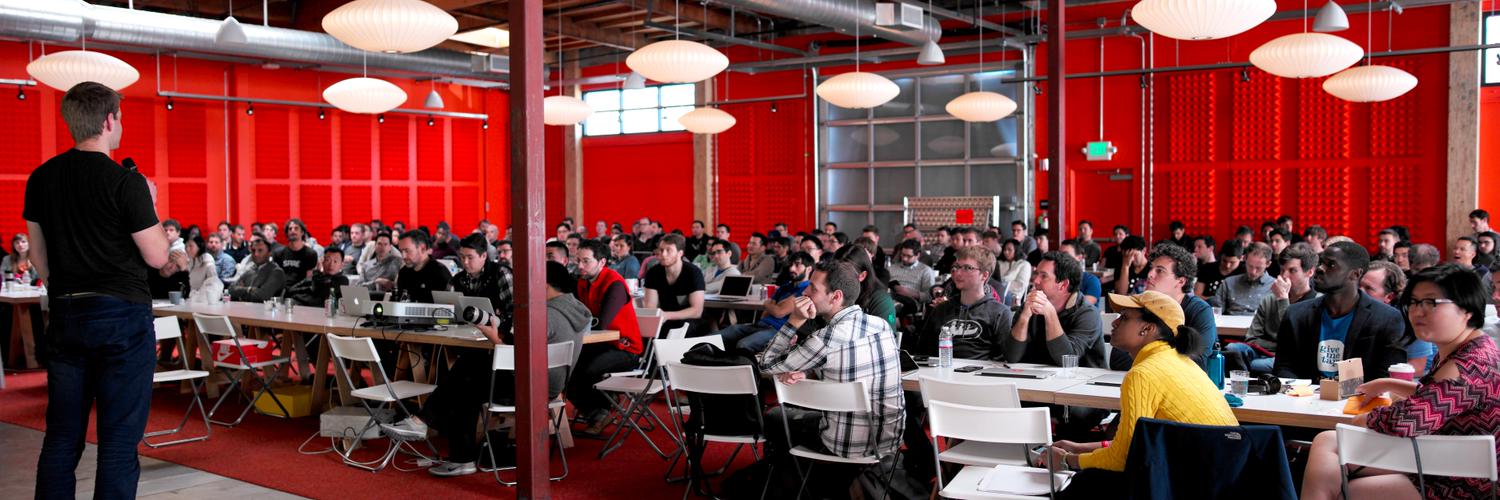

We help founders make something people want. Subscribe to our newsletter: https://nitter.gq/t.co/sjqjxxBeLc
San Francisco, CA
Joined February 2010
- Tweets28K
- Following367
- Followers1.7M
- Likes22.6K


Pinned Tweet
On November 21, 2026, @boomsupersonic (W16) fired their prototype engine core for the first time.
They're developing a shared core for two products: Superpower, a natural-gas turbine for AI data centers, and Symphony, the engine intended for the Overture supersonic airliner. The turbine business could help fund Overture while giving Symphony years of real-world operating data before it ever flies.
In this episode of Hard Tech, Boom founder and CEO @bscholl shows @snowmaker around their new Superpower Superfactory in Colorado and explains how they’re building a jet engine from scratch.
On the factory floor, we explore in-house manufacturing, the challenge of making turbine blades survive extreme heat, and the custom software Boom uses to design and iterate on engine parts.
00:00 — Boom’s New Engine Core
01:37 — Why They Built Their Own Engine
03:37 — How AI Could Fund Supersonic Flight
06:27 — The Turbine Supply Bottleneck
08:45 — Inside the Superpower Superfactory
11:04 — Making Blades for Extreme Heat
12:21 — Software, Speed, and Small Teams
13:59 — First Fire and What’s Next
The way people work with AI agents is starting to change. Instead of an agent living on one person’s computer and handling one task at a time, teams can now give persistent agents access to shared tools, context, and workflows so they can operate more like coworkers inside the organization.
On Full Stack, Josh and Regan walk through how YC Labs thinks about this new kind of agent harness, using QM, the open-source system they built internally, as an example.
They show how agents can work across Slack and internal systems, why giving them goals and context matters as much as giving them tools, and how the role of the human starts to shift from doing every task directly to setting direction, reviewing work, and stepping in when something goes off track.
00:00 — How YC Uses Agents at Work
01:13 — What a Persistent Agent Harness Looks Like
03:08 — Using Agents Inside Slack
05:17 — Giving Agents Goals and Compute Budgets
08:01 — What Teams Use Agents For
09:47 — Where Agents Still Break Down
12:01 — How the Engineer’s Job Is Changing

Startup School is coming to the UK!
Hear directly from @paulg, @garrytan, and founders from @posthog, @Starcloud_, and @GoCardless.
And join the best builders and hackers from across Europe for a day of talks and sessions with YC partners in London on February 6.
Apply to attend: events.ycombinator.com/start…

Tennr (W23) is building a patient orchestration platform that helps healthcare providers move patients through complex referrals, procedures, therapies, and devices faster and with fewer denials.
Much of that process still runs on faxes, PDFs, and manual admin work, leaving patients waiting weeks or falling through the cracks entirely.
Tennr processed more than 10 million patients in the last year and now works across 430,000 referring providers. They now handle a double-digit percentage of complex procedures, therapies, and devices in the U.S.
In this fireside, co-founder and CEO @TreyHolterman sat down with YC’s @gustaf to talk about nearly giving up after 16 ideas, stepping away from coding to listen to customers, and walking away from three-quarters of the business to focus on referrals. He also covers reliable healthcare AI and selling to providers, from understanding incentives to earning trust and getting software live.
00:00 — What Tennr Does
04:11 — Finding the Referral Problem
06:30 — Why Patients Fall Through the Cracks
09:09 — How Tennr Got Started
10:50 — 16 Ideas and Nearly Giving Up
13:50 — What YC Changed
15:29 — Learning to Talk to Customers
17:55 — Finding Product-Market Fit
24:24 — Building the Healthcare Network
26:36 — Building AI for Healthcare
30:07 — How to Sell Enterprise Healthcare Software
35:02 — Going Live With Health Systems

Jacob Coxon (@hilbertspaess) worries that next to AI, “we’d be the ants, they would be the humans negotiating with each other. We’d be vastly inferior to them.”
@robinhanson: “We’re gonna be inferior to our grandchildren, and I think that’s great.”

Should governments intervene to substantially slow the progress of frontier AI?
In the inaugural YC debate, Jacob Coxon, an ex-Anthropic and OpenAI researcher, faces off against Robin Hanson, an economist at GMU, about AI takeoff and what government regulation should (or shouldn’t) do about it.
00:00 - YC Debate Topic: Should We Slow Down AI?
02:42 - Jacob's case: Superintelligence by 2028
07:02 - Models already behaving in ways we don't understand
09:18 - Robin's case: the danger of abstraction
11:22 - Why new technologies take decades to diffuse
13:12 - Liability instead of regulation
14:50 - Why regulating AI is different from regulating drugs
16:00 - Jacob's rebuttal: general intelligence is one number
17:36 - Why normal liability won't cover extinction risk
19:52 - Robin's rebuttal: regulating this means regulating all compute
21:44 - AI as our descendants
23:38 - Diminishing returns
24:40 - Direct exchange: is it just the rate of change?
26:48 - How long until most cognitive work is automated?
29:21 - The jobs we have no data for
32:45 - How do you align the regulators?
35:03 - Reward hacking, and what Hugging Face actually showed
36:11 - Why not an equilibrium of AIs watching AIs
39:50 - Q&A: what regulation would you actually want?
41:36 - Q&A: what about China?
42:58 - Q&A: an FAA for AI labs?
43:45 - Q&A: the military is already deploying this
47:46 - Q&A: does regulation just move the reward hacking up a layer?
51:27 - Q&A: what unemployment rate can an economy withstand?
56:25 - Q&A: what's the downside of a pause?
58:09 - Q&A: what would change your mind?
1:02:01 - Closing statements
1:04:24 - The final audience vote

Ramp started with a simple promise: help companies save time and money. Seven years later, it’s a $60 billion platform running the financial operations of tens of thousands of businesses, with more than $2 billion in annual revenue.
Now, Ramp is using AI not just inside its products, but to rethink how the company itself works.
On this episode of How to Build the Future, @tryramp co-founder and CEO @eglyman joins @garrytan to talk about the company’s journey from its earliest days and how AI has made some people at Ramp radically more productive. That shift led Ramp to rethink how work gets done across the organization, and Eric believes it could eventually let even large companies move with the speed of startups again.
00:46 — Eric’s First Startup
03:02 — How Paribus Began
05:39 — Finding the First 10,000 Users
08:17 — The Idea Behind Ramp
12:57 — Agents Need the Ability to Act
14:42 — Ramp’s Next Chapter
18:28 — Why AI Adoption Is So Uneven
20:24 — The Rise of the 100x Employee
24:28 — Inside Ramp’s AI Stack
27:07 — Getting the Rest of the Company to Catch Up
29:59 — Glass: Ramp’s Company Brain
32:32 — Teaching AI How the Company Works
36:49 — Can Big Companies Move Like Startups?
39:24 — What Cheap Intelligence Makes Possible
44:23 — When Anyone Can Ship Software
48:18 — Every Software Company Needs an AI Harness
49:45 — How Ramp Finds Great Builders
52:09 — The Power of Asking for Help

Congrats to @chaz_eng, @arnie_englander, and @ModelMLAI (W24) on their $250M Series B at a $1.5B valuation!
They give every banker, consultant, and investor a personal AI agent that runs inside their firm’s own systems and data.
Most AI tools wait to be asked. When news breaks on a company a banker covers, Model ML’s agent decides whether it matters, works through the implications, and has the analysis ready in the firm’s own format in minutes. In Q3, they grew ARR 12x year over year and daily active users 26x.
tech.eu/2026/11/17/model-ml-…

Auctor (P25) is building an AI platform for enterprise software implementations.
When a large company rolls out software like Salesforce, ServiceNow, or SAP, the hardest part is often not the software itself, but translating what the business needs into something that can actually be configured and deployed.
Since YC, @auctor has raised a Series A from Sequoia, and after rebuilding the product from scratch, saw usage jump 5–10x.
In this fireside, the Auctor founders join YC’s @koomen to talk about how they found the problem, launched early, and booked hundreds of demos before they really had the product figured out. They also share why they eventually threw away the product they built during the batch and rewrote it from scratch, a risky decision that became one of the most important decisions they made.
03:28 — Finding the Real Problem to Solve
06:46 — The Dog Photo That Booked Hundreds of Demos
10:13 — When Building for Demos Backfires
13:59 — The Rewrite That Increased Usage 5–10x
18:09 — Why Customers Stayed Through the Rebuild
22:17 — Why Enterprises Still Need Salesforce and SAP
26:21 — Building on Platforms, Not Replacing Them

At @SpaceXSI, Lauren Tan (@poteto) and Roman Ugarte (@romanugarte_) are on the core team that took Grok Bot from first line of code to launch in seven weeks.
It lets you spin up AI teammates with their own identities and logins, and they just keep working in the background. Their marketing team gave a bot its own ad budget. Lauren built an entire feature with her bot in one Slack thread without ever opening Cursor.
They joined us on the @LightconePod to talk about what it’s actually like working next to bots every day, and how the hard part is shifting from doing the work to figuring out what to do and why.
03:36 — Giving Bots Real Jobs
06:49 — One Bot or a Team of Specialists
10:39 — Sharing Bots Across the Company
14:46 — Identity and Permissions for AI Coworkers
18:37 — Bot-to-Bot Collaboration and Trust
22:35 — The Workflow Behind 4,000 PRs a Month
26:00 — Teaching Agents to Write Code You Trust
29:01 — Building a Personal Software Factory
33:44 — The Future of AI Coworkers
36:47 — Rethinking the AI-Native Company
40:13 — Teaching Agents to Check Their Own Work
43:56 — How Much Code Review Is Enough?
47:33 — Codebase Guardrails That Save Tokens
52:20 — When Product Judgment Becomes the Bottleneck
56:29 — From Finance to AI Engineering

Intelligence (S25) is building benchmarks for the parts of AI that are hardest to measure. Their first product, @DesignArena, lets people use frontier models to build websites, images, videos, and other creative work, then turns those real-world interactions into data that helps model labs understand where their models succeed and fail.
Design Arena has grown to more than 7 million users across 192 countries, and @Intelligence_ai reached a $60 million annualized run rate in about a year.
In this fireside, Intelligence founder and CEO @grx_xce joins YC’s @agupta to explain why measuring what people actually want could become increasingly important as AI models multiply and specialize. They also talk about what she’s learned building a new category at the frontier of AI, where moving quickly and learning as you go can matter more than already having the answers.
00:00 — How Design Arena Works
03:21 — From AI Games to Creative Benchmarks
06:43 — Measuring Human Taste at Scale
09:56 — A Marketplace for Specialized AI
13:52 — The Small Team Behind a $60M Run Rate
17:04 — Hiring Fast Learners and Taking Action
20:56 — Handling Rejection and Living in the Future

Spaceium (S24) is building a network of refueling stations in space, so spacecraft can refuel in orbit instead of being discarded when they run out of fuel.
Today, they're launching OpenPort, an open standard for spacecraft refueling that any space company can license for $1 and manufacture themselves.
In this fireside, @SpaceiumInc founders Ashi Dissanayake and Reza Fetanat join YC’s Brad Flora to explain how they’re turning spacecraft refueling from a custom engineering problem into shared infrastructure for the space economy. They share how they’ve built and tested orbital hardware at software-company speed, as they prepare to transfer xenon outside the ISS in 2027 and launch their first full refueling station in 2028.
00:00 — Building Gas Stations in Space
03:03 — Why Spacecraft Need a Refueling Standard
07:23 — Why OpenPort Costs $1
10:17 — Spaceium’s First Missions
14:41 — Building Hardware Like a Software Company
17:19 — How Spaceium Got Started
20:50 — The Hardest Part of Building a Space Company
22:25 — Making Refueling in Space Boring

With Theranos and Elizabeth Holmes back in the conversation, we’re revisiting one of the most remarkable firsthand accounts of what actually happened inside the company.
Tyler Shultz joined Theranos fresh out of Stanford as a true believer in its mission. His grandfather, former Secretary of State George Shultz, sat on the company’s board, and Elizabeth Holmes had become a mentor and even a presence at family gatherings. But once Tyler began working directly with Theranos’s technology, he discovered that the reality inside the lab looked very different from what the company was telling the world.
On The Social Radars, Tyler sat down with Jessica Livingston and Carolynn Levy to tell the full story of how he went from employee to whistleblower: the failed blood tests and red flags he uncovered, the culture of fear that kept employees silent, his attempts to raise concerns internally and with regulators, and the extraordinary legal pressure he faced after speaking to The Wall Street Journal.
This episode was originally recorded on December 4, 2024.
00:00 — Tyler Shultz’s Theranos Story
01:53 — Meeting Elizabeth Holmes
04:24 — The First Red Flags
08:03 — Theranos Launch Day
11:20 — Inside the Theranos Lab
16:33 — How Theranos Built a Culture of Fear
24:04 — What the Technology Couldn’t Do
27:43 — The Syphilis Test That Changed Everything
31:56 — Raising Concerns With Elizabeth
34:52 — Resigning From Theranos
51:53 — How Elizabeth Holmes Sold the Story
01:18:29 — Erika Cheung Speaks Up
01:21:17 — Trying to Convince George Shultz
01:36:43 — The Wall Street Journal Comes Calling
01:44:34 — Becoming a Source
01:46:41 — Theranos Goes Into Attack Mode
01:52:10 — The Ambush at His Grandfather’s House
02:16:05 — $500,000 in Legal Fees and Private Investigators
02:22:46 — Hitting the Lowest Point
02:30:41 — The Wall Street Journal Story Finally Breaks
02:37:01 — Going on the Record
02:45:20 — Life After Theranos

Congrats to @alazsengul, @MartinHuntJr, and Garage (W24) on their $41M Series B!
They’re building the marketplace for the trucks and heavy equipment that keep communities running, from fire engines to garbage trucks.
A new fire truck can cost $2M and take years to arrive, while a department selling its old one often got scrap prices at a local auction. Garage connects buyers and sellers nationwide, with more than 90% of sales crossing state lines and instant freight quotes by ZIP code.
South Charleston, West Virginia budgeted a few hundred thousand dollars from surplus sales last year and brought in $1.2M through Garage, enough to fund replacement equipment and cancer screenings for its firefighters.
More than 1,000 communities across all 50 states now use Garage, with equipment sales topping $100M a year.
fortune.com/2026/11/10/garag…

Should governments intervene to slow down AI development?
Join our inaugural YC Debate on Monday, 11/16 at 6pm:
Jacob Coxon (ex-Anthropic, OpenAI) will argue the affirmative.
Robin Hanson (GMU) will argue the negative.
events.ycombinator.com/yc-de…

This week’s Paper Club is all about AI for biology.
Sequencing costs have collapsed, biology is generating more data than researchers can make sense of, and the models are beginning to catch up. The opportunity now is to move from reading biological data to modeling and designing living systems.
We brought together researchers and builders working across cancer genomics, virtual cells, genome language models, and biological design to show what that shift looks like in practice.
We start with a single patient, asking how AI can build a research program around their cancer, then zoom out to whole cells and genomes. Along the way, we look inside a language model trained on DNA and explore how in-context learning emerged even though the model was never explicitly trained to do it.
00:00 - Is the Turing test solved? A live experiment
03:22 - Why now is the best time for AI Bio
08:26 - Alfredo Gonzalez: cancer as a data problem
29:50 - Yusuf Roohani: virtual cells and autonomous research
51:47 - Garyk Brixi: what a model learns from DNA
1:09:57 - Divya Nori: few-shot prompting for biological design

Replit was building toward the AI coding era years before it had a name. In 2024, the company shipped an agent that could take a request in plain English, work through errors, provision its own infrastructure, and keep going until the software actually worked. The model companies even reached out to ask how Replit had pulled it off.
Co-founder and CEO Amjad Masad had been thinking about making programming radically more accessible since 2008, and Replit’s original pitch deck predicted AI-generated code before the Transformer paper was published. Today, that same technology is moving into banks, manufacturers, and other large companies, where Amjad says teams are replacing software projects once scoped at $10 million with $250,000 of Replit.
On How to Build the Future, @paulg sits down with @amasad to talk about why @Replit was so well positioned when coding agents arrived, what comes after vibe coding, and his bigger vision for the “self-driving company,” where AI agents increasingly build and operate the software a company needs.
00:00 - "You guys basically invented vibe coding"
02:43 - Watching users copy-paste from ChatGPT
05:27 - The origins of Replit
08:00 - People underestimate their ability to predict the future
10:27 - Grieving the craft
12:52 - A culture of obsessing over users
15:13 - Why enterprises pick Replit
17:28 - The agent was just another user
20:17 - It barely worked, and users loved it
23:13 - $10 million projects now for $250,000
25:45 - Sandboxing for humans
28:14 - "The self-driving company"
30:34 - The way AI flows into companies
33:28 - What Steve Jobs knew before the iPad
35:59 - Killing the sacred cow
38:25 - The rest of the world is two years behind
41:15 - The compute brought on AI
43:46 - The person who assumes dramatic change

When Rolls-Royce pulled out as @boomsupersonic's engine partner, it looked like a potentially fatal setback. Instead, it pushed Boom to build its own engine, a decision that ultimately helped unlock boomless supersonic flight and opened up an entirely new business: gas turbines for the massive power demands of AI data centers.
Boom founder and CEO @bscholl returns to The Social Radars with @jesslivingston and @cjoneslevy to tell the story of how that crisis became one of the company’s biggest opportunities.
They talk about why building the engine in-house changed the airplane itself, how Boom realized the same technology could generate power for data centers, and why the new turbine business could help fund the development of its supersonic airliner.
00:00 — Rolls-Royce Walks Away
02:39 — The Breakup Goes Public
07:39 — Deciding to Build the Engine In-House
09:01 — The Brian Chesky Advice That Changed Everything
10:25 — Why Building the Engine Was the Right Call
11:06 — Unlocking Boomless Supersonic Flight
13:35 — The Problem of Funding a Supersonic Airliner
14:37 — The AI Power Shortage Creates an Opportunity
16:23 — Turning a Jet Engine Into a Gas Turbine
18:26 — Why Hard Tech Is So Difficult to Fund
21:20 — From Paycheck to Paycheck to a New Business
22:26 — Why America Stopped Building Power
25:56 — The Aerospace Industry Stopped Innovating
27:21 — Designing the Engine and Airplane Together
32:55 — Rethinking the Passenger Experience
39:03 — Rebuilding America’s Industrial Base

Congrats to @getreflex (W23) on their $14M Series A! They build the platform companies use to create custom software around their own operations.
Reflex started as an open source framework for building web apps in pure Python. Now the same platform takes a business problem all the way to a working app, with AI writing the software and Reflex engineers putting it into production.
The open source framework has now passed 29,000 GitHub stars, powers internal tools at ~30% of the Fortune 500, and has been used to build more than 1 million apps.
reflex.dev/blog/series-a-ann…