

Físico. Investigador de Conicet, jefe de trabajos práctico @Fisica_DFUBA, Neurociencia, Modelado computacional, Sistemas dinámicos
Buenos Aires, Argentina
Joined March 2019
- Tweets221
- Following263
- Followers312
- Likes664


Yonatan Sanz Perl retweeted

You can better model brain data if you assume quantum-like entanglement.
New work from our centre indicates that the brain expresses the efficiency of quantum computation through classical mechanisms. The brain is a magnificent specimen because it operates on 20w—or a banana and some water—and yet generates a coherent, stable, adaptive, and conscious inner universe that can build rockets, computers, fall in love, and construct empires and religions.
And it does so against the backdrop of slow, wet, porous, and inexpensive bioelectric activity. Compare this to contemporary AIs, which are energy guzzlers and require massive data centres. The difference is likely 10,000x or more. Instead of looking interstellar for data centres, we should really be looking to the brain.
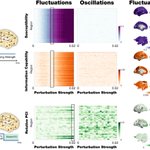
First, you model the brain as a network of coupled oscillators (commonly used for whole-brain models). If you wire these coupled oscillators up like the brain’s connectome you get very interesting, very surprising, brain-like dynamics; such as criticality, metastability (via turbulence), etc. These stochastic dynamics are crucial for rapid information sharing and maintaining local and global integration. And when these dynamics are included in the model, it fits the brain like a glove.
Interestingly, when you then include long-range exceptions to the exponential distance rule (common in mammalian brains), you get a spectral gap that separates the dominant modes from the noisy bulk. These dominant modes behave like coherent state-vectors and their interactions produce interference effects, i.e., quantum-like entanglement.
These interference effects may be one of the secrets to how the brain rapidly binds distributed information into unified, context-sensitive states. The paper also demonstrates that QL entanglement provides the brain a richer dynamical repertoire at lower energetic cost. Keep in mind that this “quantum-like” entanglement arises from the interference of coupled oscillators, but the functional end state is analogous in that you get the same mathematical advantages.
It’s super exciting and we have a lot more to share in coming months.

Yonatan Sanz Perl retweeted

Check out our literature review. We explore how turbulence offers insights into brain function and dysfunction.
#Neuroscience #BrainDynamics
@ysanz6
sciencedirect.com/science/ar…

Amazing work!!!

1/ Excited to share a part of my PhD in our new preprint:
Integrative Electrophysiology and Neuroimaging Approach in Assessing Disorders of Consciousness: A Multimodal Multicentric Machine Learning Study
#DoC #MachineLearning #Multimodal
medrxiv.org/cgi/content/shor…
A 🧵...
Yonatan Sanz Perl retweeted

1/ Excited to share a part of my PhD in our new preprint:
Integrative Electrophysiology and Neuroimaging Approach in Assessing Disorders of Consciousness: A Multimodal Multicentric Machine Learning Study
#DoC #MachineLearning #Multimodal
medrxiv.org/cgi/content/shor…
A 🧵...
Amazing work by @ivan_mindlin !!

📢Paper out📢
“Whole brain modelling for simulating pharmacological interventions on patients with disorders of consciousness”
nature.com/articles/s42003-0…
👇Brief summary below👇 (1/8)

Yonatan Sanz Perl retweeted
🧠Just published! Our study reveals how whole-brain turbulent dynamics can predict responses to SSRI treatment in depression.
nature.com/articles/s41380-0…
with: @ysanz6 @NoeliaMrtnez @UPFBarcelona @cbcUPF @UniofOxford

Yonatan Sanz Perl retweeted

🍄 Psilocybin & escitalopram create different reconfigurations in the global functional hierarchy of 🧠 brain dynamics in people with major depressive disorder 👇
@HedoniaResearch @RCarhartHarris @ysanz6
nature.com/articles/s44220-0…

Yonatan Sanz Perl retweeted

Are you at #OHBM2024? Join us tomorrow for our symposium on Whole-brain model of brain stimulation.
@neurodidact soraan @CattaniAnna @JakubVohryzek @ysanz6 @cbcUPF @CAMHnews @KellerStanfordU @EwhaWomansUniv @StatisticsBu @INS_Umr1106 @EBRAINS_eu

Yonatan Sanz Perl retweeted

Conocé el trabajo que el profesor @ETagliazucchi del Laboratorio de Conciencia, Cultura y Complejidad (UBA-Conicet) publicó junto a colaboradores del @imperialcollege.


Yonatan Sanz Perl retweeted

#Recerca
L’activitat cerebral de les dones varia durant el cicle menstrual pels canvis dels nivells hormonals.
Estudi coliderat per @AniraEscrichs, investigadora del @cbcUPF (@enginyeria_upf) i la Universitat Paris-Lodron de Salzburg @PLUS_1622
👉 tuit.cat/tnmDs

Yonatan Sanz Perl retweeted

Out in @TrendsCognSci. We rethink brain health/disease with a synergetic framework tackling complex Est-Func, phenotype heterogeneity, transdiagnostic pathophysiology & a continuum from lab to cognition in the wild. W Kringelbach & Gus Deco. 👉 doi.org/10.1016/j.tics.2023.… & 1/7🧵👇


Yonatan Sanz Perl retweeted
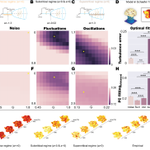
🚨First PhD preprint 🚨Here we propose a methodology for pharmacological treatment development of DoC. Our model suggests that high density receptors like 5HT2A and 5HT1A are the optimal to recuperate healthy-like dynamics in a DoC model.
biorxiv.org/content/10.1101/…

Yonatan Sanz Perl retweeted

🧠 Publication Alert! 📢 Unveiling the Brain's Dance: Recurrent unconscious pattern governed by structural connectivity in deep sleep and propofol anesthesia. Pablo Castro @loopyluppi @ETagliazucchi @jdsitt @ysanz6 @LorinaNaci @Comadork Alain Destexhe
biorxiv.org/content/10.1101/…

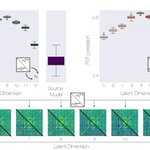
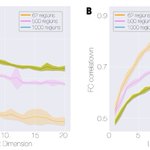
A preprint of our work is out! We build dynamical models of the low dimensional manifold brain modes, i.e. a reduced number of abstract variables each encoding the simultaneous dynamical behaviour of multiple macroscopic brain regions biorxiv.org/content/10.1101/…

Interestingly, these findings show the role of manifolds as a fundamental organising principle of brain function at the whole-brain scale, providing evidence that networks of brain regions rather than individual brain regions are the key computational engines of the brain.
I have the pleasure to work in this project with amazing team @ETagliazucchi , @ViktorJirsa, @HedoniaResearch , @VohryzekJakub, @sebageli ,Gusdeco, SebaIdesis, Eider Perez-ordoyo and Lou Zonca