

Fellow @MooreFound, Incoming Assistant Professor @UTArlington, Reasoning & Open Discovery, Language, Agent, and World Models
Joined February 2016
- Tweets348
- Following312
- Followers1.1K
- Likes2.2K





Pinned Tweet
🤖🔬 Can AI actually do science end-to-end?
🧠📈 And how would we know when it matches, or surpasses, humans?
⚡🧪 AI is rapidly automating scientific discovery, but benchmarking full-cycle discovery, from 💡 ideation → 🧑💻 execution → 📊 conclusions, remains unsolved:
🧐🧐🧐
❌🛠️ Open-ended discovery → manual validation (costly, unscalable)
❌📏 Metric-driven benchmarks (e.g., MLE-Bench) → convenient but narrow (is higher accuracy really enough?)
❌🤖⚖️ LLM-as-judge → useful, but fundamentally risky if used alone
🔥🚀 Introducing FIRE-Bench🔥: Fullcycle Insight Rediscovery Evaluation
👉🌐 firebench.github.io
📚✨ A benchmark that turns fresh, human-verified insights from recent 🏆 NeurIPS / ICLR / ICML papers into masked, end-to-end discovery challenges 🧩
🌍🔐 Constrained open-ended discovery–backed by ground truth.
📌 Key takeaways:
1⃣ 📖🧱 Reference-based evaluation still matters: constrained LLM judging helps, but human-grounded references remain essential until agents can consistently match human conclusions
2⃣ 🏆🧠 Expert-validated ground truth: all tasks come from recent NeurIPS / ICLR / ICML papers, with contamination carefully controlled
3⃣ 🔁🎭 Rediscovery, not reproduction: original 🧪 methods, 📊 experiments, 💻 implementations, and 📈 analyses are fully masked to create real discovery challenges
🔑 Key empirical findings:
💡 The "Science Gap" is Real: Even the best setup (Claude Code + Sonnet-4) caps out at an F1 score of 46.7. On hard tasks, agents struggle to break 30
💡 Success is a "Lottery": Performance has incredibly high variance. Reliability is a major unsolved issue.
💡 Coding is no longer the bottleneck; high-level reasoning and analysis are: ~74% of errors stem from flawed planning, not coding
⚙️ How it works:
🔹 Research-Problem Trees: We parse papers into trees (from broad roots to concrete leaves). This allows us to select intermediate nodes that perfectly balance open-ended exploration with verifiable ground truth.
🔹 Claim-Level Evaluation: We match AI conclusions against human conclusions using granular claim decomposition (F1 score).
🔹 Creativity Check: We score false positives to see if agents are finding novel truths (Spoiler🚨: they aren’t creative yet).
🔹 New Diagnostic Taxonomy: failures traced across four stages: 🧠 Planning → 🛠️ Implementation → ▶️ Execution → 🧾 Conclusion
🔹 Additional Analyses: cost efficiency, contamination checks, and more.
👀 The Future:
🚀 Live-FIRE-Bench: a live, continuously updated FIRE-Bench to track real-time progress on the latest research (Newest LLMs should be benchmarked with the newest research)
🚀 Stronger scaffolding (search + planning + coding) 🧠🧰 and converting FIRE-Bench into interactive environments for training research agents
🚀 Toward real creativity: We want better systems that can produce genuinely novel conclusions toward creativity 🎨⏳
🚀 Better systems 🧠✨ and better benchmarks 📏 must co-evolve 🔄 over time
📜🎥 Paper, video, demo, and research trees:
👉🌐 firebench.github.io
#AI 🤖 #MachineLearning 📚 #AI4Science 🔬 #LLMs 🧠 #Research 🧪 #AgenticAI 🚀 #FireBench 🔥
Zhen Wang retweeted

PRIMESCIENTIST shows that research agents should choose where to spend their experiments, rather than keep pushing the same idea until the budget runs out.
Instead of following a single trajectory, it keeps competing executable plans in a tree. Experiment results update branch values, while the allocation policy explores more when resources are plentiful and concentrates on stronger branches as the budget shrinks.
On 12 FIRE-Bench tasks, it delivered 10.3% higher average reward than AutoResearch while using 50.6% fewer research attempts under the same token budget. Across the full evaluation, it used fewer attempts on 23 of 24 tasks.

Zhen Wang retweeted

Interesting work on long-horizon research agents.
PrimeScientists can decide where a research agent spends its budget.
Achieves 10.3% more reward with 50.6% fewer research attempts, under the same budget.
That is PrimeScientist against AutoResearch on 12 AI research tasks. They treat deciding where to spend a research agent's budget as part of the agent's job.
PrimeScientist keeps an executable plan tree of competing research directions and their outcomes.
An adaptive MCTS policy reads the experimental feedback and the remaining budget and chooses whether to explore a new direction or continue a promising one.
The gains also hold on systems, code optimization and ML engineering tasks. If your research agent can propose more experiments than you can afford to run, this is a concrete method for choosing among them.
Paper: academy.dair.ai/papers/prime…

Zhen Wang retweeted

Introducing ApprenticeBench: computer use + continual learning on a real job.
We show Fable 5.1 and GPT-6 Astra can now continually learn on a job and surpass human professionals. A decisive step change in AI's job readiness.
No FDEs. Agents deploy themselves into the job. 🧵

🎉 Fun way to open July: ACL and ICML back to back! And AI is back in San Diego, just six months after NeurIPS 🌴
Sharing two first-author works about model self-eval/self-improve I helped lead in ACL and ICML; I’ll be at #ACL2026 in San Diego, but won’t make #ICML2026 in Seoul due to travel constraints.
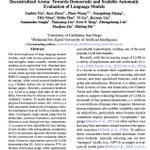
🗳️ Decentralized Arena (ACL 2026 Main)
Collective intelligence for LM evaluation: instead of relying on one “authority” judge, let models evaluate each other for more democratic, scalable, multidimensional evaluation.
🔬 FIRE-Bench (ICML 2026)
A step toward self-improving research agents: can agents rediscover scientific insights through planning, experiments, execution, and evidence-backed conclusions?
🧠 Key Question: How do we build verifiable, scalable, and robust environments where agents improve through collective intelligence, continual feedback, and open-ended discovery? How do we turn evaluation itself into a learning environment for self-evolving agents?
If you’re working on language models, research agents, self-improvement/self-evolution, continual learning, collective intelligence, or verifiable environments for agent learning, I’d love to chat.
DMs are open, and I’ll be around at ACL.
#ACL2026 #ICML2026 #AIAgents #LLMs #ResearchAgents #LLMAgents #AIForScience #AgenticAI #MachineLearning #NLP #NLProc


Zhen Wang retweeted

Now online in @CD_AACR: A Foundation Model of Cancer Genotype Enables Precise Predictions of Therapeutic Response - by JungHo Kong, @zhenwang9102, @TreyIdeker, and colleagues @UCSanDiego


Now online: A foundation model of cancer genotype enables precise predictions of therapeutic response doi.org/10.1158/2159-8290.CD…

✈️This week marks my first CVPR, and I keep wondering why vision feels increasingly central to my research on latent reasoning and autoresearch agents for science.
🏔️Btw, this is also my second trip to Colorado in just a few weeks, where the last one was a faculty onsite at a school nearby. The Rockies apparently are not done with me yet :)
Right now, vision is not just another input modality. It is one of the main ways intelligence stays anchored to the world. Most reasoning does not begin as clean symbolic text. We inspect, compare, and sketch, moving between visual structure and abstract concepts long before we can put any of it into words.
Two threads I keep chasing right now:
🧠 𝗠𝘂𝗹𝘁𝗶𝗺𝗼𝗱𝗮𝗹 𝗹𝗮𝘁𝗲𝗻𝘁 𝗿𝗲𝗮𝘀𝗼𝗻𝗶𝗻𝗴: what happens when models reason in continuous latent space rather than discrete tokens, and what changes once vision enters the loop? Across Learning Modal-Mixed Chain-of-Thought Reasoning with Latent Embeddings and our newer Leveraging Latent Visual Reasoning in Silence, I keep circling a question I do not think the field has settled: when we train multimodal models with RL, are we teaching them to reason over what they see, or only to phrase better answers? A model can sound convincing without ever grounding its answer in the image, while the reasoning that matters may live in states that never surface as text. Our ICLR 2026 work Nabla-Reasoner makes a related bet in the unimodal case, reasoning in logit space at test time: some of the most useful computation may never need to become language at all.
🔬 𝗔𝘂𝘁𝗼𝗻𝗼𝗺𝗼𝘂𝘀 𝗿𝗲𝘀𝗲𝗮𝗿𝗰𝗵 𝗮𝗴𝗲𝗻𝘁𝘀 𝗳𝗼𝗿 𝘀𝗰𝗶𝗲𝗻𝗰𝗲: most still live in a text-and-code world, writing scripts, running experiments, and revising. Building our ICML 2026 benchmark FIRE-Bench, which evaluates agents on full-cycle scientific discovery, only sharpened my sense of what that setup leaves out. Real science is deeply visual. A figure is not decoration; a plot can carry the argument of a paper, and a microscopy image, a phase diagram, or a materials characterization can hold the key evidence. In biology and materials science especially, the hard part is rarely executing code. It is knowing what to look at, which pattern matters, and how visual evidence should reshape the next hypothesis.
That is why CVPR matters to me this week. Vision does not sit apart from reasoning, agents, or science. It may be exactly where those threads converge, and the systems I care about will only get there when they can understand what they see rather than merely describe it.
A few pointers if you want to dig in:
📄 Leveraging Latent Visual Reasoning in Silence (new on arXiv): arxiv.org/abs/2605.18641
📄 Nabla-Reasoner (ICLR 2026): arxiv.org/abs/2603.04948
🧪 FIRE-Bench (ICML 2026): firebench.github.io/
📄 Modal-Mixed CoT: arxiv.org/abs/2602.00574
☕ If you work on multimodal or latent reasoning, RL for reasoning, scientific vision, or agents that have to make sense of real figures, I would love to grab a coffee and compare notes at CVPR.
#CVPR2026 #ComputerVision #MultimodalAI #Reasoning #AIforScience #AIAgents #Denver

Three AI (Co-) scientist (multi-agent) systems landed in Nature the same day: FutureHouse's Robin, Google's AI Co-Scientist, and DeepMind's empirical-software agent.
Interestingly, they are all scaffolding plus feasibility proofs on deep, real scientific case studies. The depth of those cases is exactly why they earned Nature, and this could be the serious first-wave proof that AI can truly discover something new.
But notice the timing: these are roughly year-old snapshots. In the past year, native search + reasoning + coding has quietly eroded the case for the multi-agent scaffolding underneath. The next wave won't be a bigger swarm of agents, but environments AI can actually be trained in, grounded in raw data.
#AIforScience #AIScientist #AgenticAI

Zhen Wang retweeted

Amazing work, congrats! I believe infrastructure-side innovations like this can greatly accelerate both the discovery of novel knowledge and the sharing of mined insights.
Zhen Wang retweeted

great to see the ideas from async rl applied to text optimizers. much needed!

1/ Recursive Self-Improvement isn't only bottlenecked by smarter algorithms.
One of its severe bottlenecks is sync barriers.
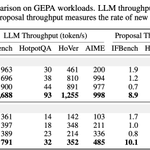
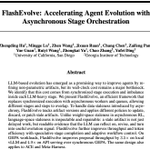
Presenting FlashEvolve: an async runtime that makes self-evolving agents (GEPA, ACE, Meta-Harness) run 3.5x to 4.9x faster. Led by @hu_ding17008
🧵👇

Zhen Wang retweeted

Thanks Zhen for sharing! Very glad to push this project forward with the great team.
1/ Recursive Self-Improvement isn't only bottlenecked by smarter algorithms.
One of its severe bottlenecks is sync barriers.
Presenting FlashEvolve: an async runtime that makes self-evolving agents (GEPA, ACE, Meta-Harness) run 3.5x to 4.9x faster. Led by @hu_ding17008
🧵👇
1/ Recursive Self-Improvement isn't only bottlenecked by smarter algorithms.
One of its severe bottlenecks is sync barriers.
Presenting FlashEvolve: an async runtime that makes self-evolving agents (GEPA, ACE, Meta-Harness) run 3.5x to 4.9x faster. Led by @hu_ding17008
🧵👇
7/ The real bet: Recursive self-improvement needs more reliable infrastructure.
📄 Paper: arxiv.org/abs/2605.08520
🌐 Project: flashevolve.picasso-lab.com/
FlashEvolve is one slice of that infrastructure. The same abstraction generalizes to memory, tool-use policies, and generated programs, and that is where we are taking it next.
8/ Congrats on the leadership, Zhengding Hu @hu_ding17008 Yufei Ding @creamyoki Chao Zhang @chaozhangcs from #UCSD and #GaTech
#LLM #AIAgents #RSI #MLSys
2
479
Our paper will appear at Cancer Discovery (IF: 33.3) 🎉 Congrats to JungHo, @TreyIdeker & team
Today's "AI scientists" won't deliver genuine discovery by scaling next-token prediction/reasoning 🤔
2 years on this clarified the real path to "AI scientists" that actually discover 👇
1/ Genuine discovery needs both structured knowledge AND first-principle raw data.
➡️LLMs scaled on text inherit the biases of what humans have already written. To find what we don't yet know, models must be grounded in raw signal AND structured knowledge. MutationProjector does both.
2/ Interpretability comes from reasoning in structure space, not bolted on after.
➡️When MutationProjector composes gene tokens through a biological knowledge graph, every inference step is already in the language of biology. That's how it surfaces new cancer drivers & co-mutation patterns a black box never could.
3/ The real vision of "AI scientists": systems that help us build the next discovery model from scratch.
➡️Not LLMs hallucinating papers. Not agents "doing research." But meta-tools that co-design the inductive biases, knowledge structures, and training signals needed for discovery in domains we don't yet understand.
Full tech thread soon🧵 #AI4Science #AI_Scientists #AI4Discovery Work done during @HDSIUCSD @UCSanDiego
Preprint: biorxiv.org/content/10.1101/…
