
Zin state of mind fueled by Oysters, Frites & Bubbly | SerialStrategist & WineZealot🍷 #Doxies #USC #SaintsFootball #NOLA ⚜️PRMktgGeek + Philanthropic Impact
Sacramento, CA
Joined June 2011
- Tweets8.5K
- Following1.8K
- Followers780
- Likes6K







MH ⚜️ (she/her) retweeted

On the morning of January 20, 1953, Harry S. Truman completed his presidency and walked out of the White House. He had no motorcade. He had no government office to move into. He had no staff. He had no pension.
The Former Presidents Act, which would later provide salaries and offices to retired American presidents, did not yet exist. He had, in the way of regular income, an army pension from his service as a captain of field artillery in the First World War. The figure was one hundred and twelve dollars and fifty-six cents a month. He boarded a train at Union Station with his wife. He went home to Independence, Missouri.
Truman's approval rating, at the end of his presidency, was approximately thirty-two percent — among the lowest exit ratings of any modern American president. The Washington press, which had been hostile to him for most of his second term, treated his departure as a relief. The general assessment, both inside the city he was leaving and in much of the country, was that the Truman presidency had been a failure.
He went home and lived the way the country had told him to live.
He bought a Chrysler that summer. He and Bess got into the car themselves. They drove from Independence to Washington, then to New York, then back. A former president of the United States was filling his own gas tank at roadside stations, signing autographs for the truck drivers who recognised him.
The Pennsylvania state police pulled him over for driving too slowly. He answered his own phone in Independence. He responded personally to thousands of letters from people who wrote to him. He walked the streets of his hometown every morning at a pace fast enough that the reporters who attempted to follow him sometimes had to jog to keep up.
He did not write bitter memoirs. He did not give interviews attacking his successor. He did not, in any visible way, attempt to rehabilitate his own legacy. He simply continued, in Independence, Missouri, to be the same person he had been before the presidency.
While he was doing this, the things he had done as president began, very slowly, to look different from how the country had judged them at the time.
He had signed Executive Order 9981 in 1948, ending racial segregation in the United States armed forces — a step he had taken over the explicit opposition of substantial parts of the American military establishment and the Southern wing of his own party, on the grounds that he had decided it was the right thing to do.
He had committed the United States, through the Truman Doctrine and the Marshall Plan, to actively contesting Soviet expansion in postwar Europe and to underwriting the reconstruction of the Western European countries that had been destroyed in the Second World War.
The Western Europe that exists today — the long arc of peace and democratic stability that has held across that continent for more than seventy years — exists in significant part because Truman, in the late nineteen-forties, decided that the United States was going to pay to rebuild it.
He had also, in November of 1945, become the first president of the United States to formally propose to Congress a system of national health insurance.
The proposal had been savaged. The American Medical Association had denounced it, in language that became standard for the period, as socialised medicine. The conservative coalition in Congress had buried it. Truman had reintroduced it. It had been buried again. By the time he left office in 1953, the failure to pass any version of the national health insurance plan was, in Truman's own subsequent description, one of the most personally bitter defeats of his presidency.
He went home anyway. He walked the streets of Independence. The years passed.
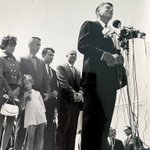
On the thirtieth of July, 1965, twenty years after Truman had first asked Congress to pass a national health insurance plan, President Lyndon B. Johnson did something American presidents had not previously done at the signing of major legislation. He did not sign the bill in Washington. He did not stage the ceremony in the Rose Garden or the Oval Office or any of the standard locations the executive branch typically used for these events.
Instead, he flew Air Force One to Kansas City, drove to Independence, Missouri, and signed the bill in the auditorium of the Harry S. Truman Presidential Library.
The bill was the Social Security Amendments of 1965. It created Medicare and Medicaid.
Truman, then eighty-one, sat next to Johnson at the signing table. When Johnson rose to speak, he looked at the former president seated beside him and said, in the recorded opening lines of his remarks that day:
"The people of the United States love and voted for Harry Truman, not because he gave them hell — but because he gave them hope."
Johnson then signed the bill into law and handed the signing pens to Truman and Bess. He described Truman, in the speech that day, as the real daddy of Medicare.
Six months later, in January of 1966, Johnson returned to the Truman Library for a separate ceremony. He brought with him the first two Medicare cards that had been issued by the United States government. The first card was assigned to Harry S. Truman. The second was assigned to Bess W. Truman. Johnson handed them to the couple personally.
The man who had been told, twelve years earlier, that the work was wasted had received the legal evidence that the work had not been wasted. It had simply needed to wait.
Truman lived for another six and a half years after that. He died on December 26, 1972. He was eighty-eight years old. The most recent surveys of professional American historians rank him, depending on the methodology, somewhere between the sixth and the ninth most effective president in the country's history.
He had not been a different person at the end of his life than he had been when he took office. He had not campaigned for the rehabilitation of his own reputation. He had not softened his record to win approval. He had simply stayed, after his presidency, in the small Missouri town he had come from, and let the work he had done continue to mean what it had meant when he had done it.
History has a long memory.
It had taken, in his case, about twenty years for it to begin to catch up.

MH ⚜️ (she/her) retweeted

The truck drivers thought they were heading to a routine production meeting.
They had no idea what was walking through that door.
Scott Swift — Taylor's father — stepped into the room on a Monday morning in early August 2023. He didn't make a speech. He didn't build anticipation. He just moved quietly through the room, handing an envelope to each of the nearly fifty exhausted drivers who had spent the last six months living in truck cabs, hauling the biggest concert tour in history from city to city.
When they finally opened them, the room went silent.
One driver thought his check said a thousand dollars. Another read it as ten thousand. A third stared at his for a long moment and said out loud what everyone else was thinking.
*"This has to be a joke."*
It wasn't.
One hundred thousand dollars. Each driver.
The industry standard bonus from the biggest stars in music runs five to ten thousand dollars. Taylor had given them more than ten times that. These were people who hadn't seen their families in twenty-four weeks. People who lived out of truck cabs. People who, until that morning, would never have owned homes.
Until that envelope.
But that moment — the shock, the tears, the disbelief — was just the beginning of the story.
Across the entire Eras Tour, Taylor Swift quietly distributed one hundred and ninety-seven million dollars in bonuses.
The dancers. The band. The riggers. The lighting technicians. The sound crew. The caterers. Every single person who built the show from the ground up — they each received bonuses, handwritten notes, and wax-sealed personal letters. When the dancers opened theirs on camera for her documentary, some of them couldn't speak. Some of them wept. Some of them said they couldn't believe she was real.
Her explanation for all of it was four words.
*"They work hard. They deserve it."*
But the crew wasn't the only quiet revolution happening on that tour.
In every city the Eras Tour touched down, a call went to the local food bank before the show arrived. No press conference. No announcement. No photographer waiting. Just a donation — one that fed seventy-five thousand meals here, hundreds of thousands of pounds of fresh produce there. Across the full run of the tour the total reached millions of meals delivered in complete silence.
She never posted about a single one.
And none of this was new.
In March 2020, when the pandemic locked down the world, Taylor was scrolling through social media watching her fans break apart in real time. A photographer about to lose everything. Someone staring down eviction. She sent direct messages with rent money attached — three thousand dollars here, thirteen thousand there. Enough to cover months of bills. She had read the names. She had noticed. She had helped.
She never mentioned it publicly.
Then in October 2025, a mother filmed her two-year-old daughter Lilah — fighting a cancer so rare that only fifty-eight families in America had ever encountered it — dancing in her living room to a Taylor Swift song. Lilah called Taylor her friend.
A few days later the family's GoFundMe received a hundred-thousand-dollar donation.
The note read: *"Sending the biggest hug to my friend, Lilah! Love, Taylor."*
Music industry veterans who have worked with the wealthiest names in the business for decades said the same thing when they saw how the Eras Tour bonuses were handled. They had seen the standard playbook.
They had watched billionaires guard their fortunes jealously while their crews scraped by. They had seen generosity used as a branding tool.
What they saw with Taylor was different.
The biggest concert tour in history grossed two billion dollars. The woman behind it became a billionaire from her own songwriting — not inheritance, not investment, not corporate machinery. Her own words, her own music, her own work.
And then she sat down and signed her name onto hundreds of envelopes by hand.
And sent enough money back to the people who built her dream that they stood in a production meeting on a Monday morning in August and wept holding a check they thought must be a mistake.
That isn't strategy.
That isn't a publicity stunt carefully engineered for a news cycle.
That's what happens when someone, somewhere along the way, never forgot what actually matters.




MH ⚜️ (she/her) retweeted

If you weren’t supporting @AbdulElSayed before this amazing exchange, listen to it & you’ll be in his corner. His sense of who he is, how fortunate he’s been, & what he wants for the rest of us is so beautifully expressed.
Can’t wait for him to win & bury the bigotry!

U.S. Senate candidate @AbdulElSayed (D-MI): "I'm not in the business of defending myself...it's about a whole lot of folks whose lives have been made so much worse because of politics and hate and racism that affects communities in structural ways."
MH ⚜️ (she/her) retweeted

Drew Brees having an entire second line at his private party led by Trombone Shorty is next level 😂
MH ⚜️ (she/her) retweeted

Eleven years ago today, nine Black worshipers went to Bible study at Mother Emanuel AME Church and never came home. They were shot and killed by a white supremacist who never should have been able to access a gun. One other person was injured and an entire community was irrevocably changed.
Today, my heart is in Charleston and with the victims, survivors, and their families. They deserved better, and I’ll always work to honor them with action.

MH ⚜️ (she/her) retweeted
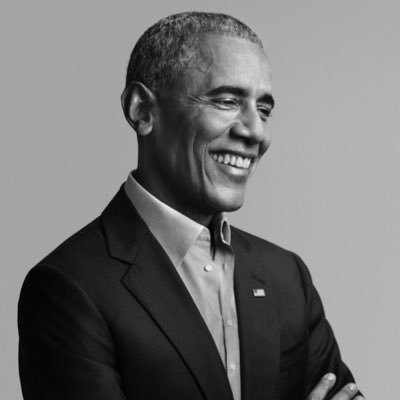
It was great joining Njideka Akunyili Crosby — a gifted Nigerian-born, Los Angeles-based artist — to unveil our first portrait together. This piece reflects so many chapters of Michelle and my story, and we’re thrilled that it will be on display in the Hope and Change lobby at the Obama Presidential Center starting this Juneteenth.


MH ⚜️ (she/her) retweeted

I recently was able to personally thank Sunny Hostin, Co-Host of ABC’s The View for featuring @TheopolisV as one of her favorite wines on the segment entitled Co-Hosts Favorite Things: Mother’s Day Edition.
#theopolisvineyards #SunnyHostin #TheodoraLee #MothersDay #TheView
MH ⚜️ (she/her) retweeted

I am so grateful to continue the series this summer with Mozart and Monk. Spread the word and let's break some more records with this one as we break down cultural barriers and make classical music history.
MH ⚜️ (she/her) retweeted
I can communicate on a deep soul level through the piano. My piano series started with Beethoven Blues and the response to it was profoundly inspiring.
MH ⚜️ (she/her) retweeted

MH ⚜️ (she/her) retweeted
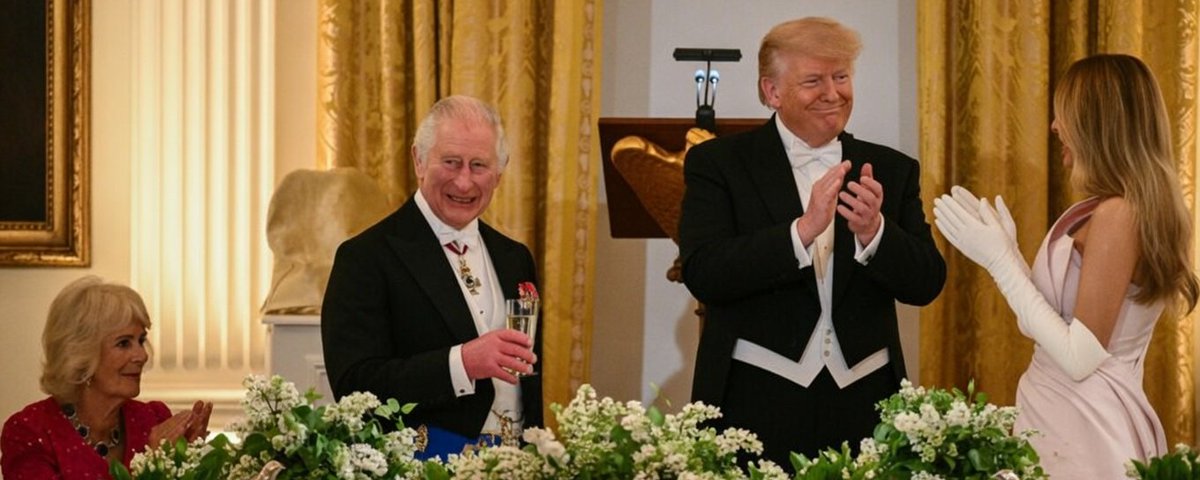
What did Charles actually do? He praised NATO in front of its loudest critic. He championed climate action in front of a climate denier. He called for interfaith dialogue during an administration that has banned citizens from Muslim-majority countries. He praised checks and balances on executive power to a room full of lawmakers who have been unable to exercise them. He referenced the Middle East crisis that is currently straining the alliance he was there to celebrate. He defended the Royal Navy after Trump publicly insulted it. And he did all of this while receiving standing ovations, bipartisan laughter, and a dinner invitation.

MH ⚜️ (she/her) retweeted

Two victories: she won the match, and she won hearts by turning her opponent’s sadness into a smile.
This is what true winning looks like.❤️
MH ⚜️ (she/her) retweeted
Today’s Supreme Court decision effectively guts a key pillar of the Voting Rights Act, freeing state legislatures to gerrymander legislative districts to systematically dilute and weaken the voting power of racial minorities - so long as they do it under the guise of “partisanship” rather than explicit “racial bias.” And it serves as just one more example of how a majority of the current Court seems intent on abandoning its vital role in ensuring equal participation in our democracy and protecting the rights of minority groups against majority overreach.
The good news is that such setbacks can be overcome. But that will only happen if citizens across the country who cherish our democratic ideals continue to mobilize and vote in record numbers - not just in the upcoming midterms or in high profile races, but in every election and every level.
MH ⚜️ (she/her) retweeted

Jazzy was named the Female Newcomer of the Year at last night’s Tommy Awards! 🏆

MH ⚜️ (she/her) retweeted

Gunrock Venture Studio will staff promising startups with a team that can work as needed to support the mission of science-based startups in Davis. bizjournals.com/sacramento/n…


