

AI -- Content creator & builder | Your research makes you money
AI city
Joined July 2026
- Tweets274
- Following464
- Followers1.7K
- Likes2.6K


Neuro retweeted

$44.82 in, $11,643.21 out by morning on a six-agent desk I never wrote a line of code for.
I loaded the Grok Bot terminal last night, dropped $44.82 into it and stopped asking the AI what to trade.
Woke up to $11,643.21. Six agents logged every single fill.
For the past year I kept going back to agents for picks, rereading the same chat threads over and over.
Last weekend I wired up a full trading system on Grok Bot. No hand-written code, ready to run on deploy.
Six agents on one control panel, each with a clear job:
1. Scanner hunts fresh pairs, flags volume spikes.
2. Rug check filters high-risk coins before any order fires.
3. Sizer scales position size with the live balance, never a fixed ticket.
4. Executor opens and closes every position, tracks slippage in real time.
5. Logger writes the reasoning behind each trade into the log.
6. Equity curve refreshes the second a position closes.
Funded the account with $44.82 before bed. Laptop stayed on the dashboard all night.
Opened it in the morning. $11,643.21.
Every order had its reasoning attached, all saved in the log.
That part surprised me more than the balance did.
I stopped agonising over whether to enter. Now I just read the fill log.
Starting balance: $44.82
Current balance: $11,643.21
The whole terminal, the agent stack and the dashboard were built inside Grok Bot.
One deploy and the system runs on its own.


15 full Grok Bot agent teams on GitHub right now, covering research, coding, marketing, trading and your daily life.
People still burn weeks building all of this by hand.
15 repos to pull first:
01 / Agent Org Chart. Pre-built squads for engineering, marketing, sales and support.github.com/serenakeyitan/age…
02 / Grok Factory. One coordinator routes coding, research and other tasks to specialist agents.github.com/jaredtrichard/gro…
03 / multiBot. Spins up specialized teammates that hand off heavy work to coding CLIs.github.com/simo255/multiBot
04 / Grok Bot Second Brain. Five agents covering memory, coordination, research and operations.github.com/mKay00/grok-bot-s…
05 / Foreman. Tracks agent teams, catches stalled tasks and confirms finished work.github.com/Archive228/forema…
06 / grokbot-x. Runs X research, content creation, publishing and writing upgrades.github.com/YannisKiefer/grok…
07 / PhoneZero. Adds a phone pipeline to Grok Bot for placing calls and booking restaurants with approval gates.github.com/function1st/Phone…
08 / BOTROSTER. Self-hosted AI agents with shared storage, browser access and scheduled jobs.github.com/mandarwagh9/botro…
09 / Grok Bot Profiles. Four dedicated roles: Spec Writer, Bug Reproducer, PR Producer and PR Verifier.github.com/HAEGONG/grok-bot-…
10 / HyperGrok Trading Desk. Seven agents across market data, strategy, research, risk and trade execution.github.com/galleonlabs/hyper…
11 / Cryptofeed. Pipes live crypto trades, price feeds and order book updates.github.com/bmoscon/cryptofee…
12 / CCXT. One API tying your trading stack to multiple crypto exchanges.github.com/ccxt/ccxt
13 / Freqtrade. Backtests and deploys trading strategies in dry-run mode with position tracking.github.com/freqtrade/freqtra…
14 / VectorBT. Runs thousands of strategy combos against historical data.github.com/polakowo/vectorbt
15 / QuantStats. Builds reports on returns, drawdowns, volatility and raw trading stats.github.com/ranaroussi/quants…
Pick one team and hand it a single job.
Wire specialists together through MCP, APIs or scripts. Set clear responsibilities and approval limits for each agent.
Stop assembling everything by hand.


Livid I missed a whole video production studio in 10 repos.
Adobe Creative Cloud runs $839.88 a year. Every stage below ships as a repo.
record. transcribe. cut. clean. generate. voice.
01 Cap → record your screen and share clips with one link
github.com/CapSoftware/Cap
02 faster-whisper → transcribe speech to text, up to 4x faster than Whisper
github.com/SYSTRAN/faster-wh…
03 auto-editor → cut every silent gap from video in one CLI pass
github.com/WyattBlue/auto-ed…
04 lossless-cut → trim and split clips without re-encoding a single frame
github.com/mifi/lossless-cut
05 audacity → edit and clean multi-track audio on any desktop
github.com/audacity/audacity
06 rembg → strip image backgrounds from CLI, Docker or a Python call
github.com/danielgatis/rembg
07 remotion → build videos in React code, agent skills plug in
github.com/remotion-dev/remo…
08 ComfyUI → run diffusion models for image and video on your GPU
github.com/comfyanonymous/Co…
09 OpenMontage → let your coding agent produce videos end to end, $10 budget cap
github.com/calesthio/OpenMon…
10 Kokoro-FastAPI → serve text-to-speech locally through Docker, no per-character fee
github.com/remsky/Kokoro-Fas…
record → transcribe → cut → clean → generate → voice.
Remotion runs on a special license. Some company setups need a paid one.
The entire pipeline fits on a single machine.

Repeat editors are one saved preset away from disappearing.
Architecture walkthrough. I cut every recording twice, wide for LinkedIn, tall for Reels, until I mapped the Recipe pipeline inside OpusClip 4.0.
A Recipe is a locked bundle: one platform, every setting, one click.
1. Layout: pick the ratio and a frame tile. Fill, Split, Three, Four each arrange speakers.
2. Cleanup: dead air, filler, echo, flat lighting, drifting eye contact. Single toggle.
3. Captions: plain on professional feeds. Moving text with AI emojis for short-form.
4. Headline: Brand kit fonts carry across every cut. Viral Hook drops an opener at second zero.
5. Pace: auto zoom punch-ins break a static shot. AI B-roll covers weak lines with footage.
6. Export: publish on schedule, send XML to Premiere or DaVinci, upscale to 4K, or pull HD raw.
Lock the preset. One click sends the next take through the whole chain.
Two Recipes. Two clicks. One recording in, two platform cuts out. More than 20 million users already run this loop on OpusClip.
Two clicks made my reformat pass vanish.
Neuro retweeted

I genuinely can't figure out why nobody touches this yet.
I made a Claude skill that converts any idea into a 3D machine you can disassemble and interact with. The skill and all its code are free.
this is what it generated:
> the hummingbird runs on three.js: a mechanical frame with armor plates, wing actuators and an optics module
> it tilts into a hover while the wingbeat counter reads 48 Hz
> the optics slide out from the head, splitting into labeled layers
> one wing detaches from its shoulder joint and spins to expose the internals
> teardown mode cracks the whole bird open, hanging every panel and mechanism around the skeleton
> the parts snap back into place and the wings pick up again
I keep tuning the skill every day. each fresh build surfaces the next thing to add.

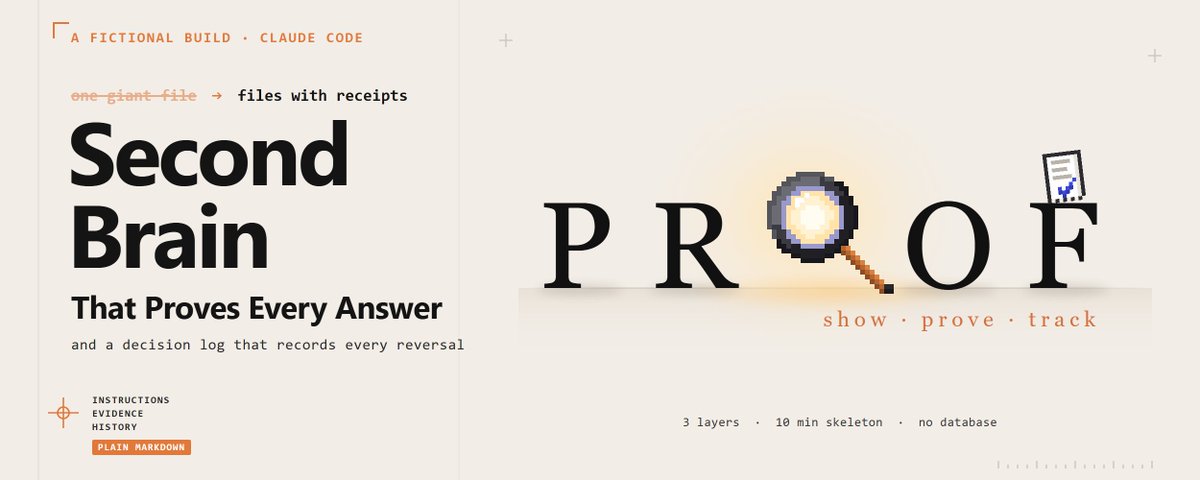
Unreal what two edits cost over a year.
One recording. Two feeds. Every single week.
My LinkedIn cut took 2 hours. Trim pauses, fix captions, add a title, export at 16:9.
Then the vertical pass. 1.5 more hours on the same footage. Reframe, restyle every caption, hunt a 2-second opener, export again.
Two months in a freelancer took over the tall versions. $379 a week, four cuts per invoice.
48 posting weeks. 192 vertical cuts. $18,192 invoiced for reformatting finished work.
Weeks the freelancer was booked, the wide file went to Reels raw. A thin strip floating mid-screen. Nobody watched.
One feature killed the entire second pass. Recipes in OpusClip 4.0.
1. LinkedIn Recipe. 16:9 ratio, speech cleanup, plain captions from Brand kit, Motion Graphics on every spoken number
2. Reels Recipe. 9:16 Fill, animated captions, auto zoom, Viral Hook at second zero
Next recording goes in. Two taps. The $18,192 line never prints again.
The cost counter flatlines the moment both recipes lock in
Neuro retweeted

I TOLD GROK BOT:
“Create the most insane viral AI vehicle stunt video that could make me my first $500.”
I expected something stupid.
I definitely didn’t expect this.
It gave me a scene where a futuristic supercar literally launches off a ramp on the Golden Gate Bridge, plunges straight into the water, activates vertical jet thrusters, flies back up, and lands smoothly on the road.
It looks weird and interesting enough to make you stop scrolling.
And that’s basically the whole strategy:
> make the first frame impossible to ignore
> use one idea people understand instantly
> keep the environment realistic
> make something progressively weirder happen
> end before people get bored
The funny part is that you don’t need some huge cinematic story.
You need one visual idea that makes someone think “WTF am I watching?” and keeps them there for another 5 seconds.
Grok handled the concept.
AI handled the scene ↓
picsart.go.link/31F4Z
I just turned the insanity into a video people would actually stop for.
One weird prompt. One 45-second clip.
Now I want to see how far I can push it toward that first $500.


Neuro retweeted
Pure insanity. for 20 years you searched other people's thinking, karpathy drops one concept, 5 minutes of wiring gives you a search engine that only finds your own notes, and you never once built it
andrej karpathy got 16M views on one post: spend more of your LLM budget building a second brain than writing code
every article you read, every podcast you caught, every meeting you sat through, every dm thread you kept, every tweet you drafted. all searchable in one query, forever
the ones already on it stopped opening chatgpt. they go to their own search bar now. that bar carries 11 years of their own thinking
the stack:
→ brew install obsidian, mkdir ~/vault, cd ~/vault
→ open claude code in that folder, init CLAUDE.md as the rulebook, /raw for sources, /wiki for your pages
→ drop any file into /raw. transcript, pdf, screenshot, meeting notes. one word: ingest
→ claude writes a wiki page, links it to 5 existing ones, updates CLAUDE.md with every new pattern it catches in how you think
→ no blank chats anymore. every question runs through the vault. every answer pulls from your own sources with dates and links
5 minutes to set up. runs forever on the laptop sitting in front of you right now
the alpha most skip:
> query your vault in one line and the answer pulls 5 of your own past notes with dates. google returns strangers. your vault returns you
> every ingest cross-links to 5 past pages on its own. after 90 days the vault answers questions you forgot you ever asked
> CLAUDE.md learns how you reason, what you flip on, what you dodge. by month 3 it drafts posts in your voice better than you manage at 2am
> flip two flags and the whole thing runs on local llama. zero API cost, zero vendor lock, your thinking never leaves the machine
> compounds over 10 years. by year 3 your vault knows more about what you believe than you do. by year 5 recruiters ask to see parts of it
the part most will scroll right past:
a coworker wired this on a saturday in february
by august his posts landed 4x the engagement on the exact same topics
by october his first draft of any doc was already stronger than your third
the gap is one 5 minute install and 90 days of feeding in what you already consume for free
bookmark this
Neuro retweeted

Claude Code just replaced every knowledge tool with 9 Markdown files.
3 layers, zero services.
1. 9 entries. 4 files, 4 folders, one skills directory. Plain Markdown.
2. CLAUDE.md holds my 6 answer rules and 4 edit rules in about 16 lines.
3. 8 percent of the 200-line ceiling. One import pulls HOME.md at launch, 4 hops deep.
4. notes/ keeps one idea per file. sources/ keeps one proof per outside claim.
5. No source file means no trust.
6. decisions.md logs every reversal I make. Old calls stay superseded, never deleted.
7. The agent reads the log and stops recommending what I already dropped.
8. The review Skill runs only when I call it. Never on its own.
9. No database. No vector store. No API. Obsidian sits on top without changing a file.
10. Auto memory lives outside the folder and ranks lower than my reviewed files.
Watch all three layers fold into one locked grid
Claude Opus 5 just reverse-engineered how to run automated businesses on autopilot...
1 prompt + 4 min = full empire override: autonomous AI agents, automated Etsy print-on-demand pipelines, digital services, and that's just the beginning
here's full guide step by step:
step 1 ➔ connect your setup to a local network and spawn a manager agent running on Claude Opus 5 to oversee your digital workforce
step 2 ➔ paste the prompt below into Claude Code with live tracking feeds of your automated market scrapers
step 3 ➔ unlock the hidden worker assignment matrix with your terminal controller – Claude tells you which tasks to allocate to your minion agents
step 4 ➔ hit "deploy" on the command center HUD - it's the last time you manually touch the operational dashboard
step 5 ➔ say yes to the revenue upgrade: zero manual labor, unlocked profit margins, automated competitor scaling – all fully scalable
step 6 ➔ install any custom open-source business logic straight from GitHub – no traditional apps
the result: now anything you can think of, your AI agents can monetize...
p.s: works for almost any model. Mine in the video is a custom build managing three Etsy stores and automated affiliate pipelines.
Try it now, you're welcome. Then read article below on how to automate anything:

Completely cooked, one AI assistant just grew a particle body
Reznikov Engineering built Apex.
Next.js 15, React 19, three.js.
WebGL2 point cloud, custom GLSL vertex and fragment shaders.
Orange core pulses every time it answers.
Web Speech catches the wake word, ElevenLabs speaks the reply.
Hand near the webcam, figure reacts.
Skin-tone centroid, no external ML.
18-node agent graph in the frontend.
The humanoid was left out of the MIT release.
The interface is MIT. The figure inside it is not.


THIS IS COMPLETELY UNHINGED
MY GROK BOT KEPT A TRADING TERMINAL RUNNING ALL NIGHT AND GREW $69.67 INTO $13,370 BY MORNING
I placed zero trades. I loaded the account and walked away. It scanned setups, handled entries, and closed every position on preset rules
10 GitHub repos to wire an overnight Grok Bot system:
01 / Cryptofeed
pulls live trades, prices, and order-book changes from crypto exchanges straight into your scanner
02 / CCXT
links your execution layer to exchange balances, market data, and order calls through a single API
03 / Freqtrade
operates crypto strategies with backtesting, dry-run mode, position tracking, and a built-in dashboard
04 / VectorBT
runs entry and exit combos against historical data and shows the trades and drawdowns underneath
05 / TA-Lib Python
computes indicators like RSI, MACD, and moving averages from raw market data
06 / skfolio
evaluates portfolio mixes with constraints on weight limits, turnover, and transaction costs
07 / QuantStats
converts your return stream into reports on drawdowns, win rate, volatility, and benchmark comparison
08 / DuckDB
holds market snapshots and trade records so the morning review can trace what happened
09 / APScheduler
sets up Python jobs for data refreshes, balance checks, and the morning summary
10 / Lightweight Charts
renders your price feed and trade markers in a live terminal you can watch while the system runs
These are building blocks you connect with scripts, APIs, or MCP tools. Hand one service full control of order submission, set spending and loss caps there, and verify a pending order before retrying it
Replay a full session in dry-run first. The morning report needs to split closed profit, open positions, fees, and failed orders so the headline number has a ledger behind it
Deranged, a whole voice and meetings team in 10 repos.
ElevenLabs Creator charges $22 a month for 121,000 voice credits. Stack Wispr Flow Pro, Otter Pro and Loom Business on top and the bill hits $71.99 a month.
record. dictate. meetings. think. publish. voice out.
01 Cap → Record the screen, share a link
github.com/CapSoftware/Cap
02 Handy → Type by voice, fully offline
github.com/cjpais/Handy
03 meetily → Transcribe and summarize meetings on your machine
github.com/Zackriya-Solution…
04 minutes → Let your agent search meeting notes, 34 MCP tools
github.com/silverstein/minut…
05 open-notebook → Turn sources into cited notes and podcasts, 20+ providers
github.com/lfnovo/open-noteb…
06 SurfSense → Search all your docs with one research agent
github.com/MODSetter/SurfSen…
07 docmost → Publish notes as a team wiki, self-hosted
github.com/docmost/docmost
08 Kokoro-FastAPI → Serve narration from a Docker API, 35x–100x realtime on GPU
github.com/remsky/Kokoro-Fas…
09 KittenTTS → Read text aloud on a laptop CPU
github.com/KittenML/KittenTT…
10 elevenlabs skills → Official kit that wires your agent into ElevenLabs
github.com/elevenlabs/skills
record → dictate → meetings → think → publish → voice out
Cap and docmost are AGPL. elevenlabs skills still needs the paid plan.
Save this
Neuro retweeted

Claude Opus 5 just reverse-engineered my drone...
1 prompt + 3 min = full telemetry override: real-time spatial pathing, geofence bypass, custom AI flight scripts straight from GitHub and that's just the beginning
here's full guide step by step:
step 1 → connect your laptop and drone to the same local network
step 2 → paste the prompt below into Claude Code with a live camera feed of your drone
step 3 → unlock the hidden Developer firmware menu with your controller - Claude tells you what sticks to push
step 4 → hit "calibrate" on the HUD - it's last time you touch the physical controller
step 5 → say yes to the autopilot upgrade: zero latency, unlocked speed limits, smart obstacle avoidance - all reversible
step 6 → install any custom open-source flight logic straight from GitHub - no manufacturer apps
the result: now anything you can think of, your drone can fly...
p.s: works on almost any model. Mine in the video is a custom build on a terrace balcony
Try it now, you're welcome. Then read article below on how to reverse-engineer anything:
6 TEAMS OF AI AGENTS ARE RUNNING THIS RECRUITMENT AGENCY
i gave a cluster of automated agents access to our internal software tools, and asked it to map out an entire agency workflow from scratch
it started setting up departments, assigning tasks, tracking salary reports, and coordinating multi-step pipelines across six different divisions
one team led to another. then i looked closer at how the marketing lead and candidate hub were handling live data feeds automatically
i started checking the active tasks, running CLIs, updating LinkedIn profiles for social brand, and monitoring task statuses to see how much manual work it was cutting out
the whole process felt less like using traditional management software and more like running a headless AI workforce right from my macbook
instead of opening 50 tabs and manually coordinating every department, i had an AI brain orchestrating the infrastructure and flagging execution bottlenecks
but automated dashboards aren’t enough to run a full business, and raw data doesn’t replace human alignment on custom client requirements
the bigger takeaway is how quickly AI can turn a complex corporate structure into an autonomous system, and how much easier it is to miss operational scale when you’re building manually


Claude Code just turned a regular ping-pong table into an AR smart court with real-time stats...
found how to track every shot speed, movement, and ball trajectory in real-time, and built it in 5 minutes
want to try it? here's the full guide step by step:
step 1 → paste the prompt below into Claude Code along with a video of your ping-pong game. If you just want a performance analysis, it works too
step 2 → it generates a script to track keypoints via computer vision, mapping skeleton poses, movement distance, and wrist speed without exposing private data
step 3 → Claude shows each optimization layer with the old and new metrics, you just say yes
step 4 → the rest is on Claude: it tracks rally time, counts shots, logs top speed (km/h), displays a live court map of bounces, and updates stats after every point
the result: before and after rally performance in one line, and a setup that turns your games into an interactive HUD: "what was my max shot speed", "recap the last rally", and other...
p:s: works with standard video feeds, if your camera setup is different, just tell Claude Code and it'll find another way in
Try right now, don't forget me later. Then read the article below showing how to build AI sports trackers for anything:

F*CKING INSANE. Elon's Grok Bot just rigged and animated the hardest 2D character scenes like an elite studio animator, and it took ONE prompt
the two sequences took weeks of manual labor and bone-weight fixing
my bot took both apart in 14 minutes and found the rigging workflow wide open on 12 character layers RIGHT NOW. ELON YOU HAVE TO SEE THIS
a 3-bot animation team running on Grok Bot's own cloud computer
in 14 minutes it:
→ took apart the skeleton setup: one automated vector weighting script linked all mesh deformers, 590 frames aligned in a flash
→ took apart the expression swap: multi-layered switch groups mapped lip-sync and eye blinks in one execution, zero manual keyframes
→ checked my own project for broken vector intersections, the bad vertex trick
→ checked every asset I import: 33 external rig nodes on the layers where I animate. the rig needed one
→ found 12 character files loading those heavy rigs with no optimization tonight, exactly like the broken templates did
no manual mesh painting. no tedious bone placement. no vertex stretching. a single smart prompt was enough
and one of those loose bones was on the main character sequence, where my rig sat yesterday. ~590 frames weren't as lucky
this is the same Grok Bot that made me $10,000 on polymarket. now it animates it
so now it never sleeps
it fingerprints every vector node on every character that touches my project and rechecks them every 10 minutes
it watches my rig for any new bone offset i didn't make
it pings my phone the minute a script changes, before i open that project again
if you animate even 1 frame in 2D, you NEED a bot like this. the studio pros already have one
you can check how it works on the video
how to build yours tonight:
→ make 3 bots in Grok Bot: Scout, Watchdog, Skeptic
→ Scout maps every character asset and rig you use. Watchdog rechecks them every 10 minutes. Skeptic reads every vertex change like a senior TD
→ give Scout the complex skeletal and facial rigging setups as examples, it hunts for the same deformer patterns everywhere
→ connect your phone so a broken rig script hits you within 10 minutes, not after the render crashes
590 frames + 756 frames in one day. 14 minutes for my bots
how long until your timeline is next?
the exact prompt is in the replies, the full Grok Bot setup is in the article in my profile

this is getting SCARY.
i just watched a guy build an AI terminal that ingests massive financial statements, parses complex tables, and extracts hidden metrics in seconds (analysts spend days doing what this pipeline automates), and i’d bet 99% of people have no idea it’s possible yet
it’s the one who processes every page, cross-references every report and pulls every key figure so the analyst never has to, and the good ones are never free
you can copy his whole setup in four lines:
> make one workspace and call it your financial terminal
> drop in your annual reports, balance sheets and SEC filings
> open Claude Opus 5 and point it at that data
> connect your workspace
from there, Claude handles everything
every morning at 7:00 it reads the documents, parses income statements, extracts growth margins the way a pro would and sends one clean breakdown with whatever numbers actually matter
1 workspace $\approx$ 3 years of deep analysis
zero manual crunching
zero missing details
zero messy spreadsheets
he set it up in minutes. it ran the entire session effortlessly
you’re done wasting hours parsing PDFs manually
you’re running your own institutional-grade terminal
save this. the full breakdown is below

Prompt + Opus 5.5 is DERANGED for full game builds
Claude Opus 5.5. $4 per million input tokens, $20 output. 20% under Opus 5.
One prompt. A full 3D game scene loads on a monitor.
Lava arena. Blocky character. Side menu opens, five crate tiers with odds bars.
Pick the rare crate. Loading screen holds.
Hex podium drops in with torches and a chest at the center.
Chest cracks. White gem floats. Ring of characters circles the platform.
Robot rolls out on a green pedestal, orb in hand. UNCOMMON.
Crate economy, probability bars, reveal animation, five rarity classes. One prompt.
Pro: $20 a month. Max 5x: $100.
No prompt published. No engine named.
Watch it load ↓