

Refugee of the People’s Republic of Seattle | Now in Scottsdale AZ | Corporate lawyer, but not: legal advice | your lawyer | or attorney advertising.
Joined August 2021
- Tweets17.3K
- Following3.7K
- Followers4.6K
- Likes38.6K





Especially in CA where schools now serve as behavioral health servicing centers with billion$ in state funding
xitter.cf/m8mabear/status/203264…

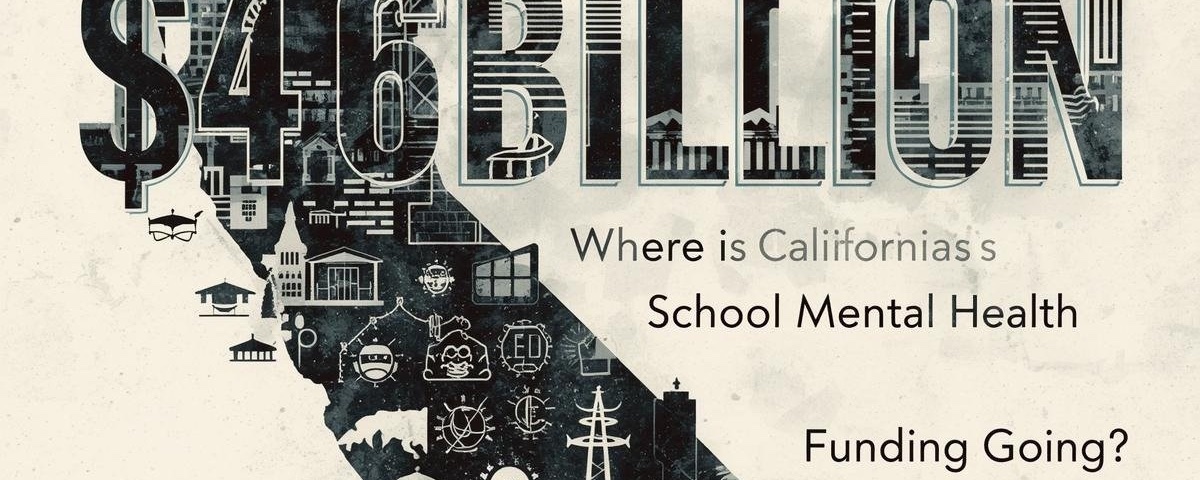
Easier access IS a benefit…funded by public dollars. But a tradeoff is mission creep/diverted resources for institutions already failing their core mission: academic instruction. Private clinics can be open weekends, without public funds and free sales support staff.
And just like, the women of MIT henceforth become yet another source for black-pilling young men.
Another, told you so.
@herandrews is a prophet.


A colleague sent me this excerpt of a text Kristin Knouse sent to a friend. Fox News posted it with the article they published.
She was so confident her own choices would count for nothing when assigning blame. The entitlement is staggering.
This captures what universities have become. Truth and fairness are irrelevant while administrators identify favored categories and protect the people who fit them, regardless of how destructively they behave. Individual conduct is meaningless in light of the institutional narrative.
The message exemplifies the entitlement behind Knouse’s accusations and the receptive audience she found among administrators. She expected responsibility to rest with him regardless of her own conduct. The institutions gave that expectation career-destroying force.
A majority female jury in a deep blue state found that she defamed Dr. Sabatini and unlawfully interfered with his professional relationships, rejected her counterclaims, and awarded him $6 million.
The disgrace extends beyond Knouse. Administrators and the rotten institutions they lead destroyed a scientist’s life’s work while claiming to uphold fairness and evidence. They should be held accountable for what they did.

Such an important subject. I don’t have a good answer to where to strike this constitutional balance. We need to develop a principled, but workable, analytical model.
Thanks for the reminder - yes, the Toronto experiment proved just that: no academic improvement from school MH programs, but did increase psychotropic med prescriptions for boys
xitter.cf/alegalprocess/status/2…


Convincing schools to become cost-free sales support staff to behavioral health clinics, marching little revenue units into therapy rooms. New batch every year!
Pharmaceutic companies can only wish it were that easy. 💰

I wish people understood that mental health on-site in schools is not the answer. But it’s ‘free’ to schools because they will charge your insurance directly. 🤦♀️ This is for elementary school children at the moment.
@CarolynGorman_ @ALegalProcess

Convincing schools to become cost-free sales support staff to behavioral health clinics, marching little revenue units into therapy rooms. New batch every year!
Pharmaceutic companies can only wish it were that easy.


“the incompetent are blessed with absolute, blinding certainty. their brain protects them from their own ignorance, allowing them to speak first, demand authority, and never second-guess their decisions.”
👉 If you’re on a public school board, you know this already.

This paper answers why confident idiots run the world.
Cornell University published a psychological paper that explains every terrible boss, every loud influencer, and every broken corporate hierarchy.
It’s called “Unskilled and Unaware of It.”
they tested participants across logic, grammar, and humor to measure the gap between actual performance and self-perception.
And the results are wild.
participants scoring in the bottom 12th percentile consistently believed they were operating in the 62nd percentile.
they were not lying. they were literally incapable of recognizing their own incompetence.
the paper revealed a brutal paradox:
the exact skills required to master a domain are the exact same skills required to accurately evaluate your own competence in that domain.
if you lack the skill, you inherently lack the cognitive capacity to realize you are failing.
this creates a dangerous systemic loop.
the incompetent are blessed with absolute, blinding certainty. their brain protects them from their own ignorance, allowing them to speak first, demand authority, and never second-guess their decisions.
meanwhile, the actual experts suffer the exact inverse.
top performers in the study consistently underestimated their rank. because a task was easy for them, they falsely assumed it was easy for everyone else.
they hesitate. they obsess over nuance. they assume they have nothing unique to add.
we are biologically wired to confuse confidence with competence.
the loudest person in the room gets promoted, gets funded, and gets the microphone, not because they know what they are doing, but because they are physically incapable of seeing what they don't.
the only defense mechanism is building systems that stop rewarding absolute certainty and start demanding proof of work.


I really respect a good old fashioned, fully developed and well-articulated demand letter.
Mr Mizelle is displaying top-tier craftsmanship.

We formally put Vanity Fair and Condé Nast on notice regarding the false and defamatory allegations published about our client, Jared Kushner.
Serious questions are now being raised about the credibility of this reporting, including by independent journalists.
Despite repeated requests, the author has failed to produce a single bank statement, wire transfer record, account number, or other verifiable evidence supporting these extraordinary accusations.
We have seen no indication that Vanity Fair conducted any independent verification of these claims before publishing them.
We call on Vanity Fair to clarify publicly whether it independently verified these allegations and, if so, what evidence supports them. Or did it simply republish the author’s claims without conducting its own fact-checking?
We have demanded that Vanity Fair remove the article and preserve all records relating to its reporting, fact-checking, editorial review, and publication.
Letter attached. More to come.


AI is the greatest educational tool in human history - after the textbook.

C'est absolument fascinant
Quand j'étais petit, j'adorais les livres qui montraient des coupes transversales de châteaux, de navires ou de machines
Je pouvais passer des heures à regarder chaque pièce, chaque personnage, chaque mécanisme
Aujourd'hui, je demande à l'IA de générer ces planches pour mon fils, puis je les imprime
Quelques exemples de sujets qui fonctionnent particulièrement bien :
1. Un galion anglais du XVIe siècle
2. Une locomotive à vapeur du XIXe siècle
3. Un sous-marin de la Seconde Guerre mondiale
4. Une cathédrale gothique du XIIIe siècle
5. Un paquebot transatlantique comme le Titanic
6. La fusée Saturn V du programme Apollo
7. Un phare maritime du XIXe siècle
8. Un château fort du XIVe siècle
Et le plus intéressant, c'est qu'on peut quasiment tout explorer de cette manière
Je vous partage le prompt universel pour reproduire ce style et créer vos propres encyclopédies illustrées

Spending like this, with the outcomes it produces, tells me schools really don’t know what they’re doing anymore.
TheLegalProcess (v3.0 | Instruction Not Therapy) retweeted

Teachers report spending an increasing amount of time needing to support students’ and families’ mental health, per a new RAND study, and it’s seriously burning them out.
In large part, this problem is unintentionally self-induced by the education system, which has increasingly taken on more the responsibilities of the mental health system.
Schools and educators have been misled to think mental health programs would improve education outcomes at scale, and that “good mental health” is necessary for students to learn (even though students had been learning at schools for forever before the rise of mental health).
The mental health programs that are marketed to schools as good for education are are explicitly teaching students and teachers alike to think about mental health more, talk about mental health more, and encourage seeking support for mental health.
That explicitly takes time away from education: it’s a mechanical, unavoidable effect.
Doing all this has not improved education outcomes or mental outcome. Growing evidence shows it can be harmful and make kids feel worse.
It’s often NOT the best thing to think or talk about how one feels, and instead get past the momentary/transitory feelings of stress, anxiety, discomfort, etc.
EdWeek writes that “in most schools, counselors and psychologists juggle up to twice the recommended ratio of students—leaving teachers to pick up the slack for students waiting for additional help.” That gives the impression that what’s necessary is more counselors and school psychologists. This is another way the education system has been misled.
Recommended ratios come from professional associations that have an incentive to say there’s a need more of their members—they’re not based on empirical evidence.
And more school mental health staff would perpetuate the cycle: more responsibility for mental health taken on by the education system, leads to more time spent on it, leads to more investment, leads to more time spent, etc.
edweek.org/leadership/dealin…
edweek.org/leadership/dealin…
