

Internal medicine, ICU, PHEM, POCUS-Research, ECMO/ECLS ARDS
Joined April 2022
- Tweets1.6K
- Following971
- Followers582
- Likes1.8K
Adrian Böhm retweeted

A historic day for Resuscitation Science at @AHAScience #ReSS2026.
ON-SCENE is out in @NEJM — nationwide HEMS ECPR in the Netherlands, cannulation on scene.
40% vs 20% survival to discharge. 36% vs 13% CPC 1-2 at 6 mo. 45 vs 77 min to ECMO flow.


Adrian Böhm retweeted

Meine Klinik trennt sich endlich von der Software des Nius-Finanziers Frank Gotthardt! Wir wechseln zur Konkurrenz. Ich hoffe, dass noch viele Praxen und Kliniken folgen.
Geld aus dem Gesundheitswesen sollte nicht dazu beitragen, ein rechtes Hetzportal wie Nius zu finanzieren.

Adrian Böhm retweeted

Ever wondered why a coronary occlusion gives the ECG it does?
Block any part of the coronary circulation on a 3D heart and watch the 12-lead (and the echo!) evolve.
Free for learning and teaching. Have fun!
cliffreid.com/culprit
#FOAMed #ECG #OMI #MedEd #Cardiology
POCUS gehört in den Rettungsdienst. Direkt am Einsatzort!
LernePOCUS praxisnah und szenariobasiert – von Lungensonographie und eFAST bis zur fokussierten Echokardiographie.
05.–06.12.2026 | Fulda | 795 €
Jetzt anmelden:
Mehr zum Projekt: pocus-project.de

Adrian Böhm retweeted

Every time I see a continuous renal replacement (CRRT) order for an ultrafiltration rate of 25 mL/hour, a small part of me dies
If we're afraid that the patient will crash from removing 0.4 mL/min, perhaps we should also stop sending blood cultures and morning labs...
I am just saying...


Adrian Böhm retweeted
Excited to share our new manuscript on the Minnesota Mobile Resuscitation Consortium ECMO truck - a purpose-built, fluoroscopy-enabled mobile unit designed to deliver prehospital ECPR for refractory out-of-hospital cardiac arrest.

After a long period of hard work, I’m excited to share that our paper has finally been published.
link.springer.com/article/10…
I’m very curious to see what insights will emerge as larger datasets become available in the future.
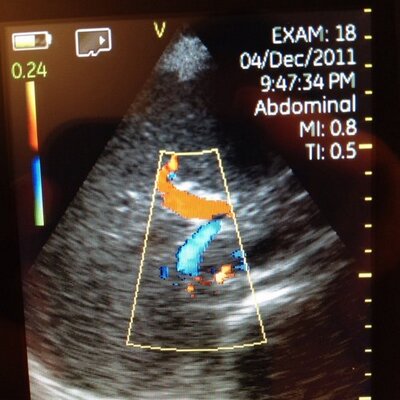
With this work, we hope to contribute even in a small way to the ongoing development of the paramedic profession and the use of prehospital POCUS.
1
82
A big thank you to my colleague for the collaboration and my deepest respect goes to all paramedics out there who bring ultrasound to the front lines of patient care.
#POCUS #EmergencyMedicine #PrehospitalCare #Paramedics #Ultrasound #Research #HealthcareInnovation
62
Adrian Böhm retweeted

Our free RRT handbook has been translated into several languages
It has now had more than 89,000 downloads
Please share
rrthandbook.org/
Adrian Böhm retweeted

TOE-guided CPR improves physiology (↑ETCO₂) but not outcomes in OHCA. Cardiac arrest care is shifting from algorithms to physiology, but we’re not there yet. #FOAMed #Resus stemlynsblog.org/toe-guided-…

Adrian Böhm retweeted

Missed the biggest ID research of 2025?Here’s your chance to catch up!
🆕🔥Year in Review –Top ID Articles from 2025!
All the most important infectious diseases research in one place!
🤝Huge appreciation to @IDstewardship for helping bring this together!
🔗idstewardship.com/year-in-re…

Adrian Böhm retweeted
Another recommendation revisited—and RCTs surprisingly ignored again: Two high-quality trials show no mortality benefit for 1-hour antibiotics in non-shock sepsis, yet the guideline continues to push it.
Recommendation 17: For adults with probable or definite sepsis without shock, we “recommend” administering antimicrobial therapy immediately, ideally within 1 hr (strong recommendation, very low certainty evidence).
Evidence comes from a systematic review and meta-analysis combining 42 observational studies (~191k patients) and 2 RCTs. The guideline argued the RCTs did not show mortality benefit, mostly included non-shock patients, and the median time difference between early and later antibiotics was small (~1–2 h). Based on this, they discounted the RCTs and relied on observational studies—though RCTs provide stronger causal evidence.
These justifications are weak: the RCTs studied exactly the population being recommended, and small timing differences do not invalidate high-quality evidence. Surprisingly, despite new data, the guideline revisited the evidence but effectively ignored it again.
@BradSpellberg @DrToddLee @PulmCrit

🔥Just published🔥
Surviving Sepsis Campaign: International Guidelines for Management of Sepsis and Septic Shock 2026 : Critical Care Medicine #IDXposts share.google/VN4AfbchzDiRr7e…


Adrian Böhm retweeted
kudos to @ACEPNation for calling out the Surviving Sepsis Campaign 2026 guidelines and not joining in this madness.
ACEP is great at making evidence-based policies that actually *help* provide better patient care.
When ACEP is politely burning your guideline, you’re in trouble.


